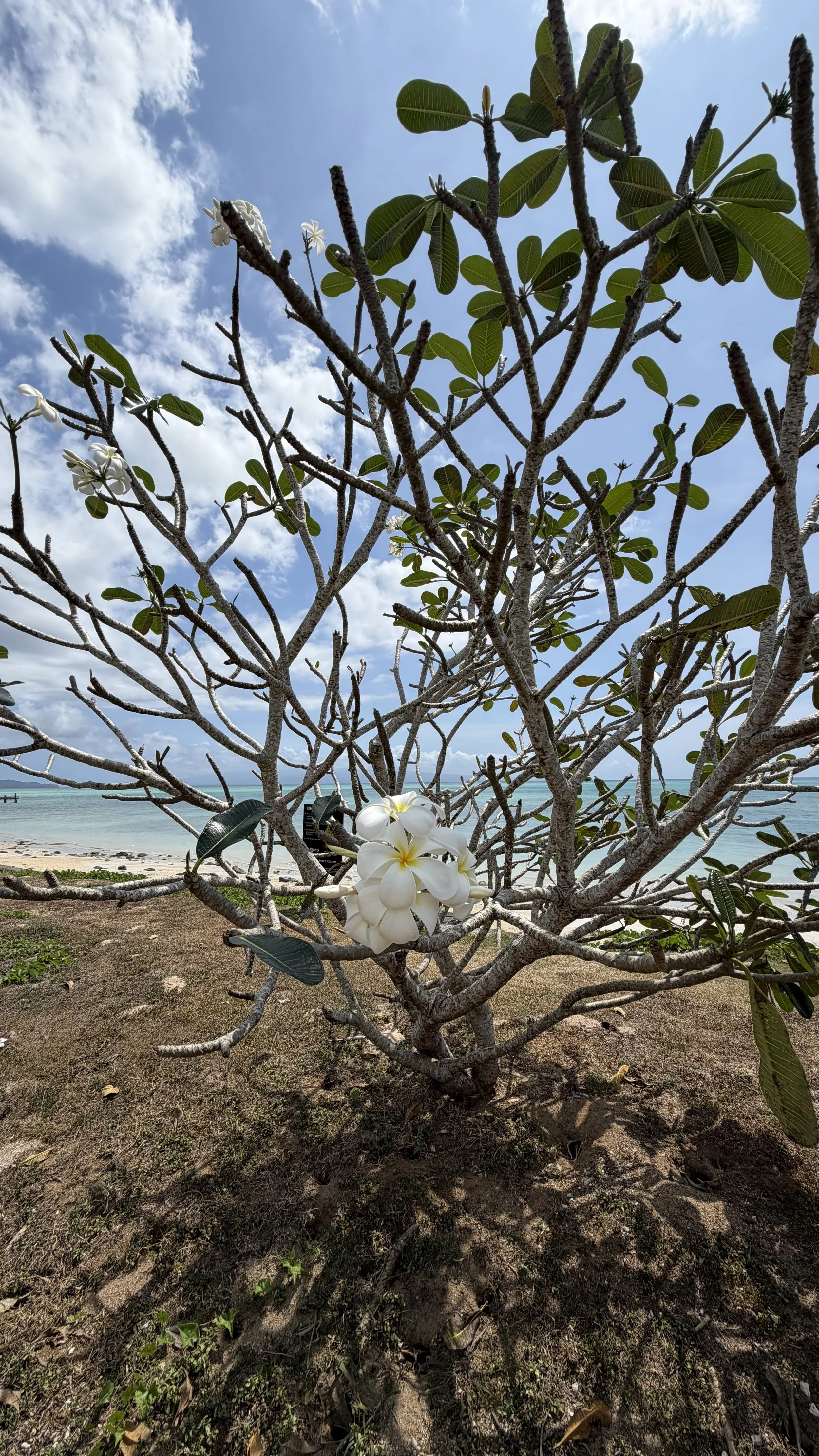
Samoa - where time seems to have stopped
This is my first time in Samoa.
And somehow, from the moment we arrived, I felt that we needed to slow down. So we did.
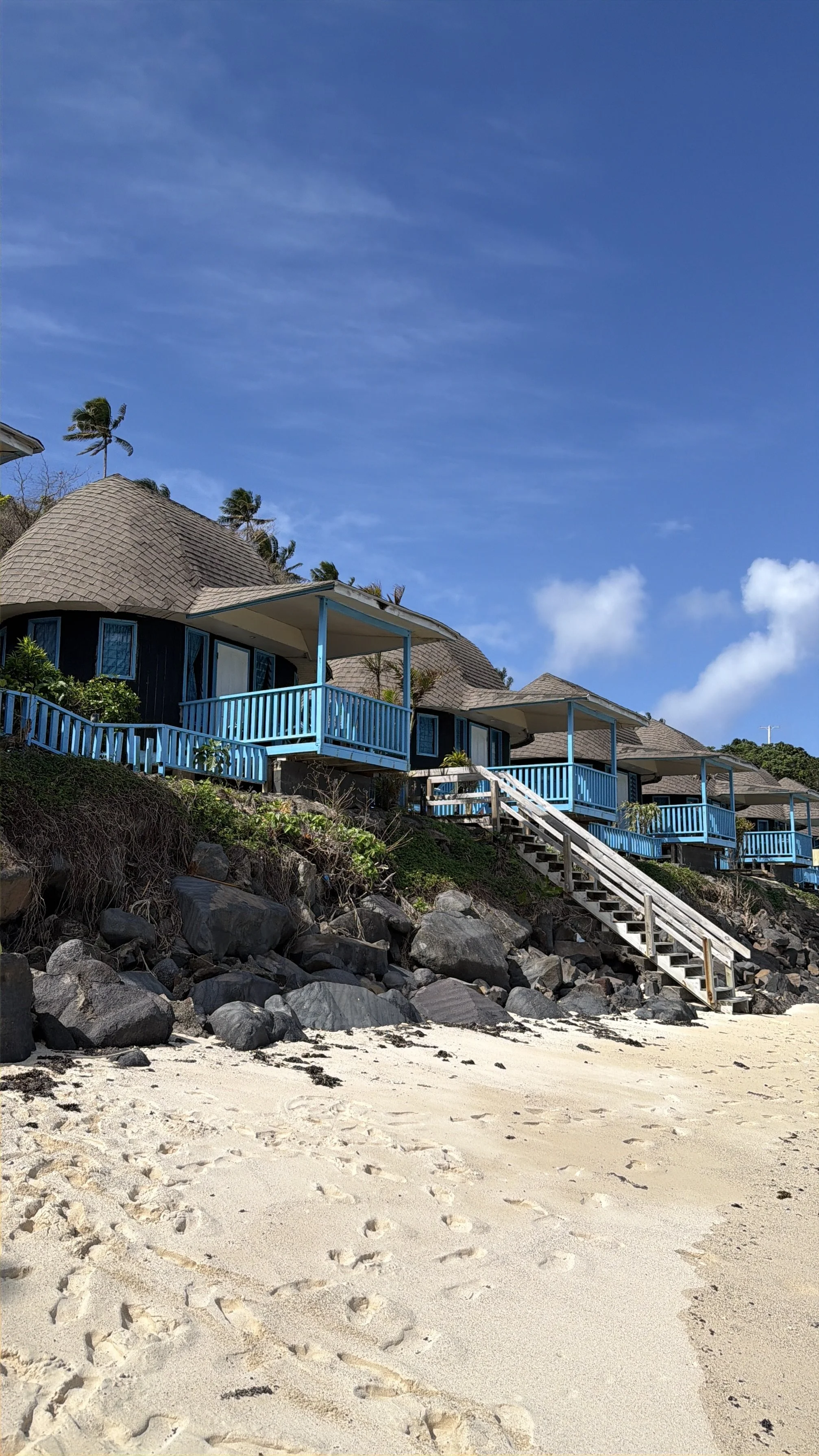
Rather than choosing a polished resort, we decided to experience Samoa in its simplest form and settled into a little beachfront fale at Litia Sini Beach Resort, right at the far end of Upolu.
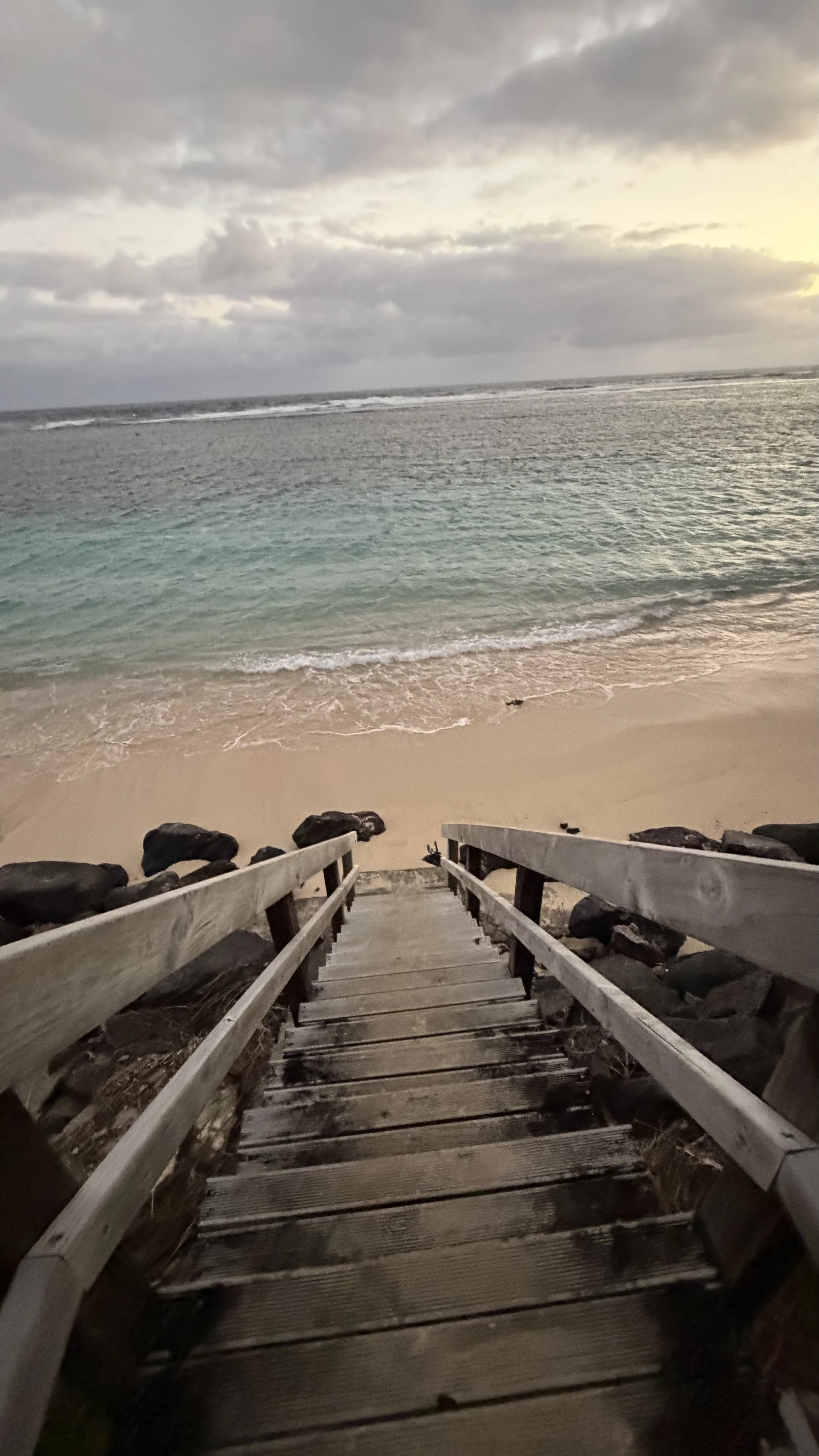
Our fale was literally on the beach, with steep wooden stairs leading to the beach.
The family lives here. They grow much of their own produce, cook breakfast and dinner for their guests, and somehow make you feel less like a tourist and more like someone who has temporarily become part of their family.
It is simple. Very simple. And I love it.
Life at Litia Sini
Litia Sini is a family story as much as it is a place to stay.
The business began in 1993, when Litia and her husband Taula started with simple beach fales, building the business with their children. They closed down a small shop and decided to build a new life. The land had previously been used by locals as a waste area. Their vision was not only to welcome visitors but also to create something for their family and community.
Then came the devastating tsunami of 2009, which destroyed much of the resort. The family rebuilt, helped by the loyalty and generosity of guests. Today, Litia Sini remains a family legacy, managed by the next generation.
There is no pretending here. If you want to give tips to staff, you do that at the end of your stay. The money goes into a special pot and is used to buy Christmas gifts and food for staff and their families each year. Everyone is treated equally by the owners, their own children who work here, and the staff they employ. No nepotism!
Food
So much fresh fruit, my favourite is soursop. I suggested they might want to explore how to export it NZ! So, so yummy!
I also loved the Samoan rice porridge with cacao - koko alaisa - and oka i’a, fresh tuna with coconut milk, lime and other fresh ingredients. My favourite lunch, so refreshing and light.
And then there was dessert. Panikeke.
They look almost exactly like Croatian fritule.
Different side of the world, completely different culture, and somehow I’m sitting there eating panikeke as if it was Christmas in Croatia. I tell you, life is full of unpredictable surprises!
Where time has slowed down
The days here are incredibly slow. I mean really slow. At first you notice it. Then you start enjoying it. Then you wonder why everywhere else feels so rushed. There is no constant pressure to fill the day.
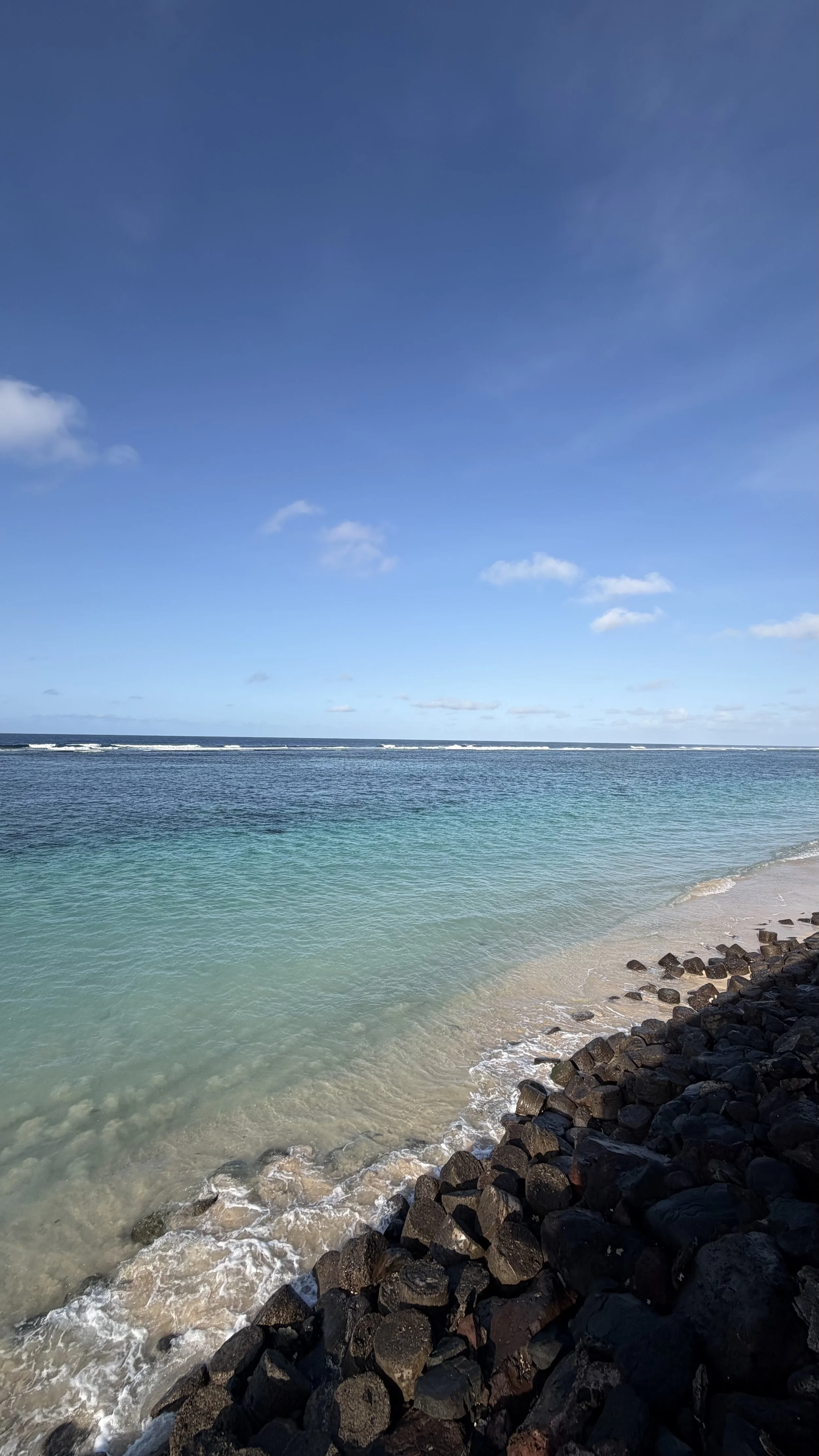
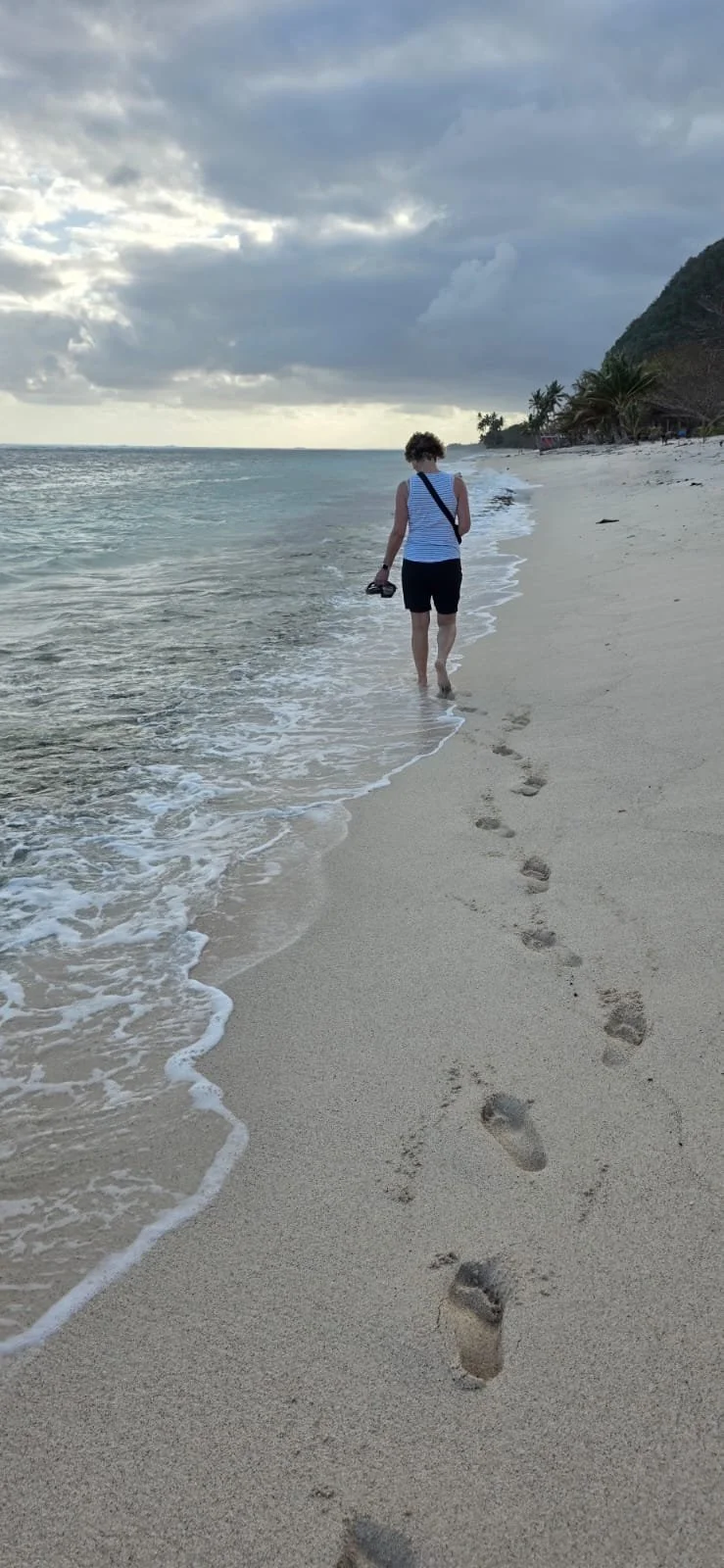
From walking, to sitting in the silence, to a quick swim to watching the reef and the waves in far away to chatting. And somehow hours disappear.
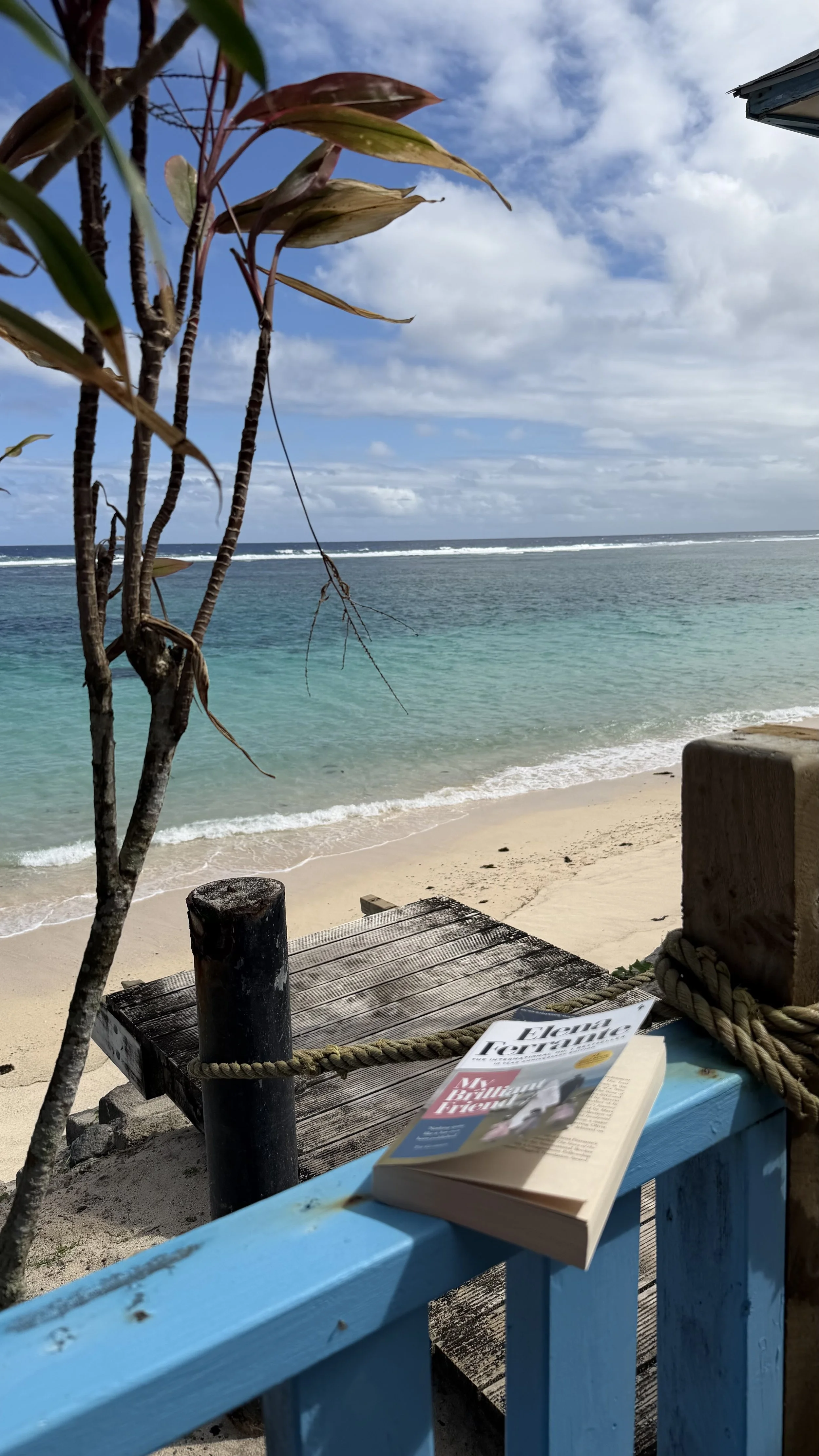
And another unexpected side effect of slowing down. Books time! But it took me pages and pages before I could focus on the story. I had to slow down and read word by word so slowly to let it sink in. Properly reading, not scrolling through words or skim reading. I was unaware of how much my focus has dropped since I find myself reading short news articles or watching short videos - this is so bad for our brain! Really bad habits we have formed in the crazy world we live in. I am sure we all kind of know this but not all is lost! In just two days I finished My Brilliant Friend by Elena Ferrante, and I’m already onto my second book, phew!
Yay, life with no scrolling, no television, no constantly checking what is happening somewhere else.
The phone has become what I think it should be when you’re travelling: a camera, with the occasional Instagram story to showcase the beauty of this island. Then it goes back into my bag. And I realise how much mental space that creates.
Instead of filling every quiet moment with a screen, there is the ocean, a book, a conversation, a walk or a swim or just silence.
Perhaps this is why the days feel so long here. There is nothing constantly interrupting them.
The island beauty
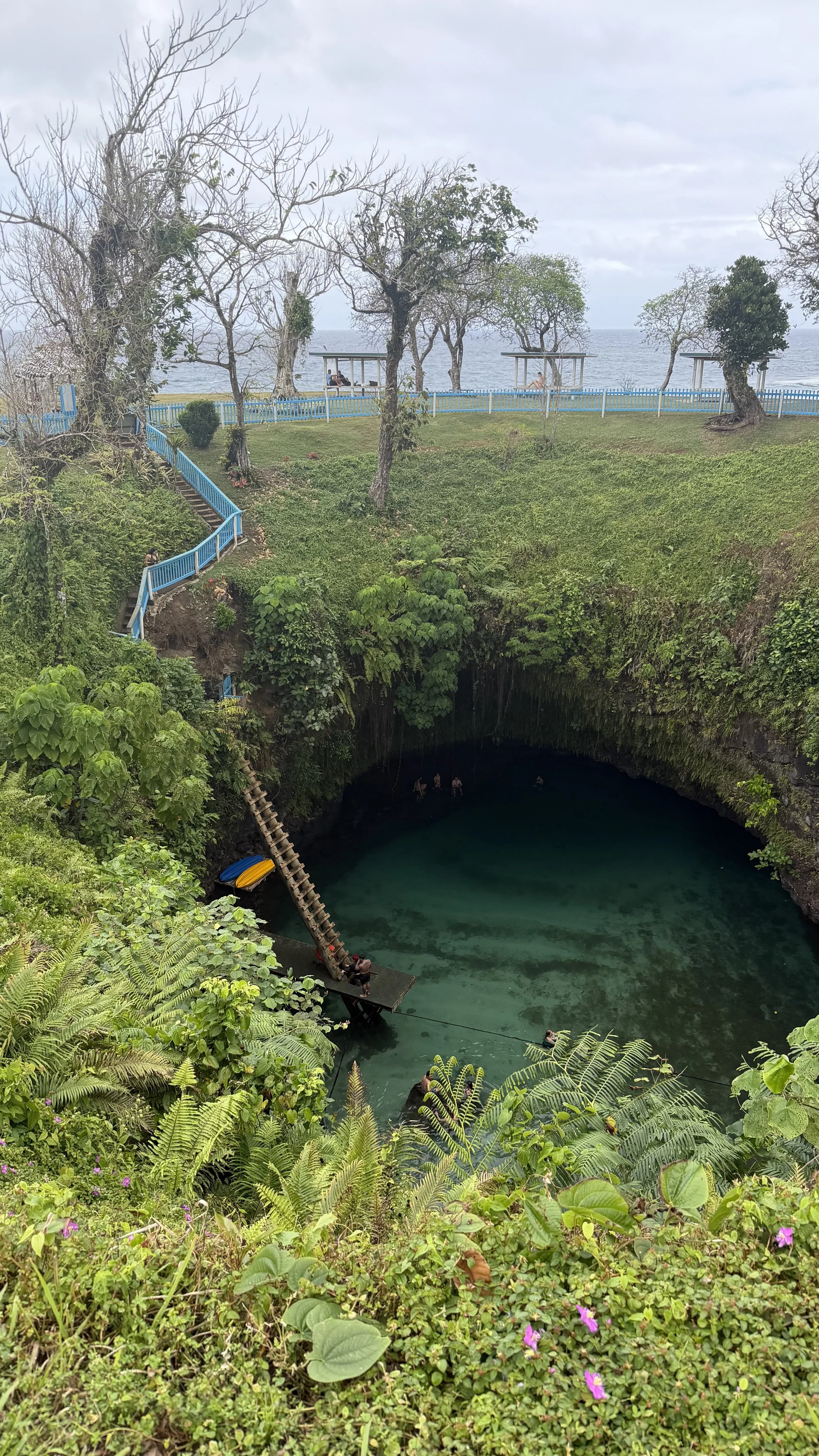
We have explored some of Upolu’s natural treasures starting with the famous To Sua Ocean Trench.
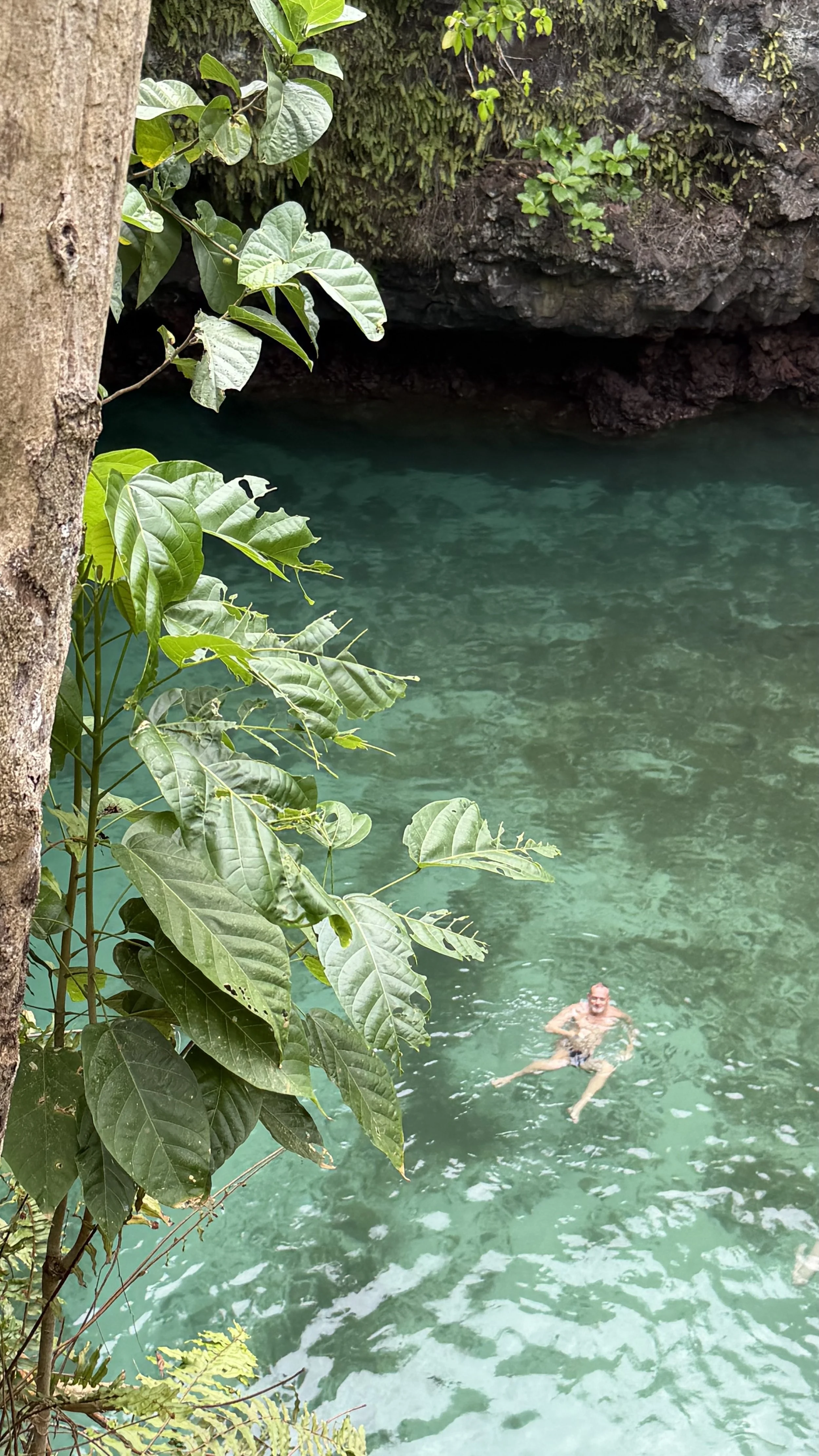
The trench is spectacular: a huge natural swimming hole surrounded by lush greenery, with a steep ladder leading down into the turquoise water.
And yes, my courageous Nebojsa actually jumped in. I watched from a completely sensible distance. I was too scared, and ladders looked very unsafe to me, plus all the disclaimers telling you that it is all at your own responsibility! Thank you but no thank you. It must have been that insurance geek in me saying, watch out, no cover !
And then, after all that courage, he felt a bit sick. Apparently, it had nothing to do with the jump, but rather with the wind on the beach. He was at half energy, but we took it slowly, in line with the island pace. A strange feeling for my planning brain but I adapted.
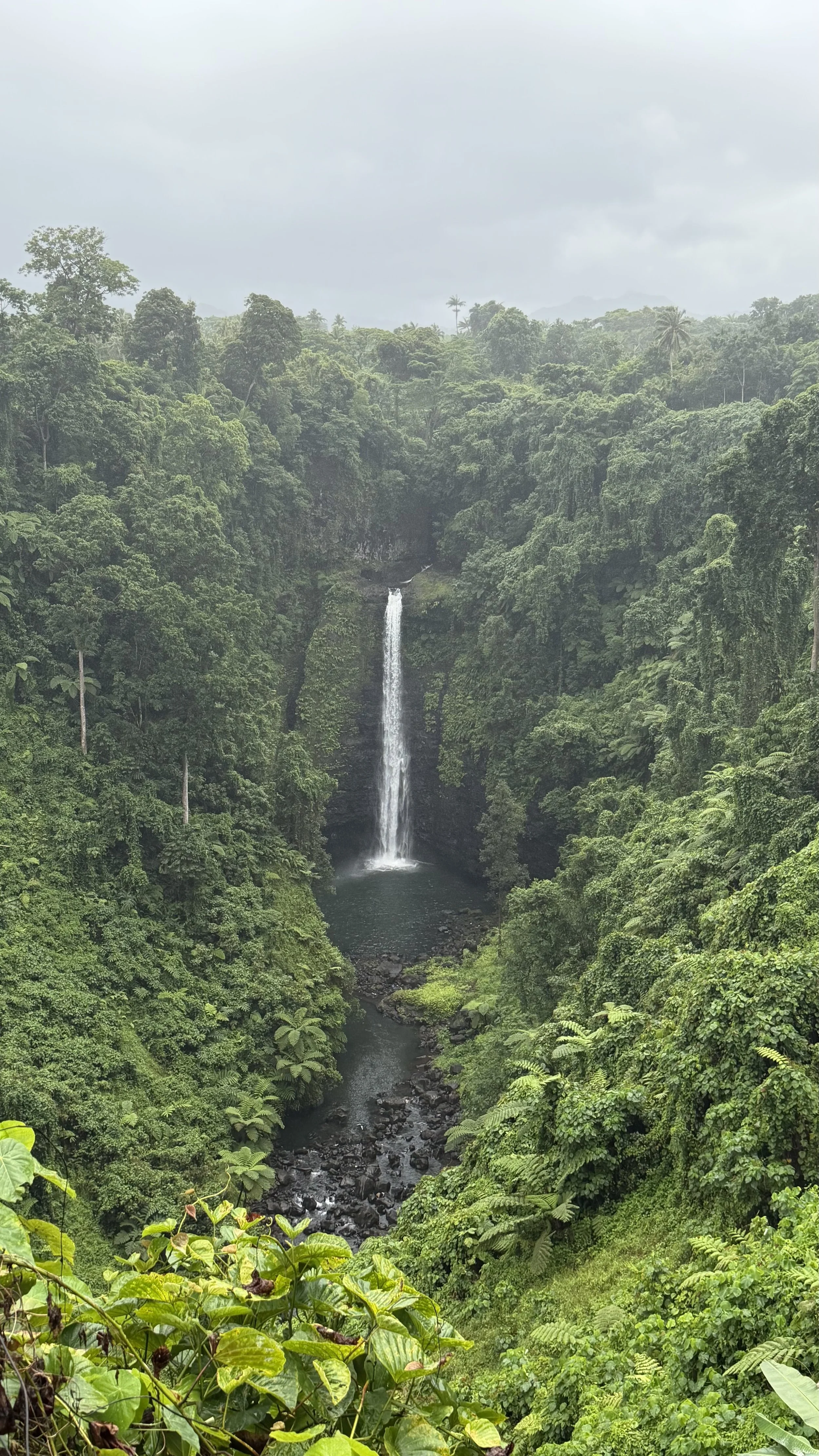
We also visited the Sopoaga Waterfall, surrounded by tropical vegetation and gardens. We met a lovely old lady who walked to our car to give us umbrellas so we could get out and enjoy the view despite the rain that lasted full five minutes. So kind of her to look after us.
The favourite beach - Lalomanu Beach
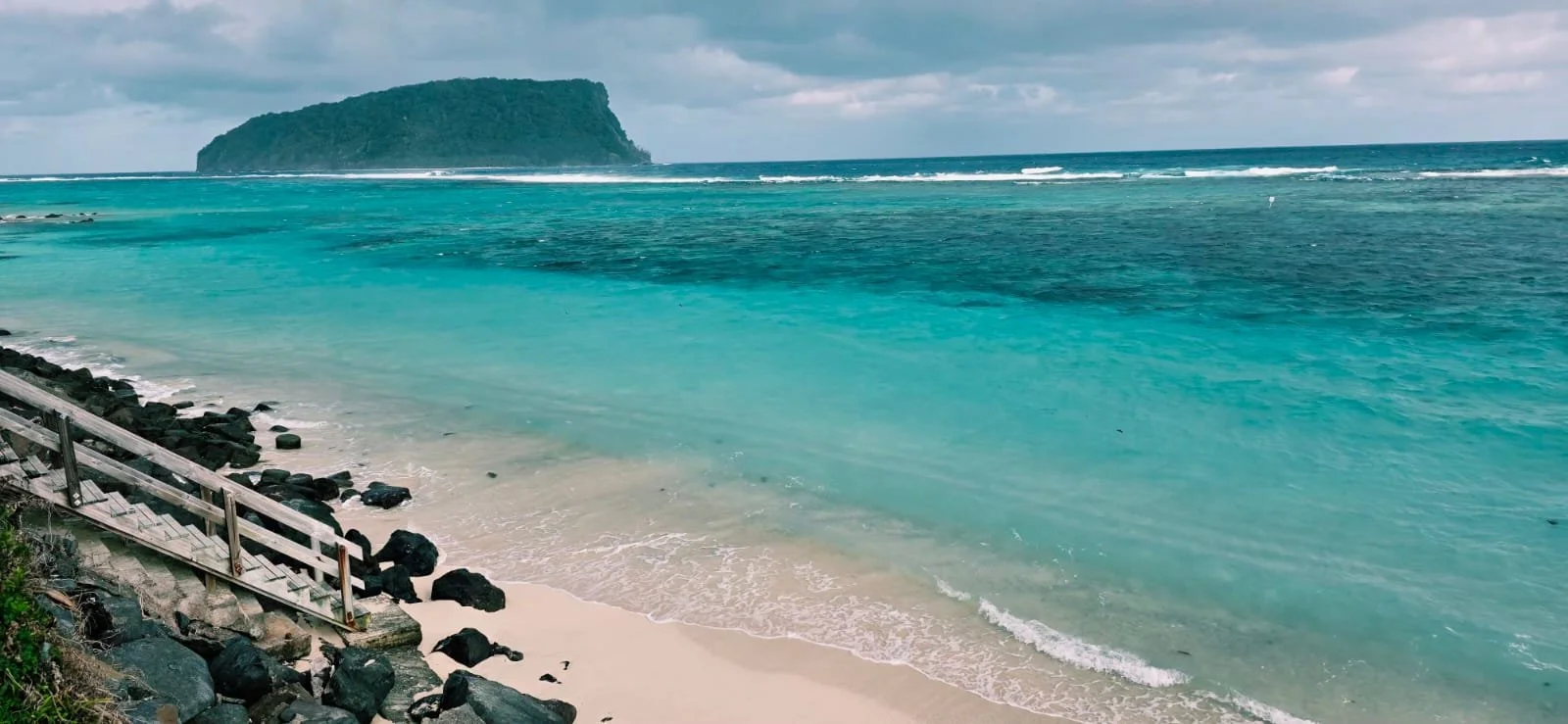
Beautiful, turquoise, incredibly clear water, corals everywhere and the kind of beach that makes you stop and stare. We were the only ones with no water shoes on. You can tell we grew up somewhere else!
The only thing I could happily have done without was the wind. But even paradise has to have something to complain about.
Giant clams, turtles and my weird brain
We also went to a giant clam sanctuary.
It is exactly what it sounds like: an area where giant clams are protected and visitors can get into the water to see them up close, along with turtles and other marine life. You can actually swim out into their world and experience them in their natural environment.
We didn’t, for two reasons. Nebojsa was still feeling at half energy, and I was too scared to go in by myself.
But there was another reason too. And this is where my weird and wonderful brain kicked in.
I’m not sure I believe we humans should always assume we have the right to enter someone else’s territory just because we want to see it.
The clams and turtles live there. This is their home. They swim, feed and live in nature without needing us to get up close and personal with them.
Who are we, as humans, to decide that we can simply come into their world and do whatever we want because we find them fascinating?
Maybe I’m overthinking it. Or maybe I’m onto something. I’ll leave that one with you.
The Samoa you notice from the road
One of the things I have loved most is simply driving around and looking. We took a rental car, and moved around.
The villages are so colourful. Houses painted bright blue, green, yellow, pink and orange.
Flowers everywhere. And rocks painted in bright colours, carefully arranged around gardens and flower beds. Nothing seems random here. Each village has its own colours, own flowers growing from the colourful pots or car tyres painted on.
There doesn’t seem to be one particular traditional explanation for all the colour, but what is obvious is the pride people take in their homes and villages.
Then I met Neve
Later in our stay, we moved to Samoa Beach Resort, a completely different experience from our simple beachfront fale.
And it was here that I met Neve.
She was serving us breakfast one morning, and from the first moment I met her, there was something incredibly warm about her.
Beautiful, kind, loving and completely open.
She spoke excellent English and had such a gentle way about her. And then there was my name. She tried to pronounce it. Again. And again. And again. Until finally she perfected it.
It made me smile, but it also told me something about her. She cared enough to get it right.
Neve has family who have moved to New Zealand, but she chose to stay here in Samoa. Not because she couldn’t leave. Because she doesn’t want to. She loves the peaceful lifestyle. The culture, music, food, roots, history. This is home.
Fiafia night
We had spent the days seeing Samoa quietly through its villages, beaches and people. Then we experienced Samoa in celebration.
Fiafia means celebration, and these evenings bring together Samoan food, music, singing and dancing. It was colourful, noisy, rhythmic and thoroughly Samoan.
The dancing ranged from graceful, flowing movements to much more energetic performances.
There were no fire knives. Instead, the performers used sticks with burning flames at the ends, moving them through the air as part of the performance.
And I have to admit, I found the performers almost as entertaining as the performance itself.
Some of the young men looked as though they had been told they absolutely had to be there. And naturally, they happened to be some of the most handsome ones. They had the moves and had the looks. But enthusiasm? Let’s just say it varied, hm hm hm …
Then there were the others. They were completely into it. You could see it in their faces and in the way they moved, completely connected to the rhythm and genuinely enjoying themselves. They were great!
It reminded me that a cultural performance doesn’t have to be perfectly polished to be memorable.
Samoa before Samoa
It is easy to think of Samoa as a remote Pacific island that was “discovered” by Europeans. I thought Captain Cook was the one, but that isn’t the story.
Samoa had been inhabited by Polynesian peoples for thousands of years before Europeans arrived.
Archaeological evidence at Mulifanua on Upolu points to human settlement around 3,000 years ago.
These were extraordinary ocean voyagers who crossed huge distances in the Pacific using knowledge of stars, winds, currents and the natural world.
The first European known to sight Samoa was Dutch explorer Jacob Roggeveen in 1722.
Fa’a Samoa
That traditional culture is still very visible.
The Samoan concept of Fa’a Samoa - “the Samoan way” - places enormous importance on family, community, village, land and respect. You can feel it!
Then there are the churches. They seem to be everywhere. Nebojsa googled and there are hundreds of them with only 200,000 residents living here. It feels like each village several churches and a primary school.
Christianity has become deeply embedded in Samoan life since missionaries arrived in 1830. Religion here isn’t something tucked away for Sunday. It is part of the landscape, part of the community and everyday life. As the locals shared, they spent the most money on weddings and funerals. They burry their loved ones in their own front yards, so they stay with them even when they are gone.
My own self debate…
Every time I come to the Pacific, I find myself confronted by the same contrast.
There is poverty. There is simplicity. There is a lifestyle based on family, land and community rather than consumption.
And then there are the Western-style resorts. If you have stayed in one, you have stayed in all, regardless of where in the Pacific Polynesian community you are.
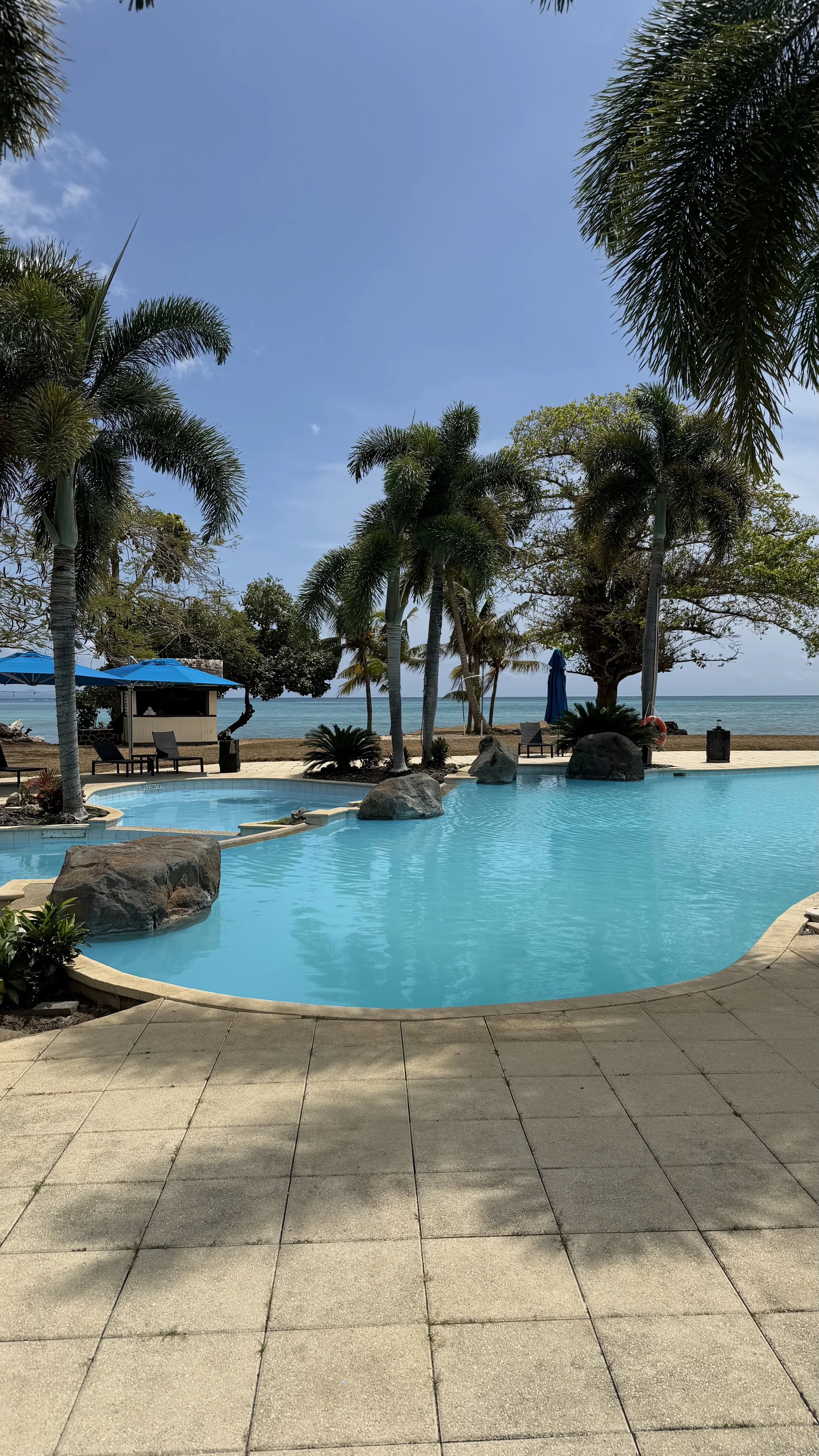
We stopped at Aga Reef Resort, only about five minutes from Litia Sini fale.
And suddenly it felt like we had entered another world. Beautiful, polished, luxurious and apparently Australian-owned.
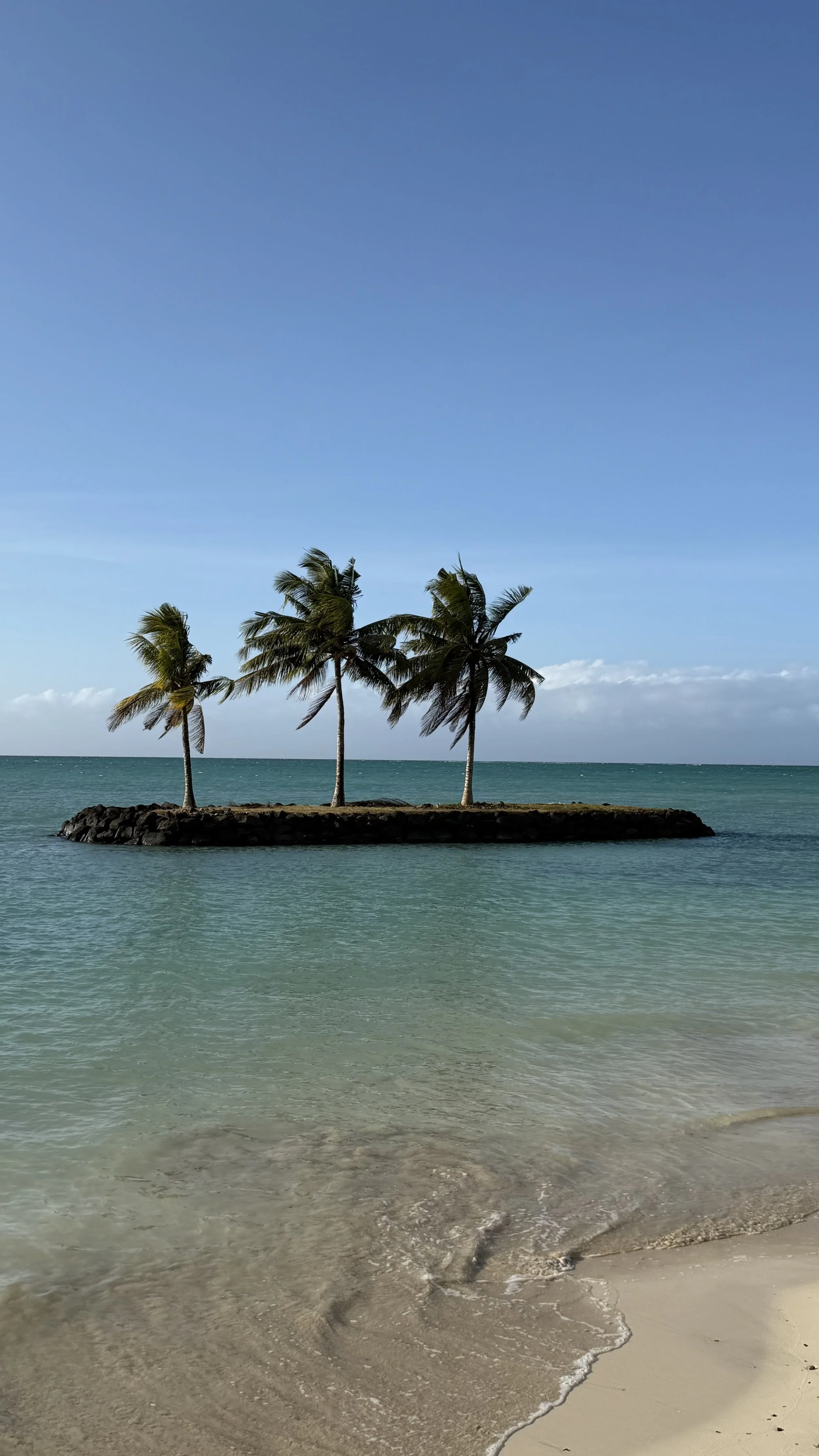
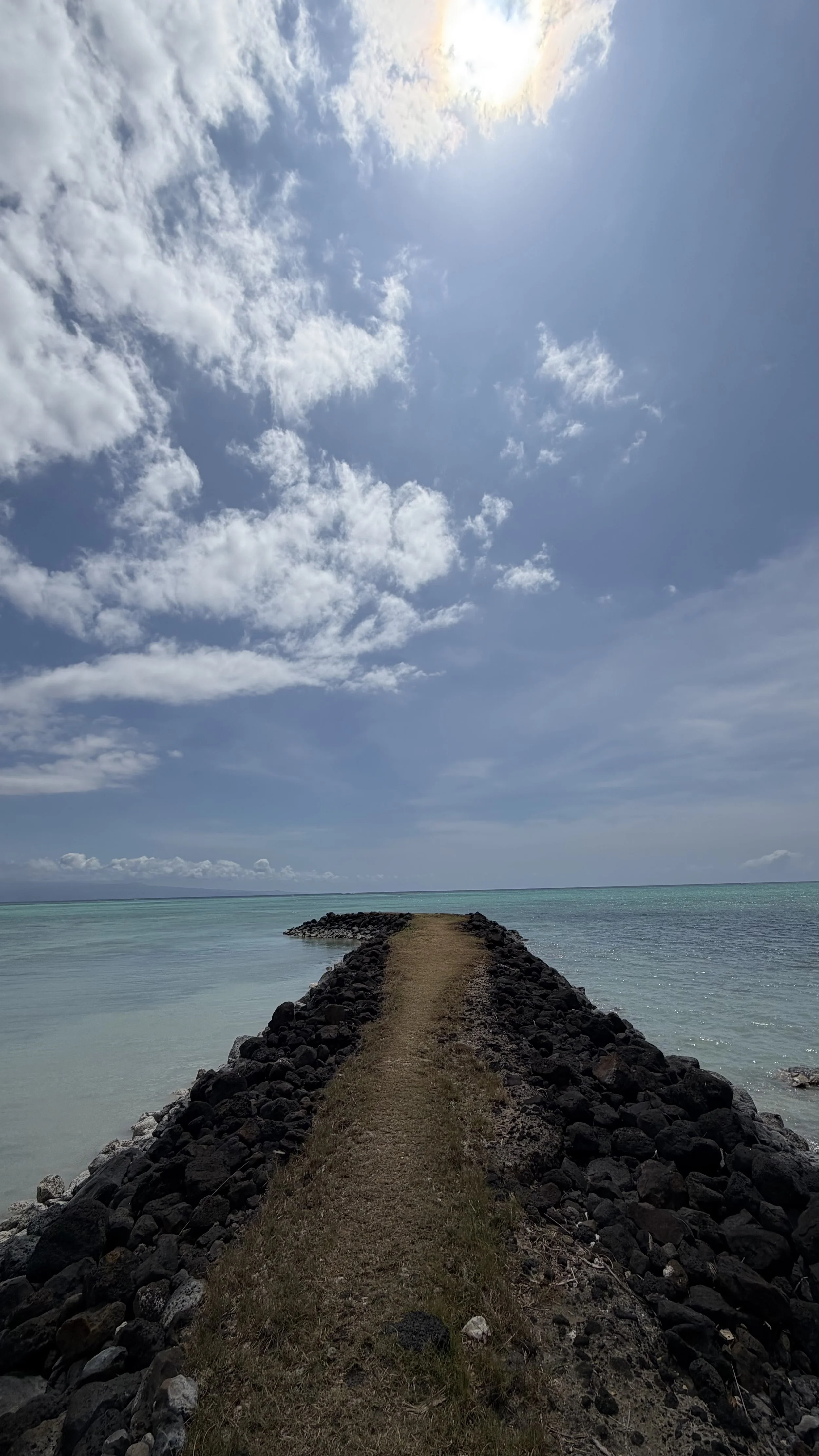
And, if I’m honest, slightly out of place, as its lagoons and tiny islands with palm trees looked and felt man-made, which they were, of course!
Part of me thinks: Why bring this here?
I don’t come all this way to find somewhere that could be anywhere in the world. I come to experience Samoa.
But then I remind myself that it isn’t that simple.
These resorts provide employment. They bring money into local communities. They buy from local suppliers. They bring international visitors and foreign currency into the country.
And Samoa needs economic growth.
A small country finding its way
Samoa is a small island nation, and tourism is an important part of its economy. Agriculture remains important too, while money sent home by Samoans living overseas is another major source of income.
So tourism isn’t simply about people like us coming here for beautiful beaches. It is part of Samoa’s economic future.
Perhaps the question isn’t whether Samoa should develop. It is how Samoa develops.
How do you create jobs and opportunities without losing the culture, community and simplicity that make Samoa so special?
How do you welcome the outside world without becoming another version of somewhere else?
I don’t have the answer.
A thought from home, while we were away
And then, on 25 August, while we were here in Samoa, the news came through that Dolly Parton had died at the age of 80.
The tributes started appearing almost immediately, messages about her extraordinary career, generosity, humour and wisdom.
But one thought in particular stayed with me:
“Don’t get so busy making a living that you forget to make a life.”
I don’t know whether those exact words were Dolly’s, but they felt incredibly appropriate sitting here in Samoa.
Back home, life is busy. Work, meetings, schedules, emails, to-do lists, admin BS.
And somehow, without really noticing, it is very easy to spend so much time making a living that you forget to simply make a life.
Here in Samoa, I’ve read a book in two days.
I’m already onto my second. I’ve barely watched a screen, but for writing my notes for this blog.
The rest of the time?
I’m looking at the ocean, swimming, reading, talking, eating, chatting to locals. And doing absolutely nothing.
Perhaps that is the real gift of this place. Not the turquoise water. Not the waterfalls. Not even the beautiful beaches.
It is the reminder that a life isn’t measured only by what we accomplish, earn or get through.
Sometimes it is measured by how much of it we actually notice.
Samoa has reminded me that having less doesn’t necessarily mean having less of life.
Sometimes it means noticing more of it. The people, food, gardens, music, culture, ocean, conversations, passing of time.
Here, time really does seem to have stopped. Not because Samoa is stuck in the past. But because, for a little while, it has allowed us to step outside the rush of ours.
Drazenka Dordevich 29 August 2026