Japan 日本からこんにちは (Nihon kara kon'nichiwa)
Japan makes sense once you see the patterns…
Japan feels different almost immediately.
Not louder-different. Not showier-different.
Quieter. Tighter. More considered.
At first, I would have described it as polite, clean, efficient. All true but incomplete. What you’re really feeling, as a visitor, is the result of centuries of choices Japan made to survive, adapt, and stay cohesive. Once you get your head around this, the everyday moments, the silence on trains, the flawless queues, the precision of a coffee pour start to click into place.
An island that learned to get along
Japan is a small, mountainous island nation with limited farmland and a long history of natural disasters, earthquakes, tsunamis, typhoons. People have always lived close together, dependent on one another.
Harmony here wasn’t a philosophy. It was survival.
Over centuries, this shaped a culture that prizes social order, sensitivity to others, and conflict avoidance. Disrupt the group and everyone pays the price. That mindset never really went away. You feel it everywhere: in instinctive queuing, in trains apologising for leaving seconds early, in the unspoken rule that you don’t talk loudly on public transport even when no one seems to be enforcing it.
Rice, cooperation, and self-regulation
Rice cultivation requires perfect timing, shared irrigation, collective labour, and trust that everyone will do their part.
Individualism here simply didn’t work.
The result was a society built around group responsibility: reputation over intention, shame over guilt. Behaviour is regulated less by rules being enforced and more by people regulating themselves. It’s also why there are almost no rubbish bins in public and yet not a piece of rubbish to be found. People carry their rubbish home because that’s what being part of the system requires.
Ritual without belief
Japan isn’t very religious in belief, but it’s deeply religious in practice.
Shinto, the native tradition, is about life, nature, purity, and beginnings. Spirits (kami ) inhabit trees, rocks, rivers, even everyday materials. Buddhism, imported from China and Korea, focuses on impermanence, discipline, suffering, and death.
Most people are Shinto for births and celebrations, Buddhist for funerals and ancestors, Christians for weddings as it’s trendy to get married in a beautiful white dress and will still say, quite honestly, “I’m not religious.” Religion here isn’t identity. It’s cultural infrastructure, a way of keeping life harmonious and death bearable.
Hierarchy, loyalty, and knowing your place
For nearly 700 years, Japan was ruled not by emperors but by samurai warlords. Loyalty, discipline, honour, sacrifice, and respect for hierarchy were essential.
Then came 250 years of near-total isolation, reinforcing rigid systems and rule-bound behaviour. Japan's period of near-total isolation, known as Sakoku ("closed country"), lasted for over two centuries, roughly from 1633 to 1853. During this time, the Tokugawa shogunate enacted strict regulations that severely limited trade and foreign relations, banning most foreigners from entering Japan and prohibiting Japanese citizens from traveling abroad.
Even though the samurai disappeared long ago, the mindset remained. Today’s corporate company often functions like yesterday’s feudal lord. It’s telling that is illegal to fire employees and that resignation agencies exist to help people quit politely when they feel unable to do it themselves.
Modernity without chaos
When Japan reopened to the world in the late 1800s, it modernised at extraordinary speed, adopting Western technology, law, and education while fiercely protecting its identity.
This is why Japan feels ancient and futuristic at the same time. Bullet trains glide past shrines. Robotics coexists with ritual. Innovation happens without chaos. You notice it in small details: vending machines selling hot coffee and soup, toilets with heated seats waiting for you, even when there’s no hot water at the sink.
Rebuilding quietly
WWII devastated Japan physically and psychologically. The response wasn’t loud reckoning, but quiet rebuilding.
The unspoken postwar code became simple: work hard, don’t stand out, don’t burden others, rebuild together. Economic success became moral redemption. Pacifism, safety, and efficiency became national values. Even now, with modest salaries and a rapidly ageing population, public trust and collective responsibility remain remarkably intact.
Why Japan feels so different
Japan stands apart in Asia for its extreme consideration for others, sometimes to the point of self-erasure. Silence on trains. Impeccable queues. Rules followed even when inconvenient.
Elsewhere, relationships often override systems. In Japan, the system is the relationship.
There is also a deep commitment to craftsmanship. People don’t just do things, they refine them. One person may spend a lifetime perfecting ramen, knives, paper, or rice. Even convenience-store food feels deliberate. Even chocolate reflects place and season.
But politeness doesn’t equal intimacy. Service is flawless, yet emotional closeness is rare. Respect and friendship are carefully separated.
The Trade-Off
The same system that makes Japan safe, clean, orderly, and beautiful also produces emotional restraint, loneliness, fear of public failure, and burnout.
This is a shame-based culture, not a guilt-based one. Mistakes aren’t just errors, they’re social exposure. Emotions go underground and re-emerge safely: in karaoke rooms, drinking alleys that date back to samurai times, and carefully contained subcultures.
Japanese subcultures are diverse, youth-driven expressions of individuality, ranging from anime/manga (otaku) and Harajuku fashion to extreme, trend-setting aesthetics that often blend modern, niche interests with traditional, everyday Japanese society.
Japan doesn’t deny emotion. It contains it.
Onitsuka Tiger is an iconic Japanese footwear brand founded in 1949 by Kihachiro Onitsuka to inspire youth through sports, famous for its retro designs like the Mexico 66 and the iconic stripes introduced in 1966. Revived in 2002 as a premium fashion brand under Asics, it is known for high-quality, slim-soled sneakers. Guess who had to buy a pair and for whom?!
How this history shows up on the ground
Tokyo isn’t one city, it’s many perfectly functioning worlds stitched together. Hyper-modern, yet governed by invisible rules. Everything moves quickly, but nothing feels chaotic. Once you understand Japan’s obsession with order and non-disruption, Tokyo stops feeling overwhelming and starts feeling choreographed.
Asakusa
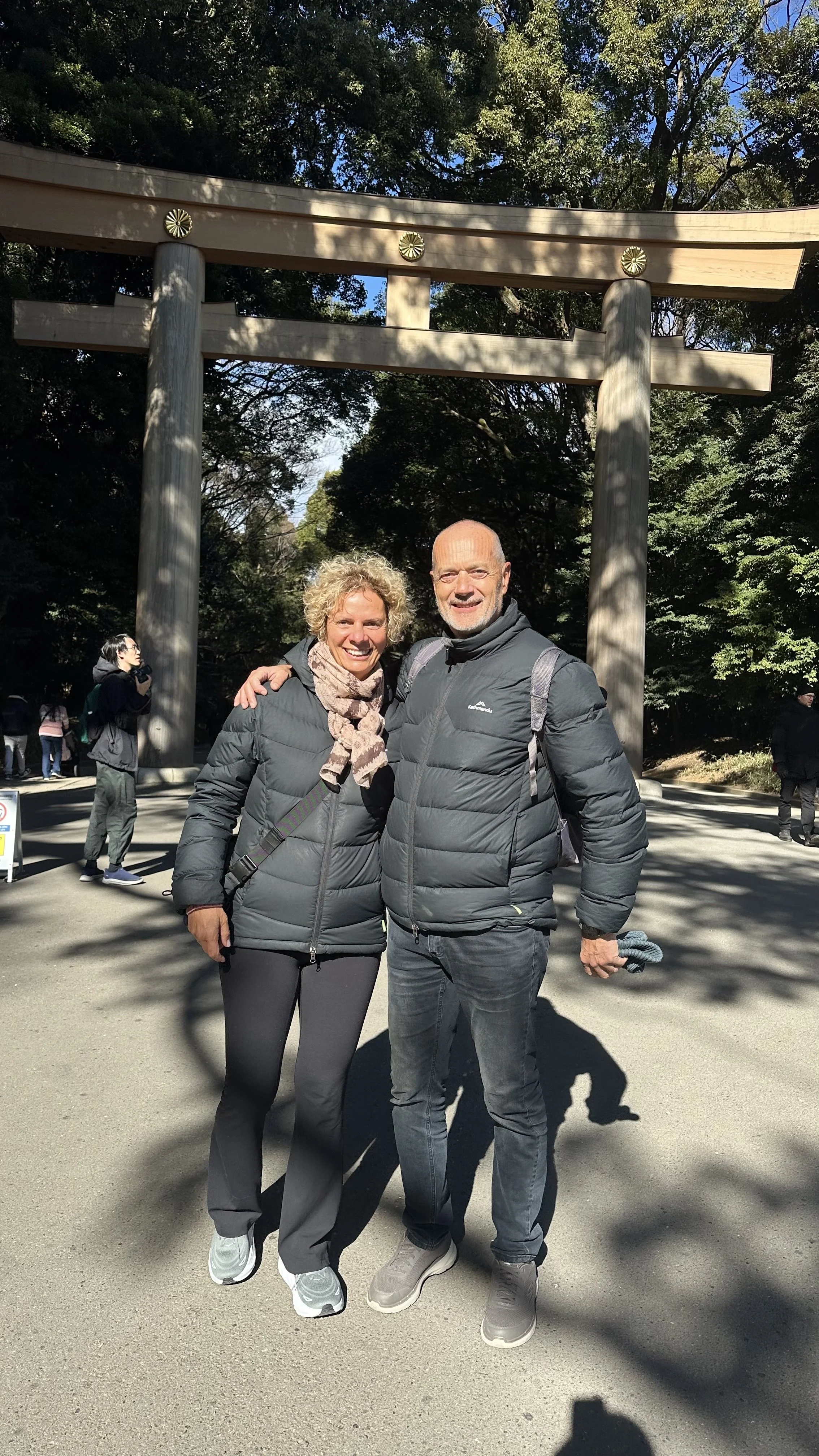
Asakusa feels like Japan remembering itself. At Senso-ji, the seventh-century temple built after a statue was pulled from the Sumida River, incense smoke drifts upward as people wash their hands, draw fortunes, and touch the dragon-water basin for luck. Even bad fortunes are tied up and left behind. Why carry misfortune with you? I had to do the same!
This isn’t history preserved as a museum. It’s history practiced as habit.
Shibuya
Shibuya looks wild in photos, but standing in the crossing tells a different story. Thousands of people move at once, around 3,000 at any green light and no one pushes. Freedom exists here, but only within structure.
Who remembers the movie A Dog’s Tale?
Hachikō was an Akita dog born in 1923, famous for waiting every day at Shibuya Station for his owner, even for nine years after his death.
His loyalty moved the nation, and during the 1930s he became a symbol of devotion in Japan.
Today, his statue at Shibuya remains one of the country’s most beloved meeting points.
And just when we thought there were tourists from everywhere but Yugoslavia we met Miran. Miran from Mostar joined the same tour with his beautiful Greek wife. After living in Athens for 7 years they now live in Split! We always seem to meet someone from our old country wherever we go.
We stopped at a sake shop that has been brewing for 200 years, tasted several varieties, and learned you never drink alone or pour for yourself, big sake bottles exist because sake is meant to be shared with family and guests.
After a few tastings, we realised it doesn’t hit hard on the first sip, which is exactly how it sneaks up on you.
Shinjuku
Shinjuku shows the dual personality best. By day, it’s suits and systems. By night, it exhales, neon, narrow alleys, karaoke rooms where restraint finally finds release.
We thoroughly enjoyed a yummy dinner at Yakiniku restaurant. It’s fair to say it took me 10 mins to figure out what we were meant to do!
Hakone, Mount Fuji, Lake Ashi
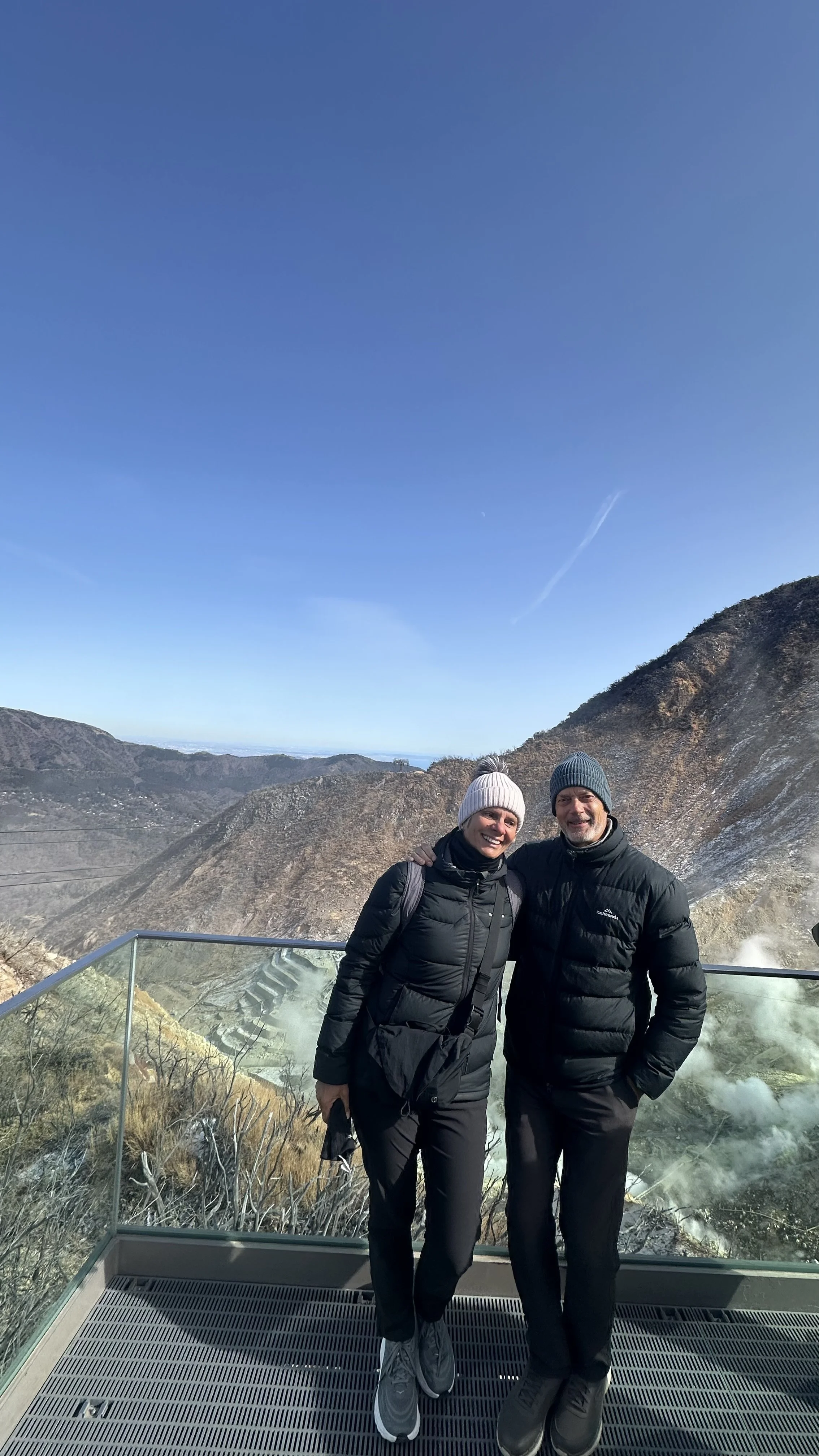
Leaving the city felt like stepping into Japan’s spiritual nervous system. The pace slowed. Nature took over.
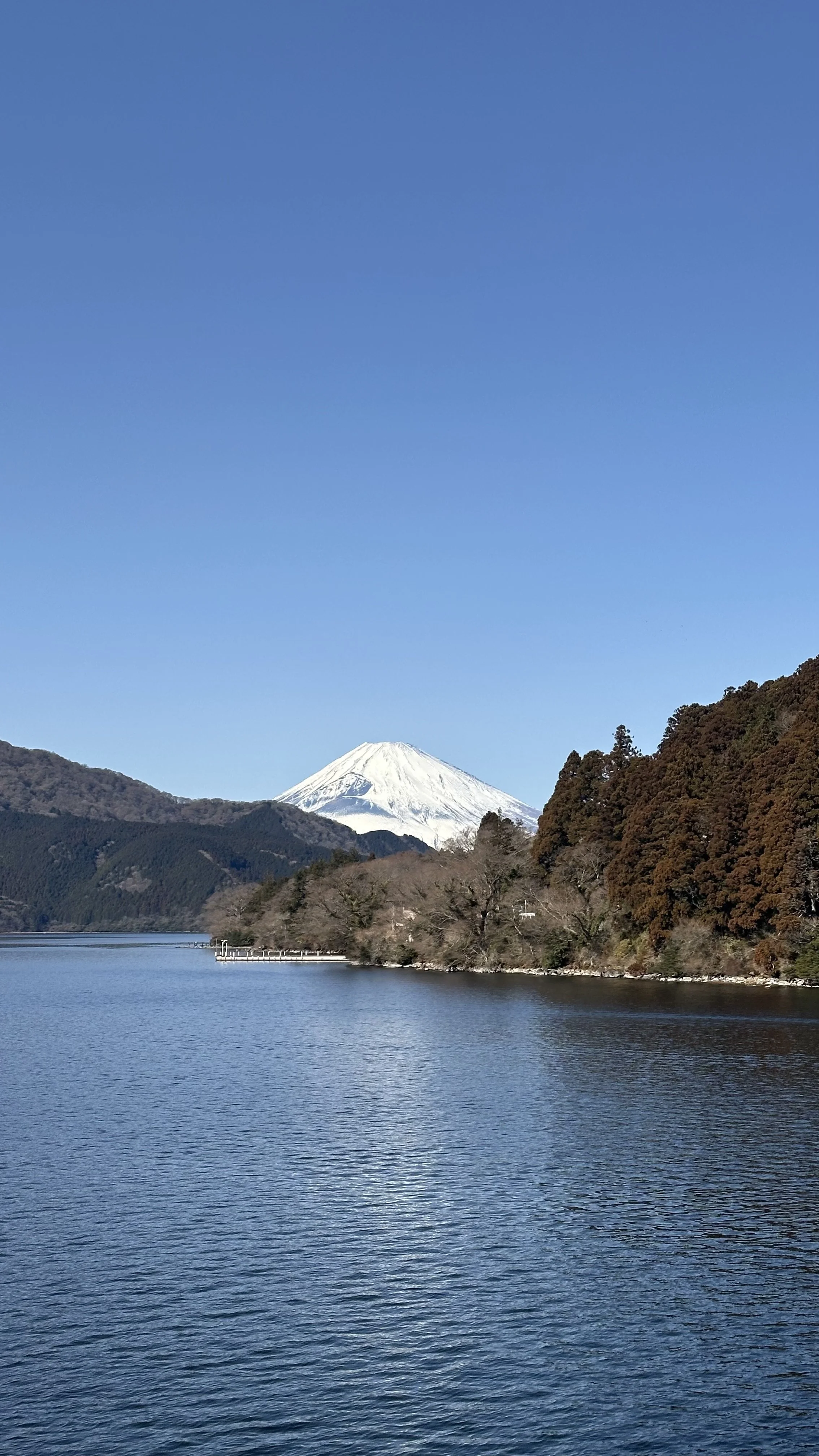
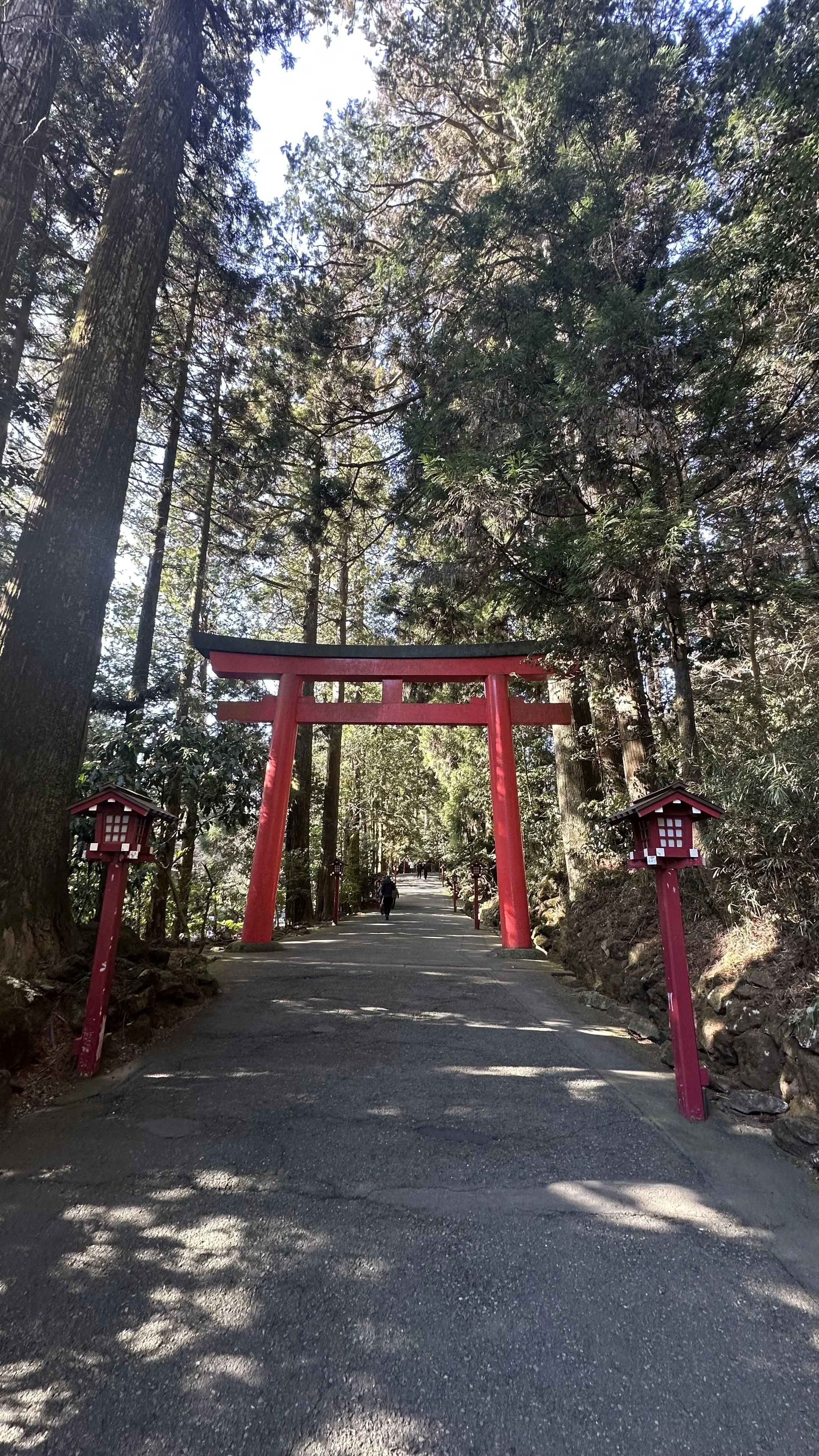
At Lake Ashi, formed by a volcanic eruption three thousands years ago, the red Torii gate rises from still water without explanation or spectacle. Mount Fuji isn’t just a mountain. Perfect, distant, revered rather than conquered. And when it appears at all, visible only on a limited number of clear days each year (70 in total including when we were there) it feels less like sightseeing and more like a quiet gift.
Small things that say everything
Children clean their classrooms every day. Employees clean their own desks.
There are almost no public bins, yet the streets are spotless.
People walk on the left and pass on the right following a yellow line in a middle of every street, a habit dating back to samurai carrying swords.
You never pour your own drink. Alcohol is shared, poured for others, received with two hands.
Curtains at restaurant entrances signal the shop is open and protect the guests privacy inside.
No one pressures you to buy. No one sells loudly.
There’s even a quiet economy built around social discomfort: resignation agencies to help people leave jobs politely, and rental families for people who need a stand-in relationship.
The film Family for Rent isn’t fiction. Our tour guide Manabu was married by a fake celebrant, because his fiancé wanted the experience and a white dress. The celebrant wasn’t real but the marriage still was.
That quiet calm I kept noticing
For years I’ve been fascinated by Stoicism, I’ve read the books and tried to live a life rooted in its calm acceptance and inner discipline. So, being in Japan made me wonder if what I was noticing in people was connected. After digging a little deeper, I learned it isn’t Stoicism at all, even though the outcome feels similar: the quiet calm visitors experience comes from Japanese values of harmony, endurance (gaman), and acceptance shaped by Buddhism and Confucianism, not Western philosophy.
Western Stoicism asks: “How do I remain unshaken inside?”
Japanese culture asks: “How do I move through the world without disturbing others?”
Similar calm. Very different roots.
Tokyo highlights…just a few
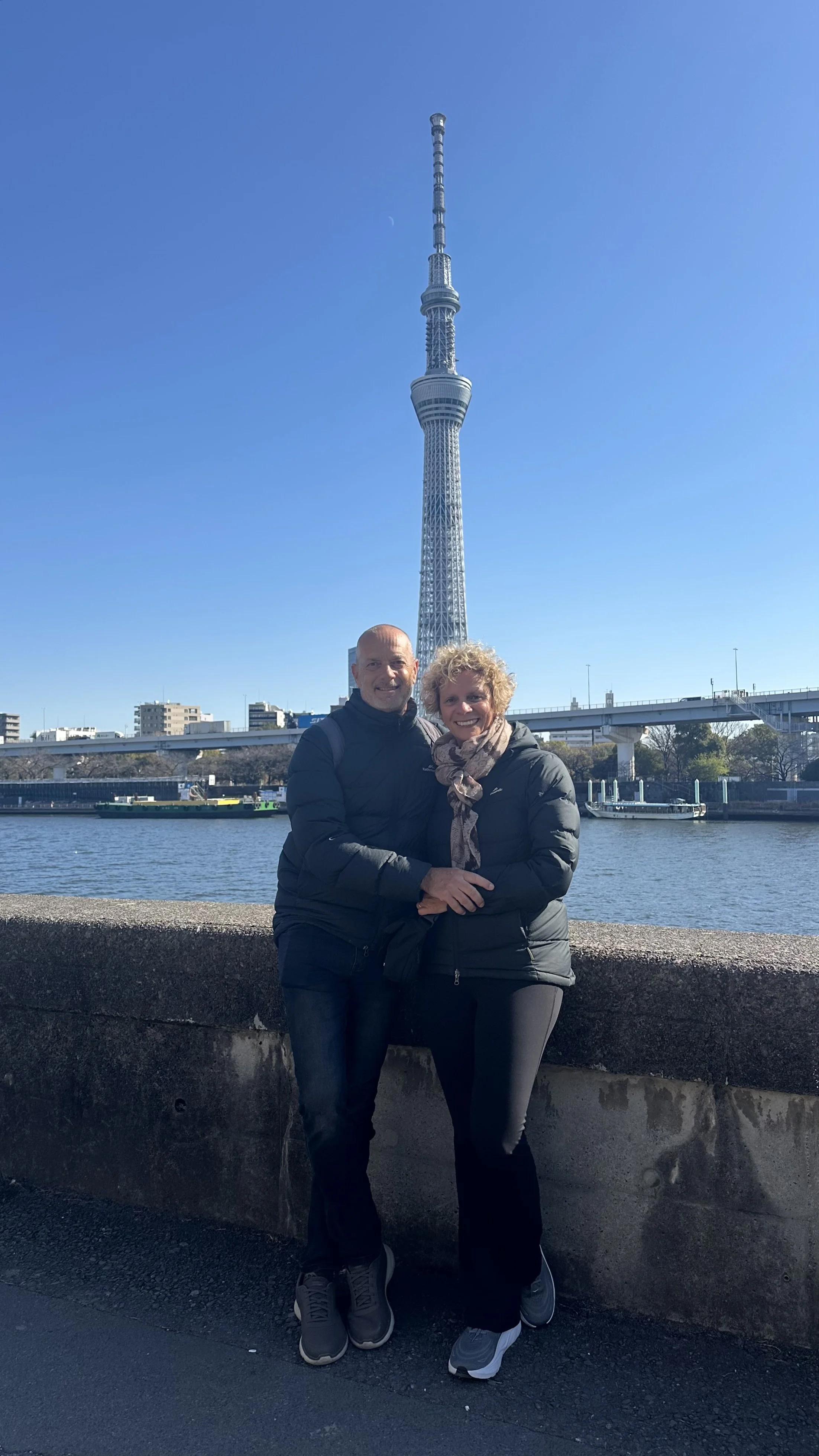
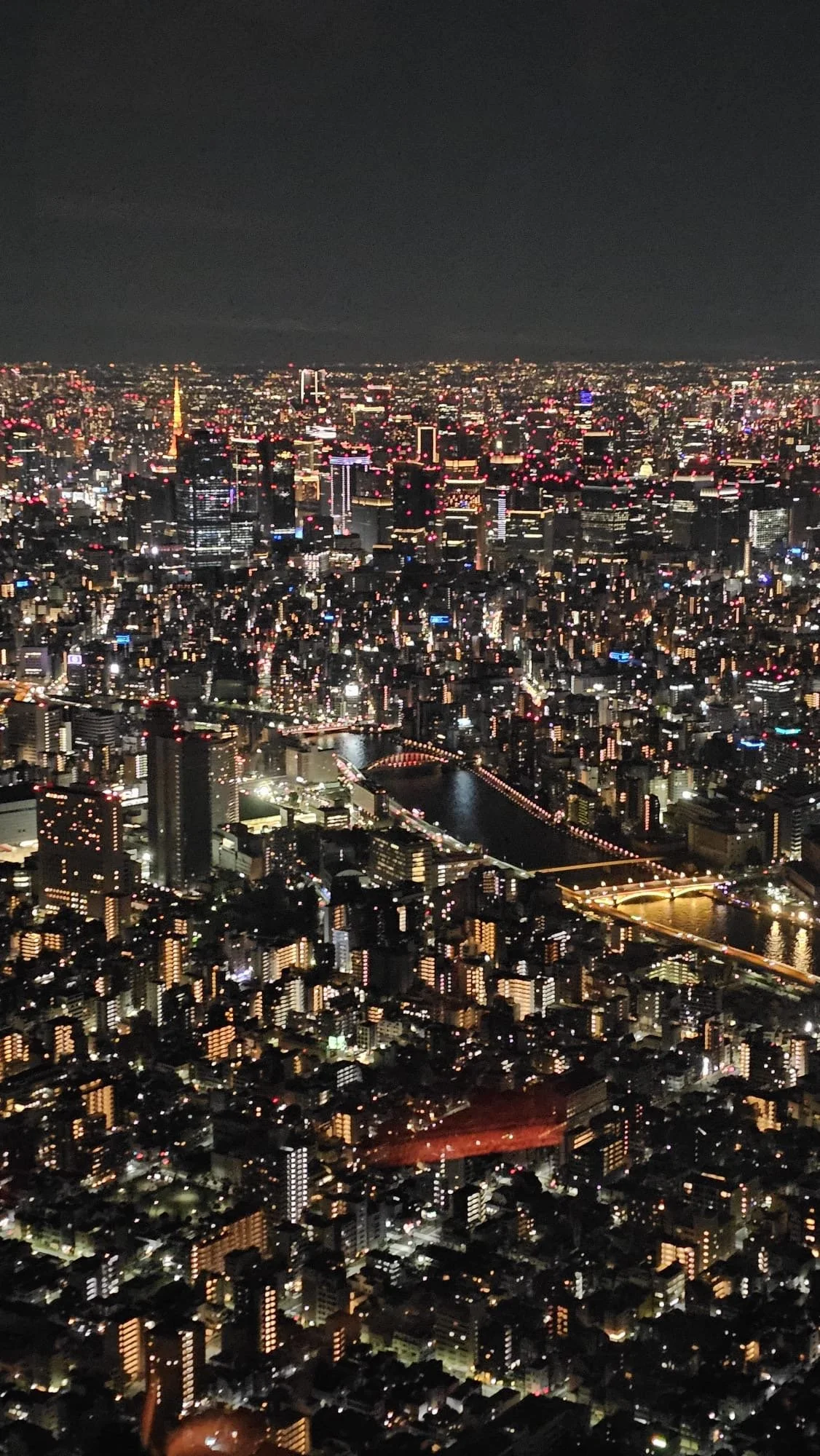
There were countless highlights too many to name, from a traditional Asakusa sumo show, offering insight into sumo wrestling, Japan’s ancient national sport rooted in Shinto ritual, to the sweeping views from the Tokyo Skytree, revealing the city’s immense scale.
Guided walking tours added depth, bringing Tokyo’s layered history, culture, shrines, and temples into focus.
At night, the city felt luminous and deeply alive and, for us, quietly surpassed even New York.
Clear blue skies and beautiful winter weather framed our days, with crisp mornings around 0°C and bright daytime temperatures reaching about 5°C.
I must add unforgettable food discoveries at every turn and the quiet brilliance of Japan’s hotel-to-hotel luggage service, which allowed us to travel light while our bags arrived seamlessly just after us.
One thought that stayed with me
Japan seems to have optimised its entire culture for survival in a dense, fragile environment and never fully turned that setting off.
And yet, even after writing all of this, I know it still kind of falls short. Being here has felt deeply personal in a way I can’t fully explain or write about. Japan isn’t something I’ve simply observed; it’s something I’ve felt - in the pauses, the silences, the restraint. It asks you to notice more, speak less, and accept that not everything meaningful needs to be explained.
Tomorrow, we travel on to Kyoto. A different rhythm, I suppose a different kind of history, and, I suspect, a different way of feeling this same country.