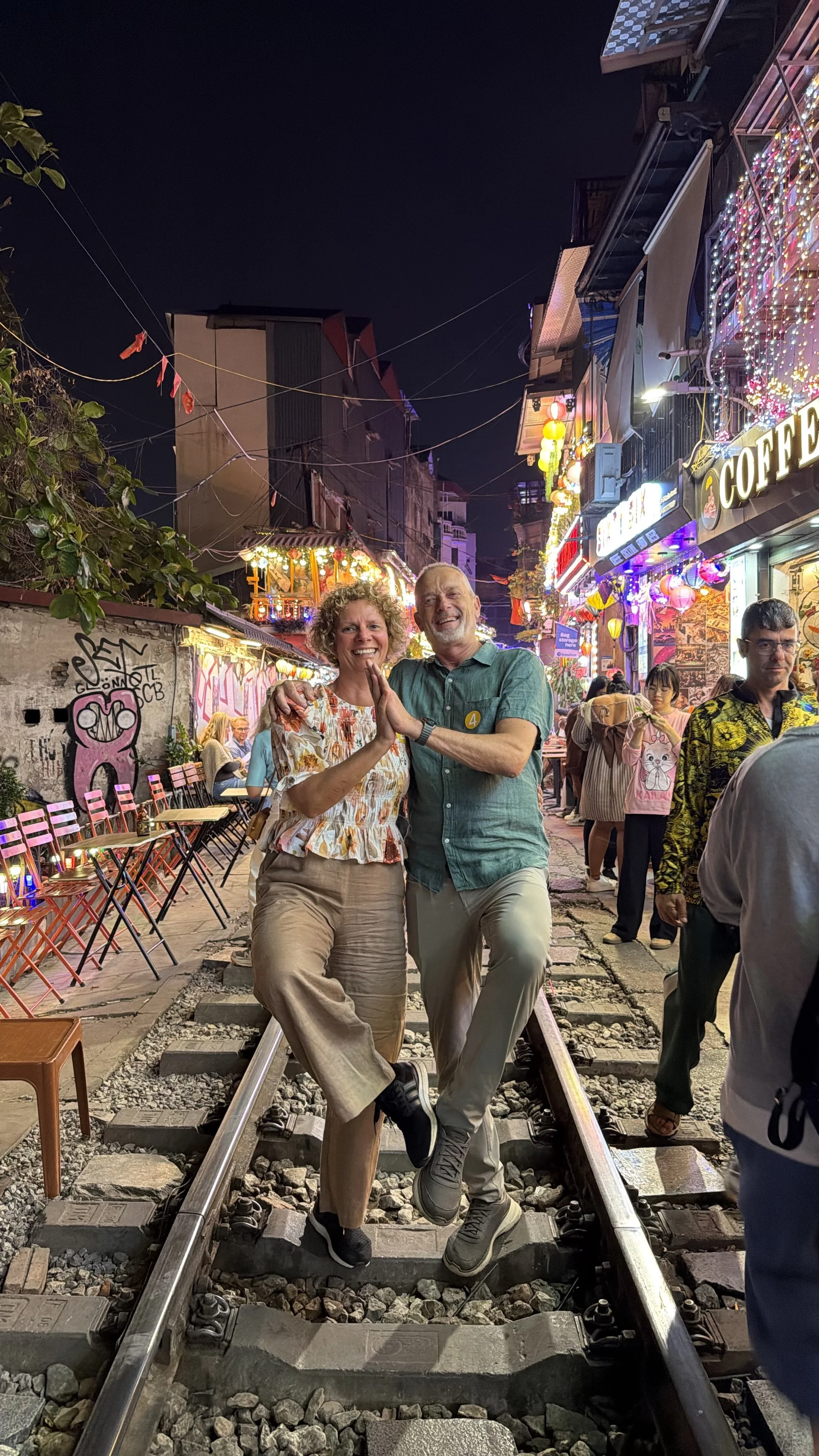
Hanoi is busy, noisy, colourful, chaotic and absolutely fascinating. Ancient traditions sit alongside rapid modern development, French colonial architecture mixes with communist symbolism, and millions of motorbikes somehow navigate streets that seem to have very few rules!
But what has struck us most is the people, their resilience, their pride in their country and their strong connection to family, history and tradition.
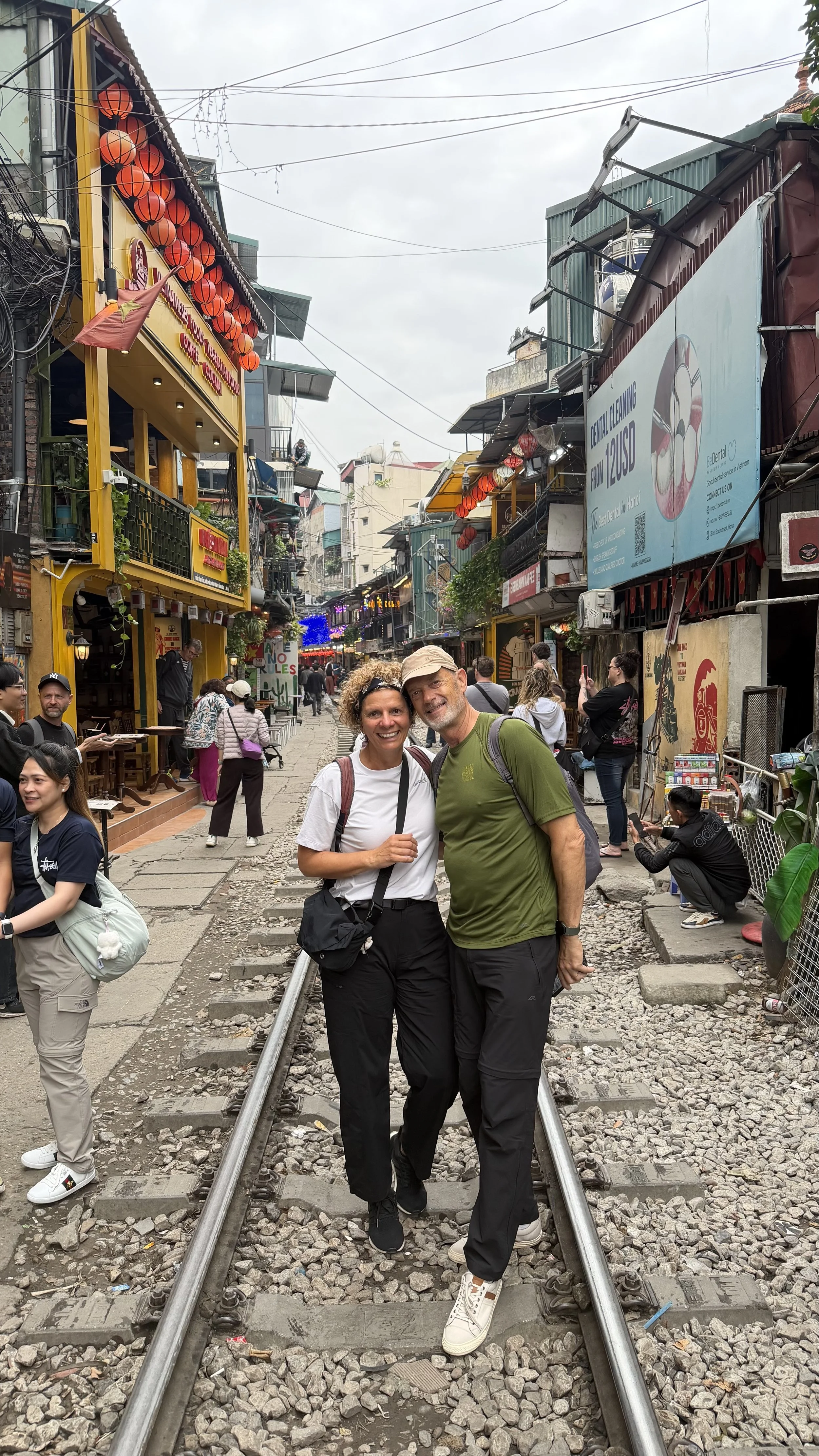
We had two days to explore Hanoi before our Intrepid adventure began, and we certainly made the most of it walking over 30,000 steps each day!
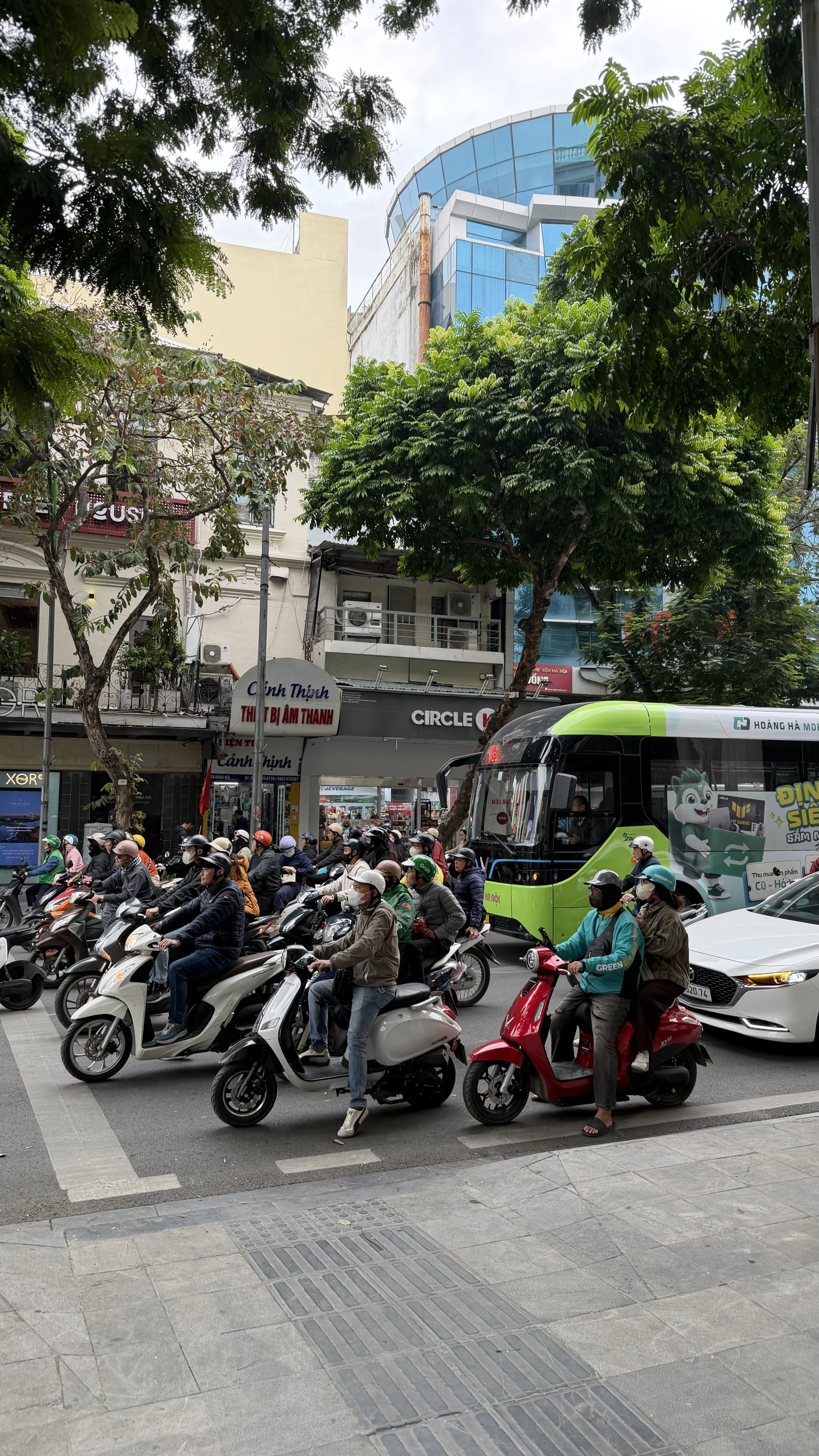
The first thing you notice is the traffic. There are motorbikes EVERYWHERE!
Hanoi has around nine million residents, with seven millions of motorbikes sharing the roads. Families squeeze onto them, sometimes with children sitting between adults, shopping bags hanging from the sides and the occasional delivery of what looks like half a household. More than two people or people carrying goods are considered illegal but yet very common.
Crossing the road is an experience in itself. You take a deep breath, walk steadily and trust that the traffic will move around you. Green traffic lights mean go, but so does yellow and red! It looks like complete chaos, but somehow there is an unspoken order to it. The secret seems to be patience and never making sudden movements! If in a group you cross the road like sticky rice. Together!!!
Even the footpaths aren’t necessarily for walking. They are full of parked motorbikes, food stalls and people going about their daily business.
Understanding Vietnam
Vietnam is a communist country with a single-party political system. The government plays a significant role in public services, education, healthcare and land ownership.
Vietnamese people incredibly proud of their country, their flag and, above all, their resilience.
Their history is extraordinary:
• Around 1,000 years of Chinese domination and influence.
• Almost 100 years of French colonial rule.
• The long struggle against French rule, followed by the devastating American War.
• Further conflict with China. Talking about their relationship with the Chinese people they say: we shake hands and kick legs under the table…
After numerous occupations and wars Vietnam was finally reunified in 1975.
It is difficult to comprehend how much this country has endured, yet here it is, moving forward at an incredible pace.
French influence is everywhere, particularly in the architecture. Wide boulevards, grand buildings and beautiful balconies wouldn’t look out of place in Paris.
We also noticed the many yellow buildings. Yellow is associated with victory and is commonly used on government buildings and important historical structures.
A different world within the city – Banana Island
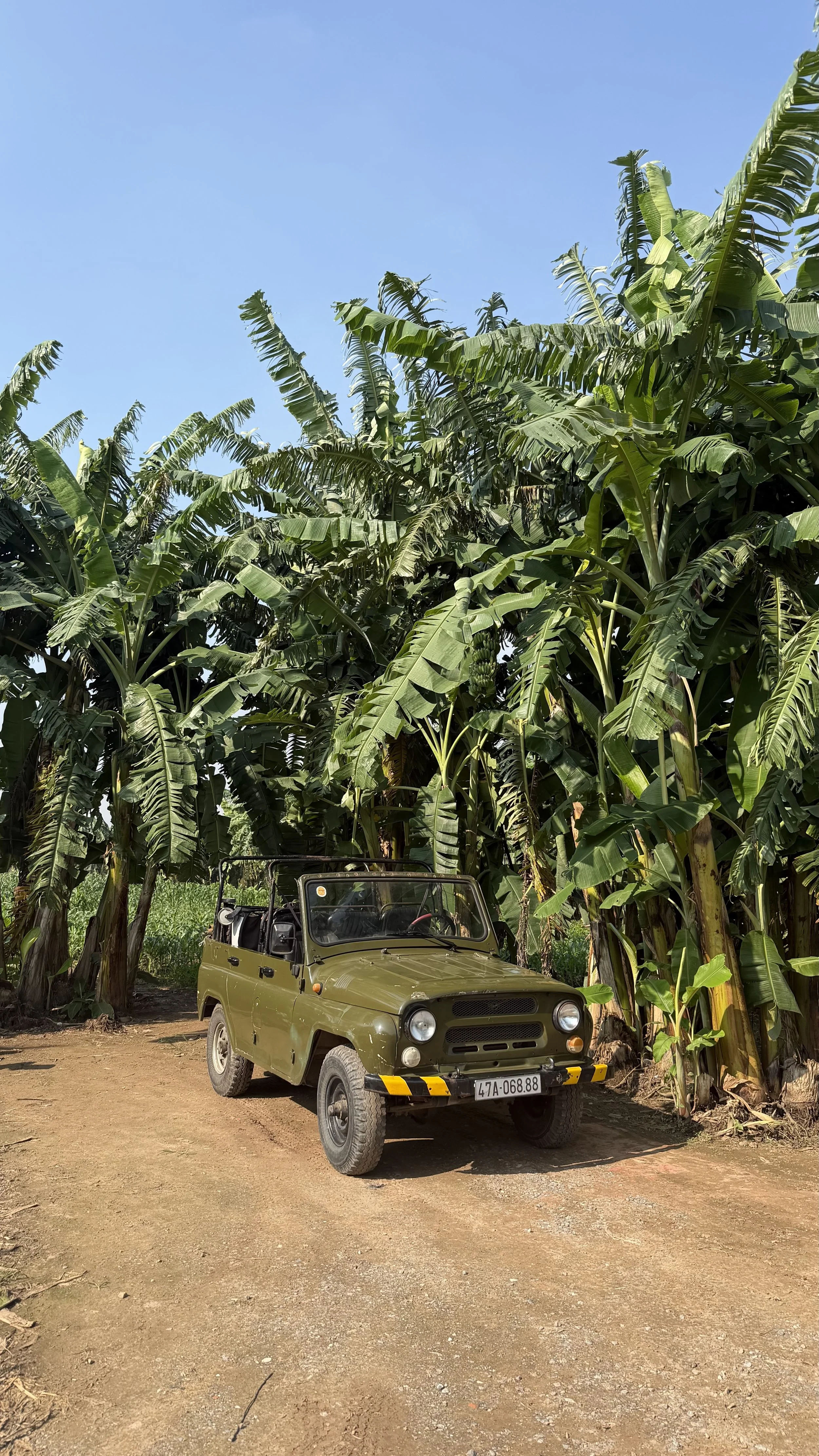
One of the experiences was visiting Banana Island in a military jeep. This is a small agricultural community within Hanoi.
Just a short distance from the busy city, life feels completely different. Around 400 people live here, growing vegetables, fruit and other produce on land beside the Red River.
The homes are simple, with much of everyday life happening in one space, cooking, sleeping and living. Land ownership and access are subject to government arrangements.
The farmers sell their produce at local markets or directly to restaurants looking for fresh ingredients.
A banana plant produces one bunch of fruit and is then cut down. A new plant takes around 9–15 months to grow and produce again.
Almost every part is useful, the fruit is eaten, the leaves wrap food, the flowers are cooked and added to salads and even the inside of the trunk can be eaten. They are small and so sweet.
The Red River itself begins in China and flows through Vietnam. Seasonal rain and water management make life challenging for communities living along its banks, particularly when water levels rise. But the banana trees are tall and survive floods each year.
Coffee, food and family
Coffee is serious business here!
Vietnam is one of the world’s largest coffee producers, second only to Brazil in many coffee export rankings.
Vietnamese coffee is famously strong, often served with condensed milk which makes it very sweet. Vietnamese egg coffee is my favourite. For our Dalmatian friends it’s “ kava sa žbaćenim jajem”.
We also learnt about Vietnamese hospitality. Tea is traditionally served when guests arrive, with the youngest member of the family often responsible for serving it. Peanuts sweet snacks are sometimes served alongside to balance the taste with the green tea. Believe it or not, the Vietnamese do not have locally made savoury snacks, not a single one, only the sweet snacks!
Family connections are incredibly important. There is a strong emphasis on respect, hospitality, family traditions and maintaining relationships. The respect for ancestors is unbelievable. They worship them at every opportunity and show respect to their elders and family members.
The famous Long Bien Bridge
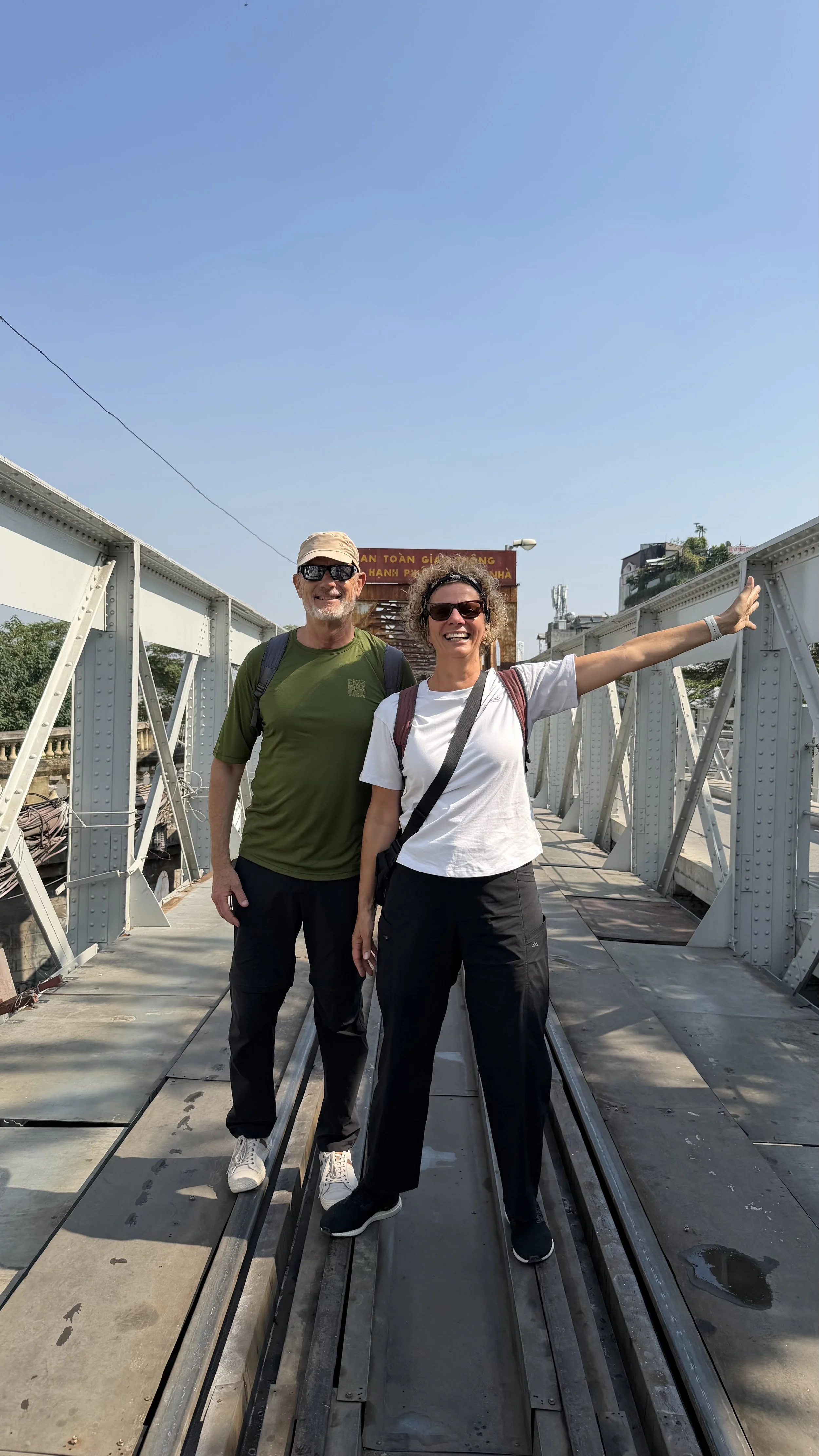
We visited the historic Long Bien Bridge, built by the French between 1898 and 1902.
It was the first bridge to cross the Red River and became an important connection for Hanoi.
At approximately 2.2 kilometres long, it has witnessed some of the most difficult periods in Vietnam’s history.
It survived both the French and American wars, although it was heavily bombed by American forces.
Standing there, looking at the old railway structure, it is hard not to think about everything it has witnessed.
Today it remains an important part of Hanoi’s transport network.
Life in modern Hanoi
There is a real outdoor fitness culture, people exercise in the parks and are very active.
The traditional diet, with plenty of vegetables, fruit and fresh ingredients, also contributes to Vietnam’s obesity rates, the lowest in the world.
We also noticed VinFast electric cars everywhere. This is Vietnam’s own car manufacturer, and there is considerable national pride in supporting a locally produced brand. Electric vehicles are becoming increasingly visible as the country tackles urban air pollution. The owner is the wealthiest real estate investor in Vietnam, described as their local Elon Musk.
Hanoi has its challenges, particularly traffic congestion and parking, but it is a city changing rapidly. I’d argue it’s a mini China, rapidly but quietly developing ahead of its time.
A little history beside the lake
We heard the story of John McCain, the American pilot who was shot down over Hanoi in 1967 and captured after parachuting into Trúc Bạch Lake.
He remained a prisoner of war until his release in 1973.
It is quite something to stand beside a peaceful lake and remember the events that took place there.
We also visited the area around West Lake, one of Hanoi’s most desirable residential locations, where property and land prices are particularly high.
An evening of Vietnamese food
We finished our first day with a food tour organised by the “ Delicious Monica.”
I could just about write a whole blog about the food. Absolute paradise of freshness, fresh herbs are served with everything, fruits are eaten all day long and the variety is huge.
For the food lovers, our introduction to Vietnamese food included:
Phở: An aromatic noodle soup made with flat rice noodles, herbs, and a slow-simmered broth, most commonly served with beef (phở bò) or chicken (phở gà).
Phở gà trộn / Mixed chicken pho A Hanoi favorite where flat rice noodles are tossed with tender poached chicken, fresh herbs, bean sprouts, roasted peanuts, and crispy shallots in a sweet-savory soy or fish sauce dressing, served with a small bowl of chicken broth on the side.
Bánh mì: A crisp, airy baguette stuffed with savory fillings like meats, pâté, pickled carrots and daikon, cucumber, cilantro, and chili.
Bún chả: A Hanoi specialty featuring smoky grilled pork patties and pork belly served with rice vermicelli, fresh herbs, pickled vegetables, and a sweet-savory fish sauce dipping broth.
Kem xôi (Sticky rice ice cream
A beloved Hanoi-style street treat combining cold vanilla or coconut ice cream with warm, fragrant pandan-infused sticky rice (xôi cốm or xôi lá dứa), dried coconut, and crushed peanuts.
Everything was so fresh, interesting and delicious. Vietnamese food is certainly going to be one of the highlights of this trip! I knew that would be case and so far I am super happy and my tummy is happy too!
We learnt a few chopstick rules too. Never tap your bowl with them, traditionally, this is associated with inviting spirits. And never leave your chopsticks standing upright in a bowl of rice. It resembles incense offerings made to remember the dead.
A simple little cultural detail, but one worth remembering!
We also met a fellow traveller Nemanja from Vienna who originally came from Teslić. It happens to us each time we embark on a new adventure. A little reminder of how small the world can be!
Day 2 – History, beliefs, resilience and a surprise discovery about ourselves
If Day 1 was about understanding everyday life in Hanoi, Day 2 was about understanding its history, traditions and identity.
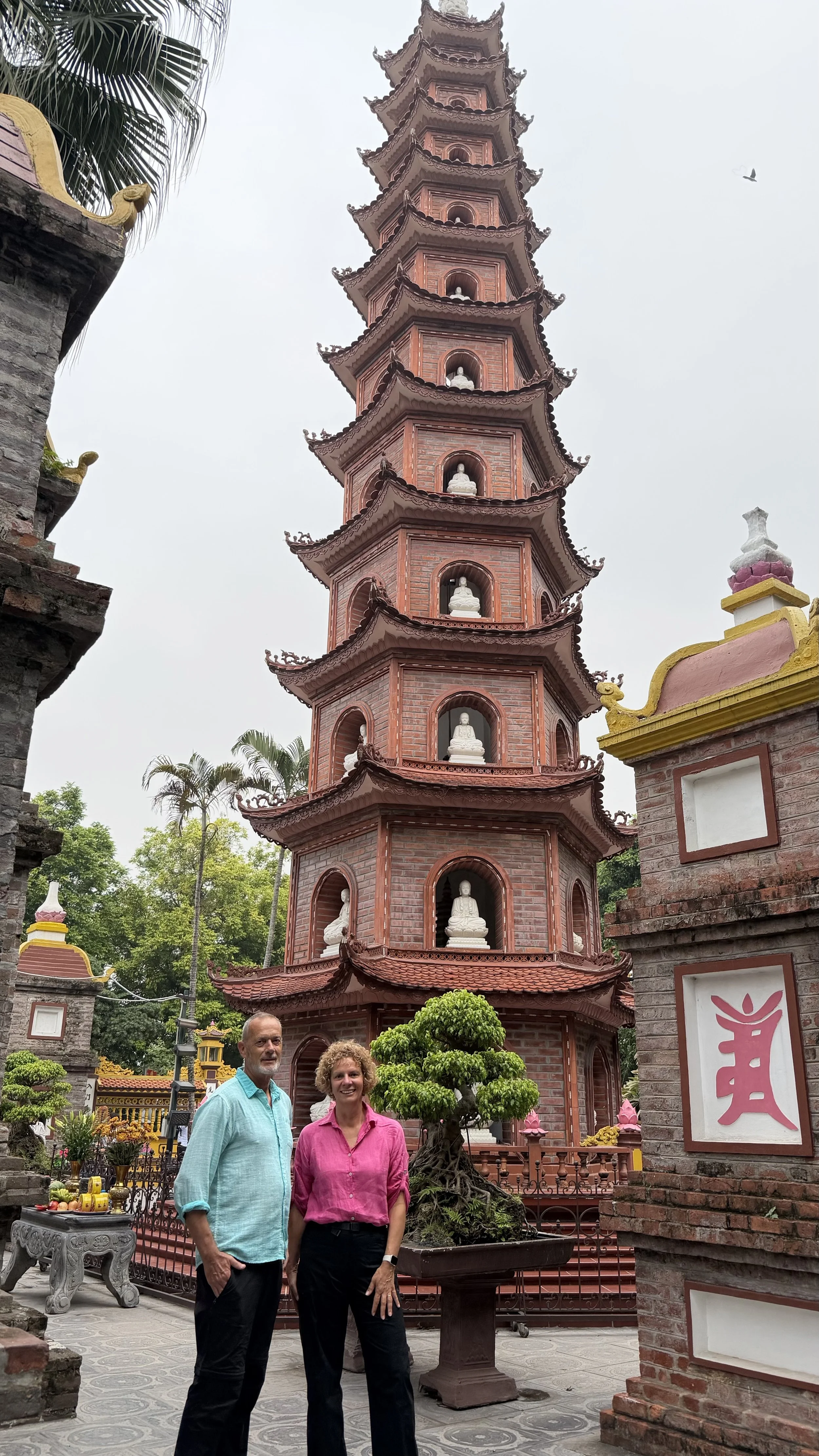
We started with the beautiful West Lake and Tran Quoc Pagoda, one of Vietnam’s oldest Buddhist temples dated to the sixth century.
Buddhism and Vietnamese beliefs
Standing on a small peninsula on Hanoi’s West Lake, Trấn Quốc Pagoda (Chùa Trấn Quốc) is the city’s oldest Buddhist temple and its striking 11-story red brick stupa is impossible to miss. Known as the Lotus Tower (Bảo Tháp Lục Độ Đài Sen), this 15-meter monument isn’t just an architectural centrepiece; its design is a visual roadmap to enlightenment.
In Mahāyāna Buddhism, the 11 levels represent the spiritual journey toward awakening:
• Levels 1–10 (The Bodhisattva Stages): Each tier symbolizes a stage of perfecting key virtues, such as generosity, patience, discipline, and wisdom on the path to helping all beings.
• Level 11 (Buddhahood): The final tier represents the summit of the path, where all illusions fall away and complete enlightenment is achieved.
Religion in Vietnam is interesting. Many people don’t formally identify with an organised religion, yet traditional spiritual beliefs are deeply embedded in everyday life. Only 27% declare themselves as religious.
Buddhism is the largest religious tradition, followed by Catholicism, with many people practising ancestor worship rather than religion.
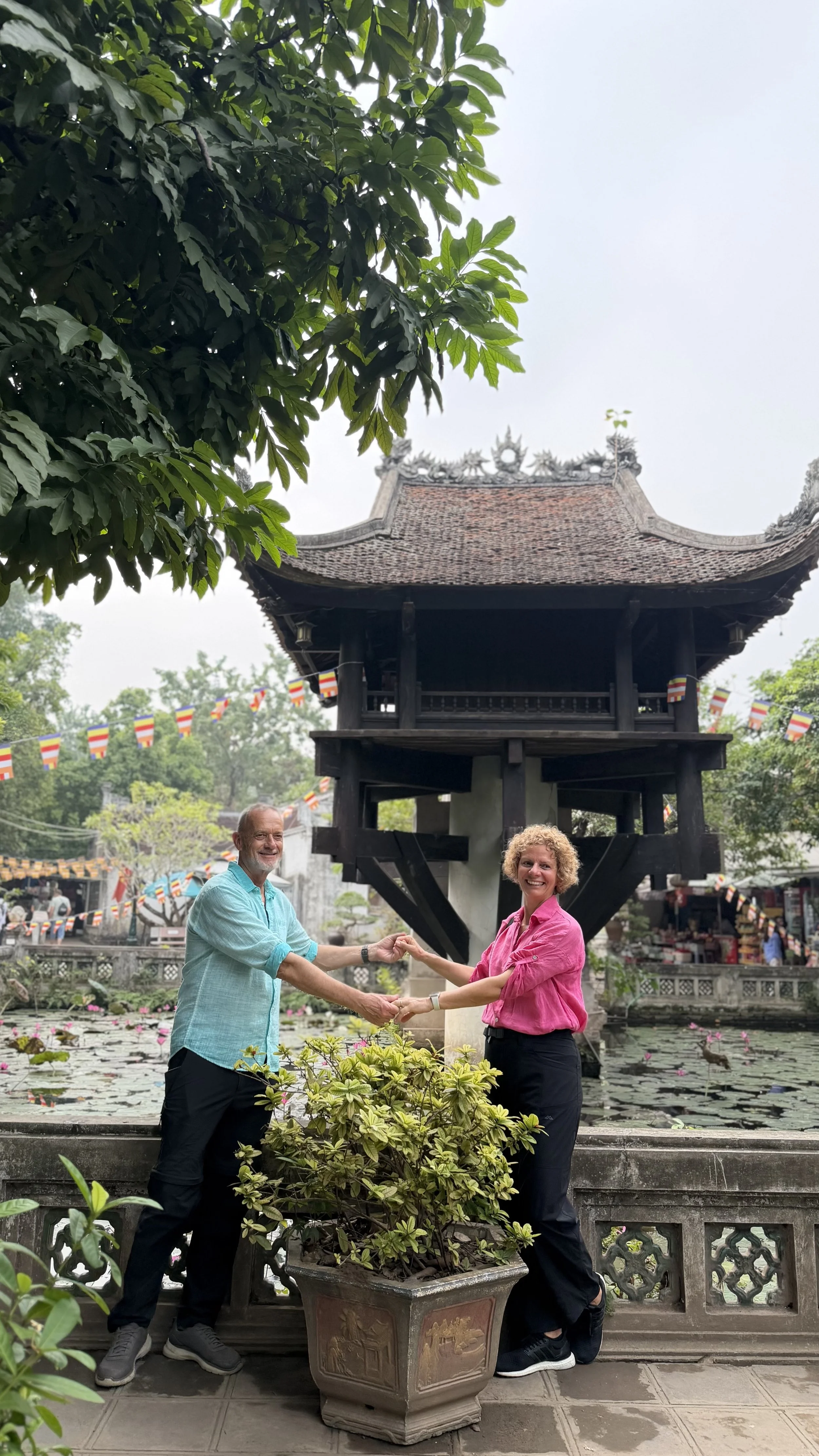
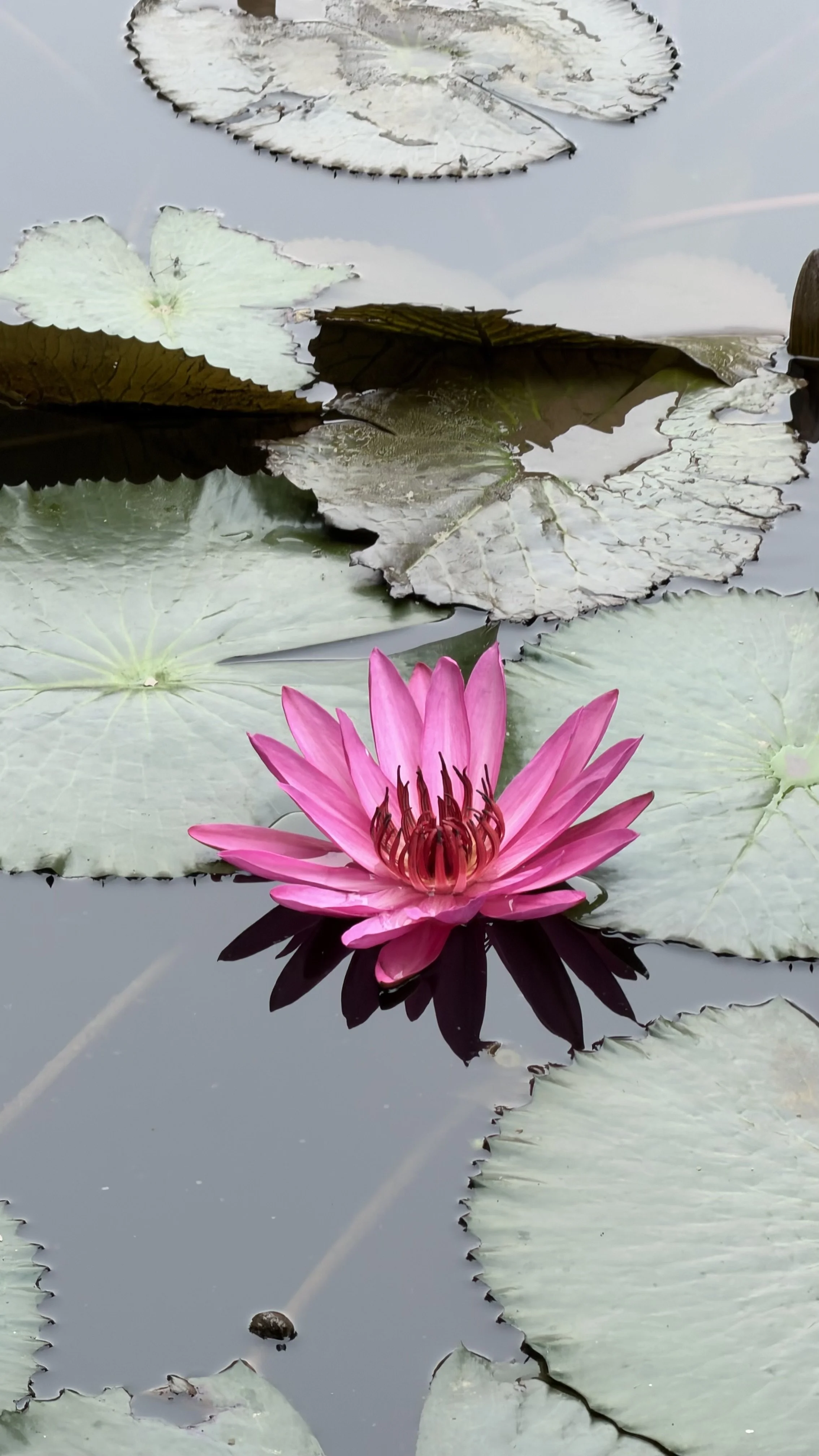
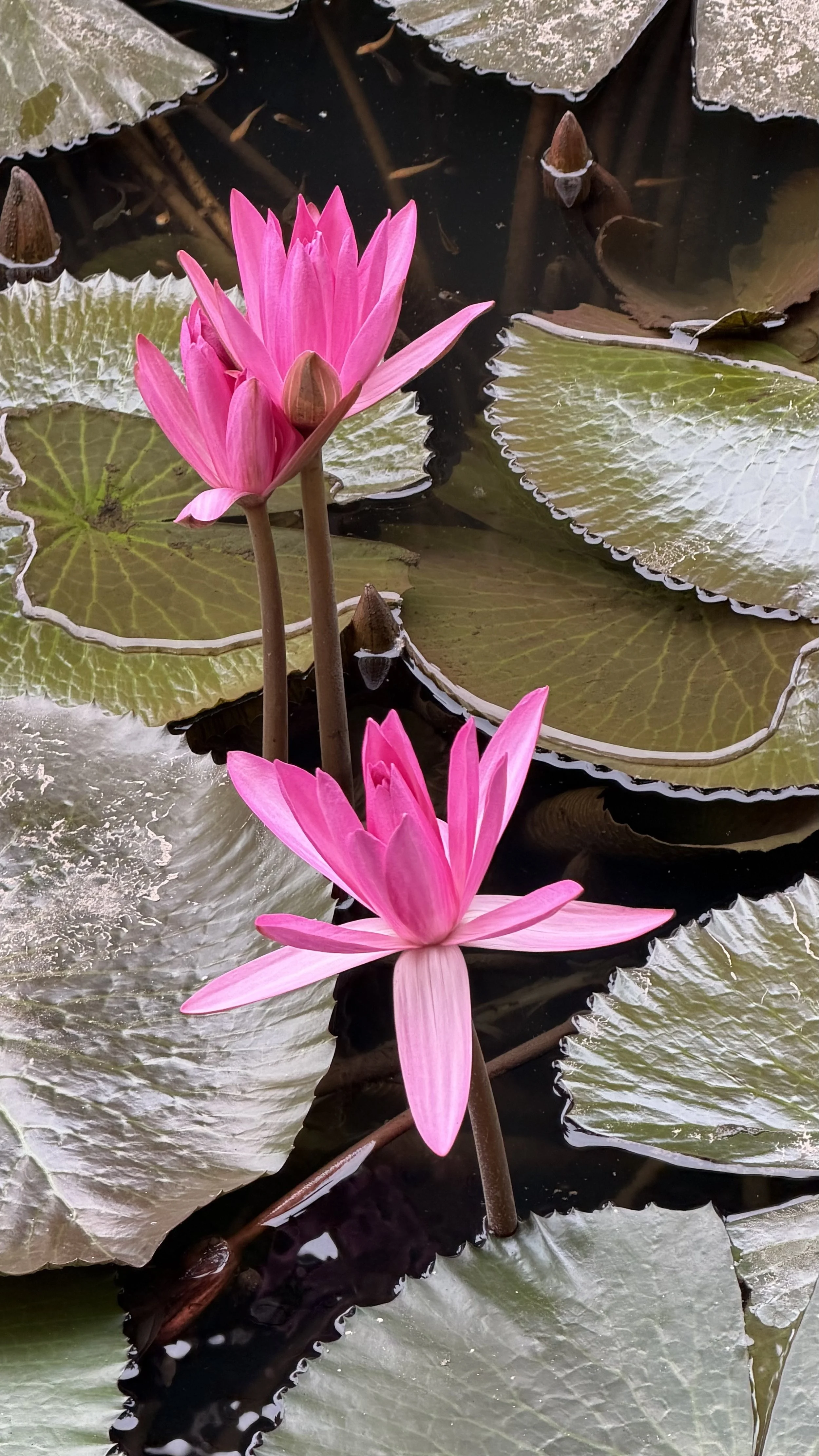
Lotus flowers are particularly important in Buddhism and are Vietnam’s national flower, symbolising purity and enlightenment.
The pagodas are beautiful, with their incense, statues, traditional architecture and peaceful courtyards.
We learnt about the importance of ancestors and the belief that those who have died remain connected to the living.
On particular days of the lunar calendar, families burn offerings of paper money and other symbolic items.
The idea is that whatever we need in this life, our ancestors may also need in theirs.
The money isn’t real, of course, but the gesture is.
The number three is considered lucky, while four is traditionally associated with death and often avoided.
They celebrate birthdays only three times in their lifetime - at one month of age, at one year and at the 80th, if you are lucky to live that long. The western approach to birthdays doesn’t exist, every other birthday is a moment to thank the parents for bringing us to this life and show gratitude.
Our own little lunar calendar discovery!
This was where things got a little personal!
Vietnamese people use the lunar calendar, birth years and the five elements – Wood, Fire, Earth, Metal and Water – to understand personality, relationships and even marriage compatibility.
Apparently, some Vietnamese families traditionally check whether a couple’s elements are compatible before marriage.
Naturally, we started wondering about ourselves! A little research later, we discovered something entertaining.
I’m a Wood Dragon (December 1964)
My lunar birthday is the 23rd day of the 11th lunar month. The Dragon is associated with ambition, energy, independence and big ideas. Wood adds creativity, growth and a desire to explore.
Nebojsa is a Metal Ox (January 1962)
And here’s the interesting bit. Although he was born in January 1962, the Vietnamese Lunar New Year hadn’t yet arrived. He actually belongs to the 1961 lunar year, making him a Metal Ox. His lunar birthday is the 29th day of the 11th lunar month.
The Ox is associated with patience, reliability, determination and hard work. Metal adds strength, discipline and a practical approach.
Suddenly, we had a rather entertaining description of how we travel together!
I’m the Wood Dragon – the visionary dreamer who wants to explore every street, try the local food, discover another destination and occasionally take an unplanned detour.
Nebojsa is the Metal Ox – the steady one who likes to know where we’re going, keep things organised and make sure we actually get there!
There is even an astrological twist. In the traditional five-element cycle, Metal controls or shapes Wood. Apparently, our different approaches can occasionally create a little friction! Anyone who knows us well or has travelled with us might recognise that!
I’m not sure astrology can explain a marriage, and after all these years together we probably don’t need a lunar calendar to tell us that we have different personalities.
But I really like the interpretation.
I bring the curiosity, the ideas and the desire for adventure. Nebojsa brings the patience, dependability and grounding that help turn those ideas into wonderful memories. Rings true to me!
Ho Chi Minh – the man behind modern Vietnam
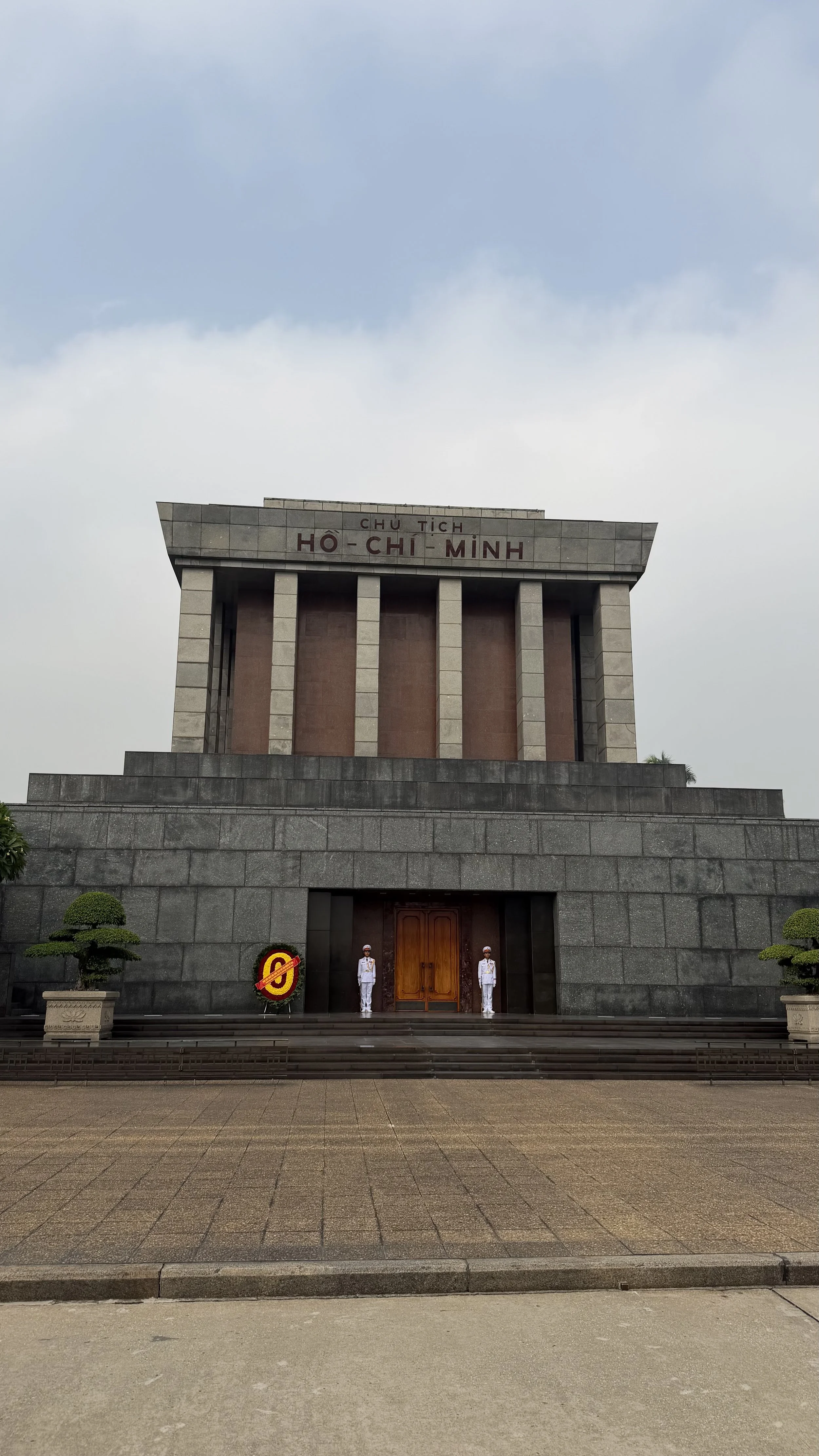
One of the most important figures in Vietnamese history is Hồ Chí Minh.
He is revered as the national hero and uncle who led the country’s struggle for independence.
His life was extraordinary. At just 21, he left Vietnam to seek support for independence. He worked in different jobs, travelled extensively and used different names along the way. He eventually returned after around 30 years abroad.
On 2 September 1945, he declared Vietnam’s independence in Ba Đình Square, establishing the Democratic Republic of Vietnam. We stood at that square and felt that pride of justice winning over the battles.
But independence was not the end of the struggle.
The French returned, followed by the conflict that eventually involved the United States. The country was divided into North and South Vietnam, and the war devastated the population.
We visited the mausoleum grounds, his home and saw the photos of Lenin and Karl Marx on the wall in his office room. We were the only two people in the group who knew who were these people in the pictures!
Hồ Chí Minh died in 1969 and never lived to see the reunification of his country in 1975.
He never married or had children and devoted his life to the independence movement.
His image appears on every Vietnamese banknote, while the reverse sides feature important places and stories from the country’s history.
An unexpected connection to home - Tito and Ho Chi Minh
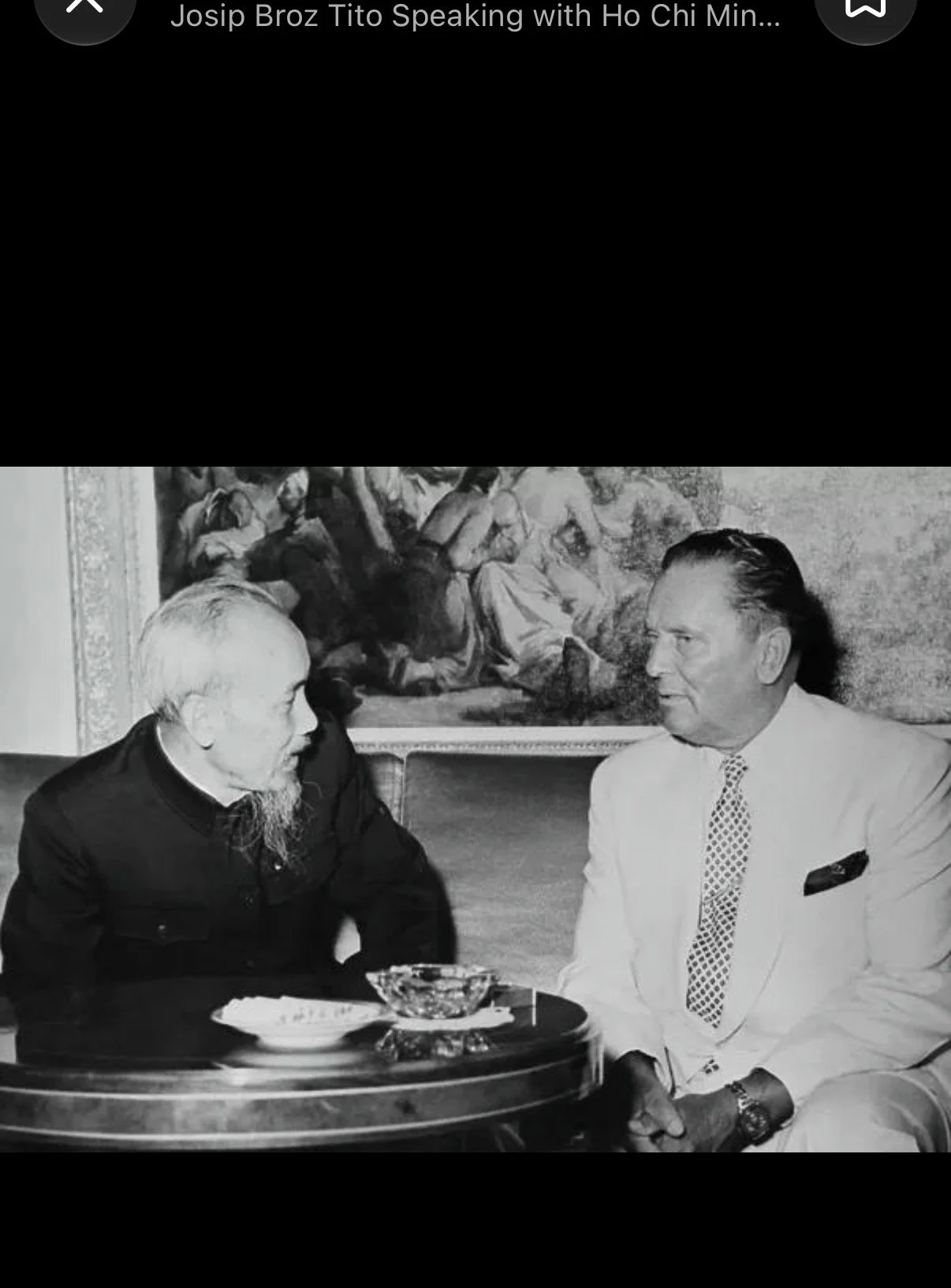
Now my curiosity got me thinking and we discovered that Hồ Chí Minh and Josip Broz Tito met in Belgrade in August 1957, when Hồ Chí Minh visited Yugoslavia.
Two revolutionary leaders, both of whom had fought against foreign domination, meeting in our part of the world.
Their political relationship hadn’t always been straightforward. Tito’s split with Stalin in 1948 had created tensions with much of the communist world, but relations improved during the 1950s.
By 1957, they were meeting and discussing international politics and socialism.
I love discovering these unexpected historical connections while travelling.
You can be on the other side of the world and suddenly find a connection to home. That little socialist girl at heart woke up again feeling happy.
The Temple of Literature – Vietnam’s first university
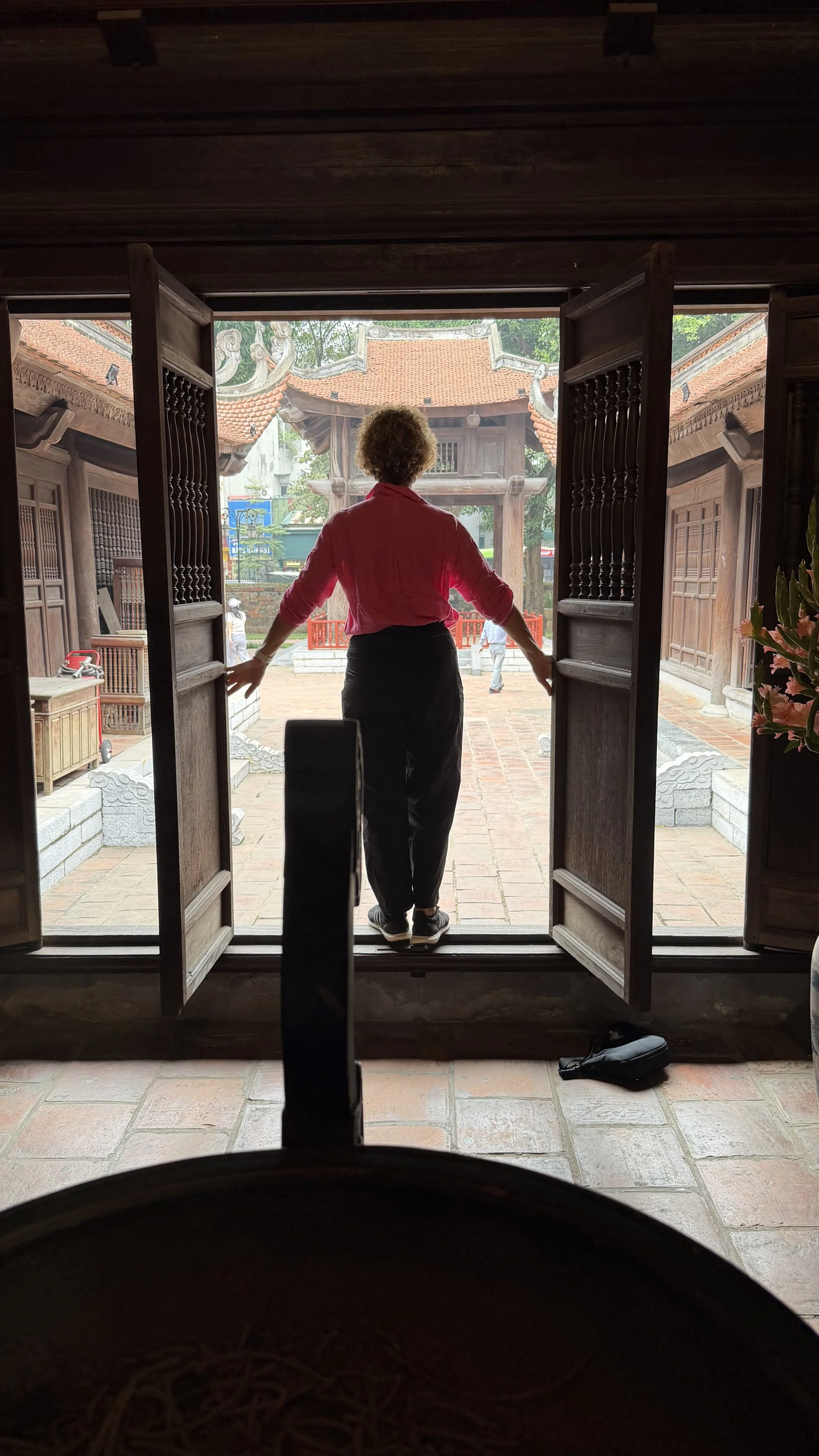
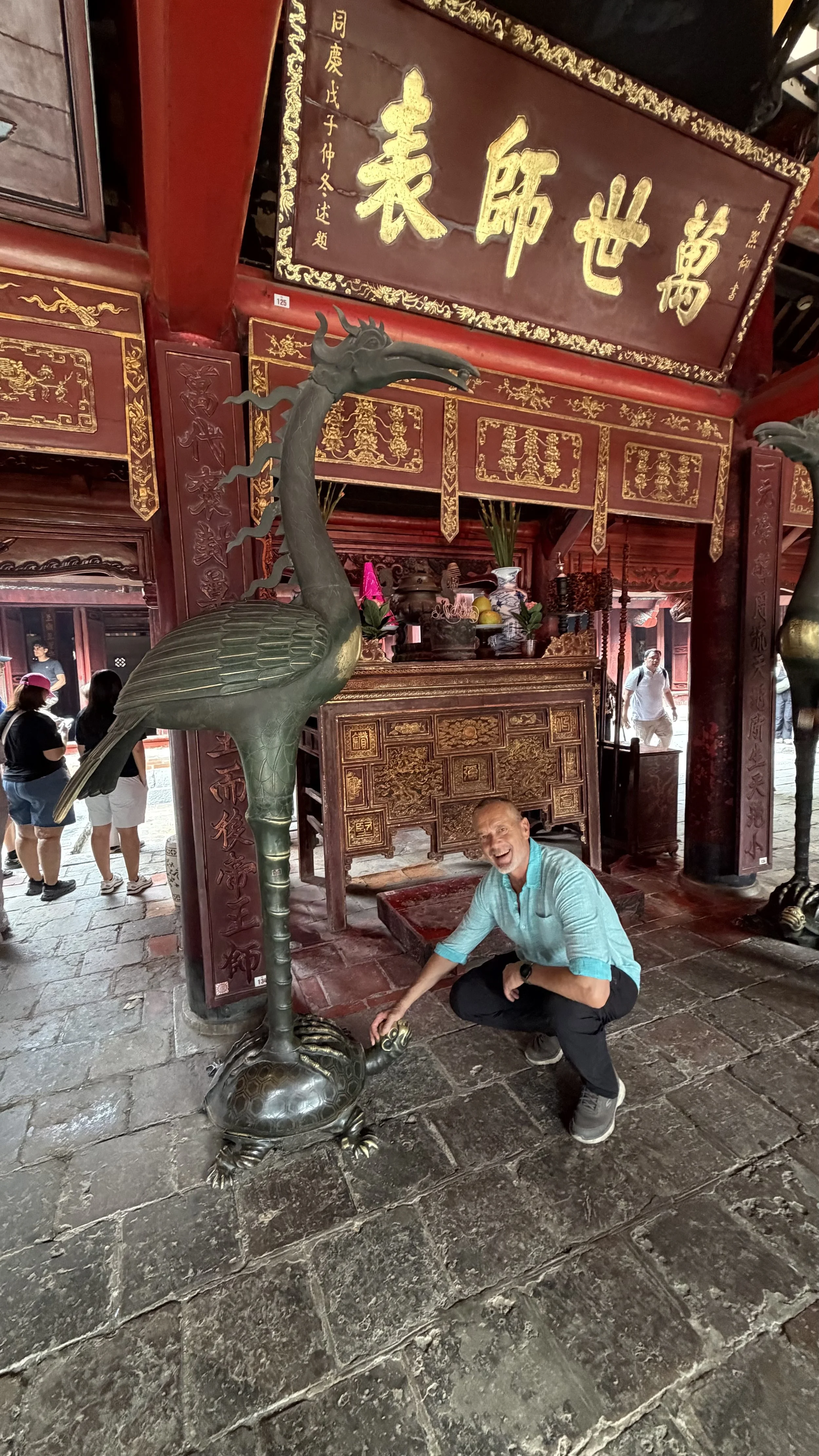
We then visited the Temple of Literature, one of Hanoi’s most important historical sites.
Originally built in 1070 and dedicated to Confucius, it later became Vietnam’s first national university.
For centuries, young men studied here and prepared for demanding imperial examinations.
Education was highly valued, although access was historically restricted to men and those meeting particular requirements.
The complex has beautiful courtyards, traditional architecture and gardens.
One of the most recognisable features is the collection of stone turtles carrying steles engraved with the names of successful graduates. The turtle represents longevity and wisdom.
Education remains extremely important in Vietnam today. Children compete hard academically and public schools and hospitals are highly regarded, even more so than the private ones.
Hoa Lo Prison – the Hanoi Hilton
This was our next stop, and the most difficult experience of the two days.
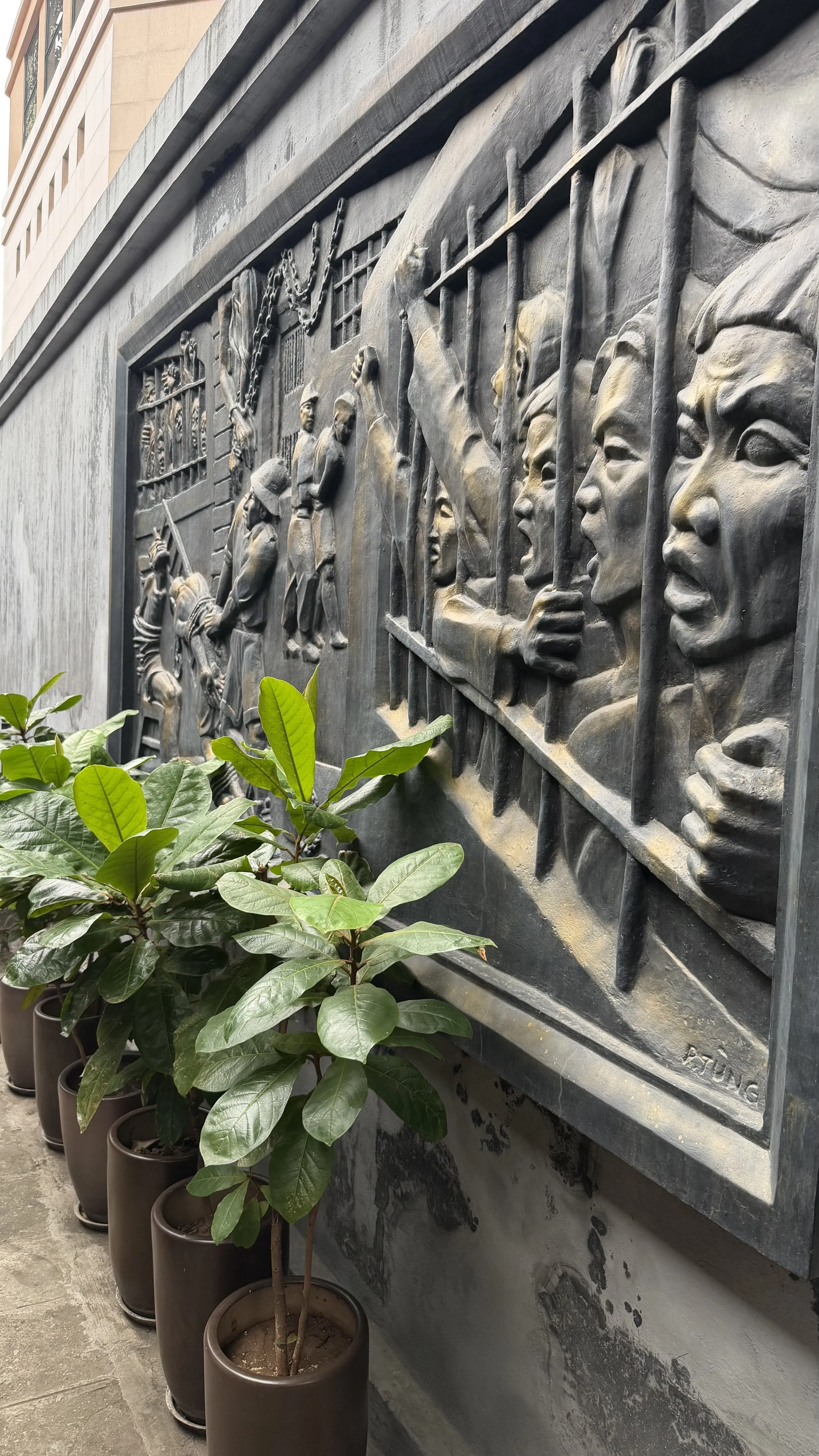
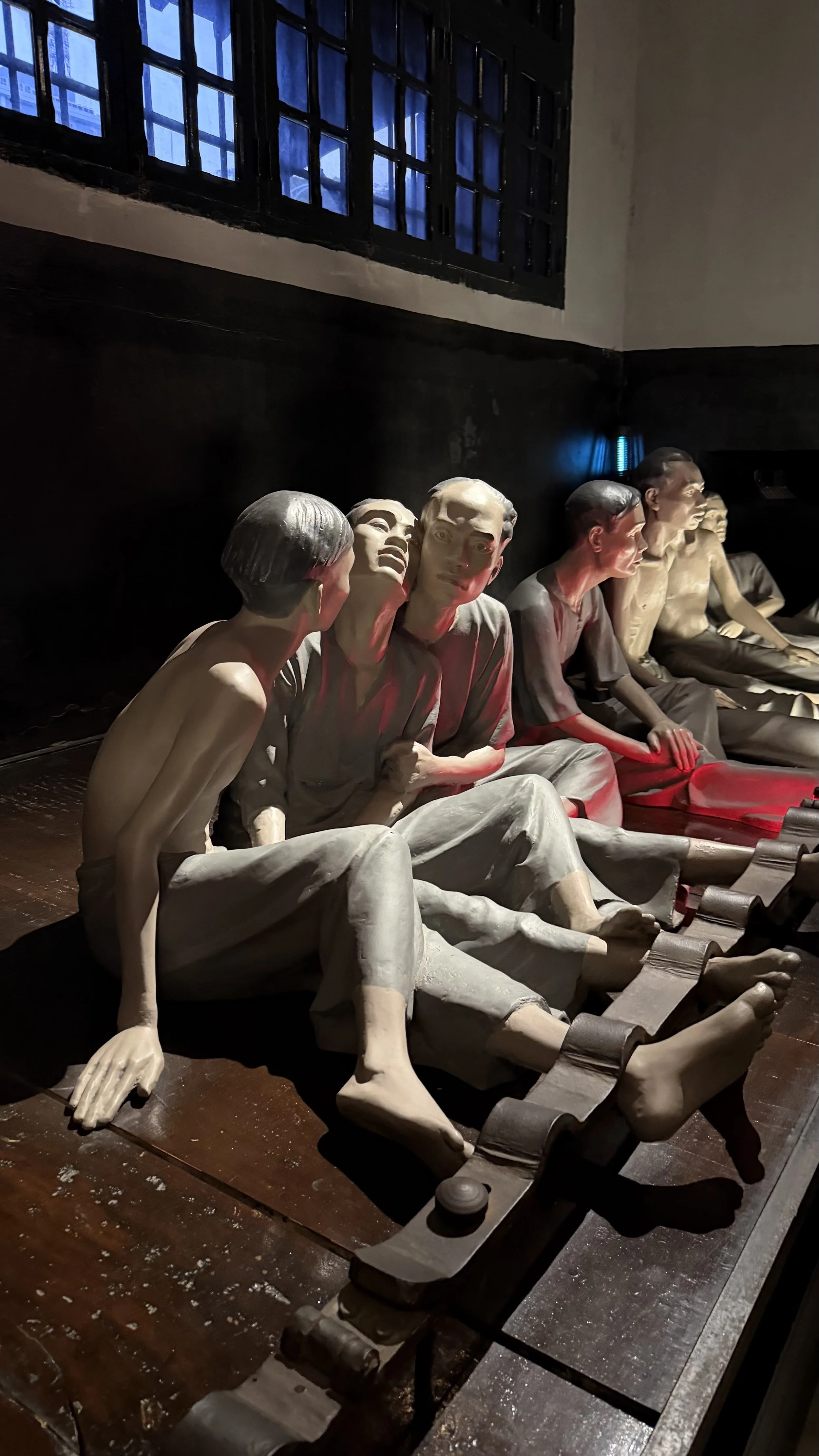
Hoa Lo Prison was built by the French in 1896 to hold Vietnamese political prisoners resisting colonial rule.
Walking through the old cells was a sombre and deeply upsetting experience. I found myself reading every single word and subtly crying in my own heart.
The overcrowding, harsh conditions, lack of sanitation and cruelty inflicted on prisoners were confronting. You can read about history, but standing inside the actual prison brings a very different perspective.
Later, during the American War, the prison was used to hold American prisoners of war, including pilots. They nicknamed it the Hanoi Hilton because of the treatment the Vietnamese military gave them during the imprisonment. They treated them with respect and dignity despite what happened.
But what stayed with me most wasn’t the nickname or the historical detail. It was the human cost of war.
As we walked through the prison, I couldn’t help thinking about what is happening in the world today. We are still witnessing wars, destruction, imprisonment, displacement and ordinary people paying the price for decisions made by those in power.
Different countries, different generations, but sadly some of the same suffering.
It is difficult to understand how humanity continues to repeat these experiences.
We left feeling rather quiet. Some places are fascinating because of their beauty or history. Others leave you with a weight that stays with you long after you walk out.
This was definitely one of the latter.
The Vietnamese Women’s Museum – extraordinary women
A much more uplifting, although equally thought-provoking, visit was the Vietnamese Women’s Museum.
It tells the story of women throughout Vietnamese history, from traditional family life to their extraordinary contribution during wartime and their roles in modern society.
Women were not simply supporting characters in the country’s history. During the wars, many fought on the front lines, transported supplies, worked in the fields and kept families and communities functioning.
We heard stories of women carrying enormous quantities of rice across difficult terrain to supply soldiers. Some received the title of Heroic Mother, an official recognition given to women who made extraordinary sacrifices for their country.
One particularly heartbreaking story described a woman who lost her husband, 11 children and 4 grandchildren during the war.
It is almost impossible to comprehend such a loss.
The museum also explores traditional dress, marriage customs, family structures and Vietnam’s 54 recognised ethnic groups.
We learnt about the traditional creation legend of the Vietnamese people: the story of a dragon and a fairy who had 100 children. Fifty followed their father to the sea and 50 stayed with their mother on the land.
A lovely explanation of the diversity and identity of the Vietnamese people.
There were also fascinating details about family customs. Traditionally, the family name follows the father’s line, and a married woman joins her husband’s family.
The first birthday is particularly important. Families traditionally offer a child three objects to choose from, symbolising possible future paths: a book for education, money for business or a sword for leadership.
Interestingly, remembering the dates of loved ones who have died is often considered more important than celebrating birthdays.
There is a strong emphasis on honouring those who came before.
By the end of our two days, I felt we had learnt far more than we could have expected in such a short time.
Vietnam is a country shaped by centuries of resistance, occupation and sacrifice. Its people are understandably proud of their independence, their flag and their history.
Yet modern Hanoi is also full of ambition, entrepreneurial energy and a determination to move forward.
What I will remember most is the contrast: the crazy traffic and peaceful pagodas, the simplicity of Banana Island and the rapid development of the city, the incredible food and hospitality, and the extraordinary resilience of its people.
We arrived knowing very little about Vietnam beyond what we had read and heard.
We are leaving these first two days with a much greater appreciation of its people, its history and its culture.
And a new understanding of our own lunar compatibility which may or may not help with the next travel itinerary negotiation!
How lucky we are to be able to travel, meet people, ask questions, discover unexpected connections and see the world through someone else’s eyes.
Two days down. Our Intrepid Vietnam and Cambodia adventure is about to begin. And if Hanoi is anything to go by, we’re in for a wonderful journey.