Rovinj blog #2
Did you know music is connecting the places we call home?
I have to share this incredible and recent discovery 💡 !
Did you know music is connecting the places we call home?
I have to share this incredible and recent discovery 💡 !
Three hours of googling, searching for facts we connected the dots….thank you Petra for kickstarting this, the facts blew our minds and left us speechless.
The true story goes like this …
The city of Pula put on a free Goran Karan concert at the Pula’s Fortress known as Kaštel.
Let me briefly introduce you to Goran Karan…

Goran Karan is a Croatian vocalist. He specializes in songs influenced by Dalmatian folk music and is known for his powerful and refined tenor voice. Karan's collaboration with composer Zdenko Runjić led to some of his most acclaimed work, which won him several awards. He is well known across Europe and has performed all around the world.
Here is a link to one of his performances that highlights his talents:
O sole mio https://g.co/kgs/ttsyT6
So, we all know Nebojsa loves to sing and play the guitar. I love Goran’s songs and through that combination our kids got to learn a number of his songs listening to Dad practicing and Mum singing along.
We attended the concert in Pula the other day, had a great time. Petra recorded a number of videos and posted them on IG. Goran’s official site picked up a few and posted on his official IG site. Petra got notified, felt excited and started searching more about his life, music, etc.
She came across a fact that Goran did a collaboration with New Zealand band ‘The Shades’ to honour the life of a young 15 years old girl that lost her life in Zagreb 2020 Earthquake.
Here is a link to the video featuring The Shades singing alongside Goran Karan with the music video shot in New Zealand at Karekare beach and Croatia! Crazy right!?
https://youtu.be/-cqJccaL2EE?si=dHLCq45fwjhEDEk1
Here is a link to the article about the collaboration between Croatian singer and the Tongan-Samoan quartet from New Zealand.
The search about The Shades continued and we then discovered they performed a month ago in Vela Luka at the remembrance concert celebrating Oliver Dragojević music.
Let me quickly introduce you to Oliver:

Oliver Dragojević was a Croatian singer and composer, who was considered one of the most enduring musical stars and cultural icons in Croatia with a discography that spanned nearly five decades. His style blended traditional klapa melodies of Dalmatia, a coastal region in native Croatia, with jazz motifs wrapped up in a modern production.
Oliver died five years ago, yet every year his birth town is filled with thousands of people to celebrate his life. There is no one like him that I know of who has touched so many people across many generations with his love for Dalmatia and his music that connects people.
Performing at this annual event in Vela Luka is a massive deal, and it’s incredible to see that The Shades performed in Croatian alongside some of the top Croatian artists of today! Their pronunciation is second to none, left us speechless, and how cool that NZ got a shout out, all the way over here in Croatia!
If you want to watch The Shades perform at the tribute concert here is the link and fast forward to 1.51.50!
https://www.youtube.com/live/9aBobVPR6tU?si=D2Vlq5hLK8QB63wl
Let me now introduce you to The Shades ….

An upcoming quartet of beautiful Tongan and Samoan voices, fusing their classical training with genre’s such as Musical Theatre, Opera, Gospel and popular music. The Shades consist of two Samoans Samson Setu and Ipu Laga’aia and two Tongans Taka Vuni and Manase Latu, who together create a strong, well-blended sound with a feel for humour and a love of laughter. Born and raised in Auckland, each have come from humble pacific homes where music was in every facet of their upbringing. Though music and singing came very natural to them, they have had years of training to shape them into the artists they are today. Between the four, they have been awarded various scholarships, chosen for prestigious programs, such as Dame Kiri programme, and have excelled in many competitions.
And then there is more….
A number of years ago Nebojsa joined a klapa band and sang a-cappella with two out of the four The Shades performers. They performed together the song Ti Samo Ti that features in their album Gratitude! Can you believe it?!
https://www.youtube.com/watch?v=Q_c26QKFLwQ&list=OLAK5uy_lKs8tI4i_PgFPzwMla6yUTJJlbbt4J8o4&index=5
(A-cappella music is a performance by a singer or a singing group without instrumental accompaniment, or a piece intended to be performed in this fashion).
My reflection
The world is seriously such a small place and music with its magical power connects people to their roots and tells life stories about happiness, love, sadness, joy…
A fun fact!
Through all this discovery work it came to our attention that a Māori Kapa Haka group also performed to the Croatian President in a private function only a couple of weeks ago too!
I feel if we continue googling we will find out we are all related to one another!
And to finish this blog, a funny story about Petra mixing the Croatian and English language:
Croatian websites end in .hr ( HR = Hrvatska = Croatia). Well, a funny part is that she pronounces .hr as English pronunciation of Human Resources - clearly her job is ingrained into her mind!
Finally, seeing Petra singing along makes our hearts melt, a kiwi born girl genuinely enjoys being here and connecting to her roots❤️.
P.S. I recommend clicking on View original post below to view the blog on the website. This way you can also leave a comment should you wish.
GORAN KARAN CONCERT PULA 2023
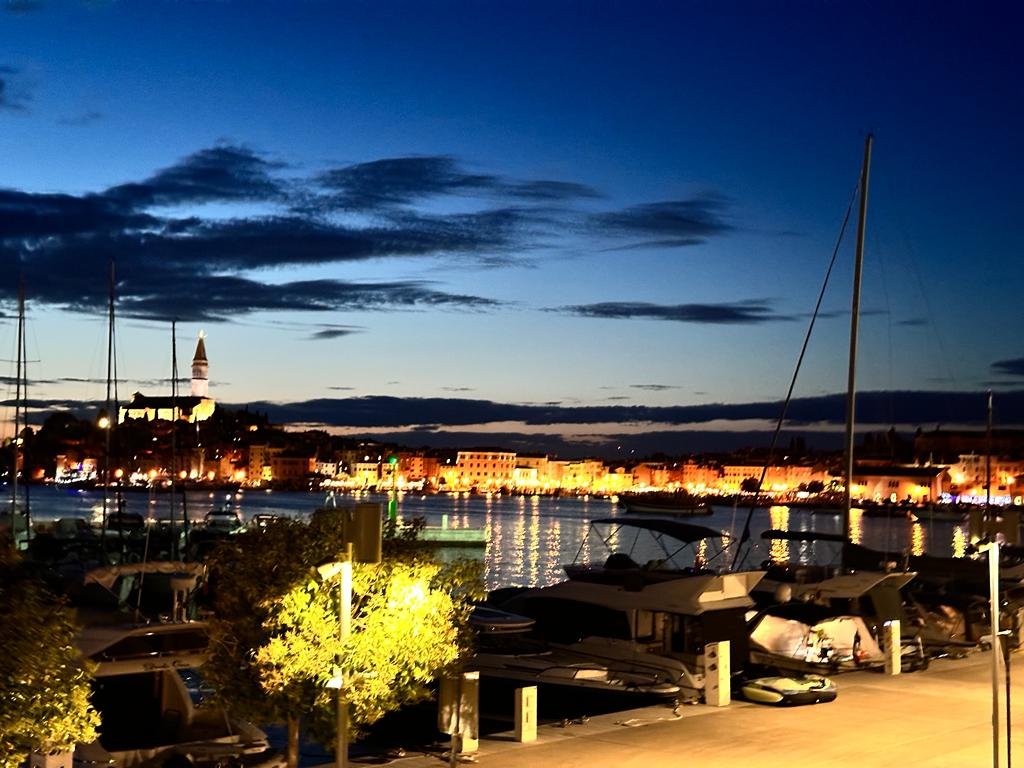
Rovinj Our paradise -Il nostro paradiso
After 8 weeks on the road, living like nomads and living the best life, we left Palma de Mallorca and flew via Stuttgart to Zagreb. Arriving to Stuttgart was a very first cold and rainy day we’ve seen since leaving New Zealand.
After 8 weeks on the road living like nomads and loving every bit, we left Palma de Mallorca and flew via Stuttgart to Zagreb. Arriving to Stuttgart was a very first cold and rainy day we’ve seen since leaving New Zealand.
It was only 11 degrees, with miserable rain. We were freezing! Everyone in the airport building was wearing long sleeves and winter coats in August and two of us in our shorts and summery tops! Luckily Nebojsa had long sleeves in his hand luggage, a true life saver!
Zagreb weather was a bit better, no rain, but still too cold for the middle of a summer, very unusual.
It was Sunday and everything was closed in Croatia. We kind of knew they introduced this new law that says shops must be closed on Sundays but still found it strange. We could see tourists wondering around looking to buy some street food (us included), but no luck. I don’t think this new law is doing any favours to Croatian businesses, but well, who am I to judge politics?!
We got to our car and drove to the first petrol station to buy junk food and carried on to Rovinj.
Petra and Chase have already arrived a couple of days earlier, the apartment looked spotless, thanks guys! After unpacking we went straight to bed.
In the morning we caught up on mutual travel stories and three weeks later we still haven’t had a chance to sit down and properly chat and see each other’s photos.
You’ll wonder how is that possible? Three weeks of holiday in your own place and no time for this?!
Let me tell you, it’s easy!
Rovinj has a phenomenon of simply not having enough hours in a day to do everything you’d like to do! It sounds crazy but it’s true!
This is how it goes:
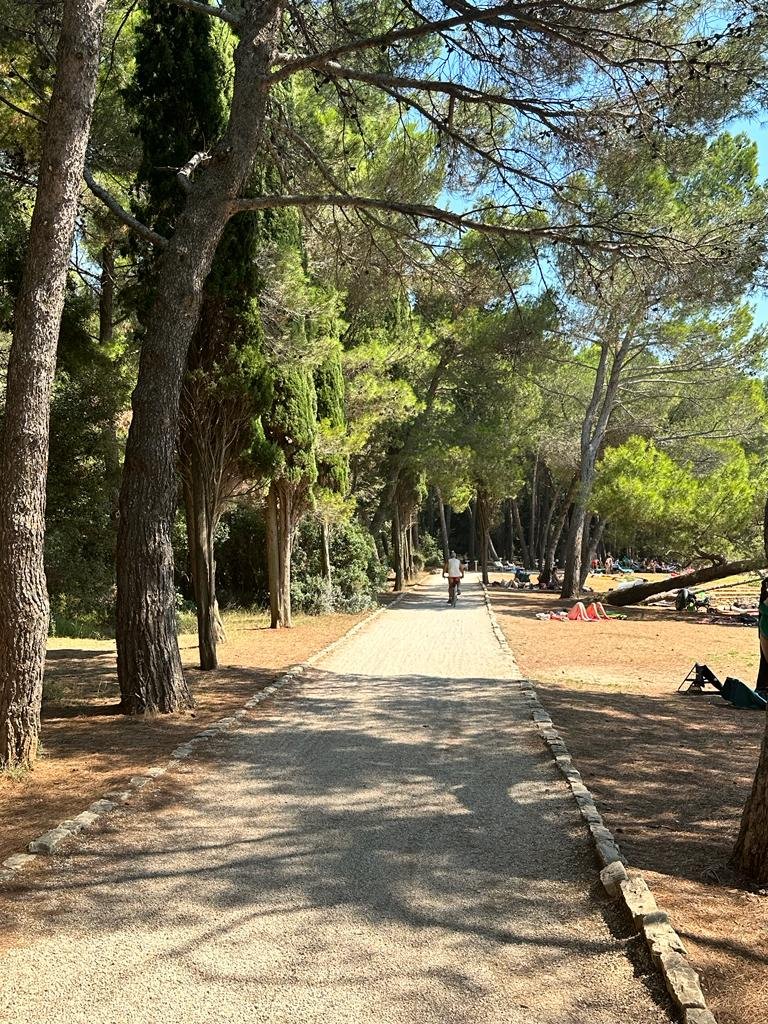
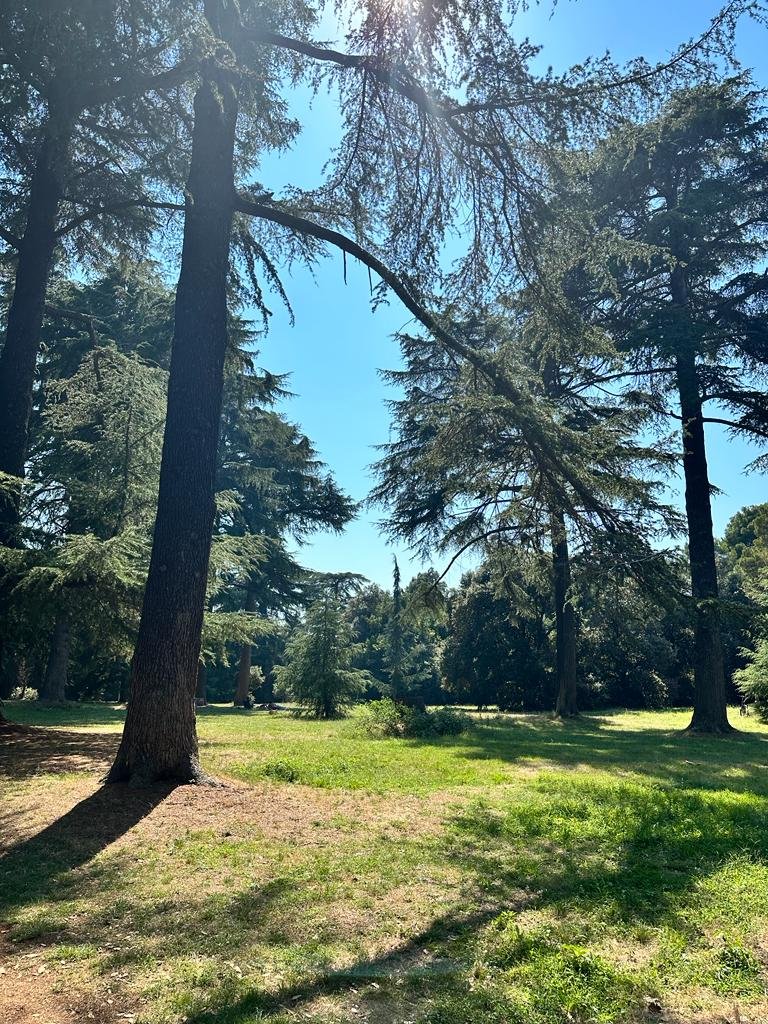
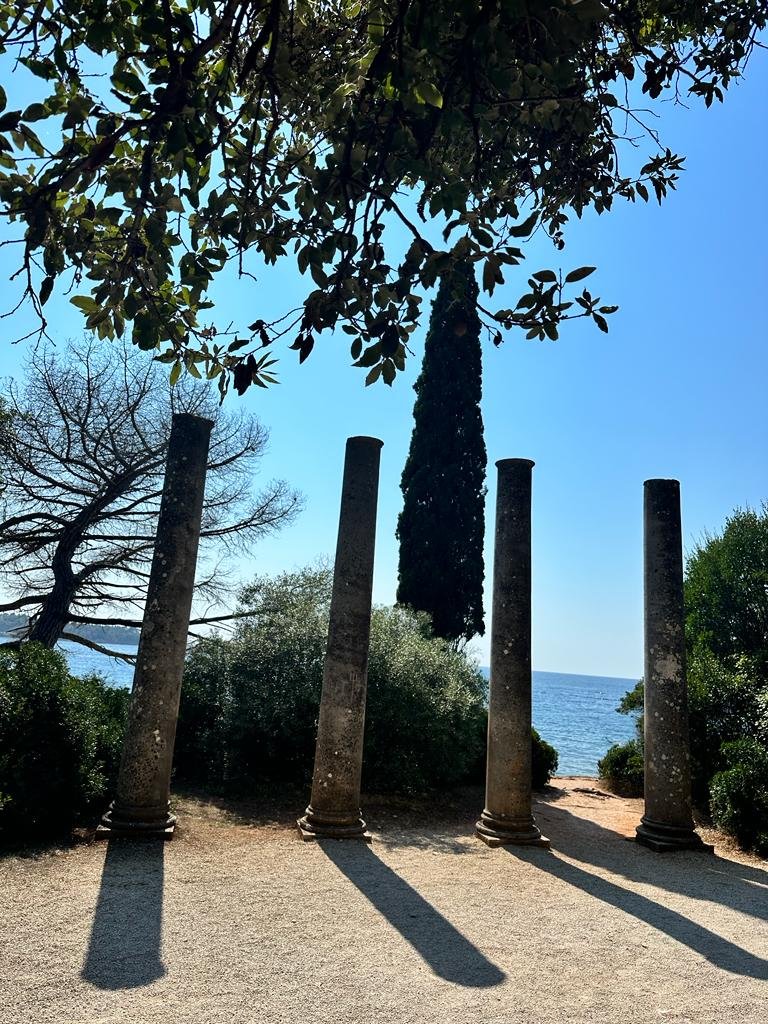
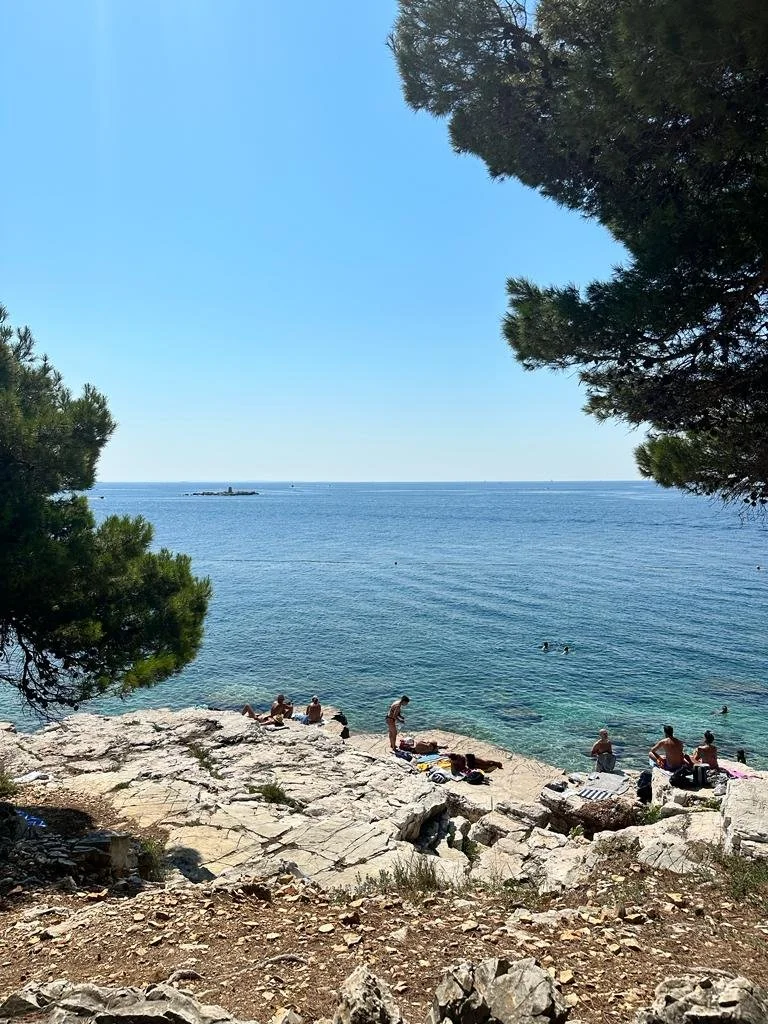
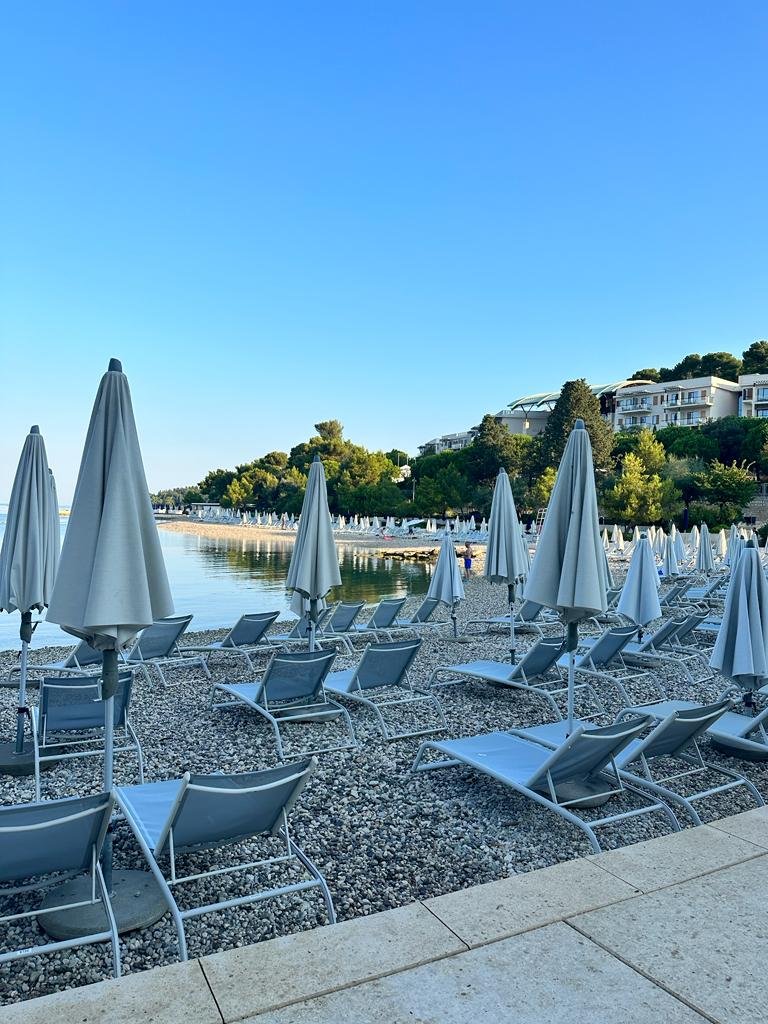
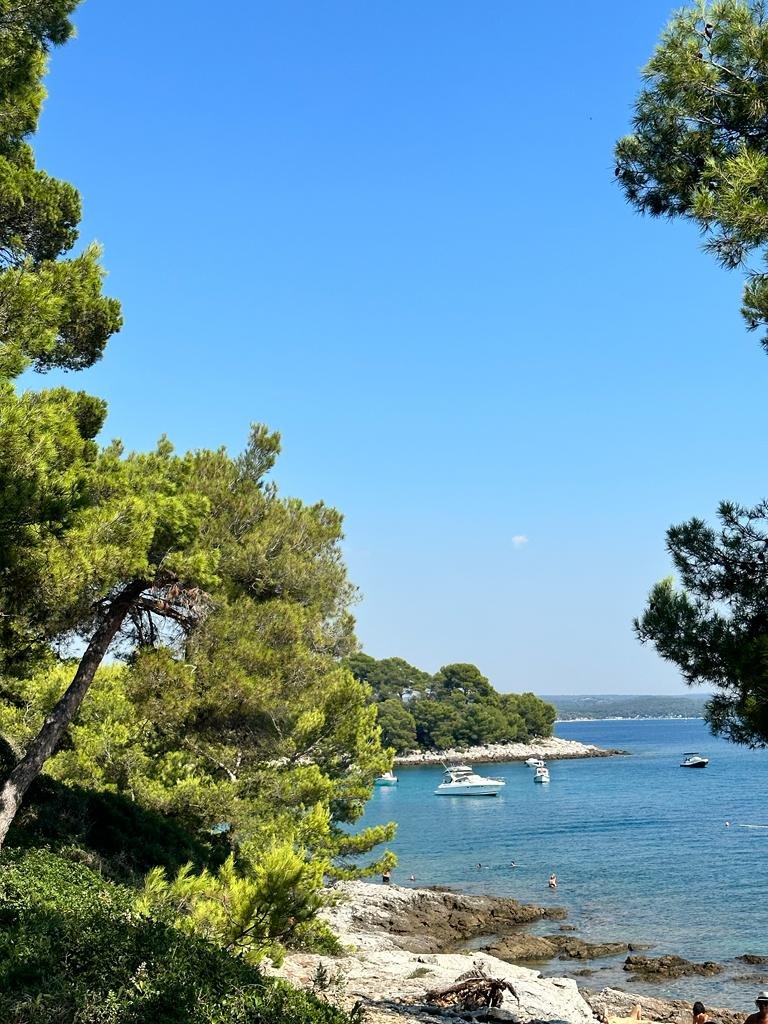
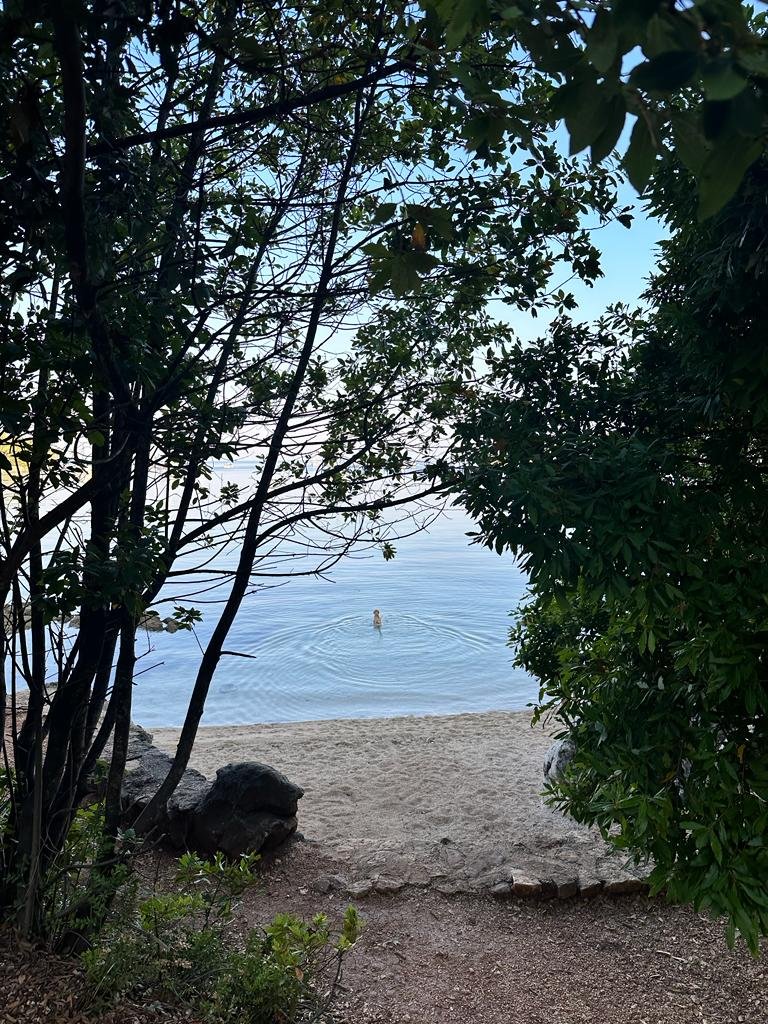
Early morning swim - nothing beats that early morning water calmness, gentle sunshine, empty beaches, stunning Zlatni Rt (Golden Cape) pine park / forest that surrounds Rovinj beaches. Thanks to Georg Hütterott, a businessman from Trieste who developed the park back in 1852-1910 we are now enjoying this true paradise.
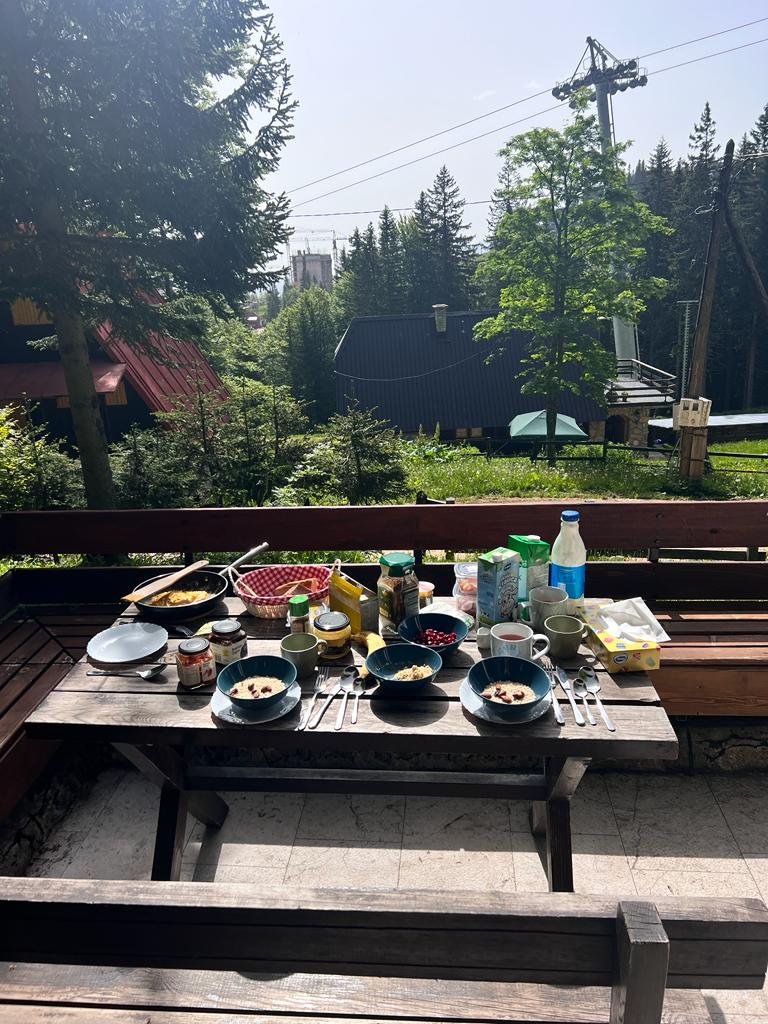
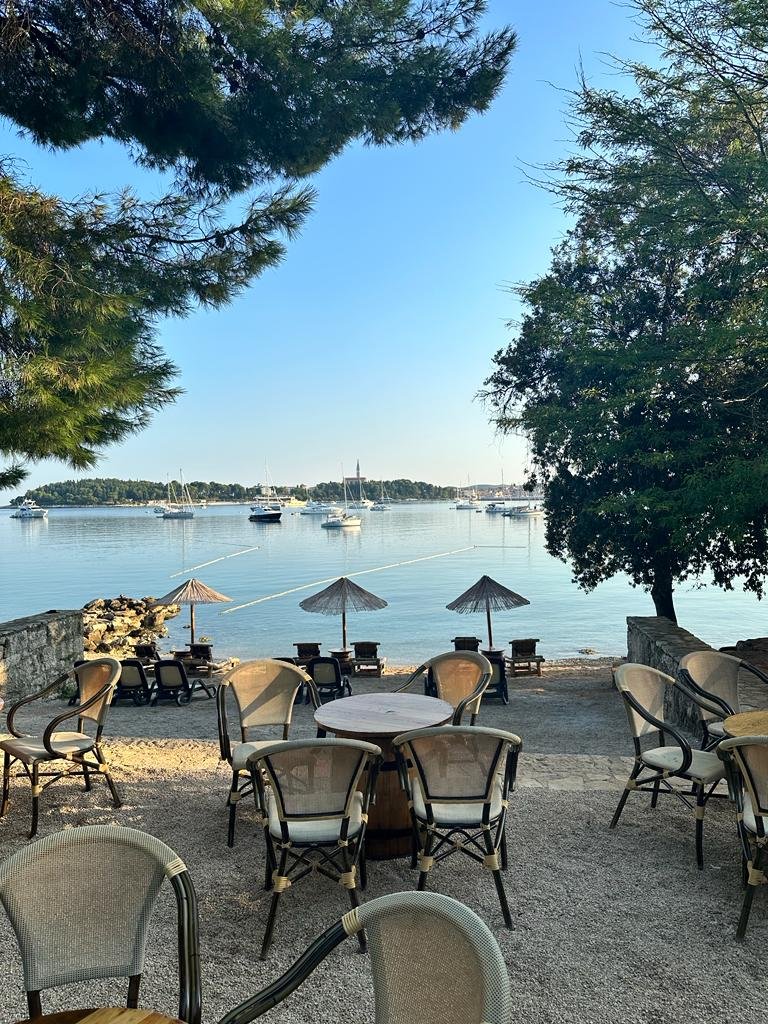
Breakfast at the beach, relaxing and chilling till 11-ish.
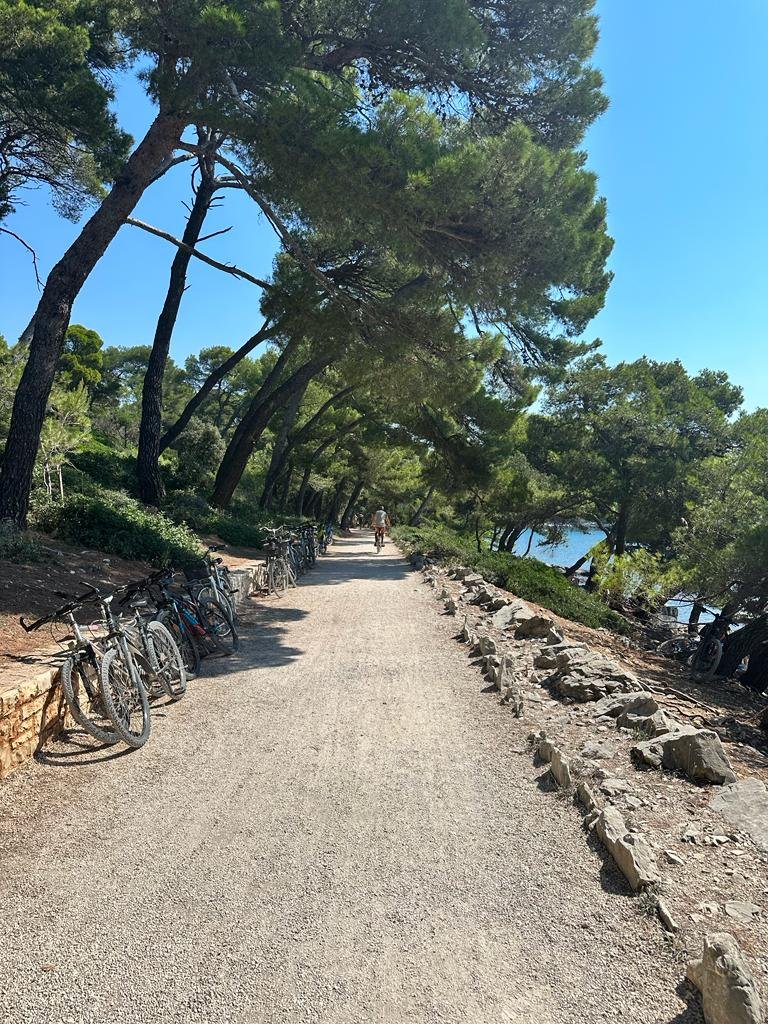
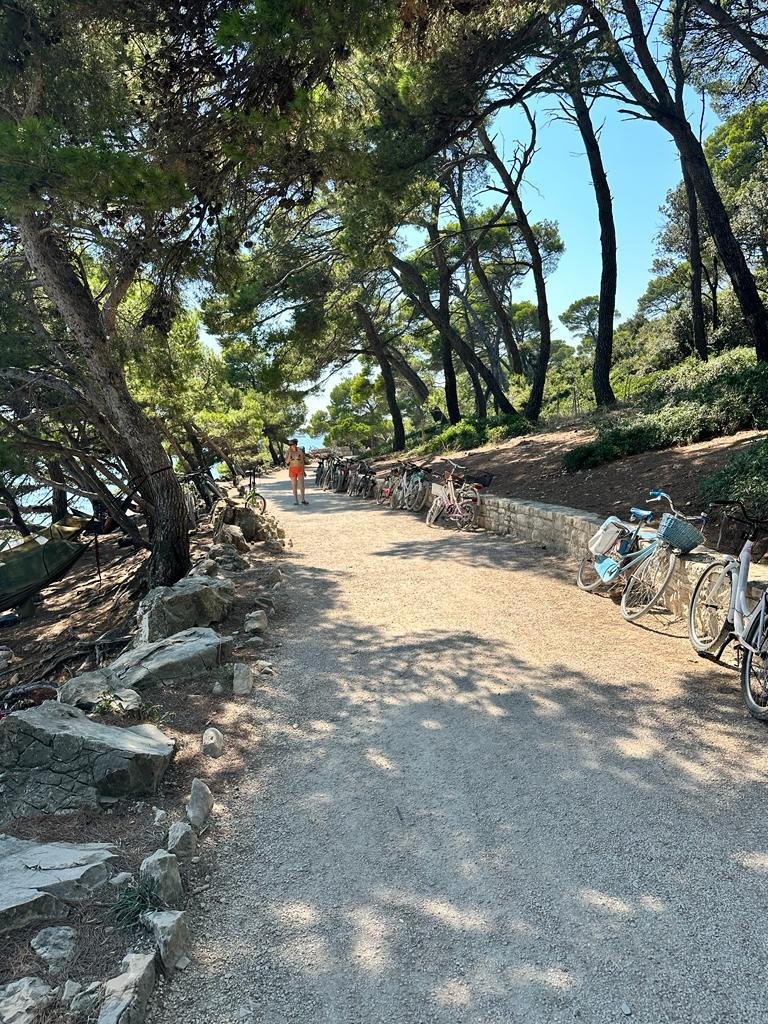
Bike ride through the forest comes next, a couple of hours min with a few stops to jump into the sea to refresh.
Lunch at the apartment, and then it’s free time while sun is too hot. I love biking / going to the old town to wonder the shops and chat to locals, or read a book, Nebojsa loves spending time with his guitar or on his computer.
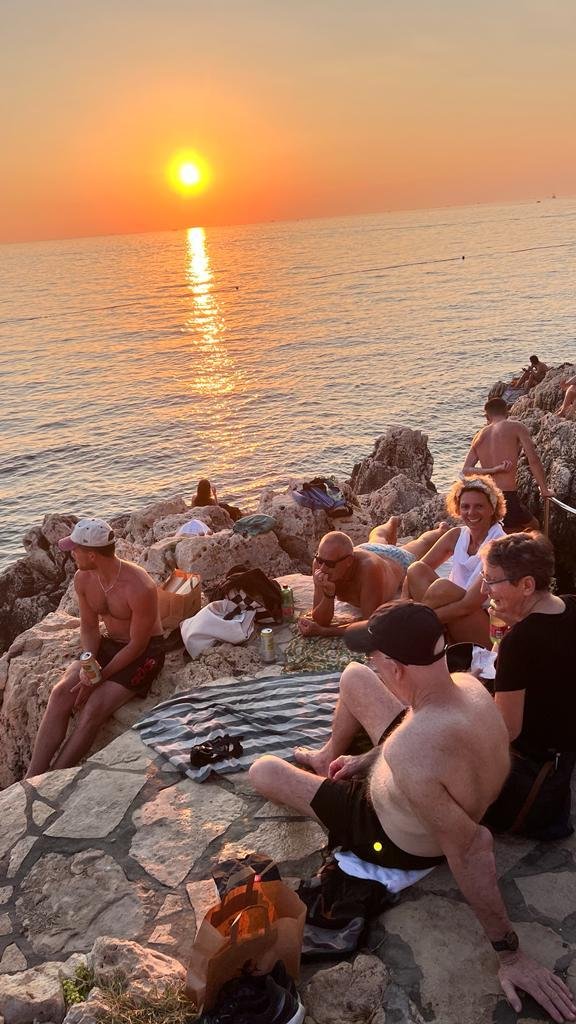
Before you know it we are back at the beach around 4pm till the sunset.
Dinner time around 7pm, shower, dressing up and going out to the old town for a few promenade walks, drinks with friends, ice cream, local concert and by the midnight we are in bed!
Not a bad routine I recon! But you can see there are not enough hours to do it all. Two active relaxers simply can’t sit still!
And guess what…there is more!
We have now added a new beach toy into a mix - a paddle board has arrived for more activity as if we had not have enough! 😂
We both love it and we enjoy it in Auckland, but the Adriatic Sea is calmer and the use of the paddle board is now a daily routine. We bought a long and sturdy one so we can both paddle together and visit many tiny islands within the Rovinj archipelago, it is already so much fun! And we negotiated a free deal to keep it at the hotel’s beach storage, it helps when you are a local and speak the language 😉
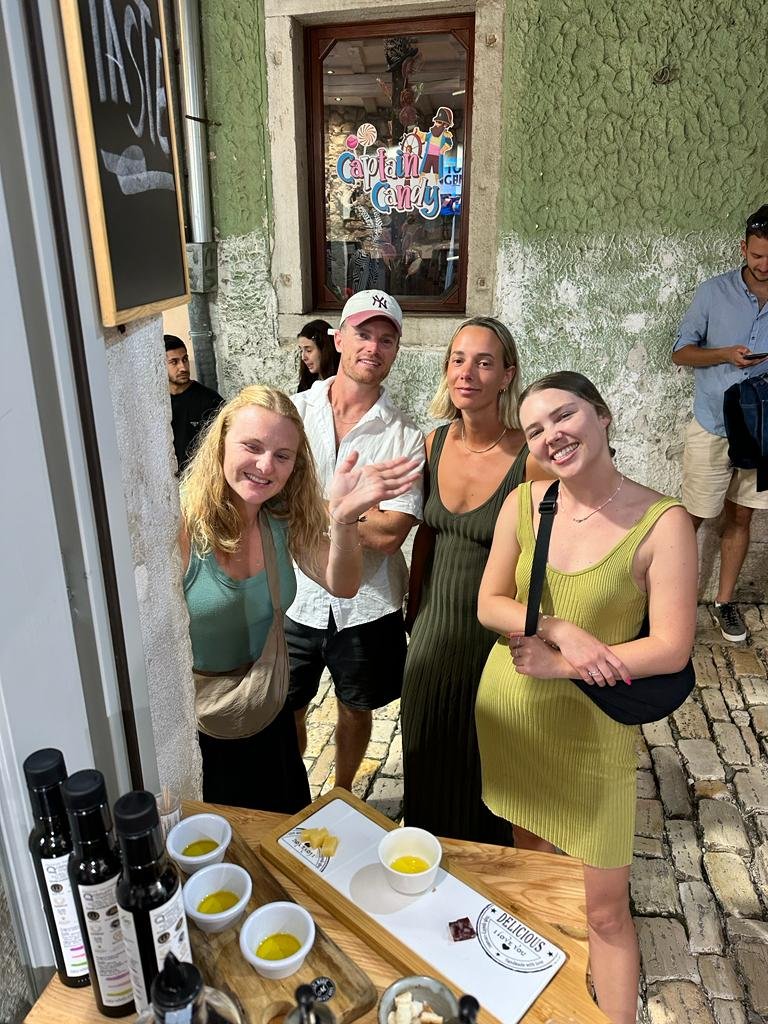
In only three weeks here we have already welcomed a number of our Kiwi friends.
We love it, it is soooo cool to show them around, take them to the restaurants where the locals eat ( much better food and better priced), teach them about the region, history, everything they want to know and let them explore on their own before meeting them for a dinner.
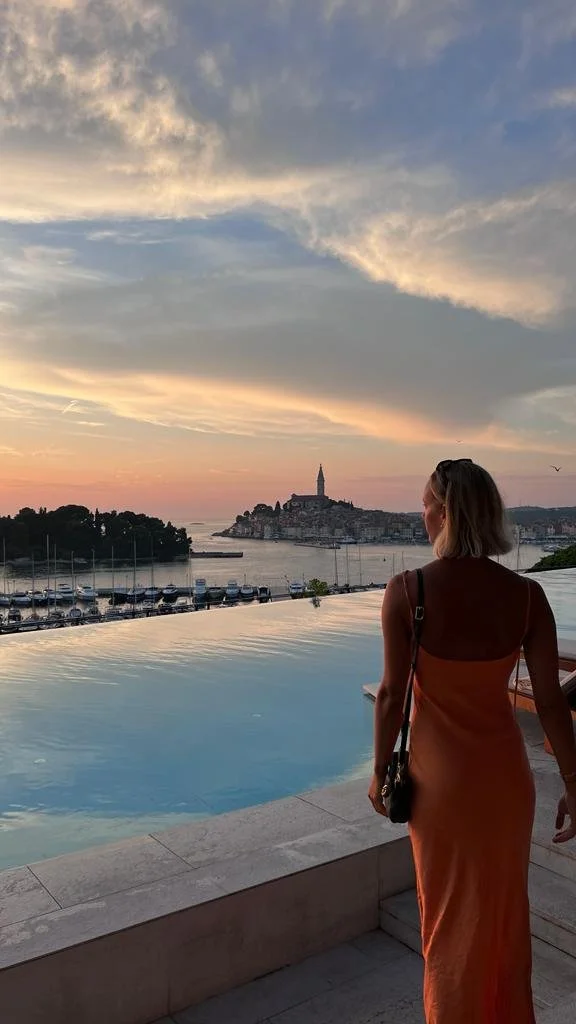
The famous 5 star Grand Park hotel is the must see and it featured in BBC series “The Grand Hotels” which was aired in New Zealand TVONE, in November last year - check it out
And then there is more …
We love concerts and they are literally happening every day, whether that’s in Rovinj or nearby places.
As my cousin would say: “ Draženka, imali li gdje da mi ne idemo?! (… is there anywhere that we are not going to?!)
Ha! My answer is simple - no, you live life only once, it’s not my fault they all decided to perform one after the other! 😂😂😂
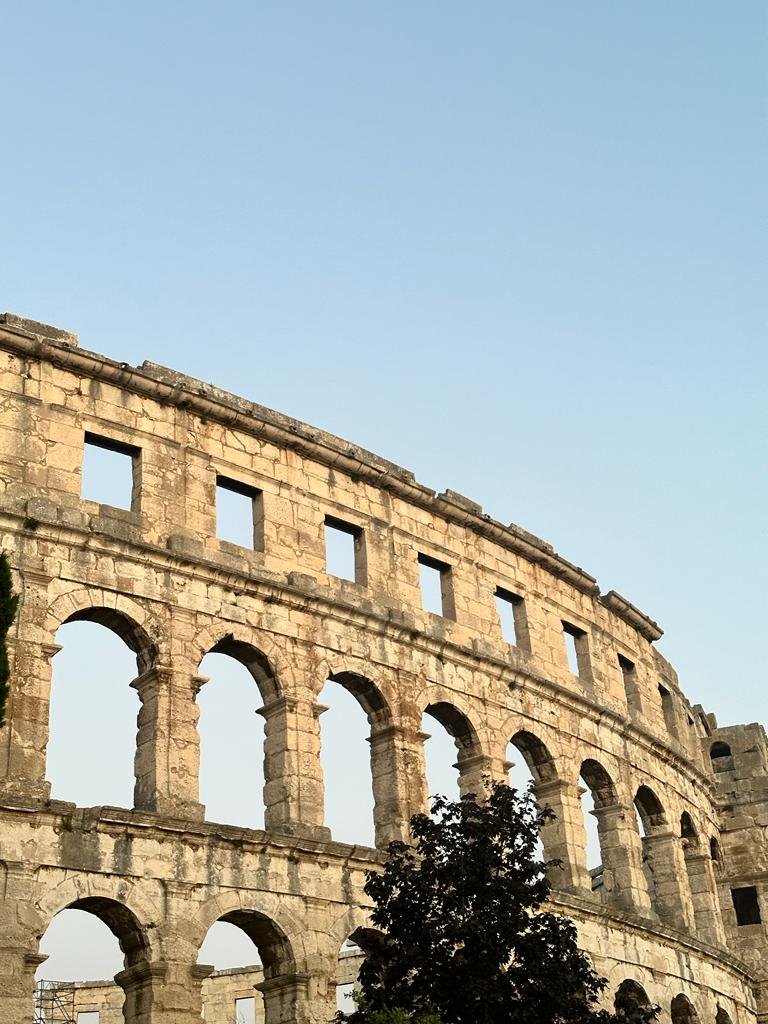
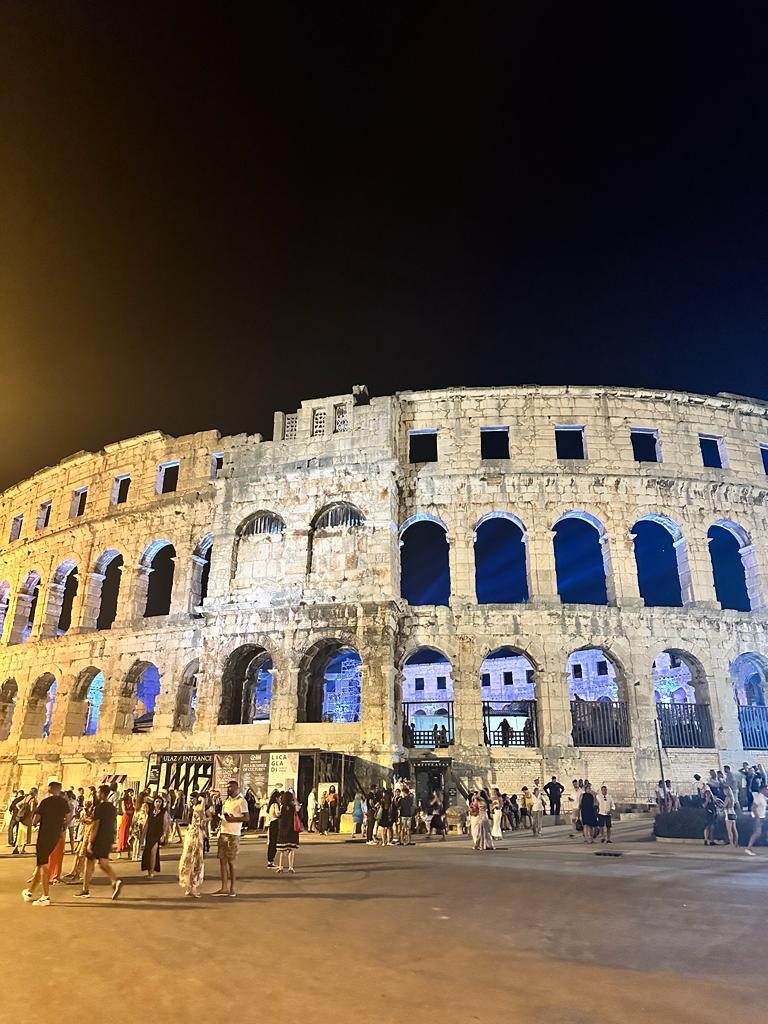
Pula is only 35 mins drive from Rovinj. Paula’s Roman amphitheater is the unique venue for local and international artists. Experiencing a live concert in the amphitheater that can host up to 23,000 people is simply phenomenal, irrespective who is performing. We have already been to a few concerts, and more to come.
I have to tell you a story about Zdravko Čolić concert, he is known as ex Yugoslavia Tom Jones!
He performed yesterday celebrating 50 years of his musical career, with a live philharmonic, a choir and sold out Arena! I bought tickets months ago, when we were still in Auckland!
To say it was an amazing concert is understatement! I don’t know what was better, his performance at its best at the age of 72, the philharmonic and choir performance, pianist and saxophone player, or just watching the crowd singing along from young people to our generation friends.
When I was growing up every girl was in love with Zdravko, and every mother hoped to have him as her son in law! I can’t explain how and why young people know his songs today, they were not even born when he was a top pop star, but here we are, we had awesome time and created another memorable moment. He will entertain us for many more years, and if someone tells me again how age matters, I’ll tell them to let go of that belief! It’s not true!
And if that wasn’t enough, we are off to another concert tonite and tomorrow night!
I am telling you, there aren’t enough hours in Rovinj to do it all, sleep is good but short 😴
Days keep flying fast, we are here for another month looking forward to seeing our relatives who arrive on the 4th of September from Serbia, so so happy knowing we will see them again and spend the time together in this paradise.
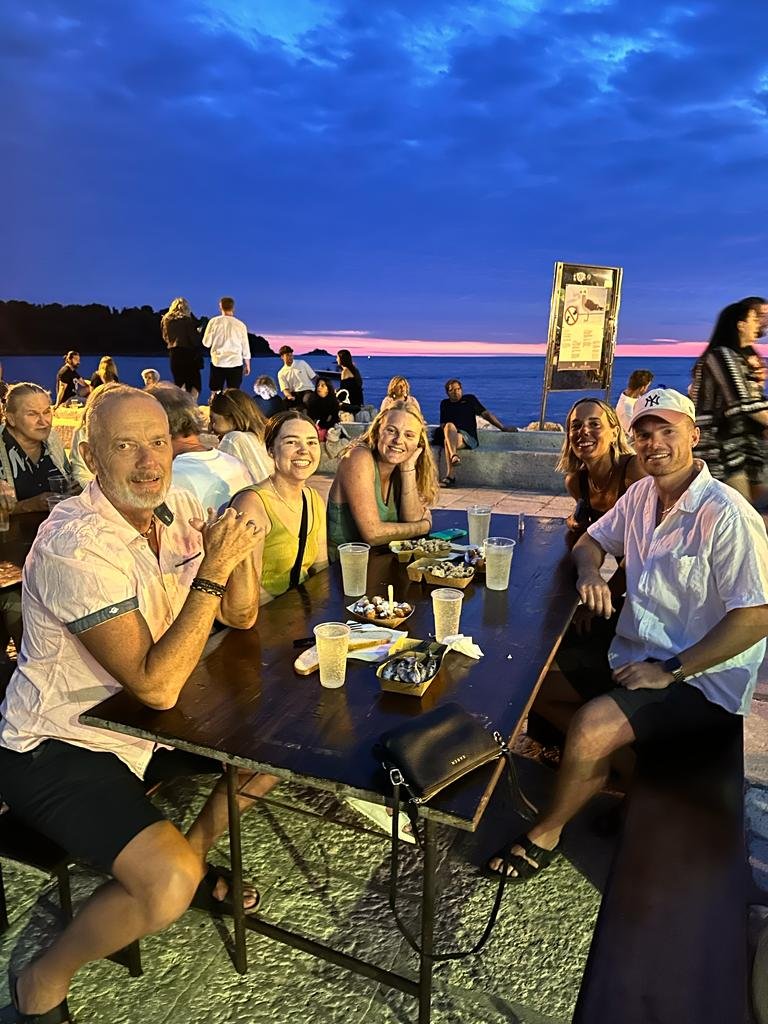
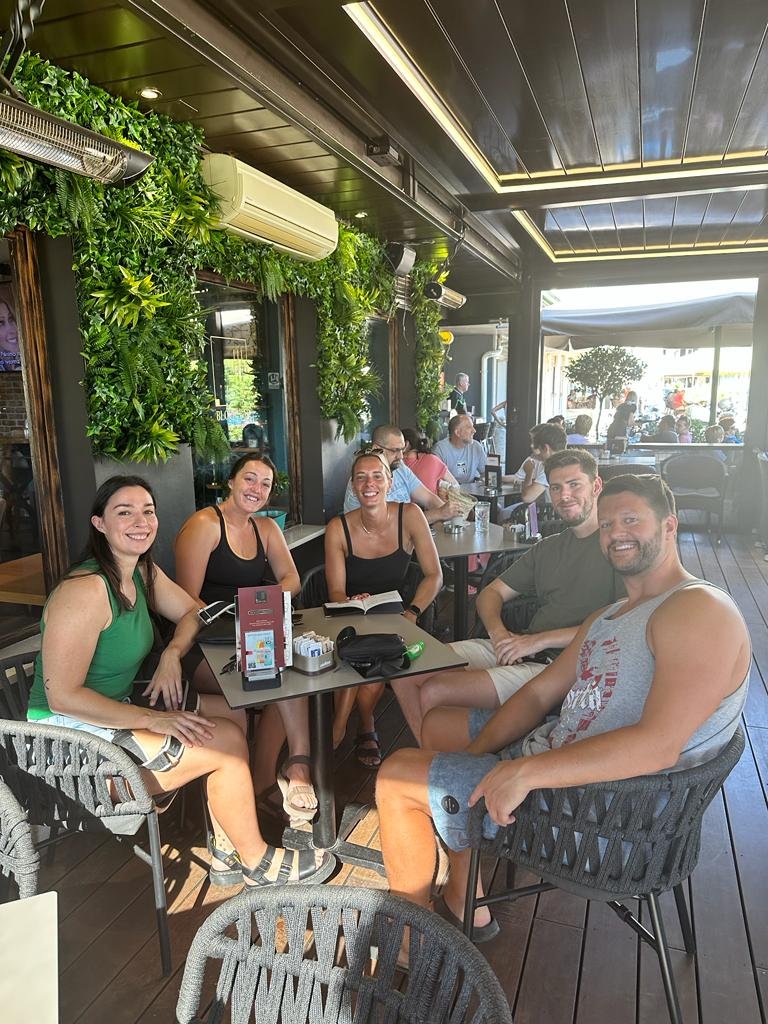
Until the next blog, enjoy the photos of Rovinj, our New Zealand friends and us, and a few videos from different concerts, as I rush to get ready to drive to Vrsar for another concert.
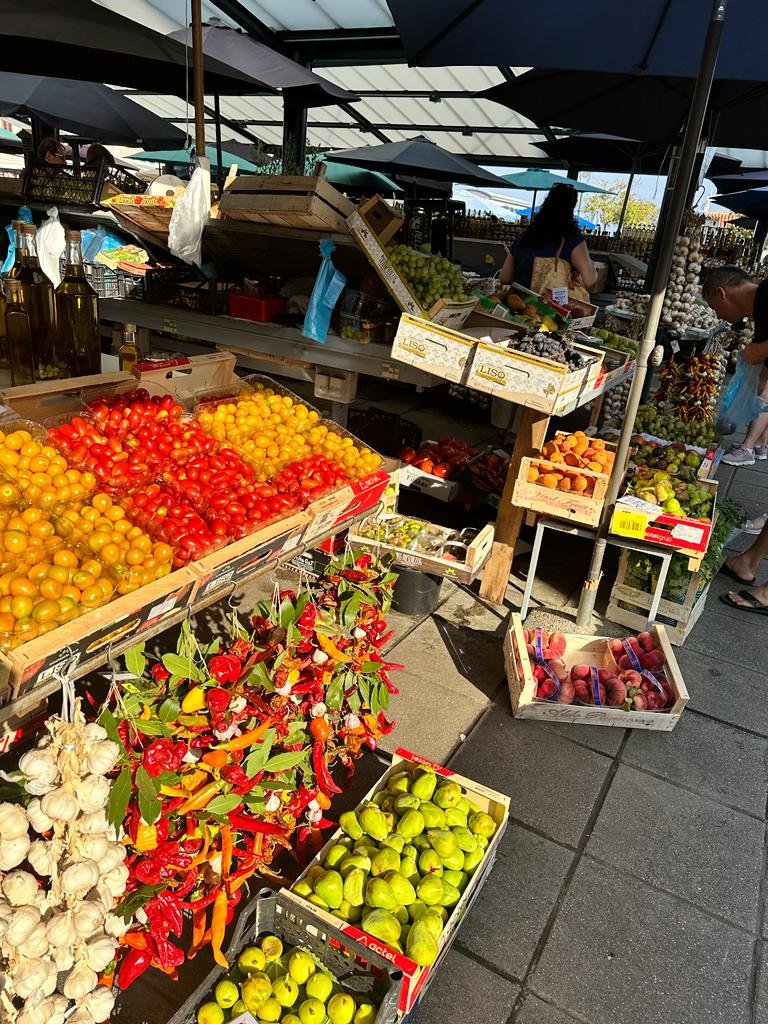
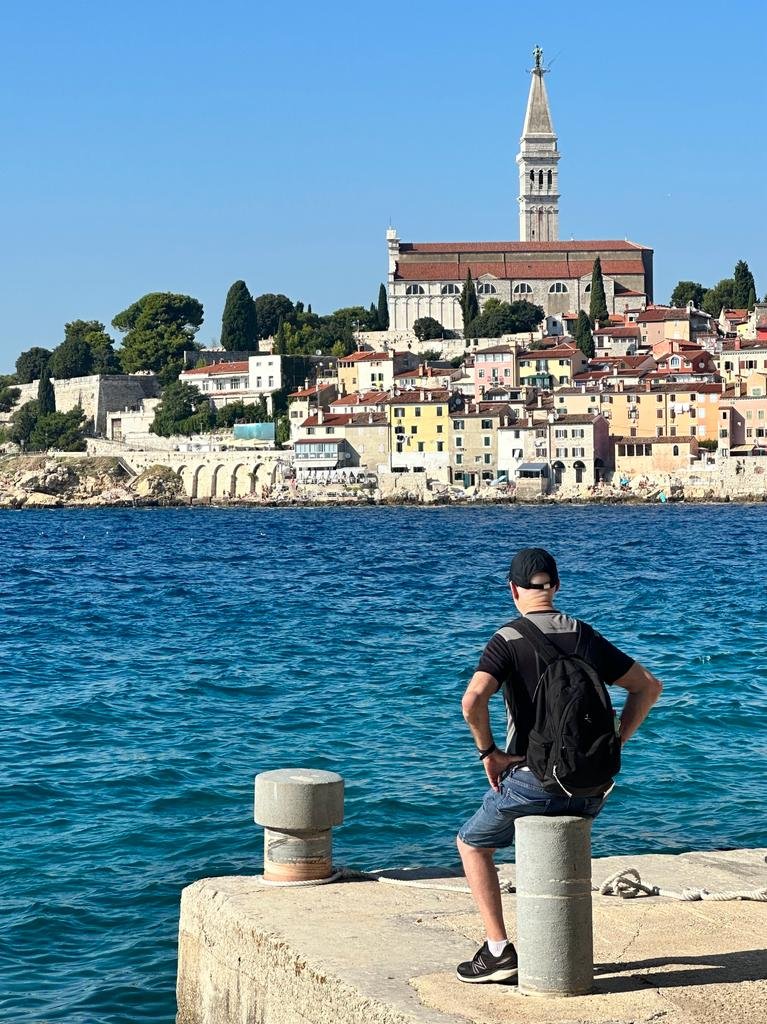
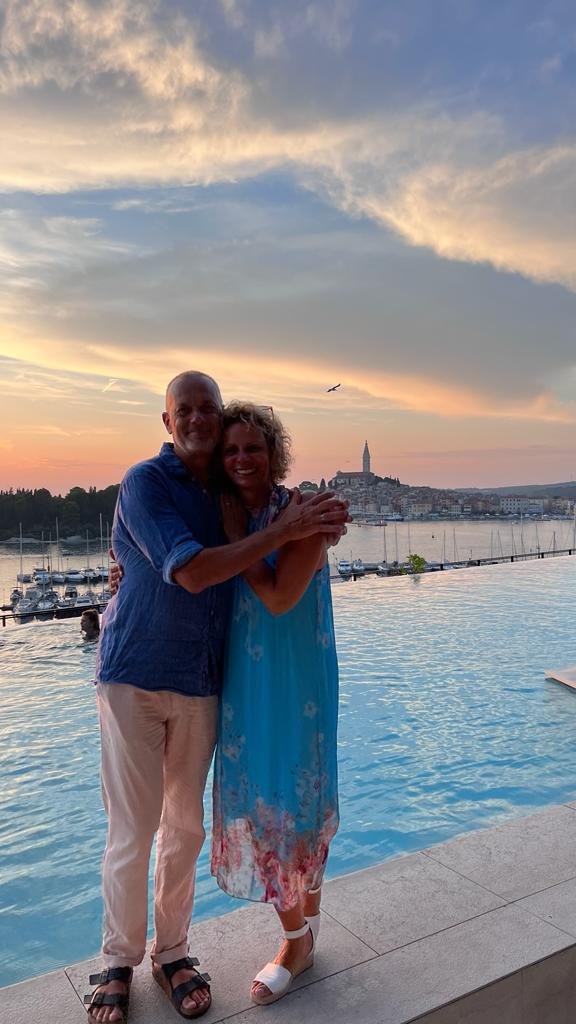
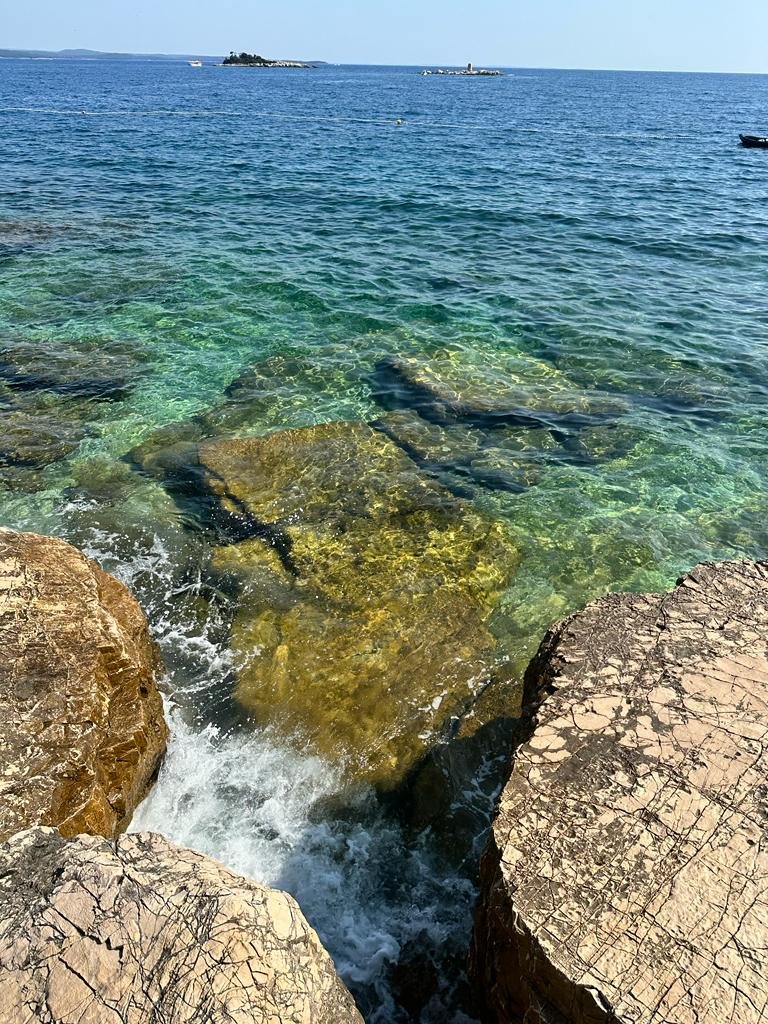
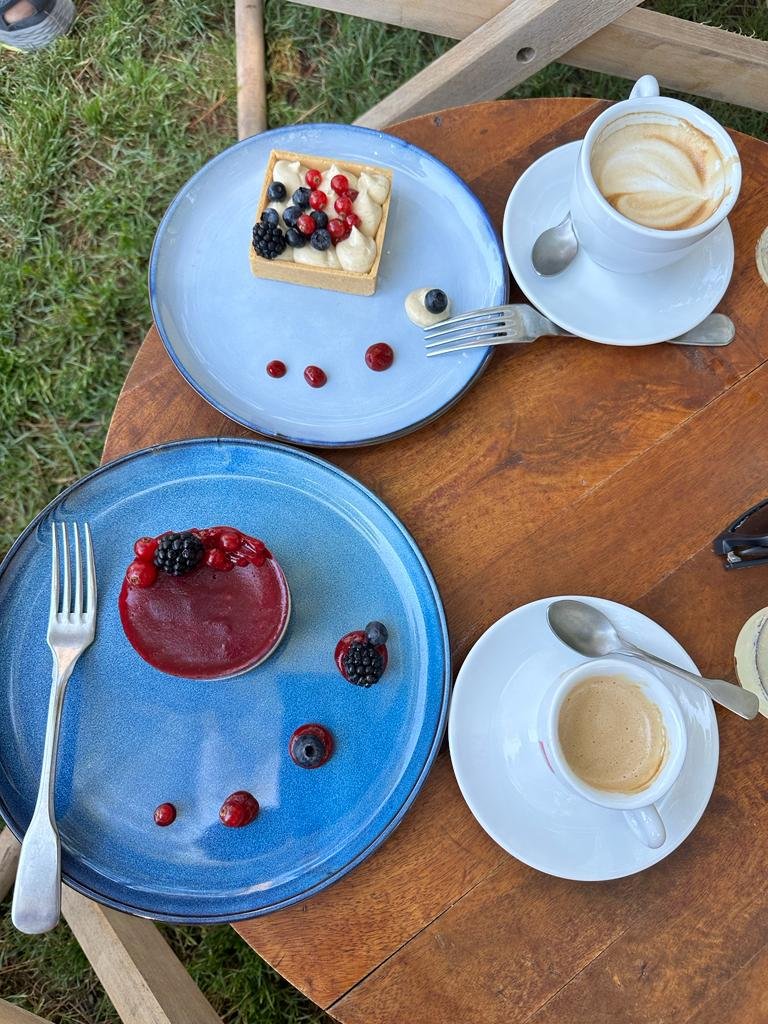
Rovinj/Rovigno Photo Album






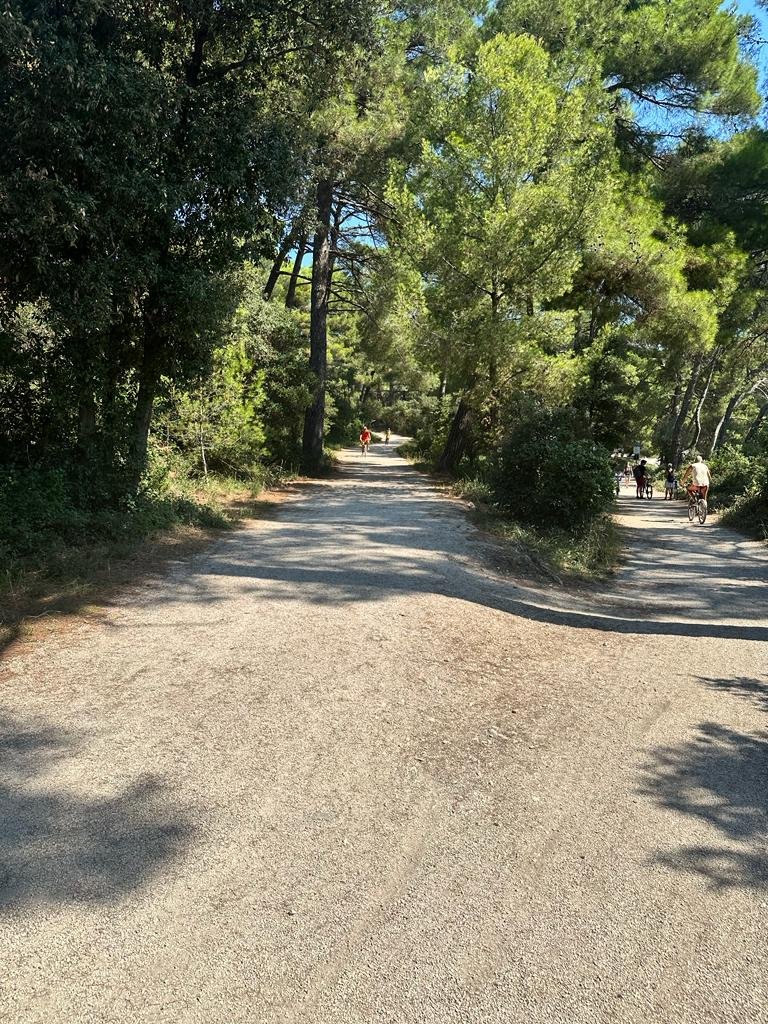
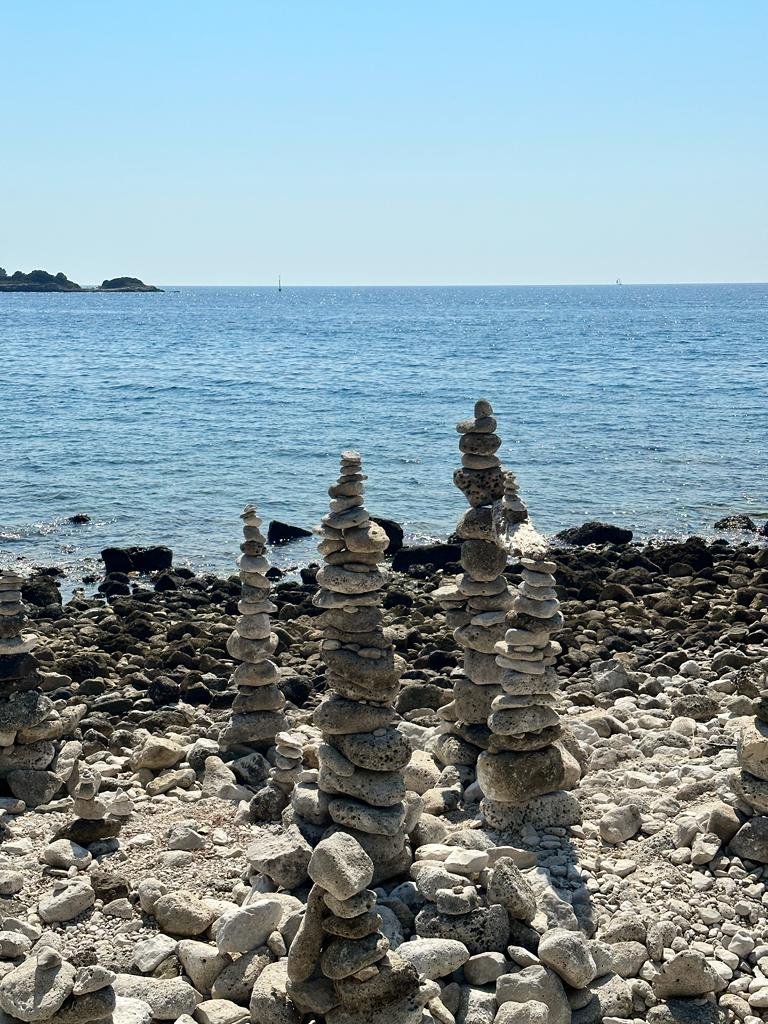
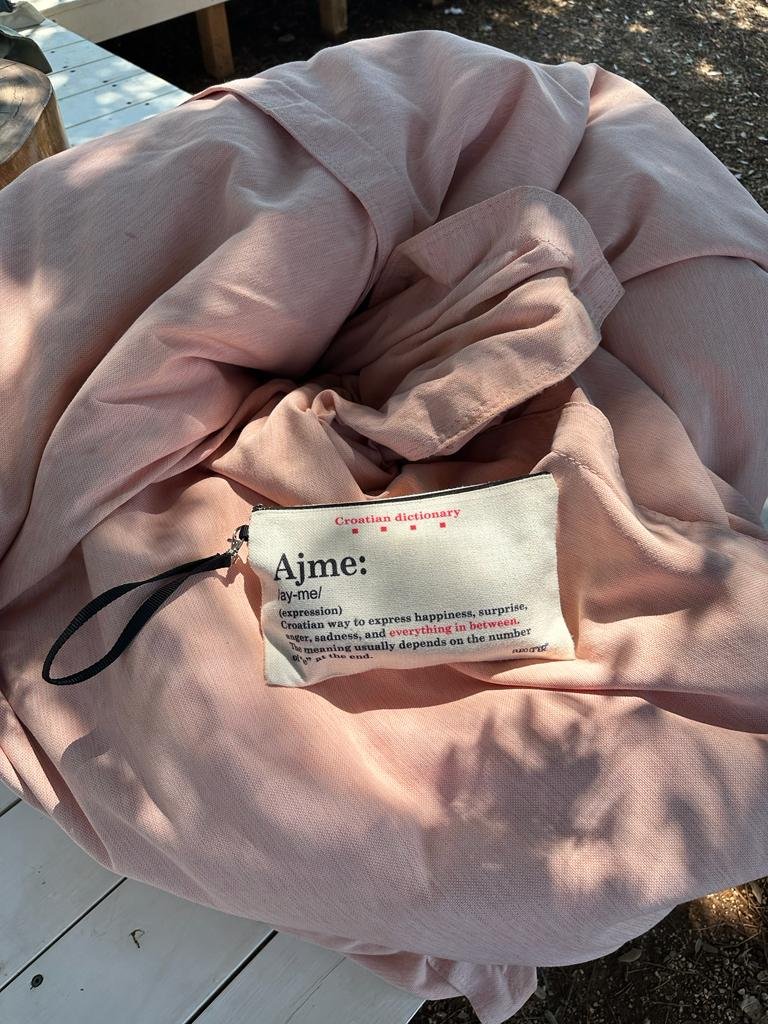
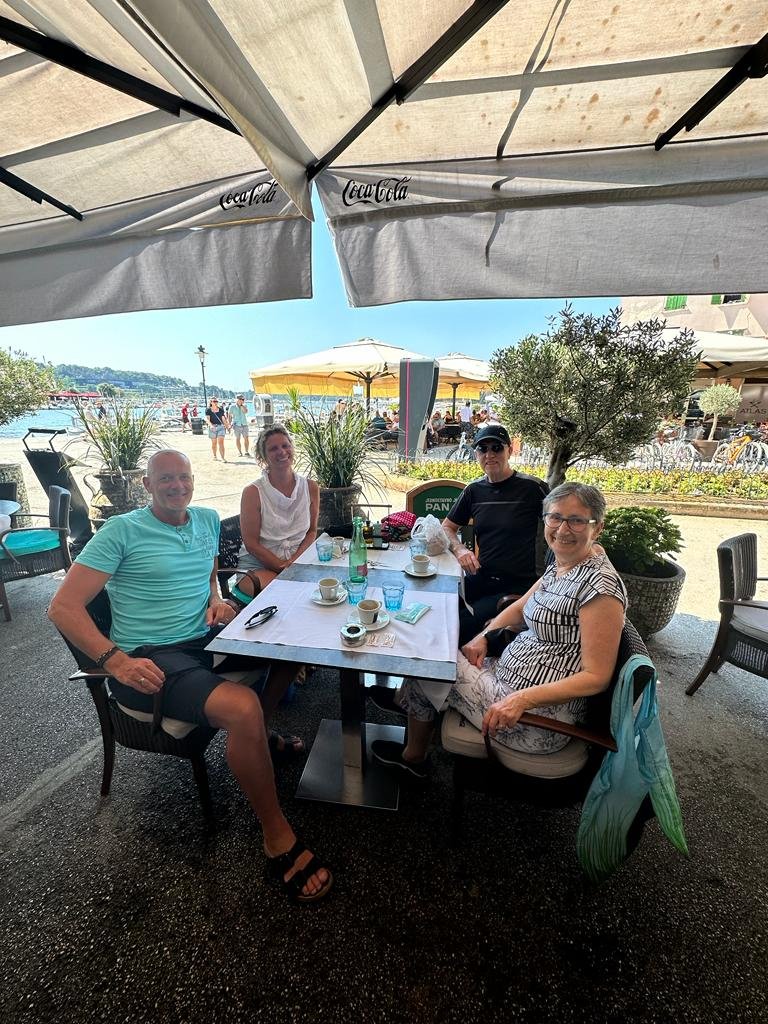







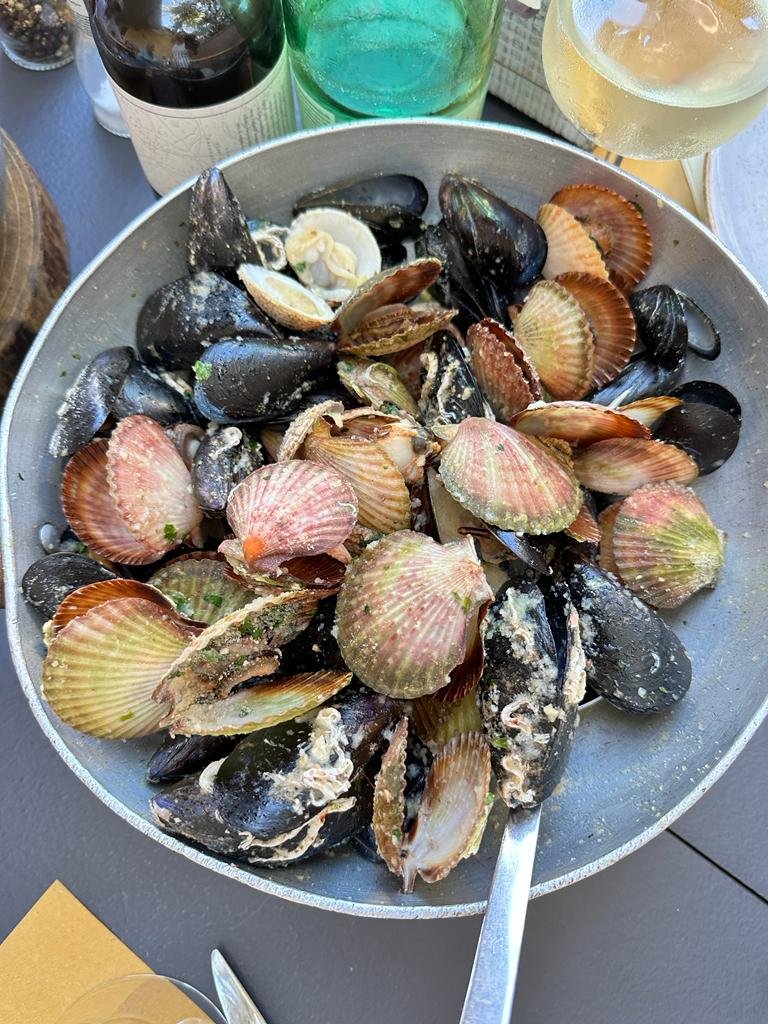
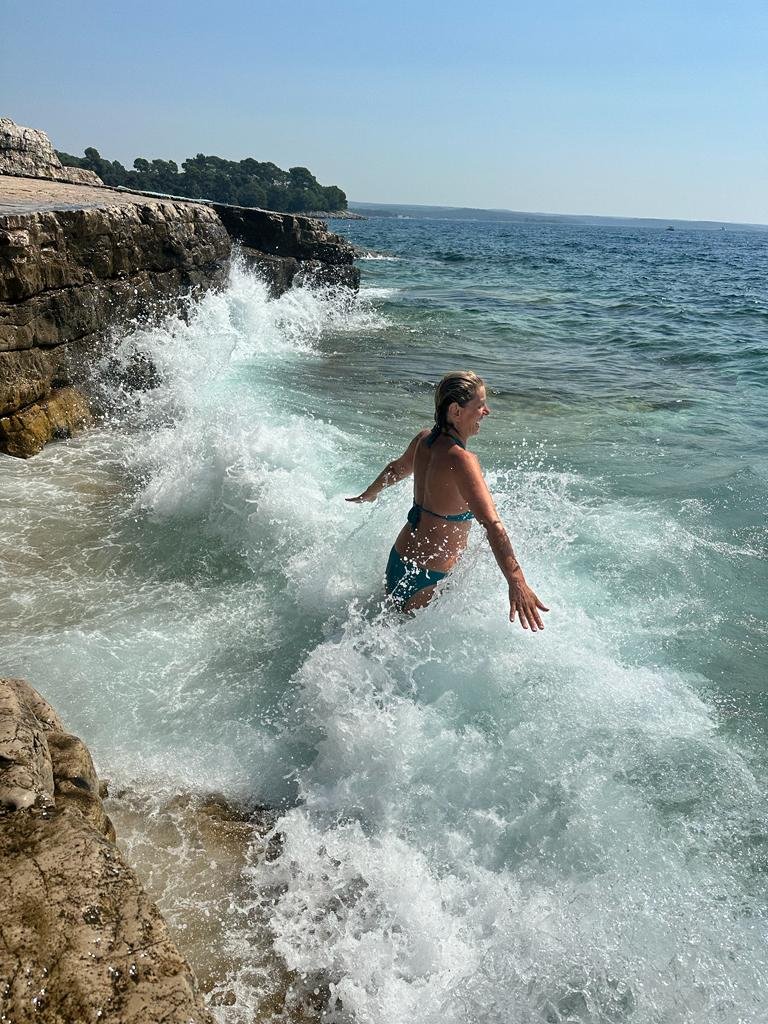
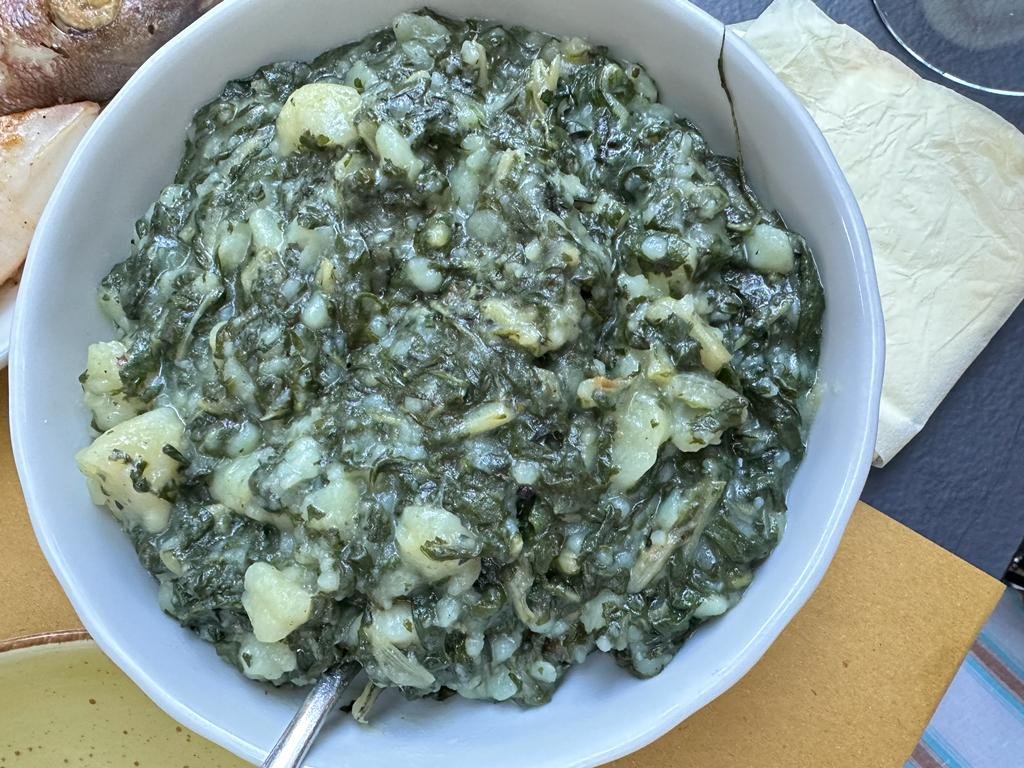
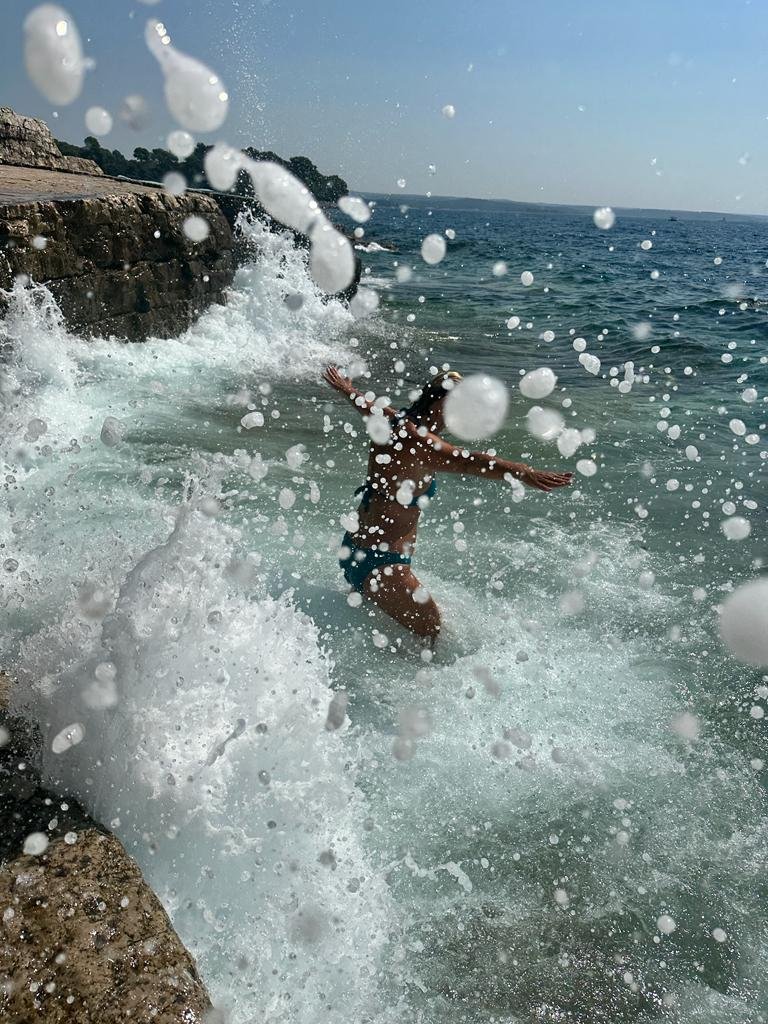
Valencia & Palma de Mallorca
On our way back from Morocco we had a short stopover in Valencia before we flew across to Palma de Mallorca to enjoy the beach, chill, relax, read and do nothing for a few days! Or that’s what we’ve thought!
On our way back from Morocco we had a short stopover in Valencia before we flew across to Palma de Mallorca to enjoy the beach, chill, relax, read and do nothing for a few days! Or that’s what we’ve thought!
Although we only had a couple of days in Valencia we managed to wash all the clothes which was superb, see a few things, and experience a few “OMG” moments!
Valencia
The port city of Valencia lies on Spain’s southeastern coast, where the Turia River meets the Mediterranean Sea. It’s known for its City of Arts and Sciences, with futuristic structures including a planetarium, an oceanarium and an interactive museum. Valencia also has several beaches, including some within nearby Albufera Park, a wetlands reserve with a lake and walking trails.
Instead of joining the usual walking tours we opted for a bike tour! A great experience and something different. Valencia is a flat city and perfect for biking.
We walked to the bike shop and joined the English speaking group with a local tour guide who spoke good English with a strong Spanish accent, loads of fun!
We started the bike tour by visiting the Turia Gardens, one of the largest urban parks in Spain. It runs through the city along nine kilometres of green space stretching from Cabecera Park to the City of Arts and Sciences.
The Turia Gardens are the perfect place for runners, cyclists, families and nature enthusiasts. It follows the former riverbed and passes by the city's main museums and monuments on either bank. We got to see a lot by just biking through it.
The gardens are built on the former riverbed of the Turia, whose course was altered to prevent constant flooding in the city. After a devastating flood on 14 October 1957, the Turia's course was diverted south of the city, leaving a huge tract of land that crosses the city from West to East, bordering the historical centre. Several urban planners and landscapists designed different sections of the park, recreating the former river scenery.
I seriously think NZ ( and other countries) can learn from València, it was a clever and presumably expensive move that’s saved the city from ongoing flooding and created a true paradise for its citizens.
We saw a number of things along the way:
The City of Arts and Science
Work of the Valencian architect Santiago Calatrava. Several of its buildings have become icons in the city. It is a scientific and cultural leisure complex which we enjoyed looking from the outside only and more on this when I get to OMG moment!
The Cathedral, Miguelete and Holy Grail Did you know the Holy Chalice is kept in the Cathedral of Valencia? Our tour guide is sceptical but that’s apparently true, we saw it or we are led to believe what we saw is the Holly Chalice?! We will never know.
Did you know the Cathedral holds one of the most important pieces of art from the first Spanish Renaissance? And the Cathedral Museum is the home to pieces by Maella or Goya? This great architectural complex was built on an ancient Roman temple that was later a mosque, and then became the Cathedral of Valencia. It is a Gothic-style building, although it preserves many elements from different periods, from Romanesque to Baroque eras.
La Lonja (The Silk Exchange) Unesco World Heritage
The Lonja is an emblematic building of the city and one of the most famous civil gothic monuments in Europe. It was declared a National Historic and Artistic Monument in July 1931 and was made a World Heritage Site by UNESCO in December 1996. It was built in 1492 and was used as the main silk trading center with upper floors used as prison for those merchants who didn’t pay tax duties. One stop shop!
This is where my first OMG moment happened. After learning about its history we got told to go in to see its stunning interior. And here I am standing there and thinking for myself - I have already bought three silk scarfs on this trip, I really don’t need anymore, but how will I resist it when I walk into this massive silk market!
Ha! Guess what - it’s empty! It’s a great building and amazing architecture, but it’s no longer an active silk market!
At the end of the 13th century, as a result of the prosperity in Valencia at the time, the old Lonja became insufficient and it was decided to build a new Exchange. Phew! What a relief, my dilemmas got resolved😉
El Carmen neighborhood: a cocktail of history and leisure
We stayed in the old town in the district of El Carmen, the best known Valencia's neighbourhood. It takes its name from the church and convent of Carmen Calzado, and is rightly renowned as utopia for lovers of Mediterranean cuisine and leisure. We tried a number of local food pastries, had no time to try paella 🥘 and you’ll laugh why when I get to my second OMG moment!
This is an area with a thousand years of history and magnificent examples of medieval architecture, a rich artistic heritage.
We visited The Church of San Nicolas de Bari and San Pedro Martir, a must-see in Valencia! Its impressive mural paintings in the vault are regarded as Valencia's Sistine Chapel ever since they were restored. Amazing 🤩!
Another point of interest is the Central Market, a great temple for local products that features modernist decorations and is considered the great showcase for fresh food in Europe. Unfortunately it was closed on Sunday and we only saw it from the outside.
El Carmen is also home to the only two access gates to the medieval city that are still standing: Serranos and Quart. They used to close when the bells announced night fall. And anyone who lost track of time had no choice but to sleep "under the Valencia moon". We managed to visit both and climbed the Quart Torre for spectacular views!
We saw a lot in only a couple of days!
Well, that’s when the next OMG moment happened. After booking the tickets for the famous BioPark I went on to check our flights to Palma to figure out if we could visit the City of Art and Science the next morning before our afternoon flight. OMG!!!
We were leaving today and not tomorrow!!!
After triple checking everything we quickly packed up, ordered a taxi, checked out and rushed to the airport!
Can you believe it?!
We wasted one night stay in Valencia, the BioPark entry tickets money was kindly refunded although it was clearly our own stuff up!
Grrrrr was I angry with myself?! Yep, big time! As Nebojsa says, mistakes happen and when you think about the trip planning happening at the same time we were dealing with our own house flood damage, tradies, insurance etc, we did pretty well!
That’s what a positive self talk does, looks for a silver lining and now we have an extra day in Palma de Mallorca!
And when I think more about it, it was definitely less painful wasting one night stay in Valencia then missing the flights to Palma, not picking up a rent a car in time etc.… you can see there was damage either way, luckily my curiosity to see more things saved us at the end!
We would love to come back to Valencia as there is a lot more to do and see, perhaps we could combine it with our return to Seville and we add Madrid into a mix!
Dreaming is for free, we arrived to Palma on time and had fabulous time.
Valencia Photo album


Palma de Mallorca
Palma, also known as Palma de Mallorca is the capital and largest city of the autonomous community of the Balearic Islands in Spain. It is situated on the south coast of Mallorca on the Bay of Palma.
As of 2022, Palma Airport, serves over 28 million passengers per year. I have been to many airports in my life but I have never seen as busy airport as Palma at 6.30 am!
Where do I start?
A magical island, a shopping paradise, a place for party and dance, with hundreds pristine beaches, luxury hotels, yachts and cars, amazing markets I loved, a busy busy place where €50 lasts a very short distance 😂.
After weeks of nomad lifestyle waking up in a different location pretty much each morning we settled for six nights in Finca Sa Canova, a true paradise, Google it and go there if you ever have an opportunity!
https://fincasacanovaagroturismo.negocio.site/?utm_source=gmb&utm_medium=referral
Built in 1600 hundreds, it’s kept its authentic charm and it’s been carefully renovated by its current American owners who bought it in 2021 and call it their home.
We knew Palma city would be overcrowded and we deliberately wanted to stay inland and close to different beaches, let’s say we positioned ourselves strategically!
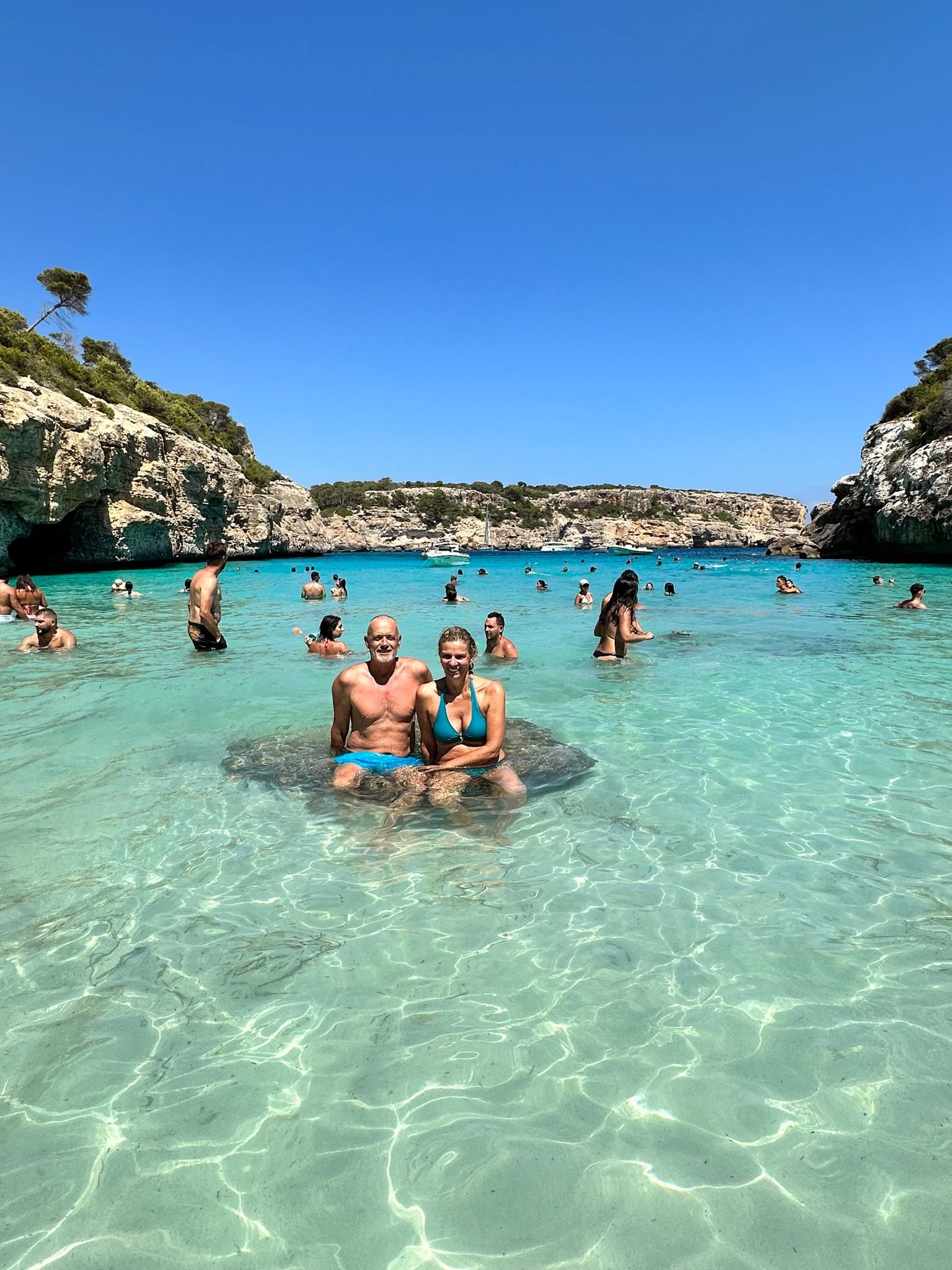
I have to say the holiday island of Mallorca is blessed by nature, offering a variety of beach types, from rugged, hard-to-reach coves and secluded calas to long, white sandy stretches of coastline with crystal clear turquoise sea, and facilities onsite.
This time we didn’t want to do any more history and walking, we decided to enjoy the lazy beach life, 🏖️, although we still saw the massive Santa María cathedral, a Gothic landmark from the 13th century, the adjacent Almudaina a Moorish-style Arab fortress converted to a royal residence, and on west in distance a hilltop Bellver Castle, a medieval fortress with a distinctive circular shape.
So, there are “only” 262 beaches in Mallorca, and it took me forever to get to the top 10 we wanted to visit. After a bit of effort, I found a website with beaches categorised based on what you are after, and by the geographical region! Perfect!
Since it’s August, and it is overcrowded everywhere we opted for unspoiled and remote beaches where you need to drive to and then walk to. Yay, it was a perfect choice, and even on these beaches we saw a mini fight each day when people rush to conquer a piece of sand. Mama Mia! People are so laud, and when they want their sun they’ll make you put down your sun umbrella if the shade is falling onto their towel ☀️Crazy stuff!
We visited a number of different beaches and will let you choose your favourite 😍!
Ses Salines - Colònia de Saint Jordi
Es Carbo Beach
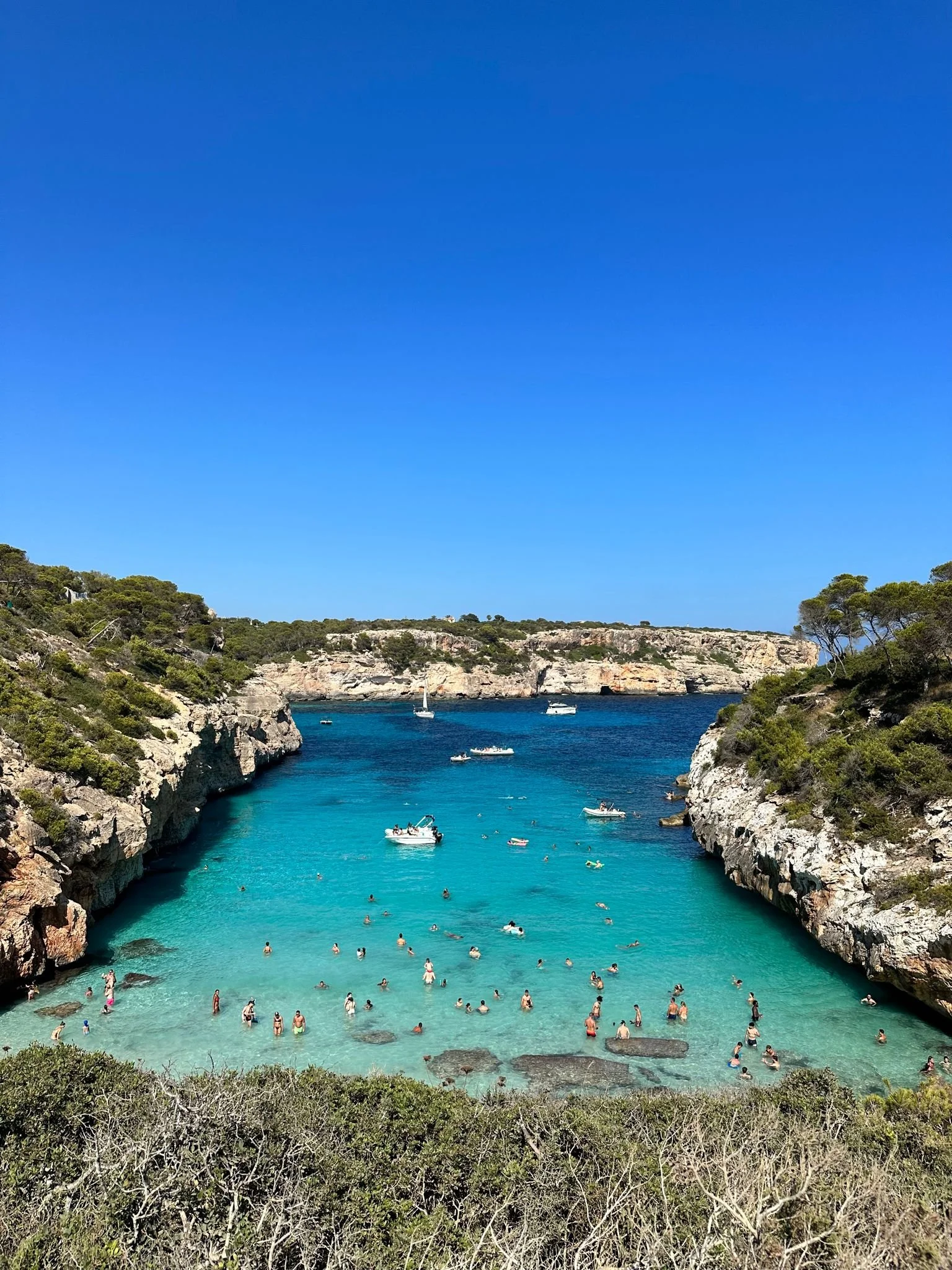
Calo des Moros
Cala s’Almunia
Cala Llombards
Calvià - Sol Del Mallorca
Cala Santanyí, a long beach day finished with a cattle fish black paella 🥘 yummy!
Cala Figuera - a dinner date we will remember forever! Let’s say we celebrated 35th wedding anniversary a few months earlier 😍
I asked Nebojsa to rate Palma’s beaches and he gave it a score of 8, out of 10!
Too crowded, water is pristine from a distance but when you jump in you first swim through a few bottle caps, pieces of rubbish before you get out into a clear water. Such shame!
If we want to compare sandy beaches of Palma with Sardinia we visited last year, then Sardinia leads the way! The green, light and dark blue, turquoise crystal clear waters of Sardinia are 11/10!
If you are happy with the crowd, you want to shop till you drop and you don’t mind that the island simply cannot cope with the volume of tourists then you must visit Palma de Mallorca!
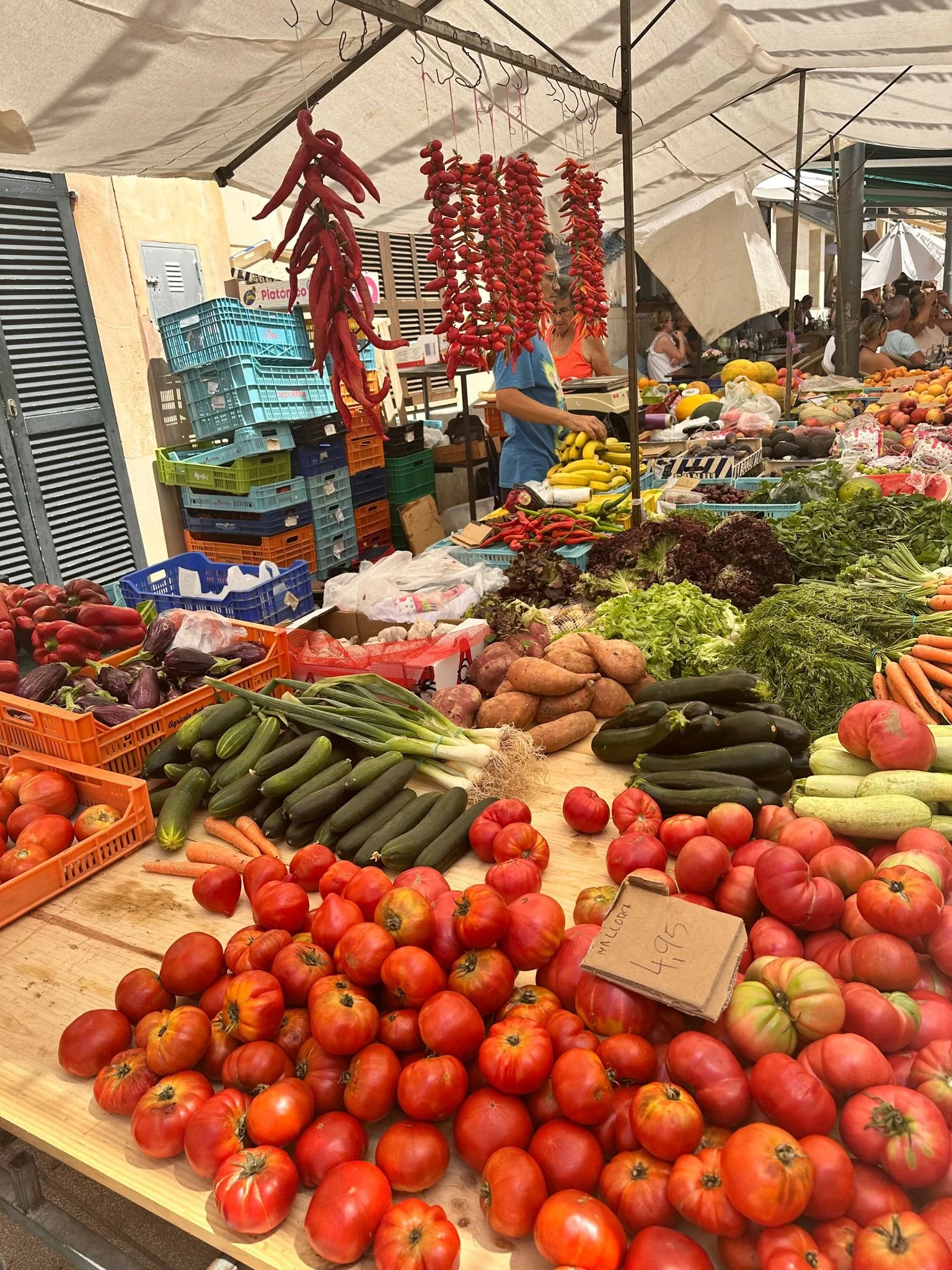
We also went to the famous Santanyi markets twice! I could walk through this market for hours, I loved it! There are numerous stalls from the local produce, fresh fruit and veggies to die for, freshly made juices, freshly made sandwiches with tomatoes, olive oil, Spanish cured ham and local cheese you can’t decide on, to jewellery and local artisan works of all sorts, to boutique shops selling clothing designed and made locally. A little shopping spree had to take place on the second visit, I couldn’t resist it and surprisingly we were within our daily budgets! Even better 😎!
And of course we went to Palma city for a wonder! I had no clue how huge this city is, it shocked me. It’s big, it’s beautiful but it’s struggling with rubbish, restaurants and shops are numerous, it is literally dining and shopping paradise! If you have thousands of euros to spend and go nuts, you would want to be in Palma! You’ll have a ball!
We are happy we visited this famous tourist destination, it was worth it! We have made so many beautiful memories again and are leaving it with our hearts and souls filled with joy and happiness.
So here we are, after just under 8 weeks of non stop travel and nomad life we are heading back to our place in beautiful Rovinj in Croatia, for a nice relaxing summer holiday.
We look forward to catching up with our friends and family and hosting our NZ visitors. Looking forward to seeing you guys soon!
We’ve had an absolute ball, it was hard on days, it was hot, it was demanding, it was outside the comfort zone, it was learning experience, it was heaps fun, and we met incredible and interesting people along a way! Amazing 🤩
The time has come to catch a breath or two, slow down a bit and enjoy our homeland beauty for a while!
Can we do it? Time will tell😎
Palma de Mallorca Photo album




Morocco - part 3 of 3
Day 13
We left Zagora and continued journey along the rugged and desolate Jbel Tadrart ranges and through seas of sand and arrived to the last village before Sahara Tamegroute
Day 13
We left Zagora and continued journey along the rugged and desolate Jbel Tadrart ranges and through seas of sand and arrived to the last village before Sahara Tamegroute with 4000 people living here under harsh weather conditions, proud of their land and grateful to tourists who are interested to get to know more about Africa and Morocco! We visited a library filled with ancient scripts of science, literature and Quran. We went through an underground kasbah and saw pottery making trade and people working under rough working conditions, my heart was broken 😢
Photo Album Tamegroute
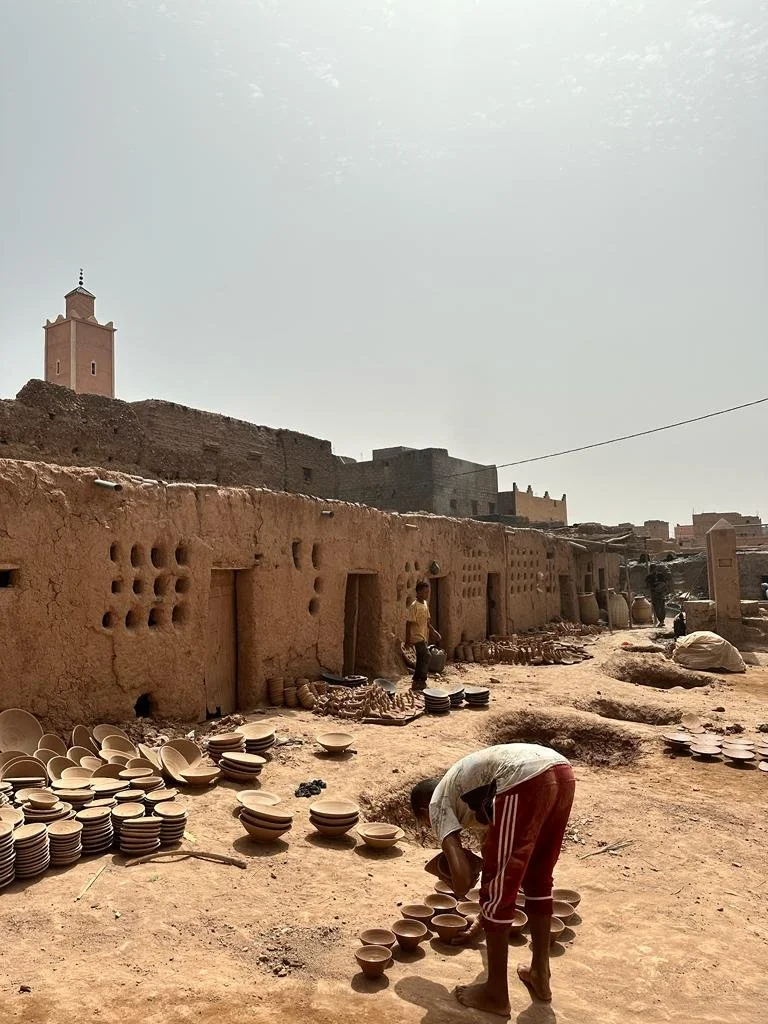


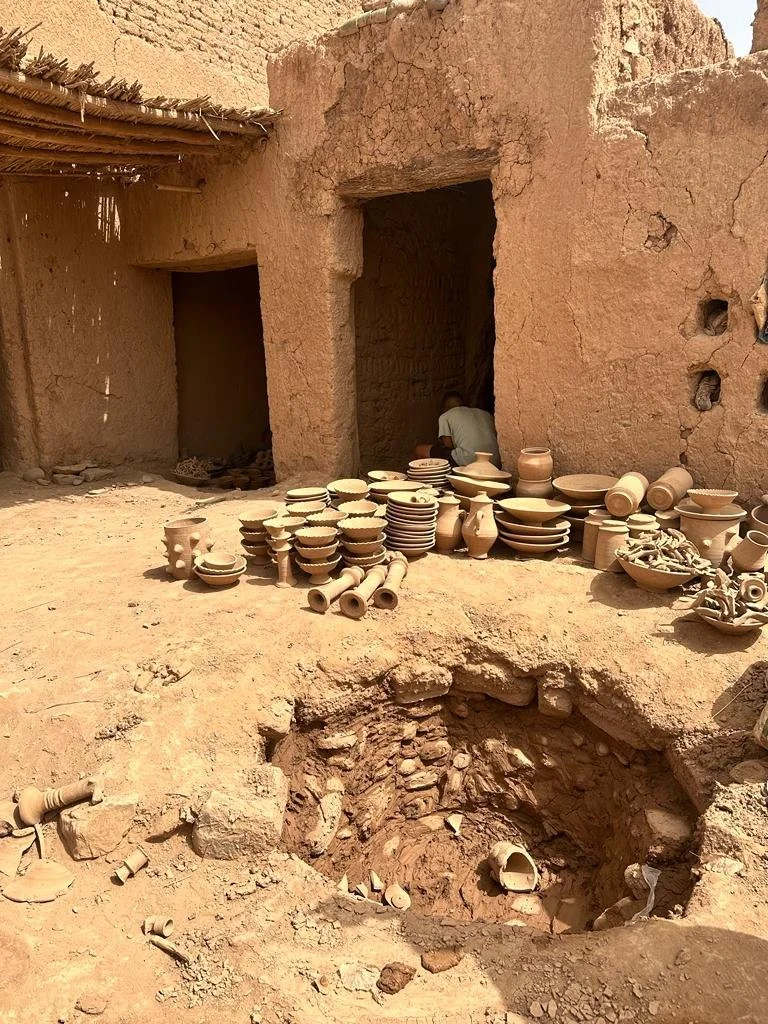


We drove a bit longer and stopped for a lunch at the frontier town of M’Hamid. After a short break and a swim in the pool off we went in 4W4 to Sahara sweating on 47 degrees! Crazy crazy crazy hot!
We drove for two full hours through the desert till we arrived to our camp site! I literally don’t have the words to describe this lifetime adventure and experience. Of course, I will give it a go, but photos below will do a much better job!
So, the 4W4 ride was crazy but safe, local guys drove us and took every opportunity to speed up, go up the dunes, do donuts circle rides, to chase one another, screaming all along was all I did ! So much fun with adrenaline at its highest!
Our camp site was far better and more luxurious then what I expected. Each of us had our own cabin with a bathroom, we had a gathering area for music and dance and a dining area in the open.
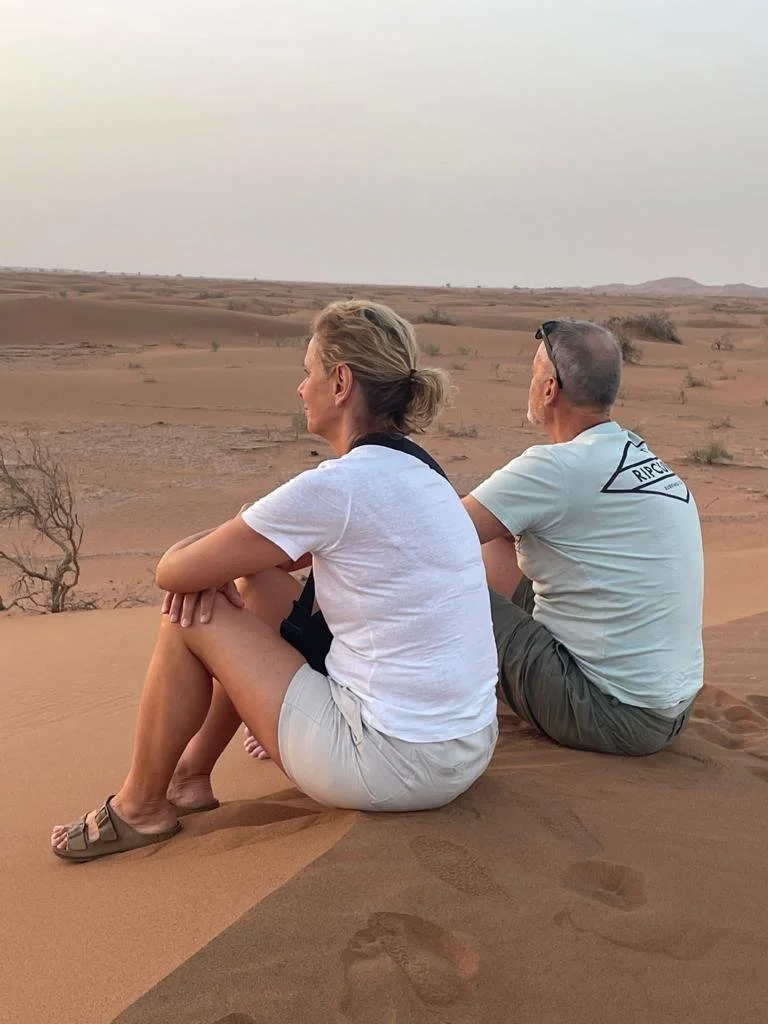
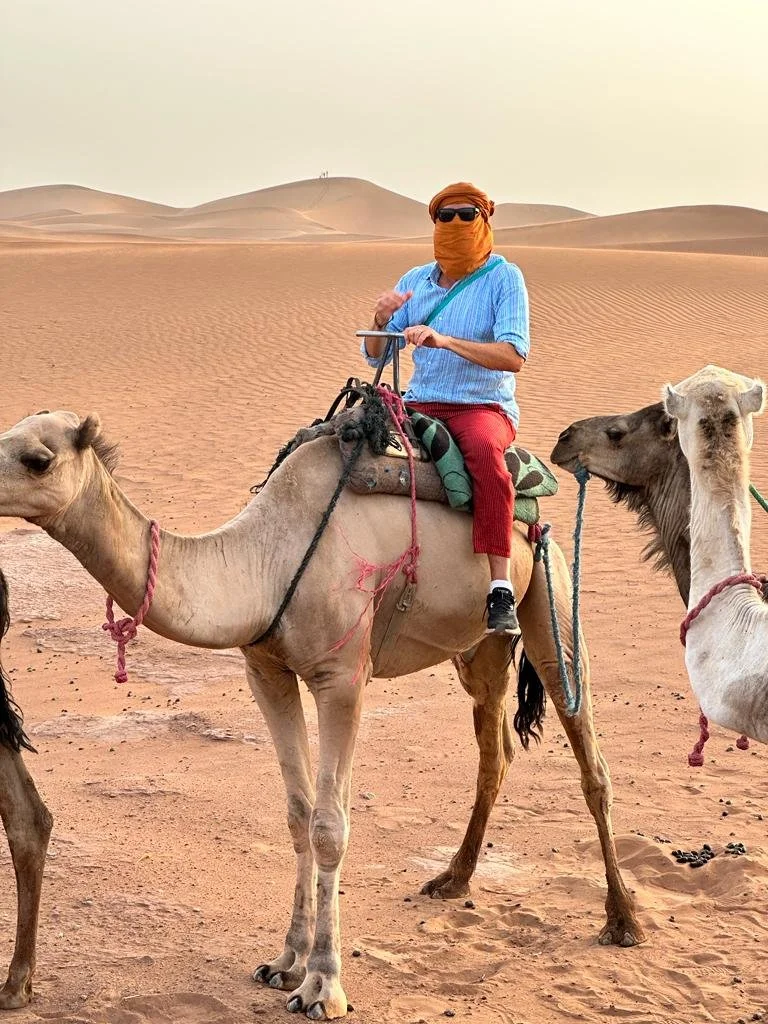
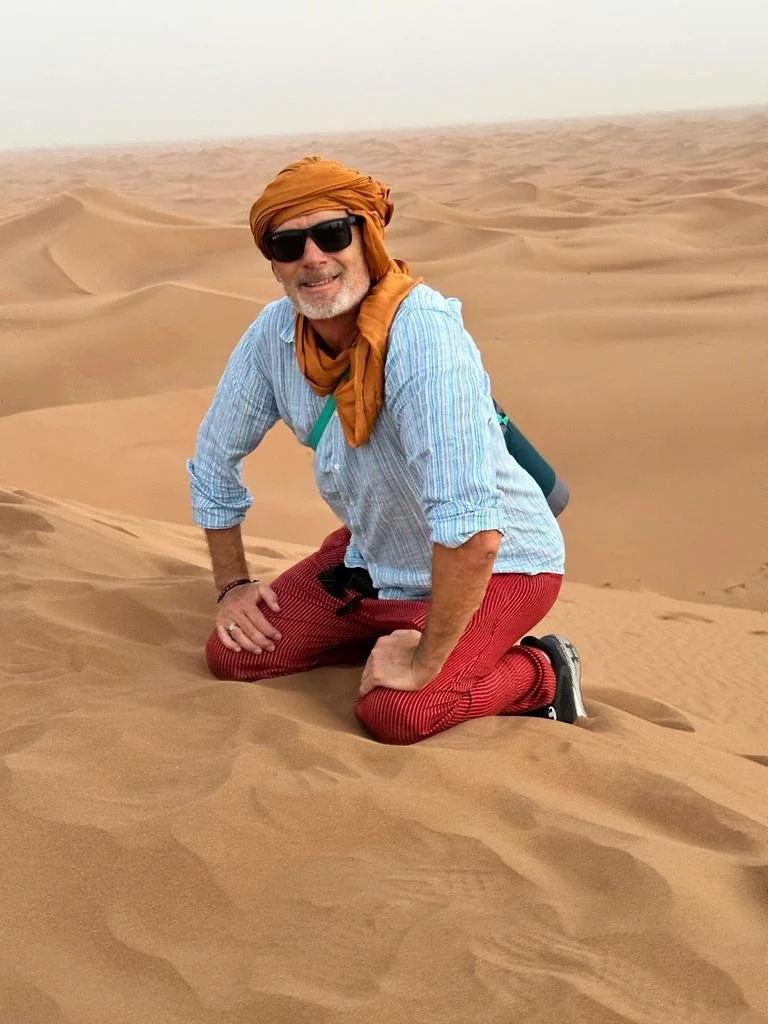
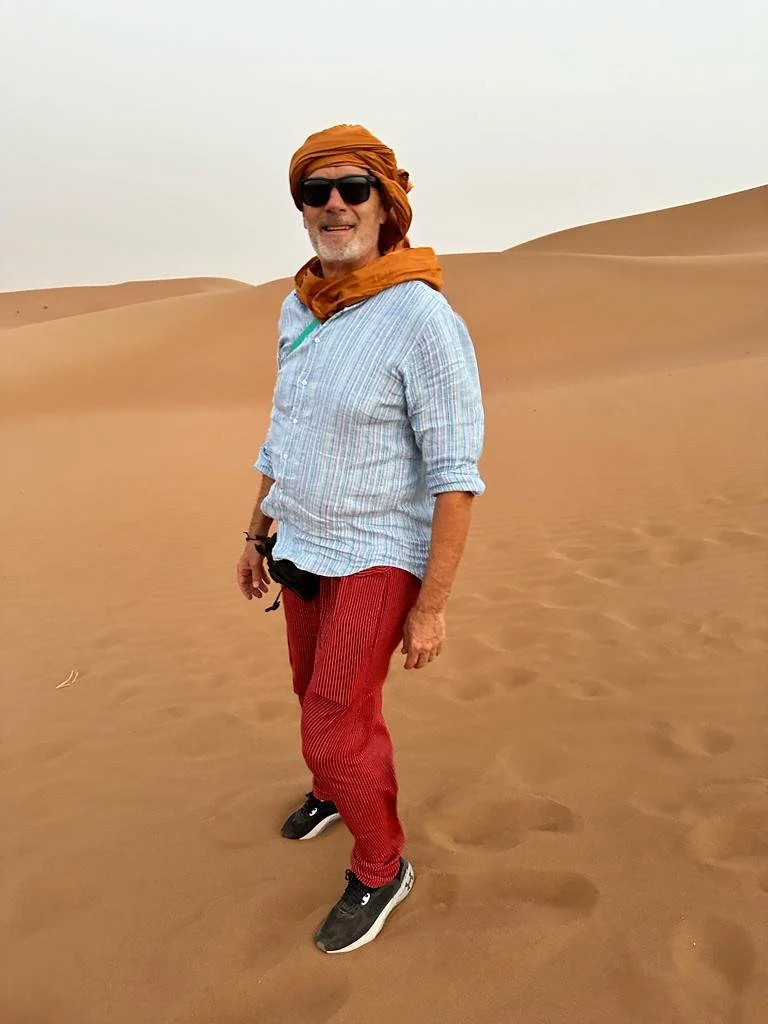
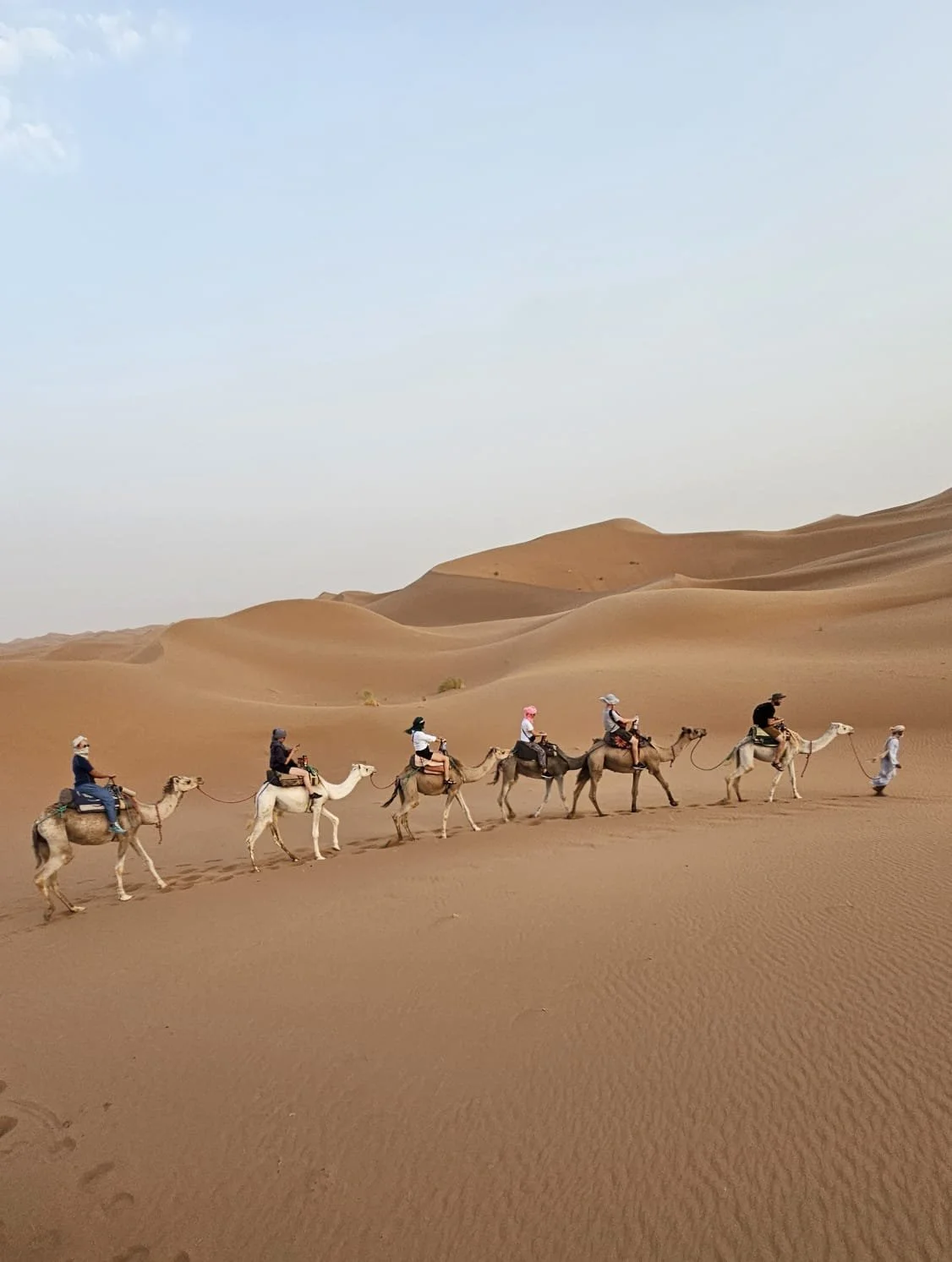
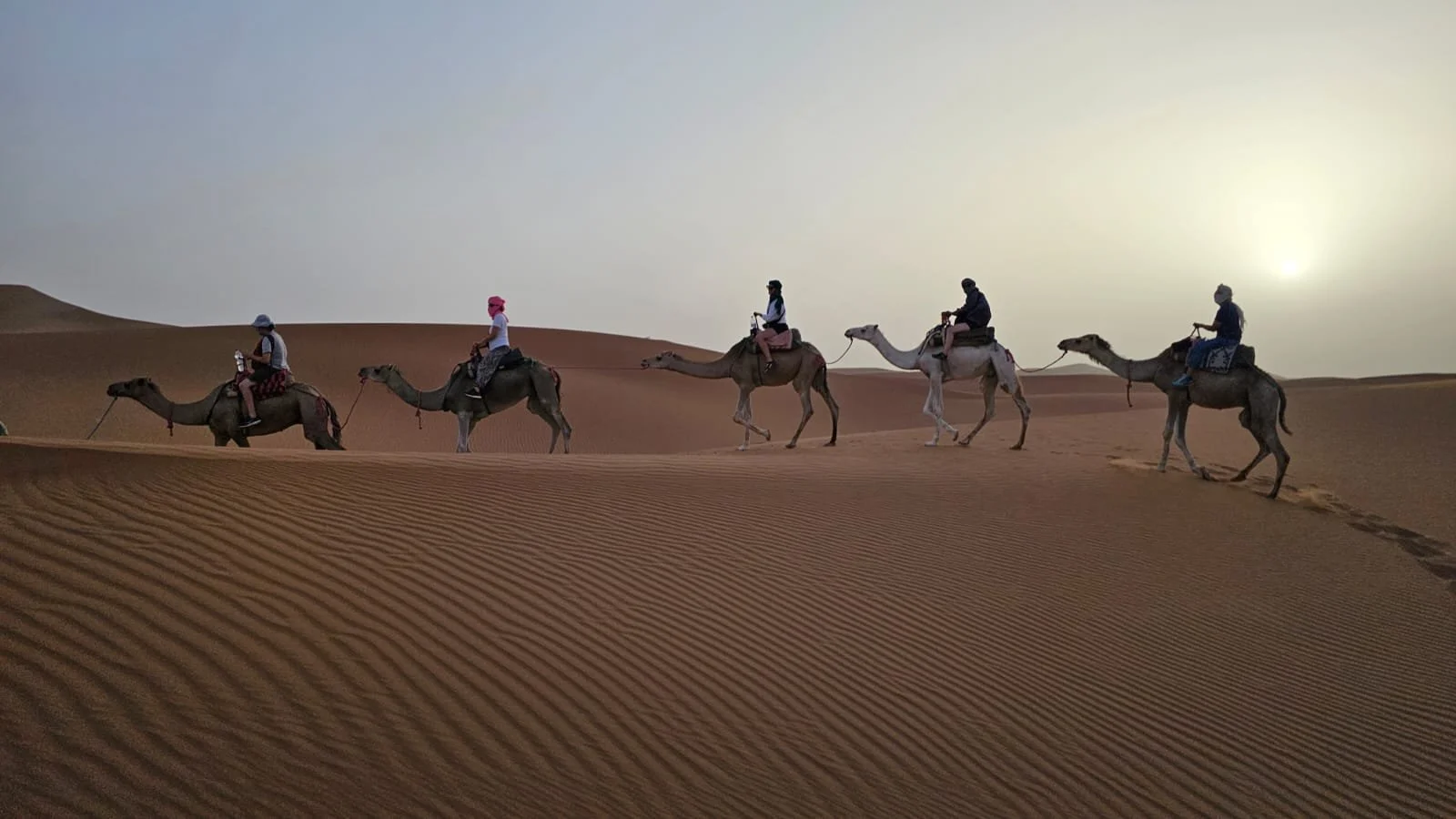
We quickly got changed and went for a walk, it was around 7pm and camels were waiting for us. Bedouins looked amazing in their national outfits covered from head to toe and we looked similar with our own headscarf bought on the way to Sahara.
The whole camel experience was fantastic, fabulous, fun, so easy especially for me who always wanted to do it, but was apprehensive about it. Another one of those out of the comfort zone experiences!
We went on a camel ride towards the sunset - no words can describe it. Loved every minute and it felt surreal, it really did and I still pinch myself to believe it. It was extremely hot, but heat didn’t bother us, we were soaking in every minute. Absolutely stunning scenery, serene, calm, beautiful, peaceful, desert, camels, and us…
After the camel ride and thousands of photos we had a shower and got together for a traditional Moroccan dinner under the stars.
Having a shower in Sahara is not a pleasant experience! The shower water was so hot, burning hot even when we opened a cold water tap! I have never ever experienced such a hot shower! Had to jump out to let the water run first before I could go back, but there was no trace of a single drop of cold water at all ☹.
After a dinner we had the local guys lit the fire ( as if it wasn’t hot enough) and play local music under the stars. Wow that’s what I call a magical experience!
All of us ended up sleeping outside, we dragged mattresses out of our little cabins and tried to sleep outdoors with a bit of breeze. Neb was the only one sleeping inside. His reasoning was that snakes and little scorpions were wondering in the sand during the night. None of us really slept that night but that was ok, as sunrise in Sahara totally wiped out all the exhaustions from days of heat and hiking.
Day 14
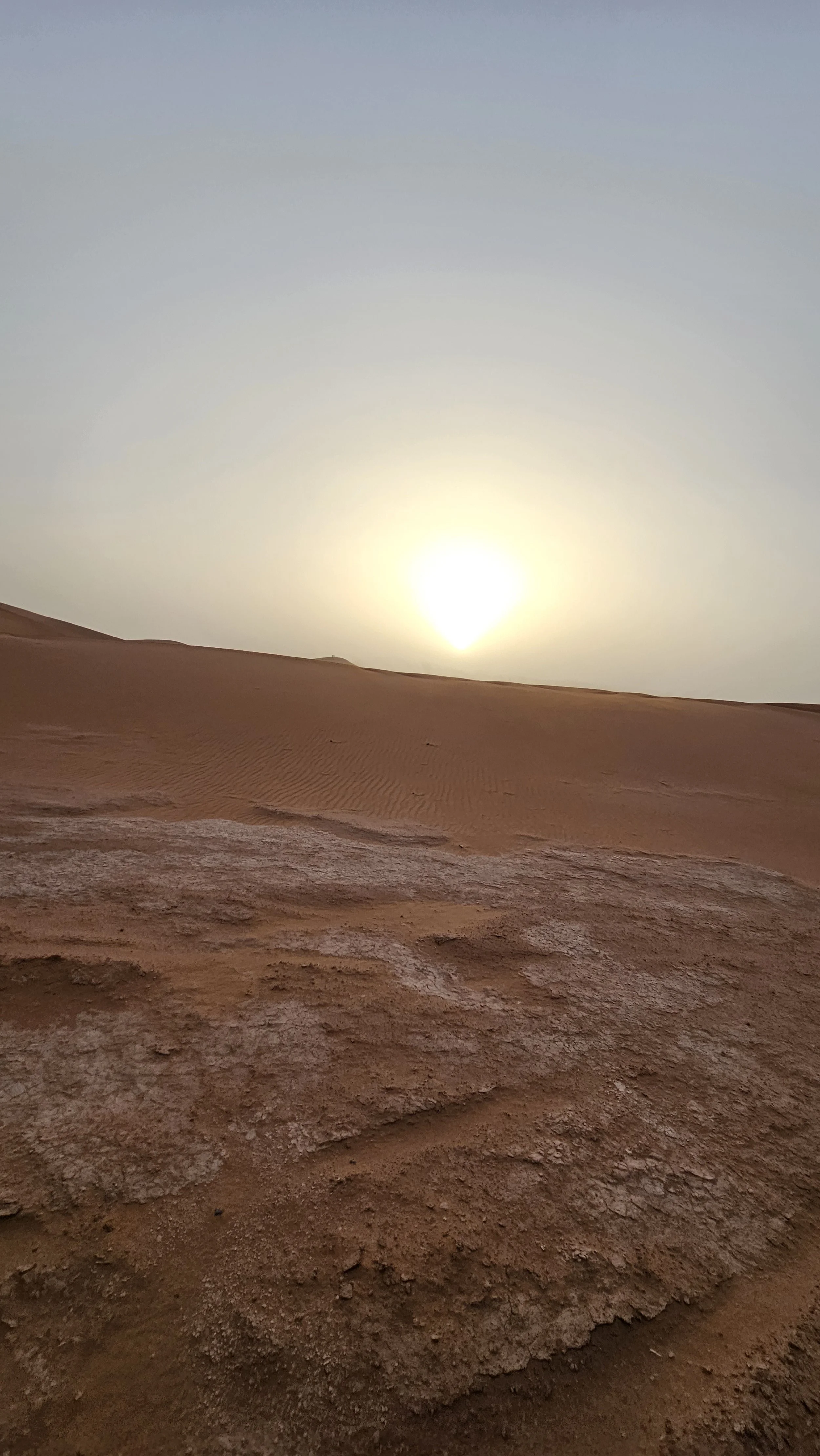
We woke up at 5am to enjoy a freshly fried bread with Nutella breakfast and left the camp by 5.30am to drive back in 4W4 towards the sunrise in the desert. I will forever remember the sun rising above the desert, calmness and peacefulness of the place. Everyone sat on the sand dunes speechless and mesmerised. Hopefully photos will do it justice, the words simply cannot.
Our drive back to a civilisation was four hours long, same local drivers did their best to bring us back safely and well entertained along the way, shukran lak - شكرًا لك ( thank you)!
We are both so proud of ourselves, Sahara desert was a big undertaking but worthy every sweat drop and there were many!!!
Photo Album Sahara Desert Day 13 and Day 14

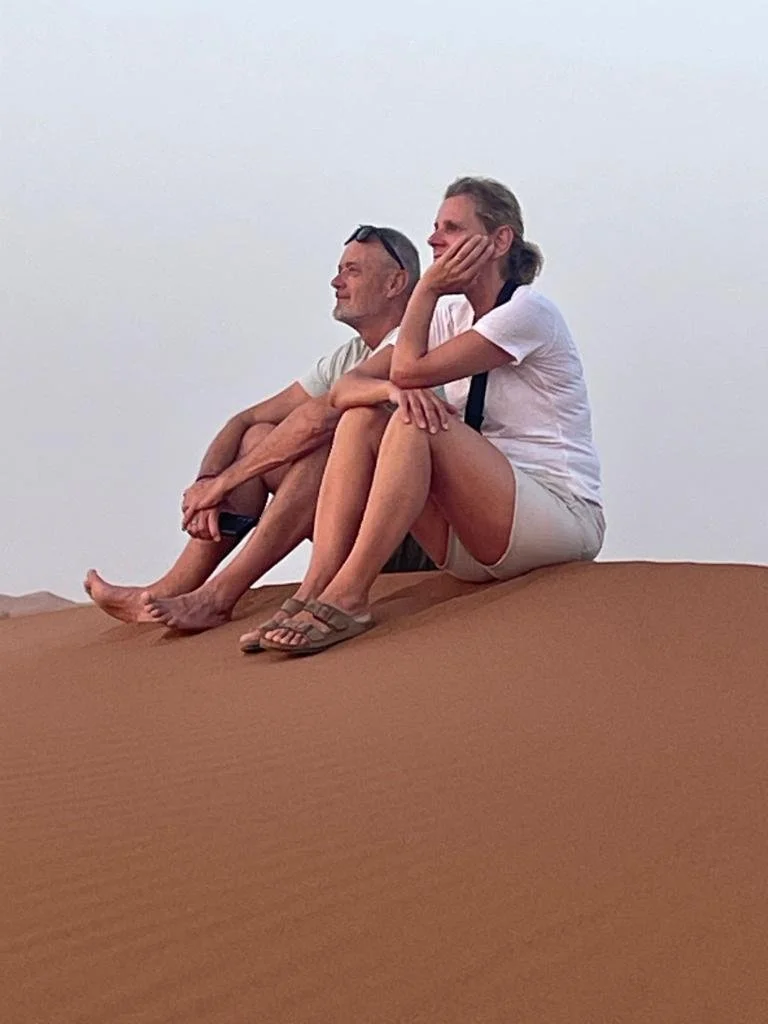














We continued our journey to the market town of Oulad Berhil by minivan and our cheerful driver Ismail. The drive was long through the desert scenery and along a route there was a reserve for the indigenous argan trees. And of course we were lucky enough to come across the famous goats climbing the argan trees and eating the nuts. That was so funny to see and surreal again?! When have you seen goats on the trees ? It only happens in Morocco!
We arrived at our accommodation at early evening and chilled in the swimming pool, had a dinner a good night sleep!
Photo Album Goats on the Argan trees


Day 15
In the morning we left the accommodation and continued travel towards Taroudant township where we stopped to see the silver markets, colourful Moroccan ceramics and to grab a coffe.
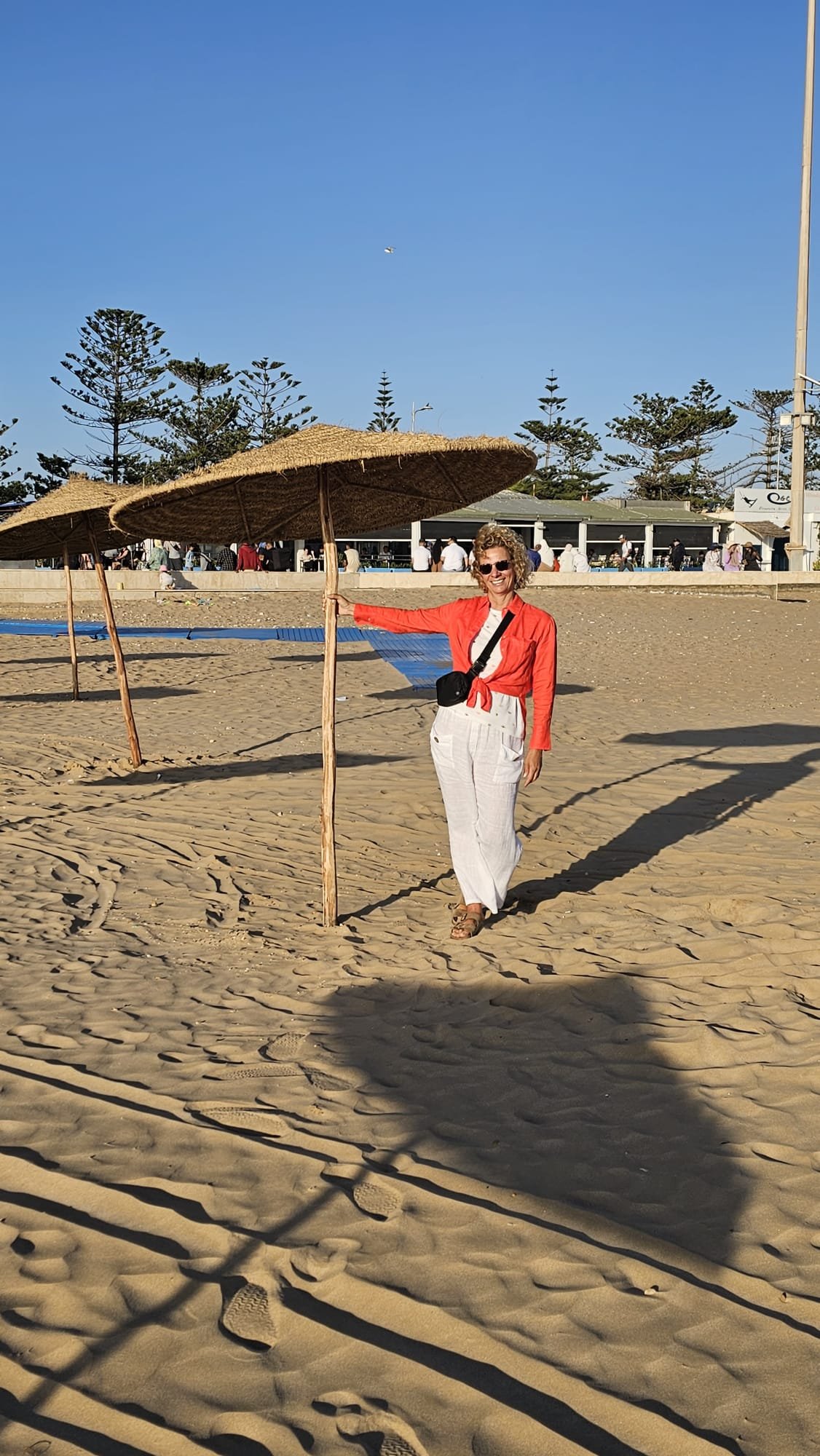
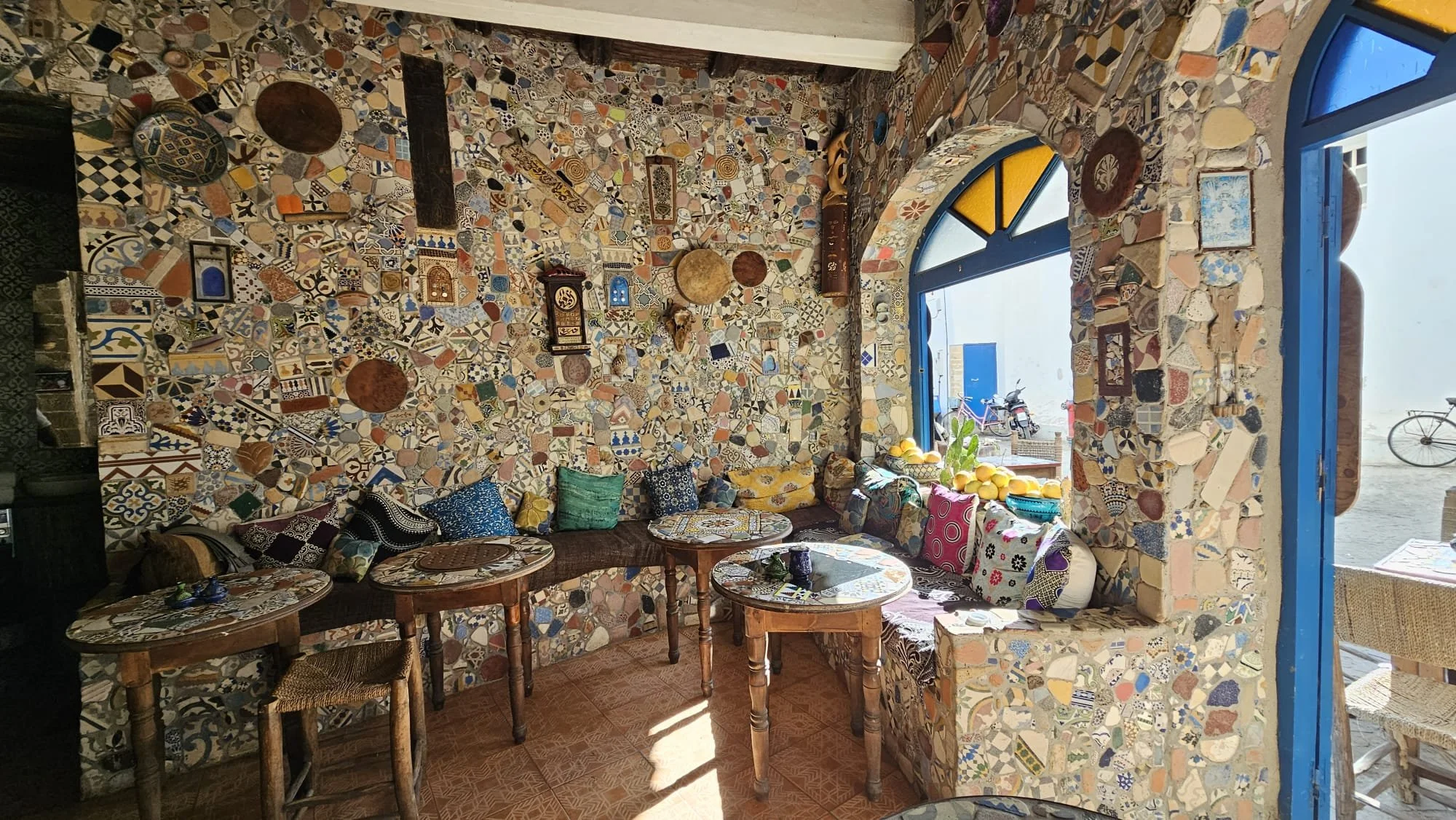
We headed west towards the coastal town of Essaouira. We arrived late afternoon and had a free time to explore this Mediterranean city on the water, with palm trees promenades, white and blue buildings and had fish and chips for a dinner - a bit of a change from Tangine!
Day 16 & 17
Our day started with a lady tour guide Rashida who took us around Essaouira beautiful city. Just when I thought we’ve seen it all, we fell in love with Essaouira. First of all we love the climate here! After living with 45 degrees for days, it was 23 degrees, I had to wear my only long sleeves T-shirt I bought with me! What a difference!
We’ve learnt that it is always around 20 degrees here, with a gentle breeze it’s so refreshing. In winter months it comes down to 17 degrees and in summer it goes up to 28, never more. A perfect place if you ask me, and a very popular tourist destination for local people and foreign visitors.
Essaouira is a historic coastal city located in the western part of Morocco, along the Atlantic Ocean. The city has a rich history that dates back several centuries. Here's a brief overview of its history:
The region where Essaouira now stands has been inhabited since ancient times. Phoenicians, Romans, and Berber tribes were among the early settlers.
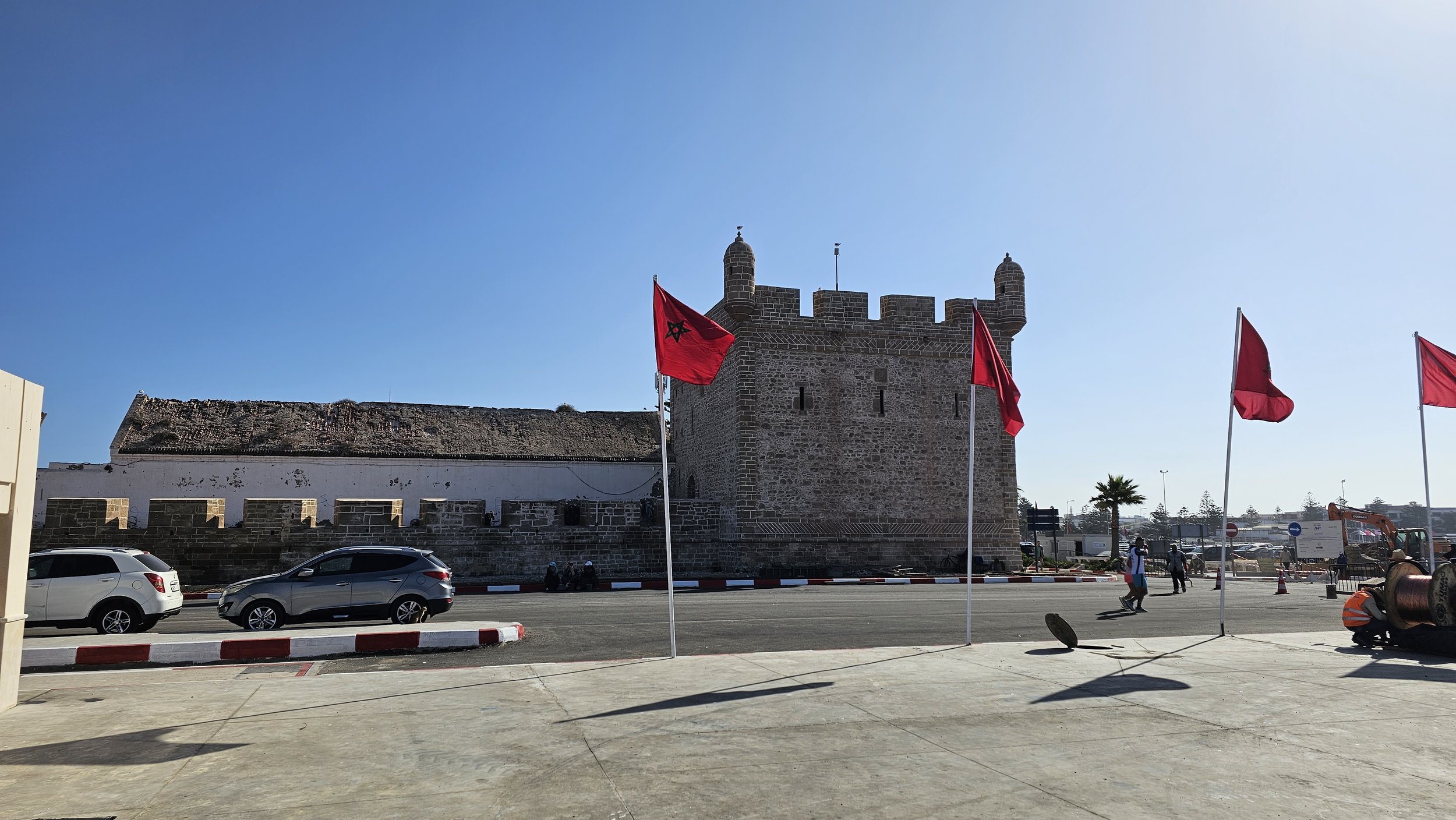
In the 16th century, the Portuguese established a fortress on the site of present-day Essaouira, which they called "Mogador." The fortress served as a trading post and stronghold for the Portuguese in the region.
In the late 16th century, the Moroccan Saadian dynasty managed to drive out the Portuguese and took control of Mogador, renaming it Essaouira, which means "the beautifully design" in Arabic. The city's strategic location made it an important trading port, attracting merchants from Europe, Africa, and beyond.
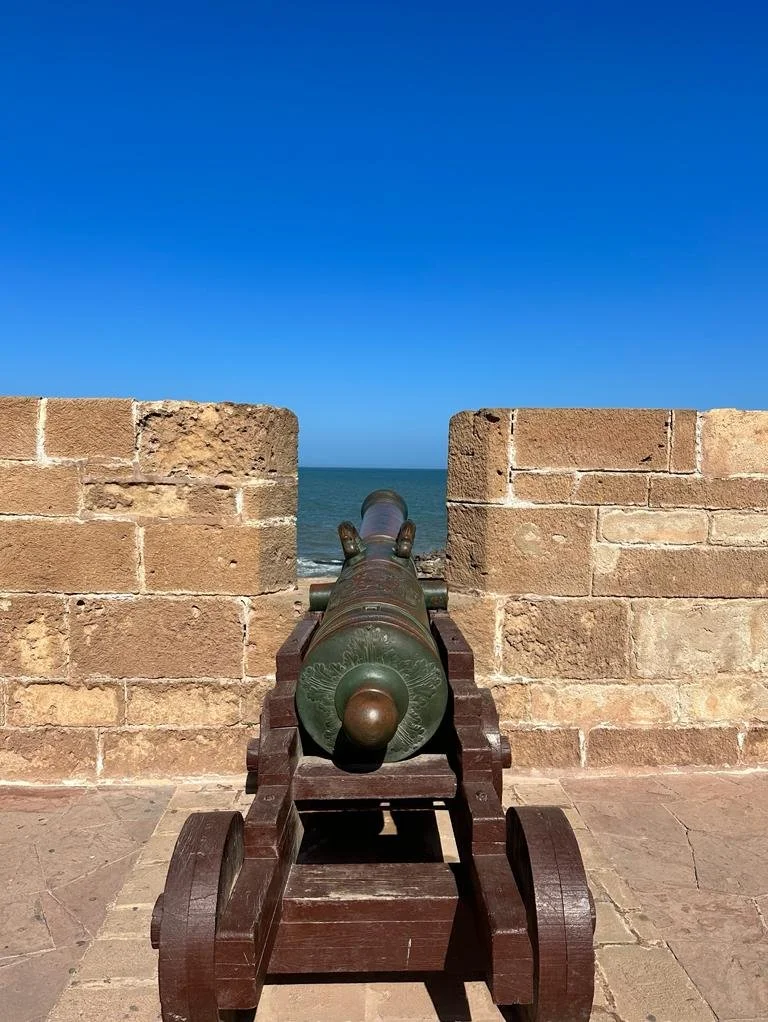
During the 18th century, under the Alaouite Sultan Mohammed III, Essaouira experienced significant growth and development. The sultan fortified the city with impressive ramparts, making it a prominent trading hub and a vital link between Morocco and the rest of the world.
Sultan Mohamed III used the city’s location to build a new port with fiscal advantages for Jews because they were great traders. Since its early days this has been a cosmopolitan city.
City was designed by a French designer, remembering that Morocco was under French protectorate from 1912 to 1956.
Anti French feeling is prominent when you get to talk to locals who feel comfortable to share their views. It goes back to the Second World War when French promised independence if Morocco joined the Alliance forces. Morocco delivered their side of the bargain but French betrayed them and ruled for another 12 years till 1956.
Essaouira has a notable Jewish history, with a significant Jewish population throughout the years. The city was home to a thriving Jewish community, and its mellah (Jewish quarter) was an essential part of the city's social and economic fabric.
We visited a former Jews quarter and learnt that Jews who left Essaouira went to France, Israel and Canada. Israel had to pay $50 USA for each Jew that left and they had to keep the Moroccan citizenship. Jews from Morocco who live in Israel have dual citizenship and are proud citizens of both countries.
In the 19th century, Essaouira became a hotspot for European powers seeking to expand their influence in North Africa. The city saw the arrival of French and British consulates and became a center of European diplomacy.
With the advent of modern port facilities and changing trade routes, Essaouira's importance as a trading port declined in the late 19th and early 20th centuries. The city fell into a period of relative obscurity.
In recognition of its well-preserved historic architecture and unique blend of cultures, Essaouira was designated as a UNESCO World Heritage Site in 2001.
In recent decades, Essaouira has experienced a renaissance as a popular tourist destination, drawing visitors with its beautiful beaches, vibrant medina (old town), bustling souks (markets), and annual cultural events like the Gnawa Music Festival.
Today, Essaouira remains a captivating city that reflects its diverse history through its architecture, traditions, and unique cultural heritage.
You’ll remember me saying how I didn’t like bargaining with sellers. Well, today we had the best experience ever! We tend to buy two coffee cups wherever we go. We love our coffee and drinking from a souvenir cup revives memories and triggers conversations. We stopped by a ceramic store and hesitated to engage. The young man read our body language well, invited us in and left us to wonder around. He made us a royal Moroccan tea, sat down with us to talk about his family, business and proud respectful Berber - Amazigh culture. He shared with us that Marrakech is a place where sellers are more aggressive which puts people off, but in Essaouira sellers are predominantly Berber and are different- they want tourists to enjoy the experience, to remember Morocco in a good light and spread the news around. They are very respectful. We bought our two coffee cups, we paid the price he asked for and loved the young family man, so so so kind and generous.
I have to share one more story from this visit. Rashida our tour guide lady was phenomenal and you could tell she was a highly educated and intelligent person.
Rashida said that Morocco has never been a melting pot but rather a mosaic of ethnicities. I was intrigued by that statement, so I asked her to explain the difference and I was blown away with her simple yet profound explanation.
As an example, America is a melting pot where everyone is expected to fit in, for example you must speak English to live there.
Morocco is a mosaic of ethnicity where everyone is different, authentic and unique and the country encourages it to be that way, there is no expectation to fit in, it’s about being yourself, it’s about the concept of plurality! I love this and will take it forward with me.
Food, movie industry and handicraft are the main income sources for the region.
We visited the port and saw so many fishing boats all painted in blue colour, it’s the must! Why - no one really knows, but a couple of theories are - Portuguese influences, or Jews who outnumbered Muslims in the 16th century painted them blue for hygiene reasons because flies don’t like blue colour pigment?!
Essaouira is the 5th sardine port of Morocco. Foreign fleet do not fish here, but fish is getting depleted, it is a global problem but world has double standards - Spanish do the same as Chinese and Japanese but no one talks about it !
Fishermen give between 2-3% of their daily catch to women who wait in the port every morning with a bucket. These women wear a vail to protect their privacy, and to fight a prejudice that says every soldier and a sailor has a woman in a port, intimidating that women in the ports are “cheap ladies”. These women get fresh fish to feed underprivileged community members, so they get fresh fish and not leftovers. Don’t you like this community spirit, I do!
In 1984 slavery was officially abolished in Morocco but double standards exist today and its an ongoing battle.
Entrance into the port built by Mohamed III in the 18th century has three ethnicities symbol engraved in the walls - Berber, Jews and Muslims. He was a visionary man who wanted everyone to live together peacefully.
Here we go again, we seem to have lost something that our predecessors fought for, co-life. It seems the civilisation today prides itself on singularity instead of plurality- just watch the news for a week and you’ll get what I am writing about!
Game of Throne was filmed here too, it was Astapor City - click here ( https://exploreessaouira.com/game-of-thrones-essaouira/)
We visited the fortress built in the 18th century to protect Morocco from different European invades.
I found it interesting to know that French wanted to expand the French influence and French type of life, while Spanish were way more interested in using Morocco’s natural resources for their benefit and left Morocco with Sahara desert filled with land mines, so sobering.
Diplomatic relations with France are currently pretty bad, especially since Morocco decided to teach English instead of French at schools, starting from September 2023! It’s a brave move by the central government and welcomed by its people.
Photo Album Essaouira







Day 18
We left Essaouira around lunch time, took a public bus back to Marrakech and had the final farewell dinner with our Intrepid Tour friends.
Intrepid Tours was the great choice, we offered a few suggestions for the future, but overall we were very happy and felt very well looked after all along, definitely happy to recommend them and would use them again without hesitation!
In the morning we left for the next destination, more on that in the next blog!
To wrap it up:
Morocco is the country of contrasts, yet very proud and more progressive African country.
Morocco’s history is rich and diverse, spanning thousands of years. The region’s earliest inhabitants were Berber tribes. Over time, Phoenicians, Romans, and Vandals influenced the area. In the 7th century, Arab conquerors introduced Islam, and Morocco became part of various Islamic empires.
The country saw the rise of the Almoravid and Almohad dynasties in the 11th and 12th centuries. These dynasties expanded their rule across North Africa and Spain. Later, the Marinid and Saadi dynasties ruled the region, establishing Morocco as an influential power in the 16th century.
In the 19th century, Morocco experienced European colonial pressures, with France and Spain establishing their influence. In 1956, Morocco gained independence from France, and King Mohammed V became its monarch. His son, King Hassan II, followed him and ruled for several decades, facing political challenges.
Today, Morocco is a constitutional monarchy with King Mohammed VI as the reigning monarch. The country is known for its unique blend of Berber, Arab, and European influences, making it a fascinating destination with a vibrant history and culture.
Moroccan people are so kind, welcoming and grateful, and above all they do not like to show off. When they go grocery shopping they buy meat first and put it at the bottom of a bag, fruit and veggies in a middle and long mint leaves at the top. That way whoever sees a grocery bag doesn’t know if they have meat or not, some can afford it, others can’t, mint leaves are cheap and everyone uses them daily for their famous Moroccan Tea. The same approach applies for how they dress, build houses and live life in general, humble hard working smart people who on average speak at least three languages.
Each time we engaged in a conversation we got asked where we are from. We would say from Croatia but we live in New Zealand. The response was always the same - oh Croatia - Modrić! Luka Modrić! Everybody knows Modrić and loves him so much! It was so cool to talk to them about the football, and the last FIFA cup when Croatia played Morocco for the third place. As soon as Modrić retires Morocco will beat Croatia, everyone has told us that!
We fell in love with Algerian singer songwriter Amine Mohamed Djemal, the lead singer of the band Babylone and their popular song Zina! Our lovely bus driver Ismail played this song and sang along with a big smile and hands in the air! We got to learn the lyrics and here is a link with English translation - enjoy!
https://www.youtube.com/watch?v=K-_oVlImkXA
And check this one out - Ahmed Alshaiba - he taught himself to play the oud, a lutelike stringed instrument, and made a splash on social media with his cover versions of pop songs. Amazing!!! He had over 140 millions views on YouTube. Unfortunately, the young artist died last year in a car accident.
https://www.youtube.com/watch?v=E5OfNIQtK3U&list=RDEMOHMSiQsB9piQu9Z47zeaEA&start_radio=1
The End
This phenomenal and enlightening trip has come to its end, I am so happy we spent this much time exploring Morocco, from the North to the South, from the big cities to the Atlas Mountains and Sahara desert, to the coastal cities of Tangier and Essaouira.
The people of Morocco deserve every happiness in this world, they are so hard working, so multitalented, smart, multilingual, craftsmanship is in their blood and they are so happy with so little.
I wish them all the very best in their journey to prosperity, I thank them for the warm hospitality, and I know for certain Nebojsa and I will help them in our own way.
Morocco - part 2 of 3
Day 10
We left Marrakech at 9am and took a short drive into the High Atlas Mountains to the village of Imlil. We stored our luggage in the hotel, packed an overnight bag onto mules and started our walk towards the peaceful village of Aroumd.
يله مغربي
Yellah Morocco
Let’s go Morocco
Day 10
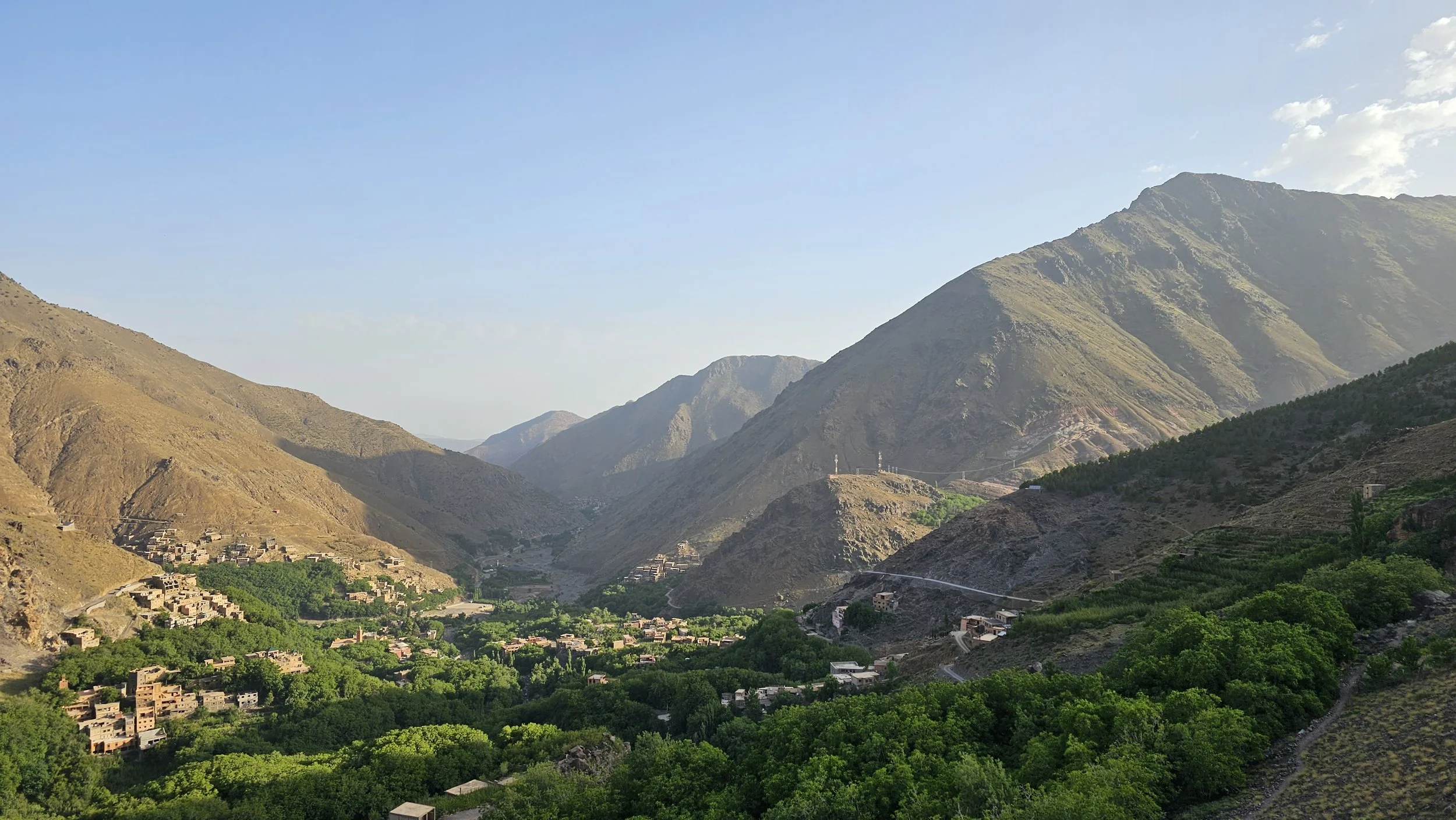
We left Marrakech at 9am and took a short drive into the High Atlas Mountains to the village of Imlil. We stored our luggage in the hotel, packed an overnight bag onto mules and started our walk towards the peaceful village of Aroumd. Along a way we saw many walnut, apple and cherries trees full of fruit. This village is 400 years old, perched on a rocky outcrop and offers stunning views of the High Atlas Mountains. It is a special place to explore beyond the reach of the modern world.
I didn’t know there are as high mountains in Morocco perfect for hiking and tracking in spring or autumn time, and ski fields in the winter time, with heaters in the hotel bedrooms for cold winters, believe it or not?!
The mountain summit is 4167m above the sea level!
I thought Morocco was pretty much a desert country while actually Sahara Desert sand dunes make up 20% of Moroccan landmass, the rest of the Sahara desert is rocky mass or dried out lakes, everywhere else is green with huge Atlas Mountains chain spreading across the country. What a surprise!
The visit to Aroumd gave us an opportunity to experience a true Amazigh culture. Since Amazigh people are the indigenous people of Atlas Mountains, it was sooo cool! Lachen our new tour guide is another proud Amazigh!
12 families who live in Aroumd make up 2000 people who live as one community supporting one another in everything.
They have a mosque, Hamam and a school all built together as a community with no help from the government. After waiting for 50 years they simply took charge of their own destiny and went on with it!
Intrepid Tours collects the money and puts it towards the girls education and builds homes and colleges in villages within the Atlas Mountains, 5 are built so far and more to come. I loved this fact, it’s good to know a portion of our money goes for a good cause. I’d say good on them!
We spent a night in a family run mountain gite and enjoyed the hospitality of wooden baked bread, tangine or tajine, Moroccan whisky ( green and mint tea) and amazing peanuts cookies, yummy!
Early morning after breakfast we went hiking for 8km return to the pilgrimage shrine of Sidi Chamharouch!
We have never ever done anything like this and I am super proud of us both!
We hiked uphill on uneven surfaces in hot weather for over 4 hours, and went all the way up the mountain to see the shrine.
We walked from 1930m to 2350m above sea level! We had a freshly squeezed cold orange juice on the way up, saw many mules carrying people and goods, enjoyed the beauty of the nature all along.
Although the shrine is a holly place it carries a pretty bad reputation! The story goes like this: women come to either find a husband or those whose are married to get pregnant. Quran says you believe only in one God, when women start believing in shrine superpowers the troubles start, marriages split, betraying starts, and you can get the rest of the story, not good!
I found it fascinating we got told a completely different story by the local tour guide to what the itinerary stated about the shrine! That’s the best part of having local people guiding you on tours, so much more information and fun!
This day’s memory will last forever! We’ve never done anything like this before, we had sunshine, thunderstorms and refreshing walk back downhill with a bit of rain! Yes the very first rain since we started our journey that lasted 15mins!
On arrival we had delicious home made dinner and slept like the babies!
Photo Album Imlil/Aroumd
…walking towards pilgrimage shrine, at this point we were about 1,980 meters above sea level
… coming back to Imlil after the day walk


Day 11
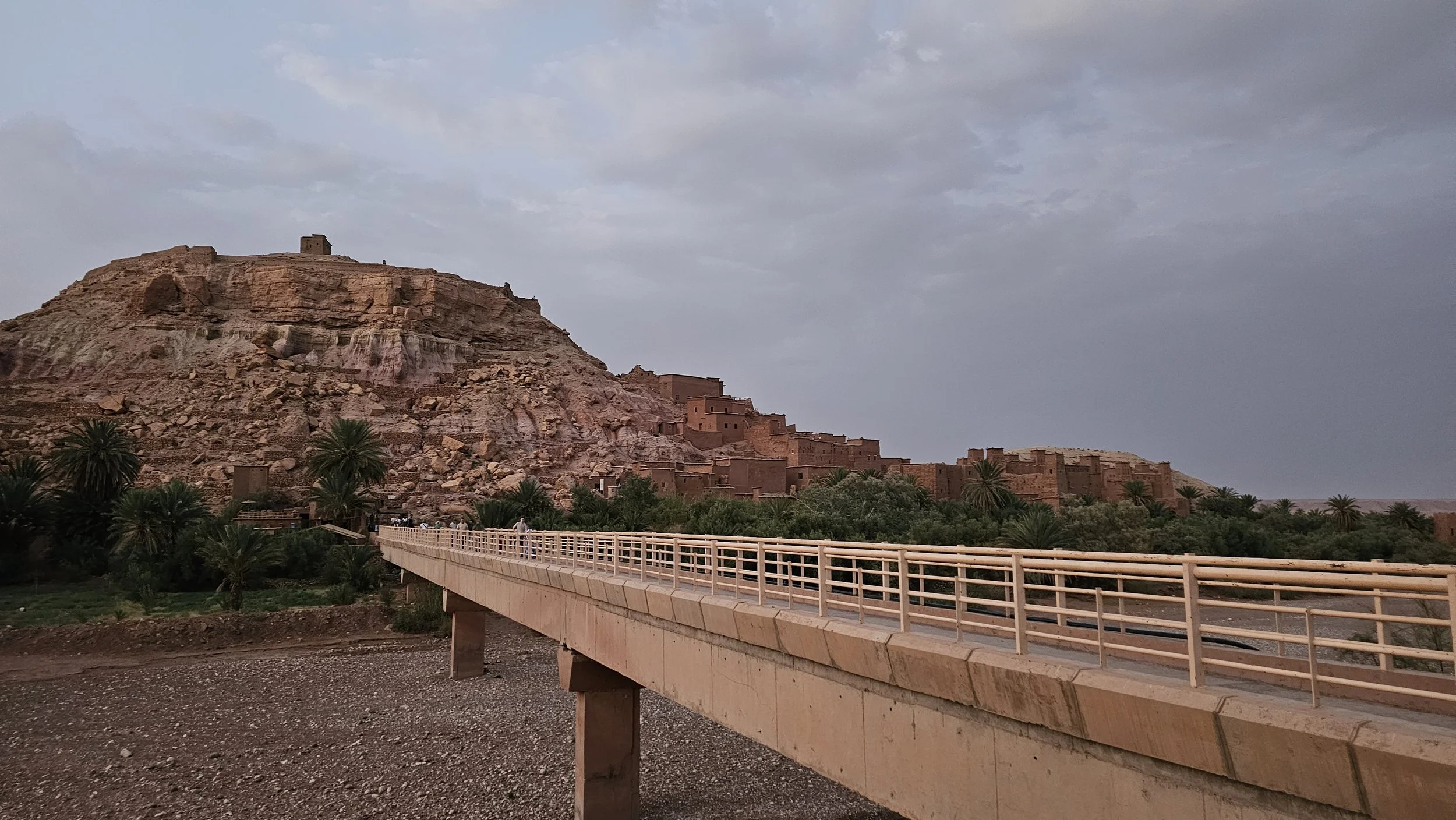
After breakfast we walked back to Imlil village to pick up our bags and we continued journey along the mountain roads and over Morocco’s highest pass Tizi n’Tichka (2260m) to Ait Benhaddou, one of the Morocco’s most iconic sites.
On the way we stopped by Richard Benson’s hotel full of people who pay fortune to stay in this beautiful hotel, who would have ever thought he’d own a hotel in Morocco?!
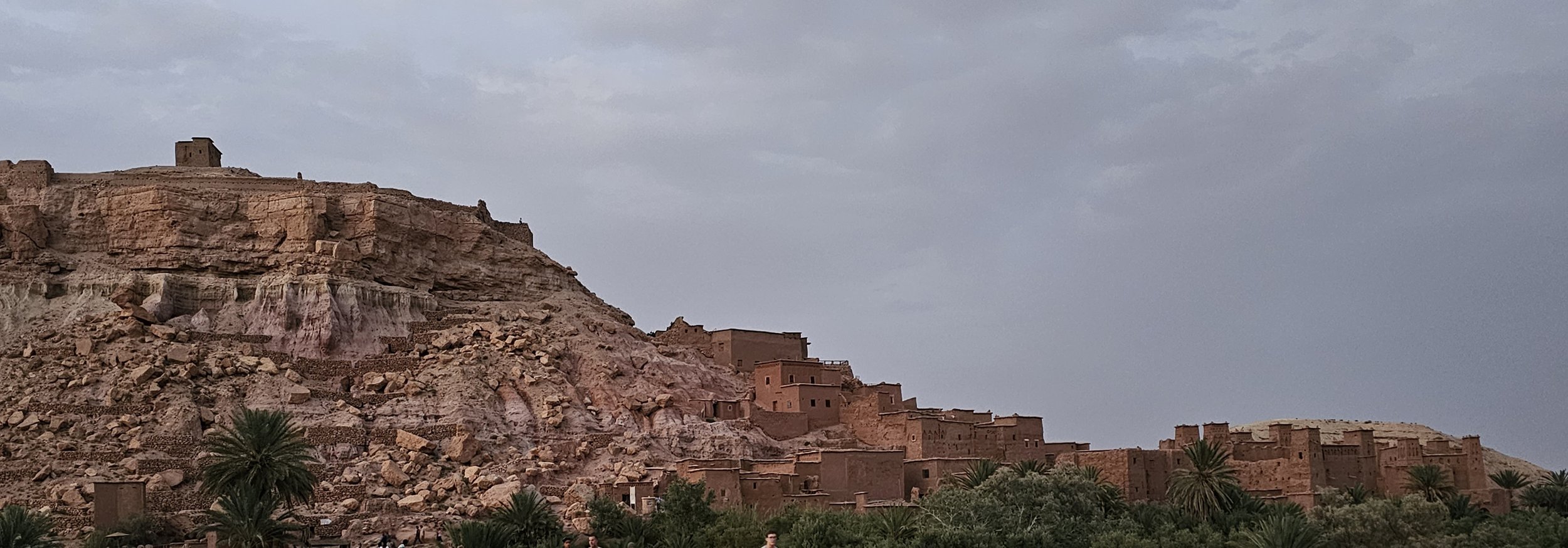
Ait Benhaddou village hasn’t changed since the 11th century although the local tour guide believes it’s even older because of the architecture and exposed external beauty of the buildings built out of terracotta soil, straws and water! And they are still standing strong and proud!
Between the old and a new village there is a river and donkeys are used to carry people and stuff over. But no river today! Drought is so prominent, they have never experienced it as bad, so we simply walked across the river bed to get to the old village.
After 1956 the first family moved from the old to the new village, the year when Morocco declared its independence. Today there are only 8 families who live in the old village.
It used to be a caravan stop for salt trading. In the old days salt and gold had the same value / price and the river is called the Salt River, it was a golden time for the community.
But guess what?! It is a very important site today too, not because of the salt but for the movies production! Yes, this is the site where Gladiator (both movies) were shot, plus Game of Thrones, including our very own tour guide acting in the Season 4 episode 6! We are all now going to rewatch that episode to spot our Mohamed. 🤗
Since 1987 this village has become UNESCO protected site. Since then, if a movie studio builds anything, they need to destroy it after the production is over to keep the site in its original state. A great call!
Mohamed took us to the old village to show us his family home. It’s mind blowing how they make living out of so little and how strong is the community co-life.
Even animals live inside the house area because the land is individually owned so they respect it and don’t want animals to randomly wonder around and eat each other grass. It’s organised farming with pre agreed protocols. We could learn a lot from these people!
Only 10 years ago they’ve got a fresh water in houses. There are many olive trees, and they make a well known extra virgin olive oil out of green olives.
Bread is made every second day, it is a shared responsibility, it means less work and less wood needed to bake it when they work as a community rather than individually. Super cool if you ask me!
Couscous takes 3 hours to make, yes and not 3 minutes! First you stew the meat with onion and water, later you add veggies, and couscous comes last, you must only steam couscous, never cover it with boiled water!
They have a mosque and a synagogue.
Jews and Muslim lived here together for 600 years. In 1947 most Jews went to Israel after the country was formed, and in 1964 the last Jew family left to Jerusalem.
When I asked why today co-life is almost an impossible concept, Mohamed’s response was: it’s never been about religion, it’s always about the money, power, politics and crazy people! I couldn’t agree more!
We stopped by Tawesna Teahouse on the banks of the river. This community run establishment provides local women with income to support their families, who in turn produce delicious pastries, cookies and tea using locally produced ingredients.
Photo Album Richard Benson’s hotel
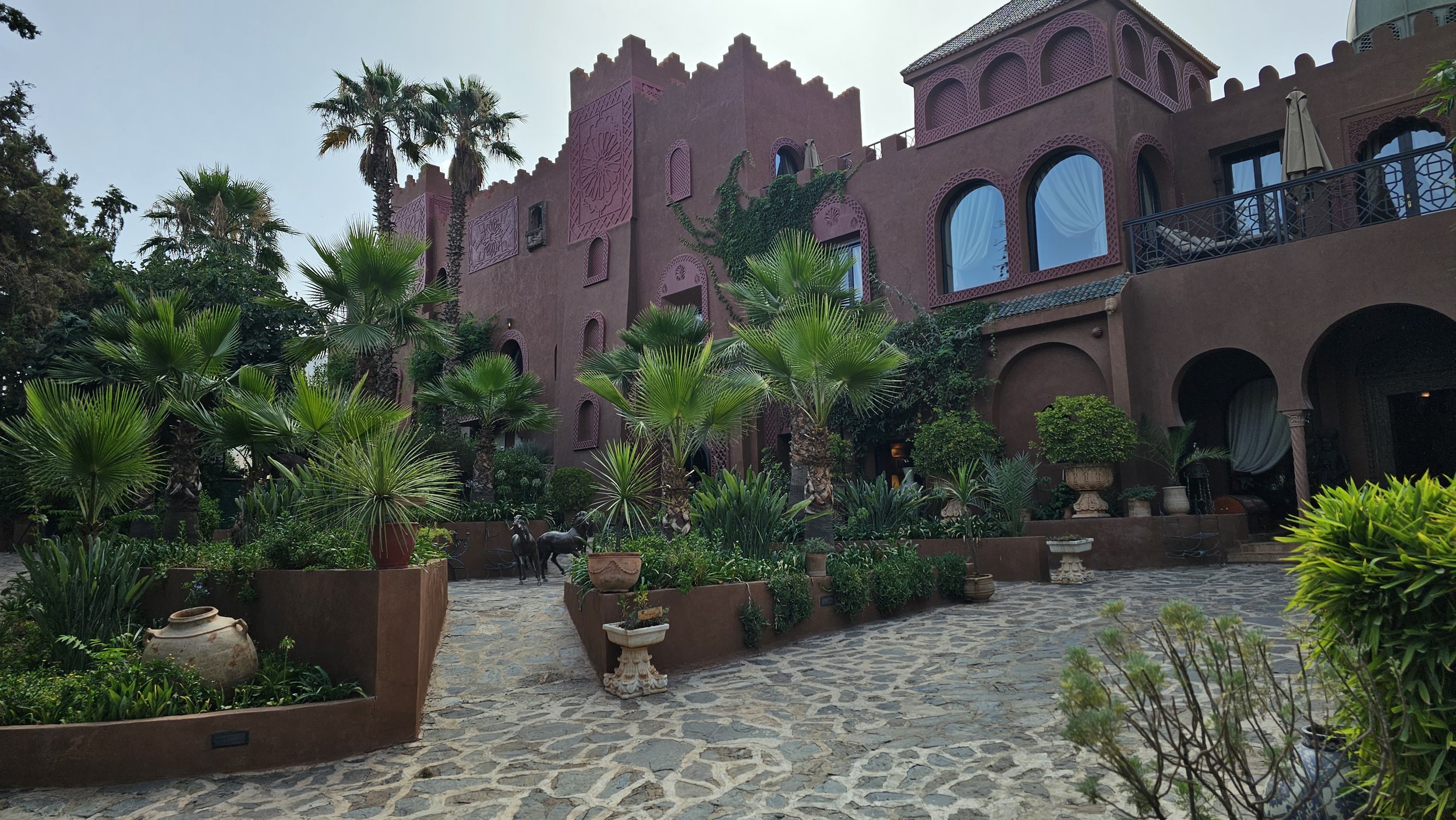


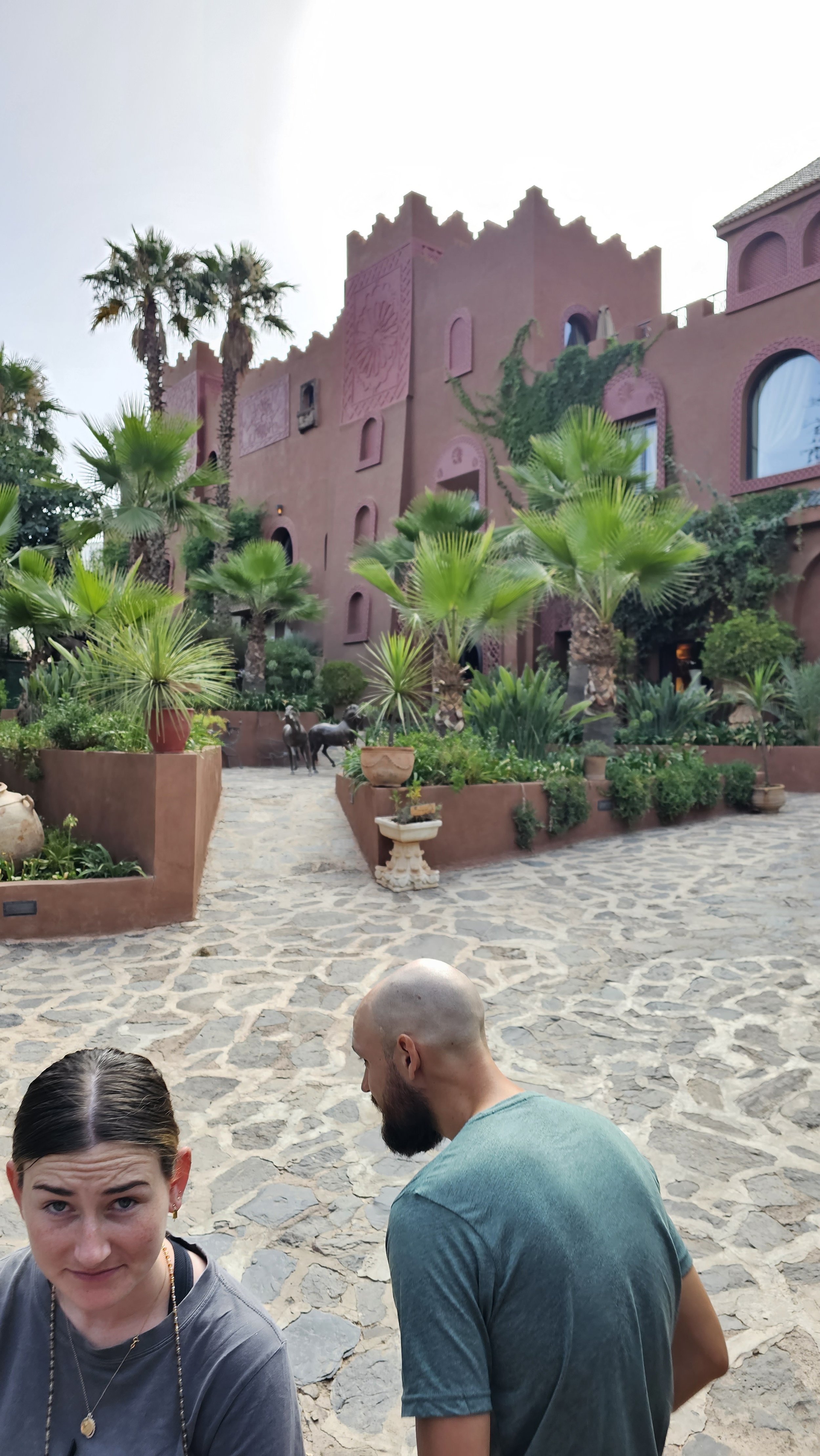


Photo Album Ait Benhaddou


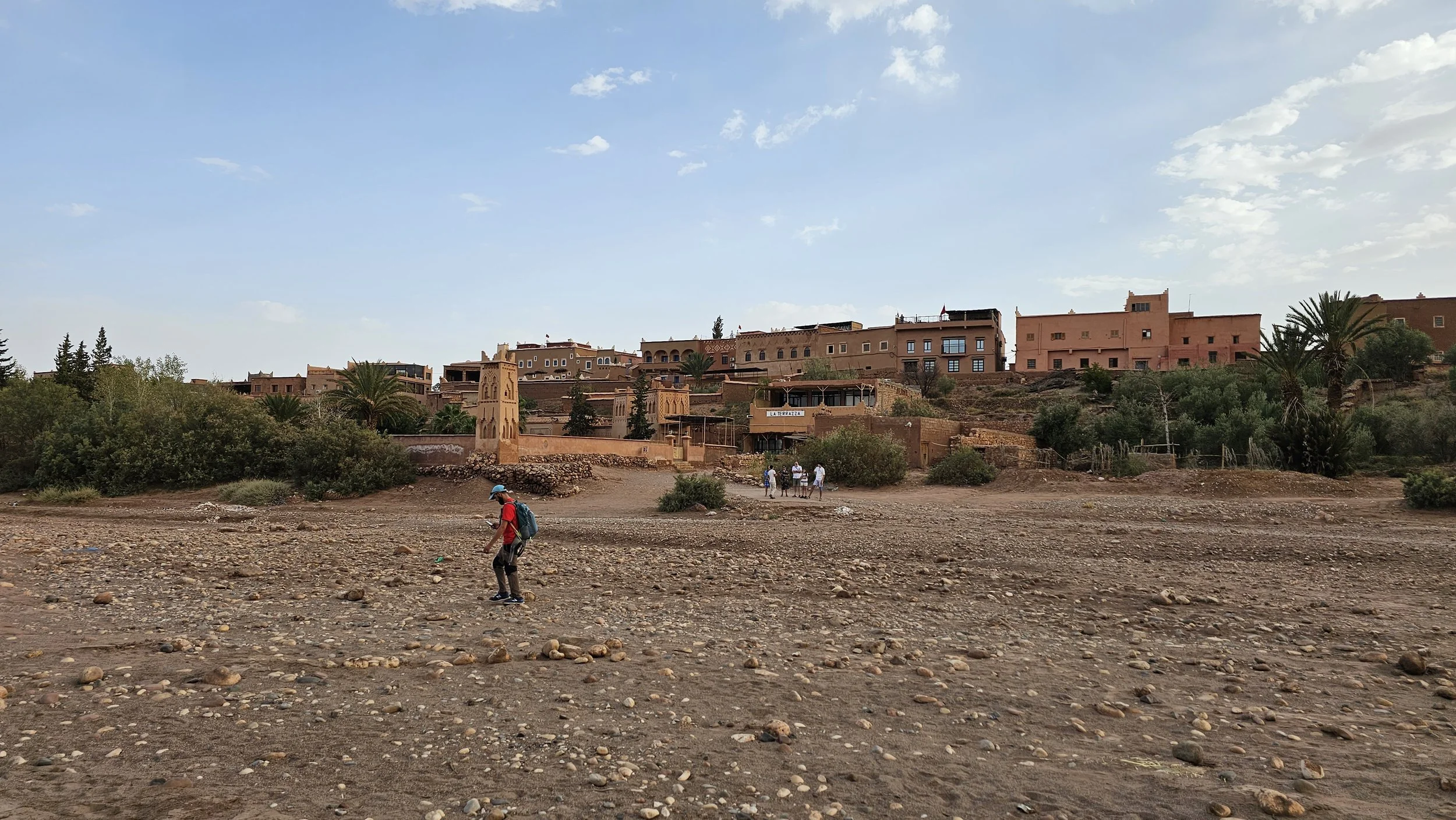


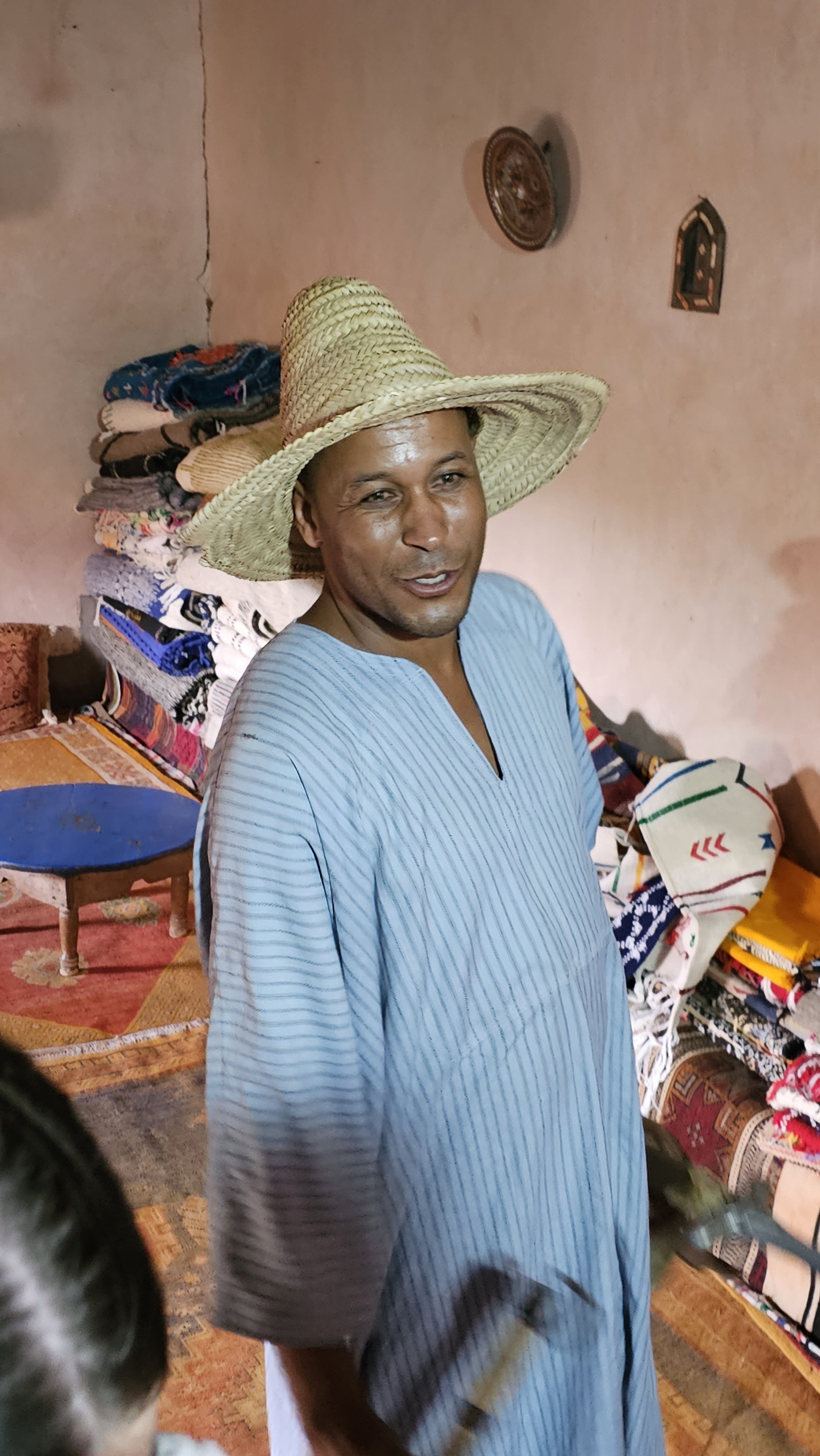




Day 12
We left after breakfast and went south towards Sahara.
We visited a nice local carpet “factory” where ladies work in their spare time. The variety is phenomenal, all hand made, individually designed and unique. We bought a small rug for Jahorina, couldn’t resist to do it and are so happy we did it as 80% of the carpet price goes to the lady who made it! They only use natural ingredients for dying: white, grey and black are natural colours, green tea is used to get a green colour, saffron and pomegranate produce red and yellow depending on a ratio, and of course indigo gives the blue colour. Natural and organic rug is off to Jahorina!!!
After the carpet place, we drove by the biggest solar power pole in the world, shaped like giant cobra snake, and arrived to The Atlas Movie Studio, the third biggest cinematic studio in the world and the biggest in Africa in Ourarzazate. I had no idea this massive place existed in Morocco! You see how many cool, interesting and new things we uncovered in this trip. Morocco is amazing and had a lot more to offer than a desert and camels!
A few fun facts about the movies screened here:
Jewels of Niles was the first movie
Gladiator
James Bond
Prison Break series
Aladdin
Ben-Hur etc..
Passion of the Christ - Directed here but banned in many European countries due to Jesus relationship with Marija Magdalena.
7 years in Tibet with Brad Pitt - represents Tibet as an independent country and was banned in China. Atlas Mountains were used to represent Tibet.
Versace commercial screened here !
Netflix Cleopatra new series is being screened right now and we shot a video on the actual site - you’d love it!
… from Netflix’s new series Cleopatra set
…from Alladin movie set
Photo Album The Atlas Movie Studio


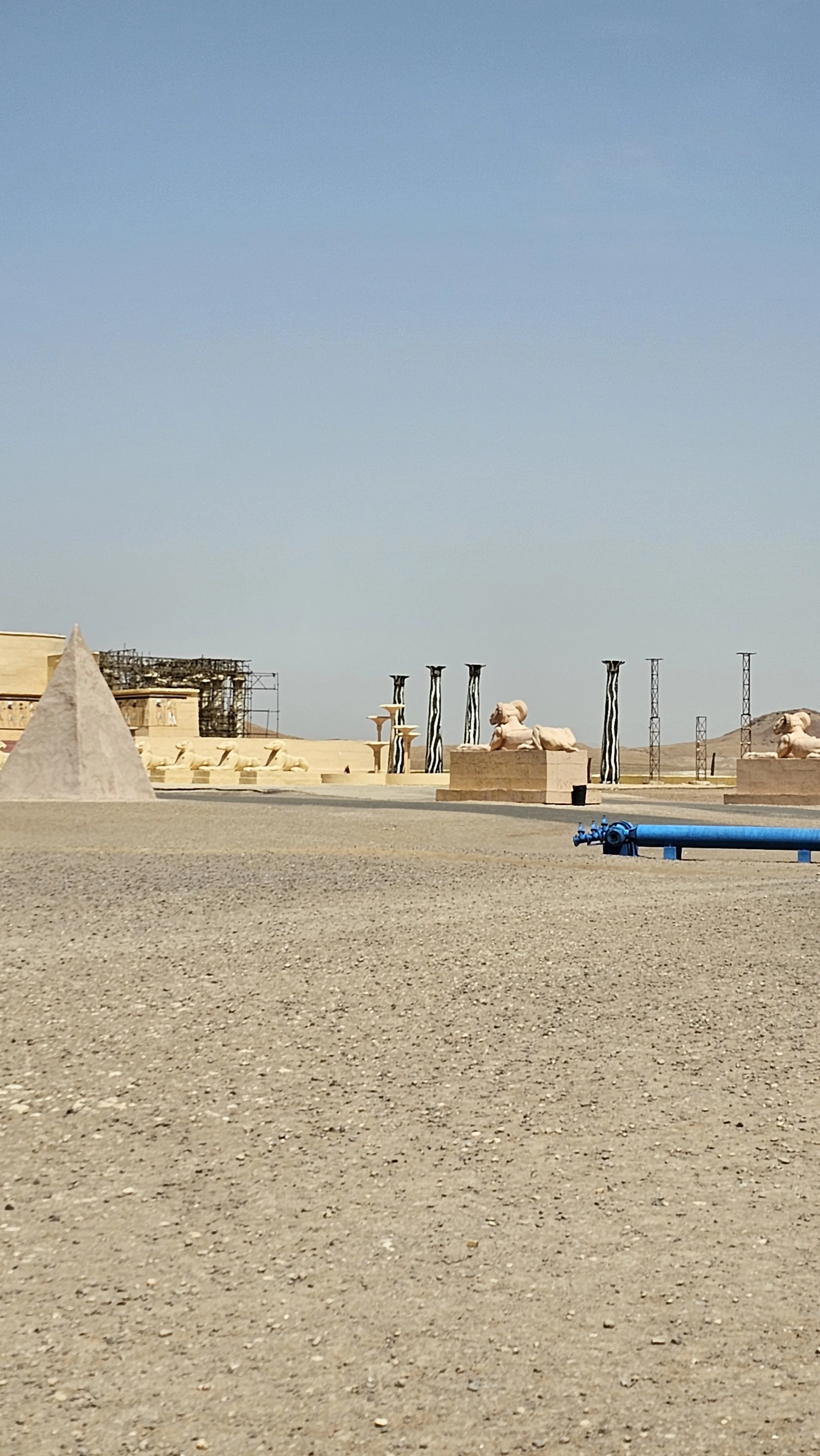

They use wood and plaster to build the scenes, everything is fake but looks so real!
Some scenes are reused for different movies, economy of scale!
We left the Atlas Studio with tens of photos and videos, loved it!
Our journey continued and we arrived around 4.30pm to Zagora, the last township before the Sahara desert. It felt we were entering a ghost town, no one was out, town was literally empty because it was deadly hot!
We settled into our hotel and jumped into the pool to refresh before the palm trees oasis walk and a dinner.
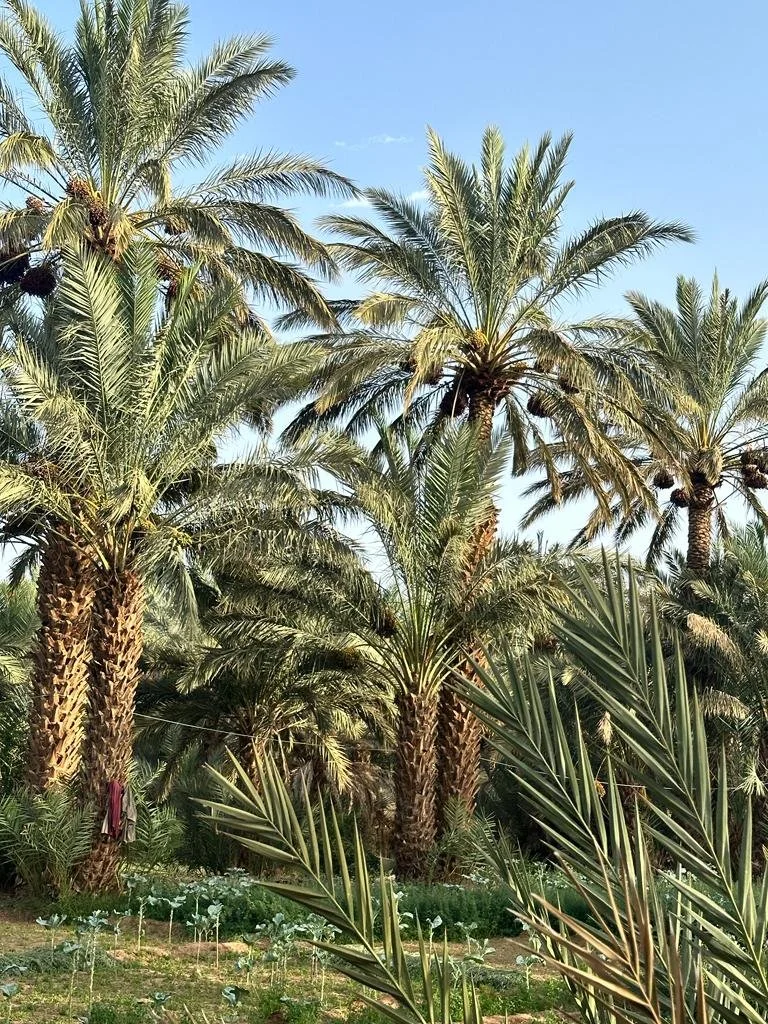
Palm trees walk was superb, all trees are Date Palm trees and they grow over 23 varieties, with October being the harvest month when the top quality dates are sold for 200 dirham per 1kg. (20 Euros). On average each palm tree produces around 260kg dates! And they come in different levels of sweetness.
Irrigation systems are in place to water palm trees and veggies and sometimes have to go 35 to 65m deep to find the water! The working conditions and ingenuity of these people continues to fascinate me each day!
Photo Album Zagora




Morocco - part 1
After luxuries, clean, beautiful, colorful, mixed and proud Andalusia we took a plane from Malaga and landed in Casablanca, Morocco!
After luxuries, clean, beautiful, colourful, mixed and proud Andalusia we took a plane from Malaga and landed in Casablanca, Morocco!
As we were running through Malaga airport Nebojsa’s legs walked straight into my favourite Spanish shop Desigual! He is a great husband!
I got a new beautiful and colorful leather backpack, but I am told I have to get rid of my existing Desigual backpack bought in New York and I can’t do it! It is worn out but I simply love both tooooo much and they are precious memories from different trips. There is no room in my overcrowded luggage (yes I know I am useless when it comes to packing), we will see how I go, for now I am keeping both🤗
Why Morocco?
So far we have visited every continent but for Africa and Antartica. Morocco was the obvious choice for a few reasons:
Proximity to Europe / Spain
Experience Africa in its full light and do something we’ve never done before
Push ourselves out of our comfort
Get confronted with a different culture, tradition, religion, rituals, economic status, social development, education and health systems, learn and learn more
Visit the country that went mad at the last FIFA soccer tournament supporting their Team playing for the third place v Croatia - we loved watching the entire country backing up their team
Go to Sahara and ride camels
Continue our Islam educational experience
And the list goes on….
In order to tick all these boxes and a few more we decided an organised tour long enough to see everything we wanted to and with enough free time to explore on our own will be the best choice.
Intrepid Morocco Encompassed 17 days Tour was booked and off we went!
Neb was persistent to buy a Sahara cap before our tour to Marocco. I would like you to take a moment and play a little game called “Spot the difference” before diving into a comprehensive reading on Maroccan history:

Courtesy of our son Miroslav who came up with this. Thanks buddy.
السلام عليكم المغرب
(in Arabic caligraphy)ⵜⵉⵣⵉⵖⵔⴰⵜⵏ ⴰⵍⵎⵏⵏⵓⵙⵏ
(in Berber or Amazigh language)Salaam Aleikum Maroc
(in Latin Arabic)Welcome to Morocco
(in English)
Morocco is the mosaic of people and cultures! It’s the country of contrasts! We saw so much variety and visited so many amazing places, some impressed us, some made us incredibly upset with inequity, injustice and poverty, made us feel incredibly grateful for the life we live today and above all made us feel we want to help and make a change for the better future of this amazing country and its warm, welcoming and caring people. We don’t know how to help them but we will figure out what we could do through the Intrepid “Education for all” programs.
Let’s travel through Morocco together 😎
Day 1&2
After arriving to Casablanca late afternoon we met with the tour guide, our new group of friends from NZ, Australia and States. We bonded pretty quickly and started our journey next morning by catching a local train to Rabat and Moulay Idriss.
That was the experience in its own right!
There are soooo many people dragging their suitcases, running around to catch a train, jumping in as there is no tomorrow and sitting down on the first free chair! Having tickets with seat numbers means nothing until the train guy comes in and tries to create some order. None of us sat in our own seats, some had to stand, as Neb said, it looked like when kids open a box of chocolate - you just never know what you’ll find in there! (Forrest Gump line)
On arrival we had a couple of hours to explore Rabat on our own.
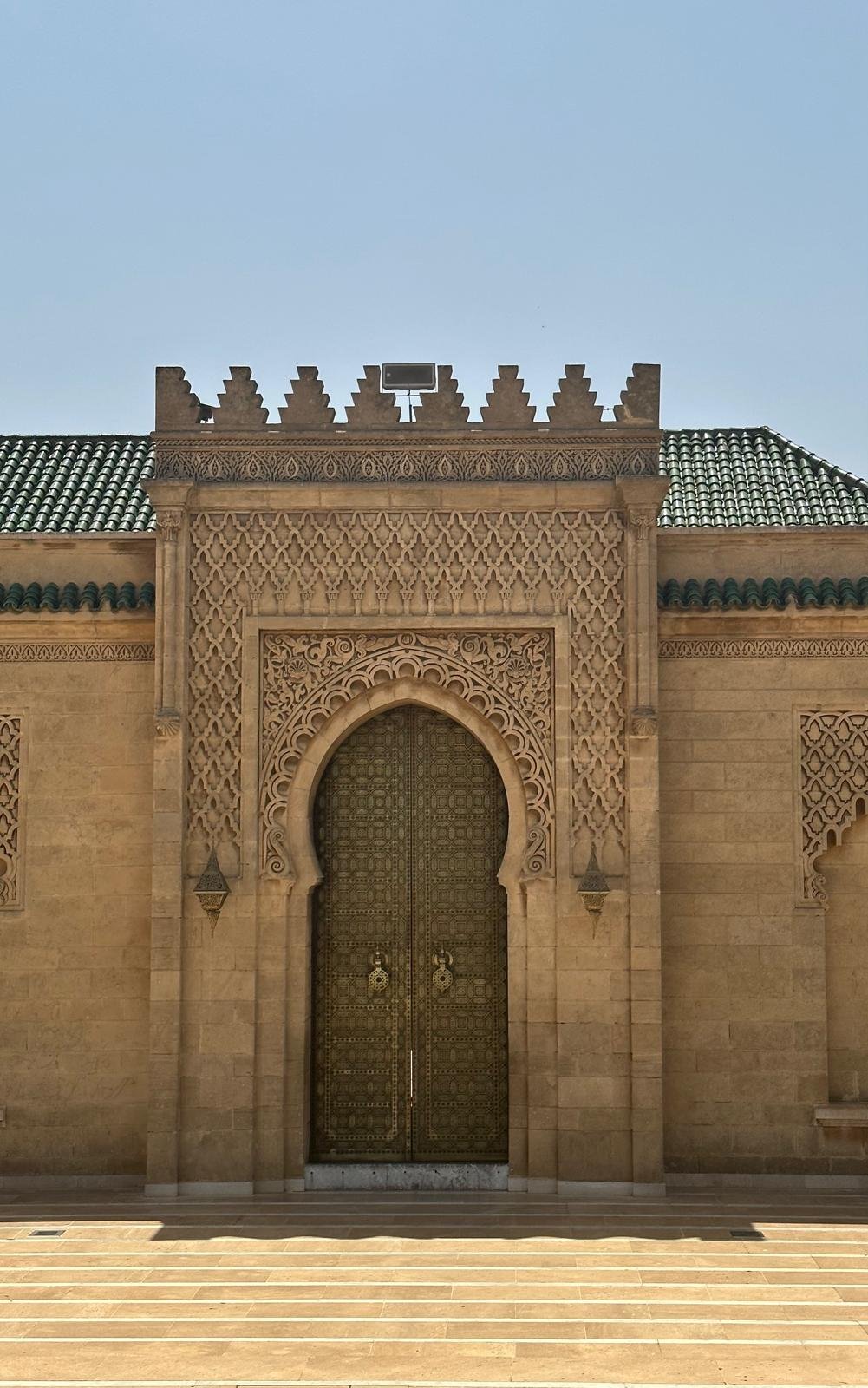
As Morocco's capital, Rabat is the home to the country's most important museum, the Royal Palace, and the Mausoleum of Mohammed V, as well as several historical tourist attractions.
As one of Morocco's Imperial Cities, Rabat is smaller in size and less famous than the Imperial Cities of Marrakesh and Fes, but it’s calmer atmosphere gives a nice welcome to those new to Morocco cities.
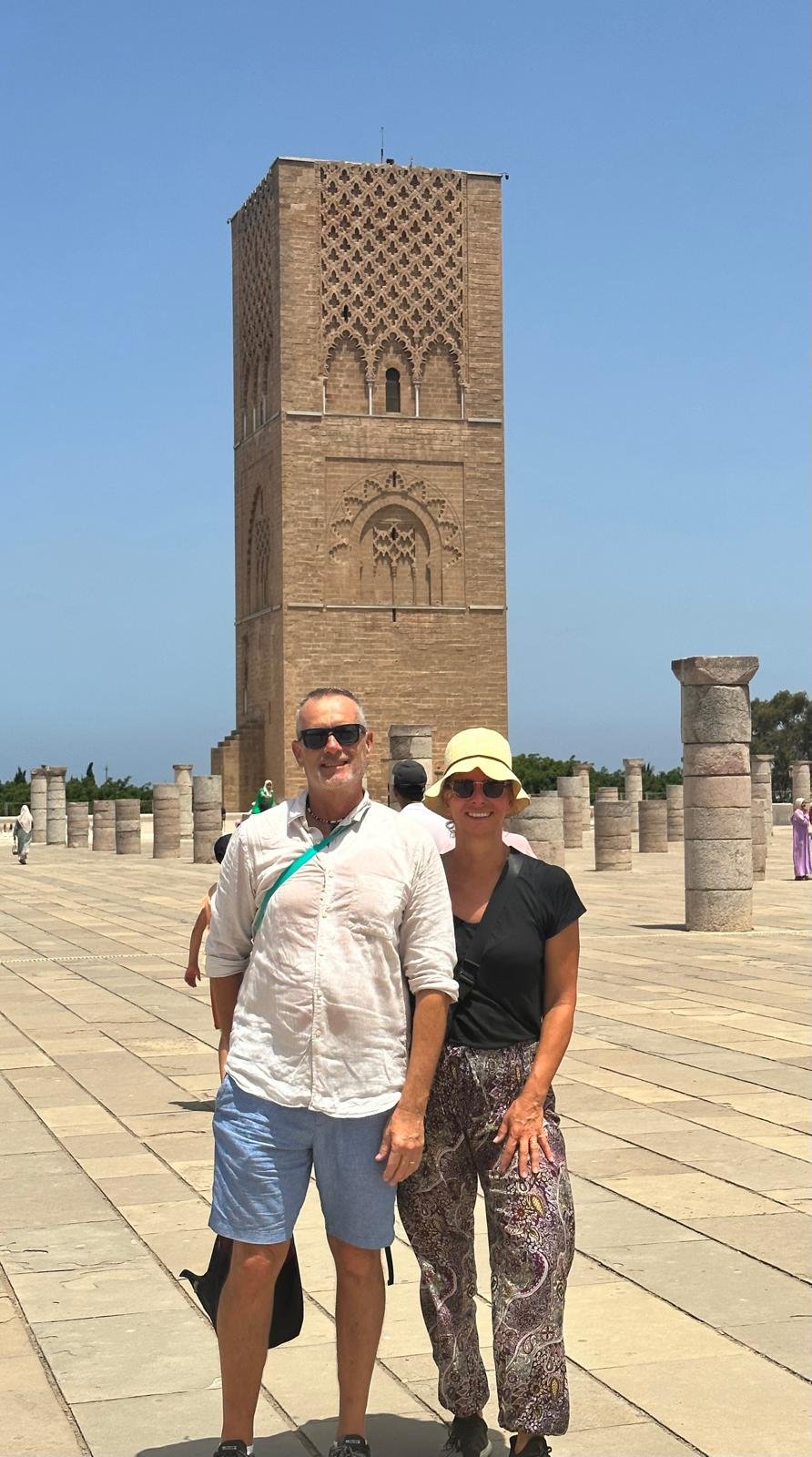
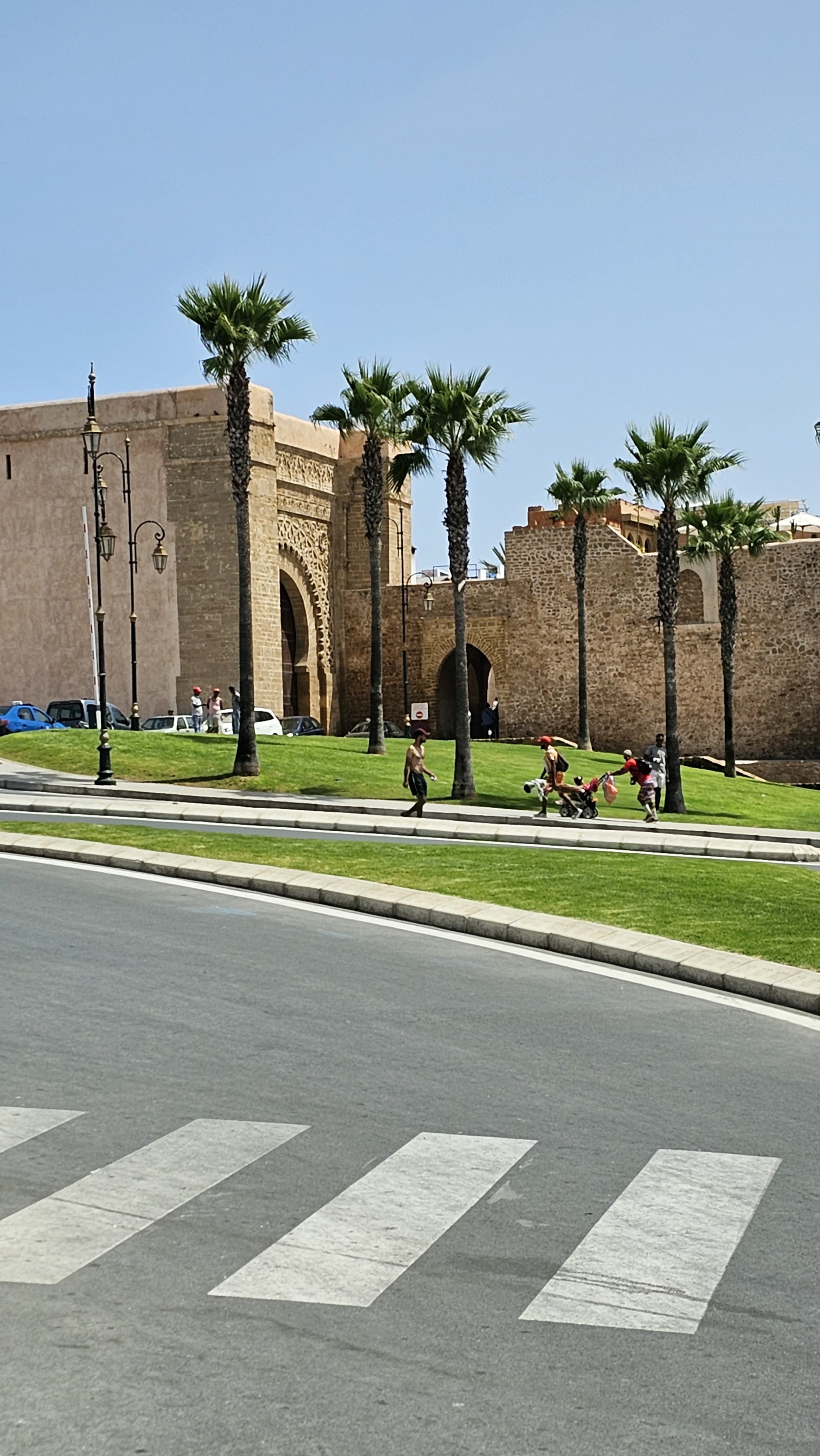
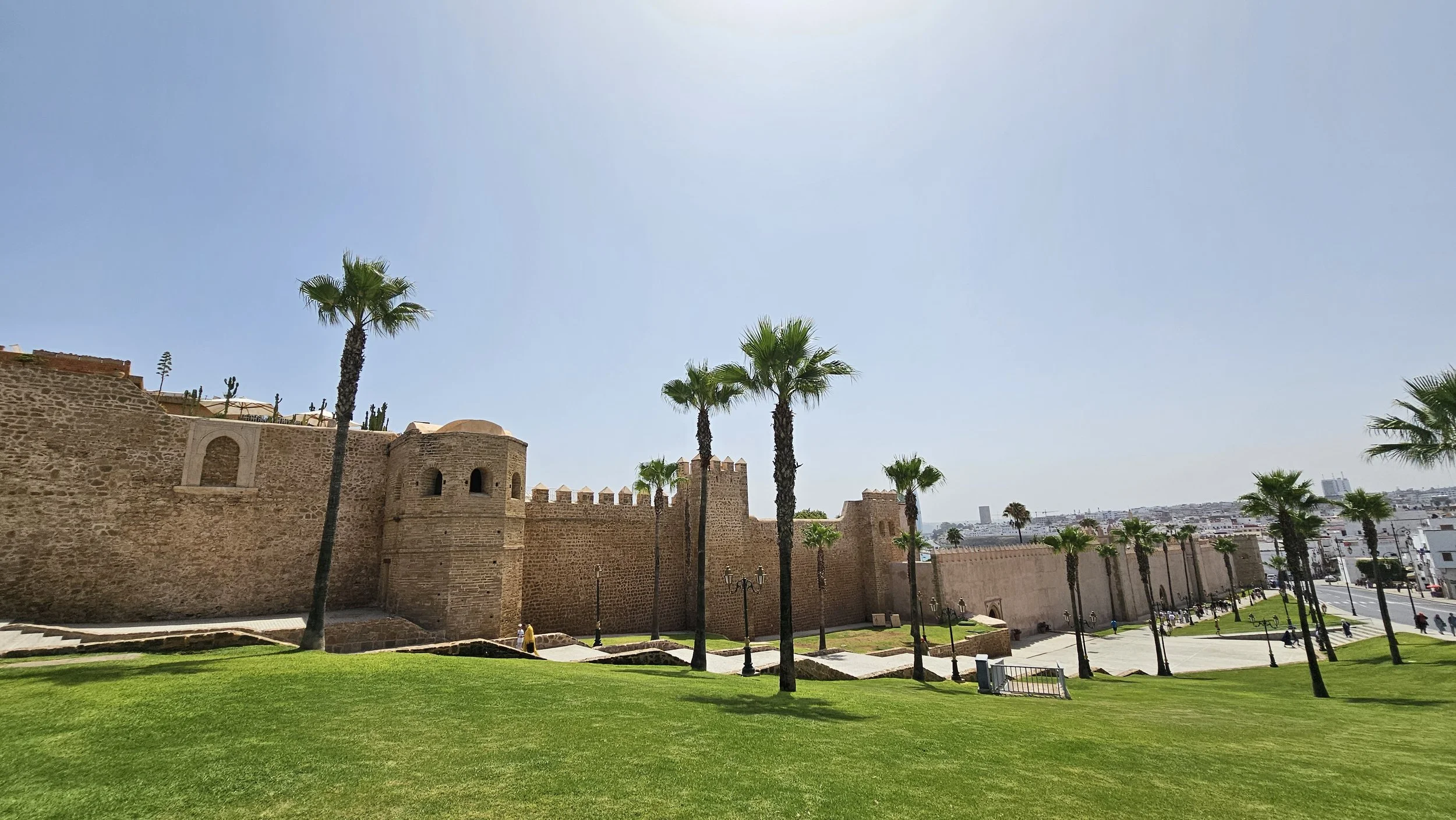
We stayed together as a group and saw two amazing points of interest, Rabat Kasbah and Hasan Tower.
Rabat Kasbah is the 11th-century fortress with walls and inside is a small neighborhood of winding lanes rimmed by Andalusian-style houses. On one side are beautiful gardens and on the other a big platform offering amazing views towards the Atlantic Ocean and the local public beach crowded by people.
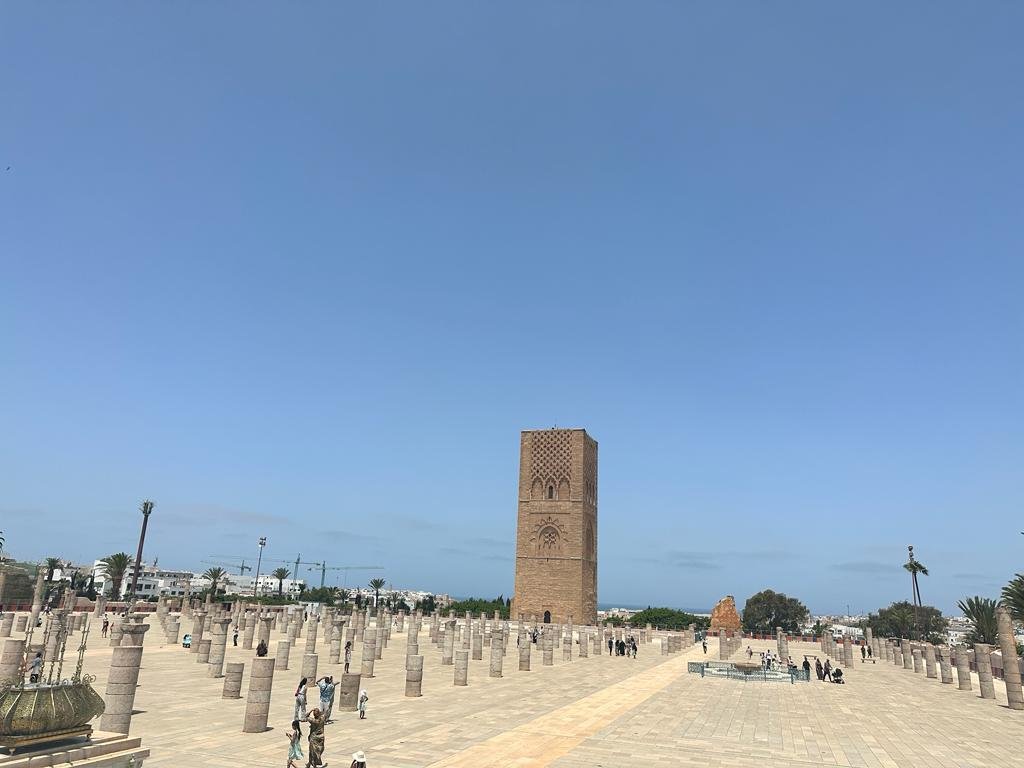
Hasan Tower, or better say unfinished Hassan Tower was the work of ruler Yacoub al-Mansour and would have been the minaret for his grand vision of a massive mosque that was planned to be one of the largest in the world. Upon his death in 1150, construction was abandoned, and this 45-meter-high tower is all that remains of his original ambitious plan.
Amazing carved motifs and designs cover the tower's façade, pointing to the luxuries ideas of what al-Mansour had in mind.
The Hassan Tower, and the neighboring Mausoleum of Mohammed V both sit inside the stunning gardens of Jardin Tour Hassan.
After seeing a bit of Rabat we continued on a different train to Meknes. On arrival we took a taxi through scenic countryside that drove us to the sacred pilgrimage village of Moulay Idriss. We explored the Medina of this ancient town with a tour guide and got such a great insight into Moroccan lifestyle.
This is the place where the faithful gather to pay homage ( respect publicly ) at the tomb of Moulay Idriss I, who was the great-grandson of Mohammed who bought Islam to Morocco.
We have learnt that each neighborhood has five aspects to it:
Mosque to pray
Haman with 3 rooms and 3 temperature levels - hot, hotter, the hottest!
Public fountain - to get water in old times
Medresa - Quran school
Bakery - to feed the community
This ancient village was founded in 790, a year after the first king of Arabic Dynasty ( Muley Idriss) from Saudy Arabia arrived here and married a Berber wife.
Today 15,000 people live here, and this was the first kingdom of Arabic dynasty in Morocco ever!
This is the only place where you can see a round minaret in Morocco that was copied from Mecca. You can see two types of writing on the minaret -one from Saudi Arabia and the other from Iran. Its green color is the representation of Islam.
Coming to this village 5 times in your life counts as if you went to Mecca once. At this time there was the first day of the pilgrimage for Berber tribe. There are four main tribes that live in Morocco - Arab, Rif, Sus and Berber.
Arab and Rif use music inside the mosque to celebrate Moulay’s life, while Berber and Sus do music outside the mosque and men and women are together. It is so interesting how each tribe has different rituals, but they live in piece, harmony and respect.
Did you know there are only five holly cities in the world:
Mecca
Medina
Jerulasem
Kierwan
Moulay Idriss
We can now say we have been to one of the five, Moulay Idriss, and it was a very special experience.
We stayed overnight in the house with the local family who cooked amazing food and made us feel more than welcome.
Berber name is from Roman times, but it has a negative connotation as it sounds like a Barbar - a bad or dodgy person. They prefer to be called Amazigh which means free man. Amazigh people are indigenous people of Atlas Mountains.
This is very important to the local people, our tour guide Hicham is a proud Amazigh.
To showcase the important of this fact, since 2011 Amazigh has become an official language, so now there are three: Arabic, French and Amazigh.
Photo Album Day 1 & 2
Rabat








Moulay Idriss

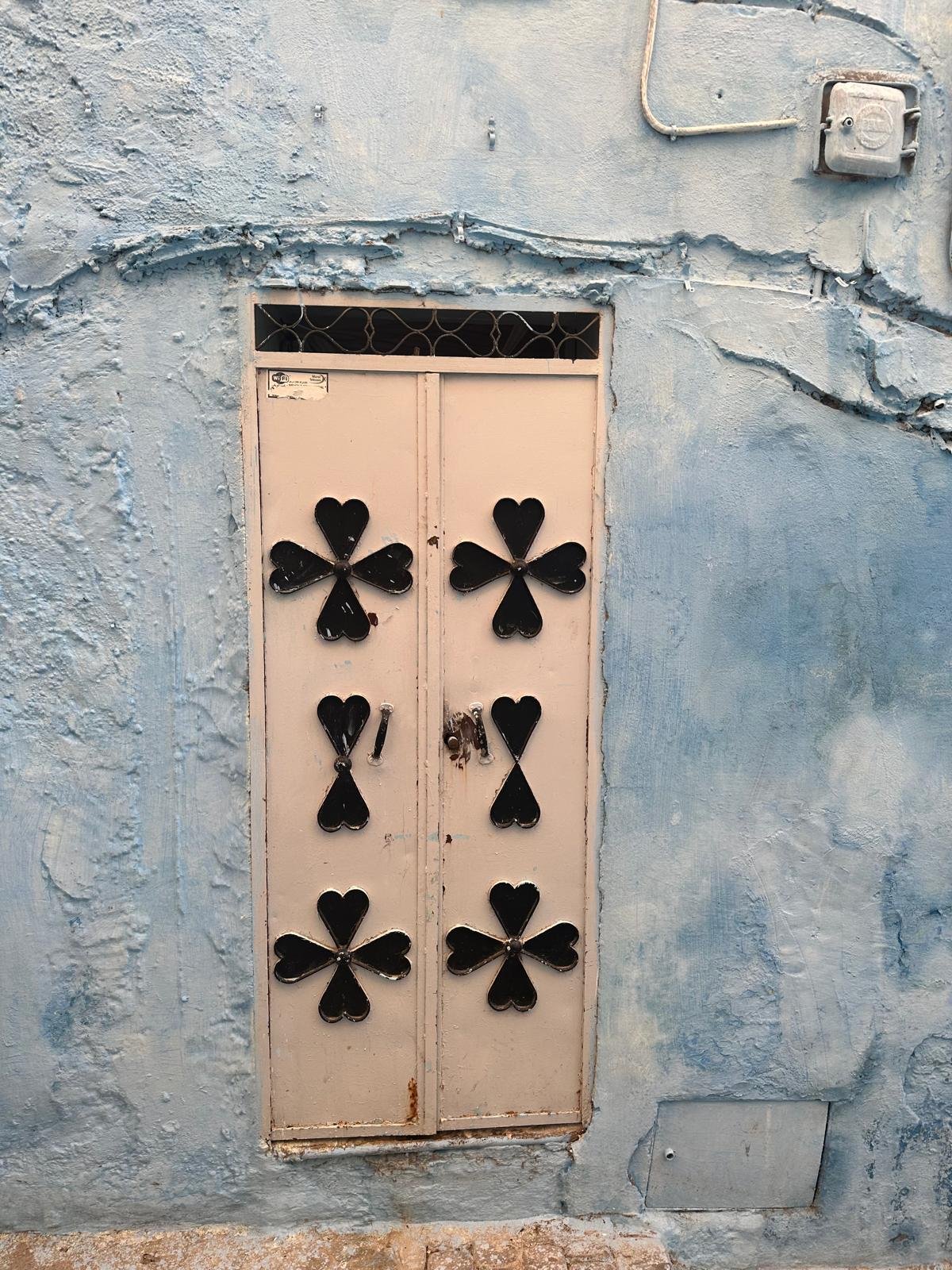


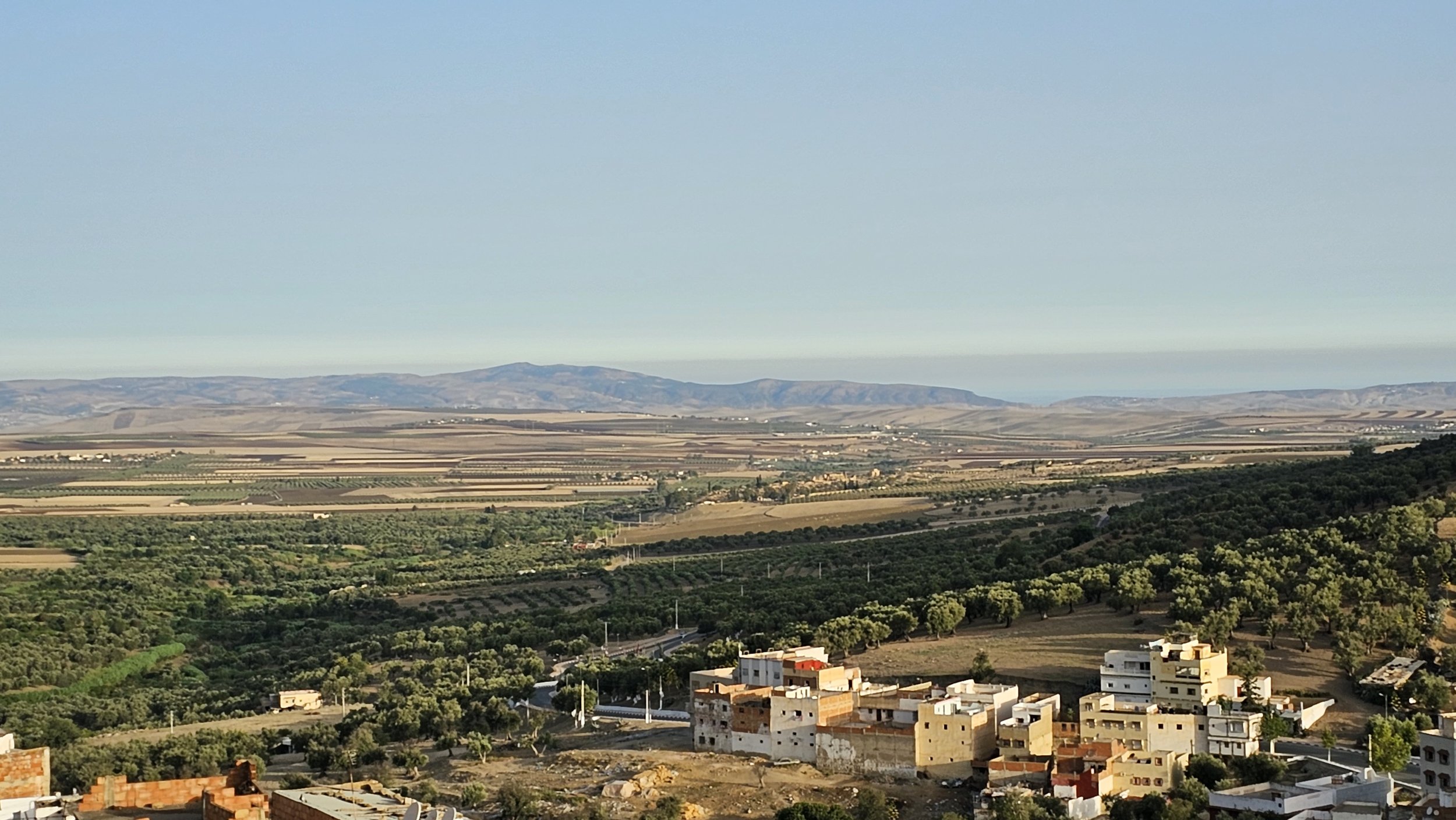


Day 3
In the morning after a hearty breakfast with the family we packed our bags, donkeys took them to the taxis and we went to Volubilis.
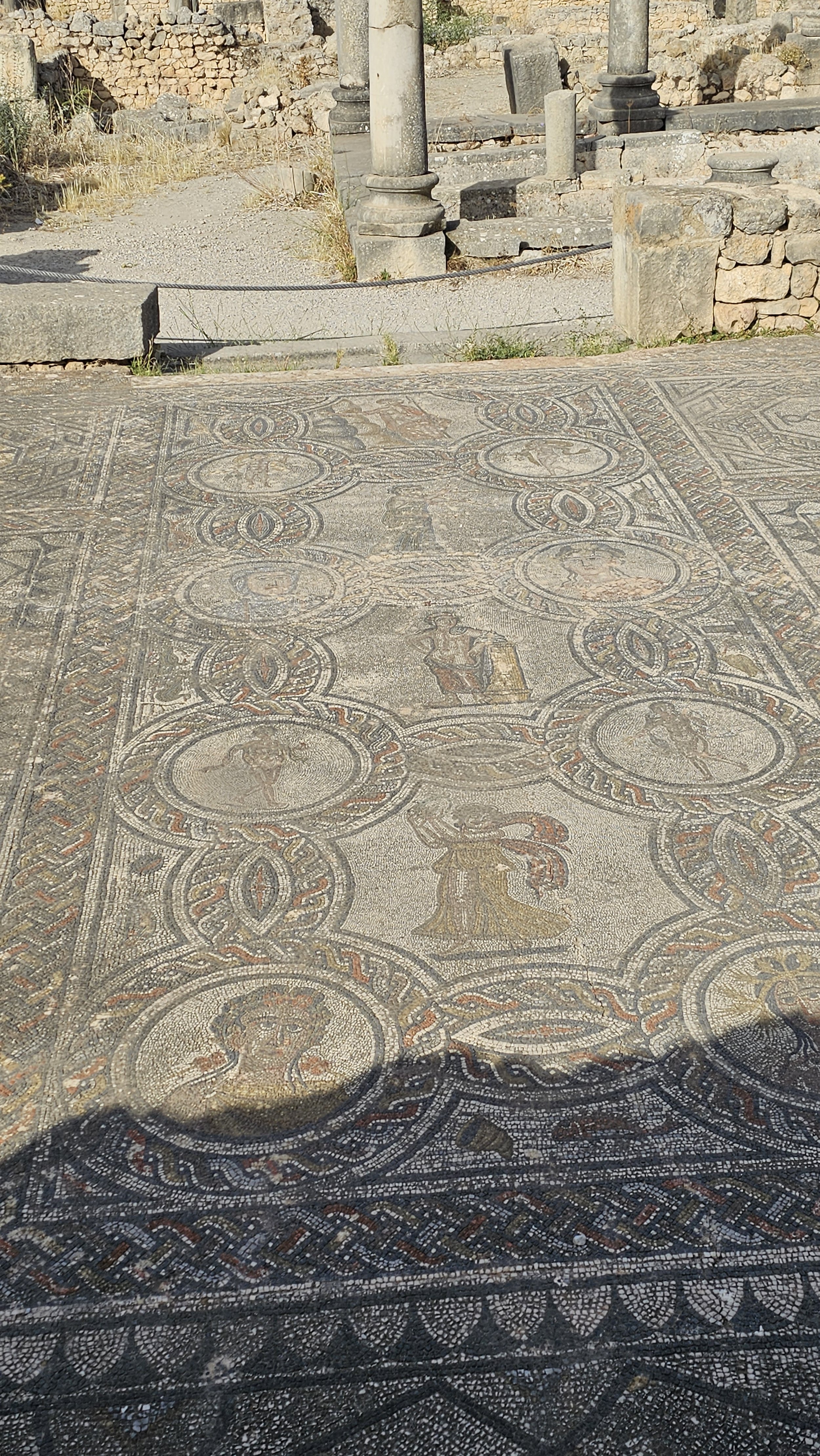
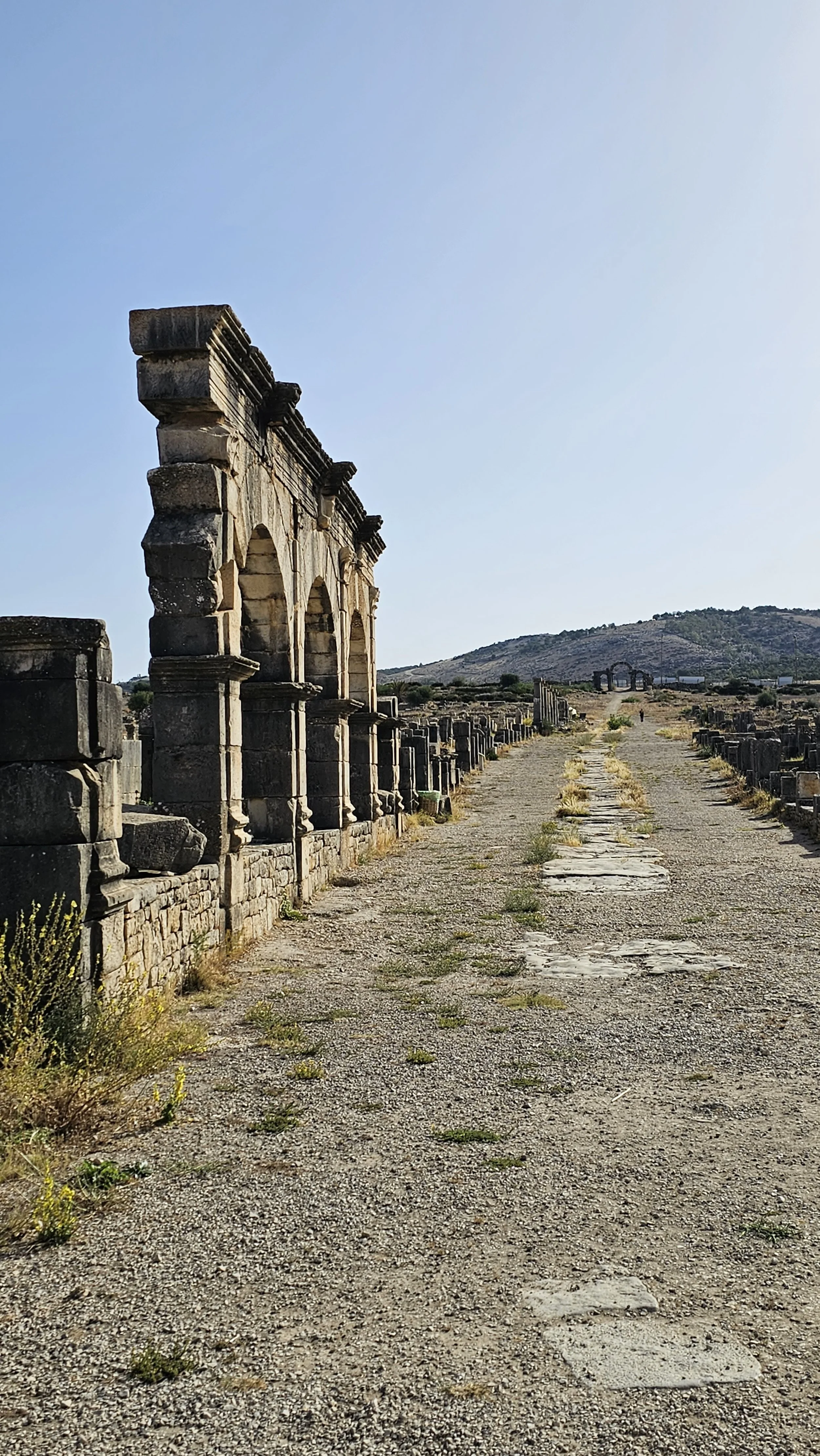
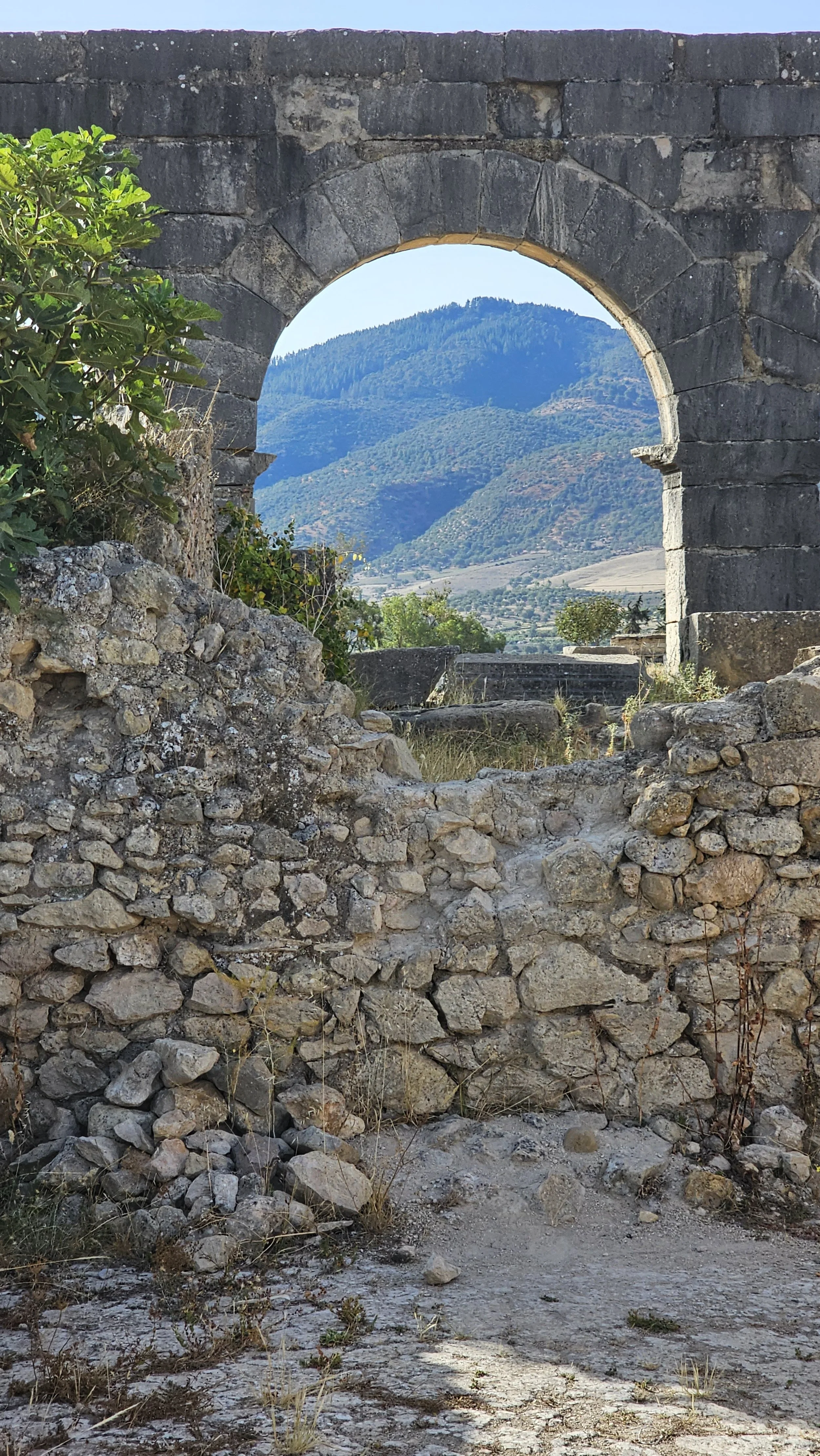
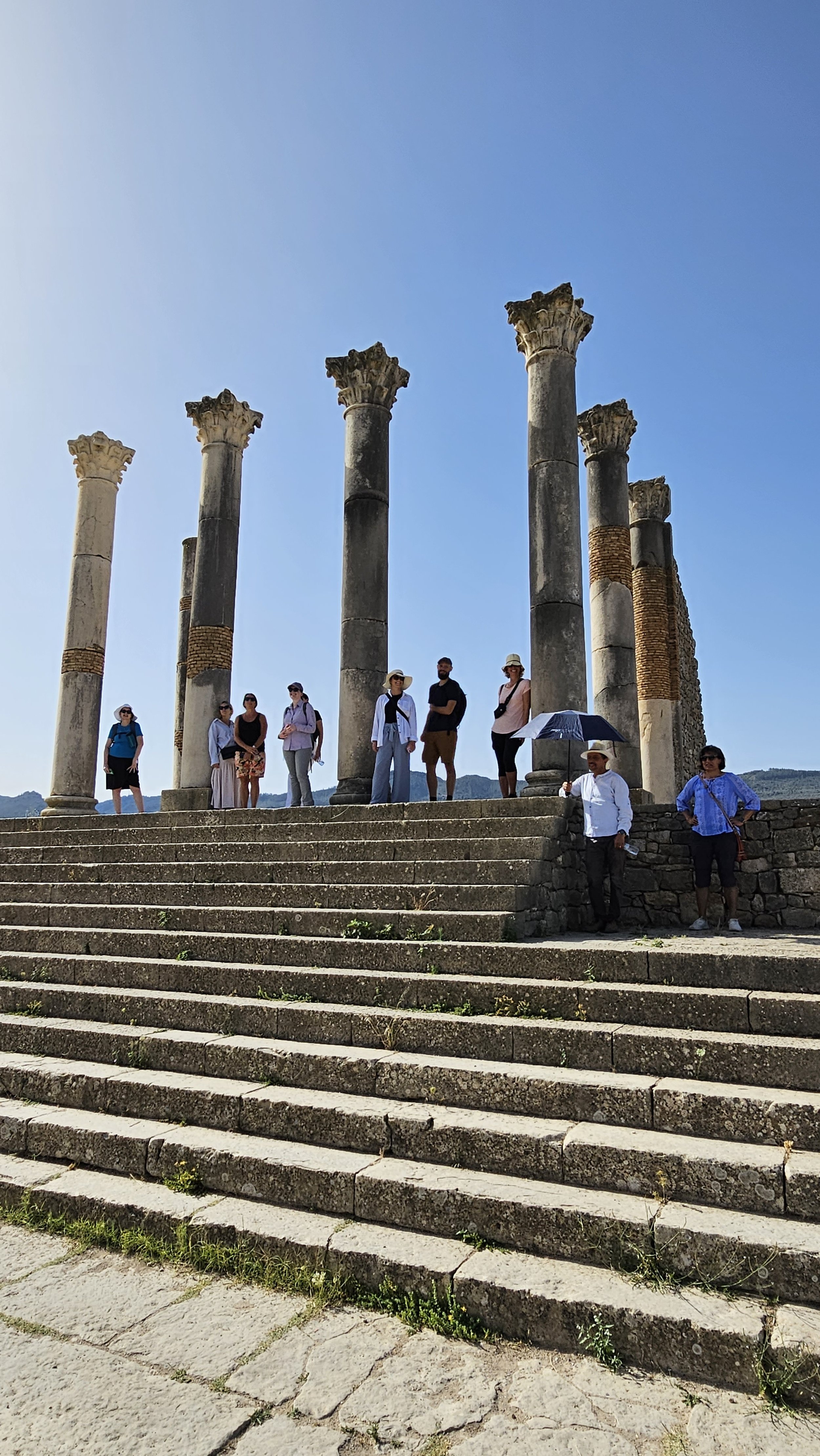
Volubilis is an ancient site from Roman times, established in 100 BC, it is over 2000 years old!
When Romans conquered Africa they built cities near the water. When they went inside the countryside they planted olives and established farming. Volubilis was a Roman city where archeological excavations continue to today. It has been declared as the UNESCO World Heritage site! Who would have thought we would come across that in Africa?
With only one third uncovered and excavated there is a lot more work underway and the experts expect to find colosseum, hippodrome and other well known aspects of the Roman cities.
So far, it has taken archeologists 50 years to excavate what we have seen today!
This is what they know today:
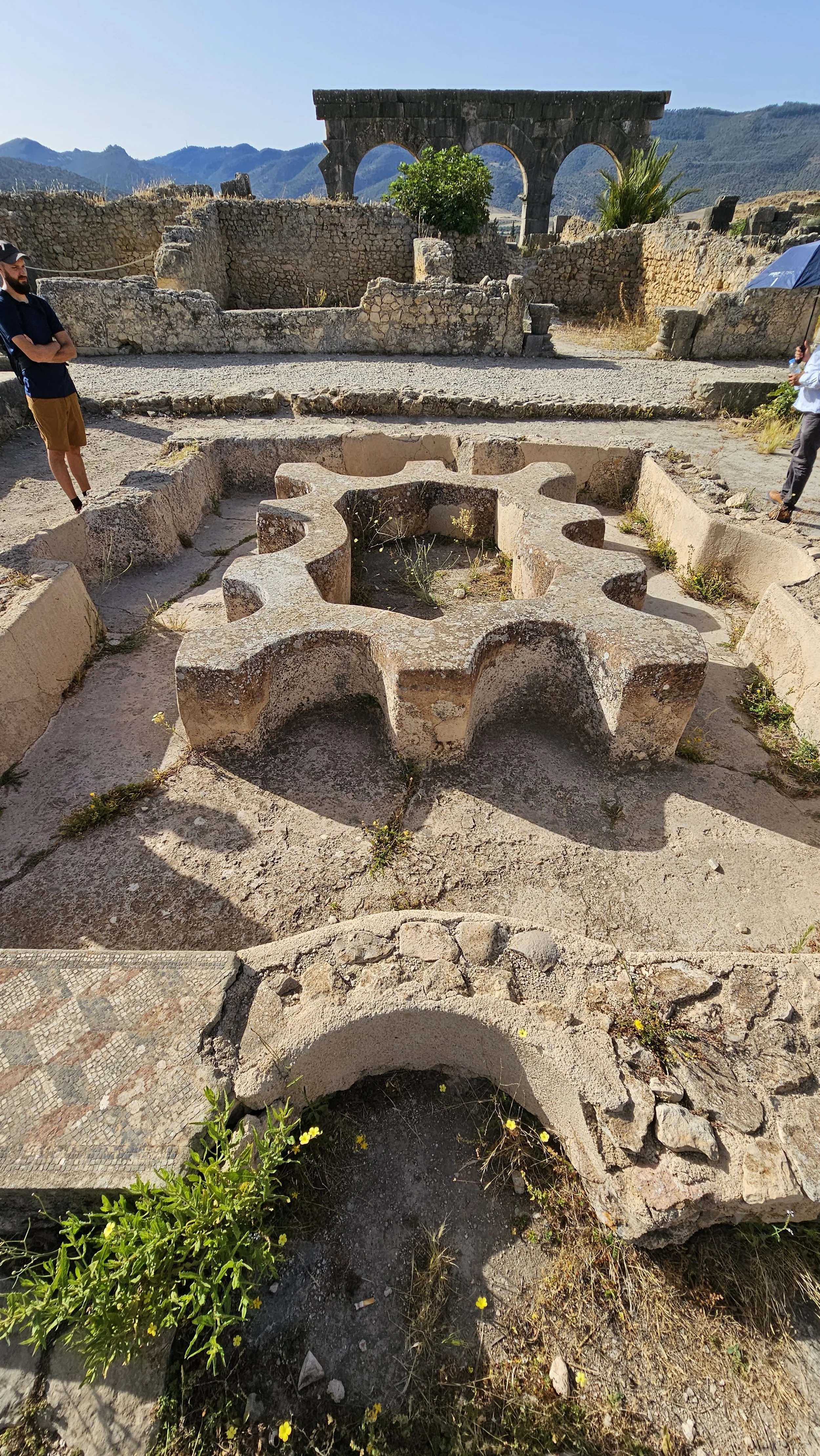
Every house had a kitchen, cca 25000 people lived here, Romans left at 4th century due to draught and poor people moved in. It was damaged during Lisbon EQ, military outpost became a city and a big trading center, using river to transport to the Mediterranean Sea with olives exported to Rome.
A few fun facts:
The infinity knot known in the Western world as the love knot that no one can undo, but for the Alexander the Great who cut it through, references to the expression of “ tying a knot “ when people get married.
Aqua duct work was higher than the land level, they used led ( mercury) to clean the water which poisoned many and caused mental illness.
Mad hatters - people who made hats during Victorian times got mad due to mercury used in creating hats.
Dolphins bring good luck and fertility.
Swastika’s origin is Indian, it represents good luck and it’s in the opposite direction to the Nazi one.
Public toilets had marble lids and Romans used slaves to make them warm. People had to pay to use toilets to clean it so it didn’t stink. English expression “spend a penny” originates from these old days.
This was a volcanic place, there were hot springs everywhere and the word “spa” originates from “salute per aqua” - water for health.
Corridor means a city center/ (heart of the city), word Cardiology comes from it - heart is the center of the body.
Forum was a huge open market area - word phobia of open place originates from this word.
We continued our ride to a beautiful city of Meknes. The city is made of two sections
Medina( Arabic term for city) known today as old city walls with maze of narrow streets and a new city developed in the 20th century under French protectorate.
Meknes originates from the 10th century, it was created by Berber / Amazigh tribe and it was a capital city of Morocco.
Squared minarets are visible everywhere and they differ in Morocco compared to other Islamic countries where minarets are round shaped.
1mil people live here, and 60% of Moroccan population live in urban zones today.
The Ministry of religious affairs funds the building mosques supported by people’s donations.
We visited a few tourists points:
Gate - Beb Alhamiz, know is Thursday Gate
Each Thursday there was a market day - weekly market was important for local people. It was considered a commercial and social event to share the news.
This area was under lots of pressure from different powers throughout centuries. On the West it was French, Spain, Portugal mighty powers, in the East side the powerful Ottoman Empire. Moulay Ismail became a well known King who fought hard to push them all away from Morocco. The current Morocco King is the descendant of the King Moulay Ismail, and Morocco is the Constitutional monarchy today.
Jews quarter - Morocco is a popular spiritual destination for Jews” Mellah”
The Jews influence is felt in every regard, but unfortunately from 10% Jews at the end of the 19th century todays presence is under 1%, majority left to Argentina and Chile during the early years of the 20th century.
Dinner stories x 3
We went to a dinner together to a traditional restaurant and three interesting things happened:
1) In our Intrepid group of travelers we have a lovely young couple from USA, Jessica and RJ. We have been travelling together for 3 days, and at the dinner Jessica approached us wanting to share something with us.
We had no clue what she was going to say and she went-" I would like to tell you something and I hope you will be OK." I looked at her, had no clue what she'd say and said - yes please, tell us. She then shared that her grandparents on her father's side are from Serbia & Macedonia who came to the USA in the 1970-ties, and she hoped we would be OK knowing that she has Serbian roots since we are from Croatia, living in NZ! Of course we are OK with that!
Jessica was born in USA in the 1990-ties, she grew up there alongside her grandparents, but her Mum (American) was too scared to openly talk about her roots, she never learnt the language, simply put, her Mum was too fearful during these terrible times. Later on in her adult life Jessica went to Serbia twice with her grandparents, her Dad never went back and she is the only one in the family who is interested in learning more about the Balkans, traditions, food, rituals, music etc. At her wedding two years ago she decided to have some aspects of a traditional Serbian wedding rituals, so so cool!
Here you go, more than 30 years after the war she met two of us on this tour and it took her 3 days to get confidence and courage to approach us since we were from Croatia! I find the story to be a beautiful and sad at the same time, all these years later and people still feel apprehensive. We have exchanged our details and we hope to stay in touch and meet them again somewhere in the former Yugoslavia, NZ or States!
2) We have met two young NZ girls living in Australia. They have been banging their heads for three days trying to figure out how old we are. They didn’t believe we had adult children as apparently we look way too young for that. At the dinner we reveled our age, to their disbelief! They ended up writing food recipes and learning about our nutritional habits and the magic of the good olive oil! So entertaining and fun!
3) The dinner finished with each of having to dance with the owner as we were paying the bills - watch the video to laugh at our expense!
Photo Album Day 3
Volubilis







Meknes




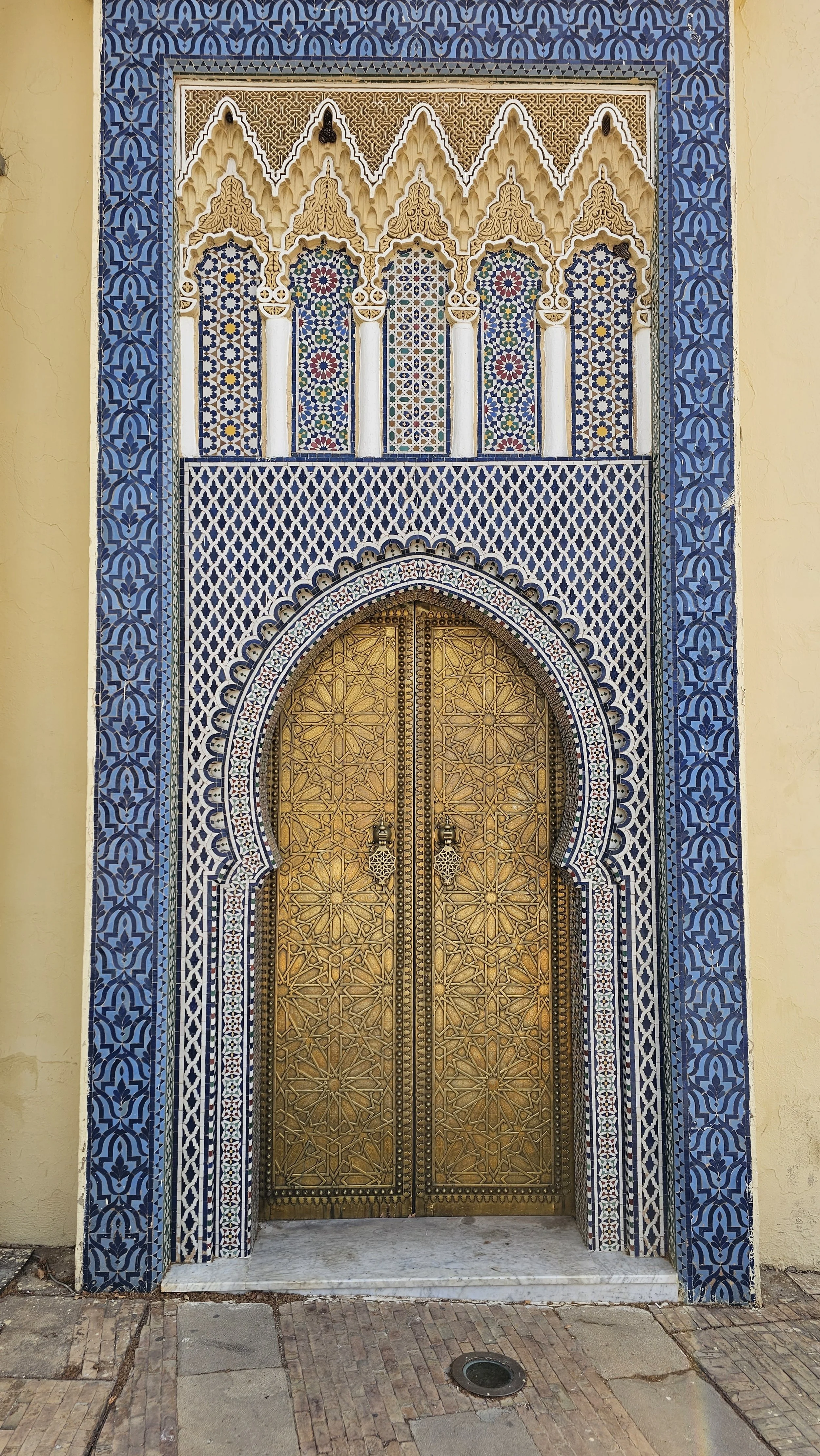


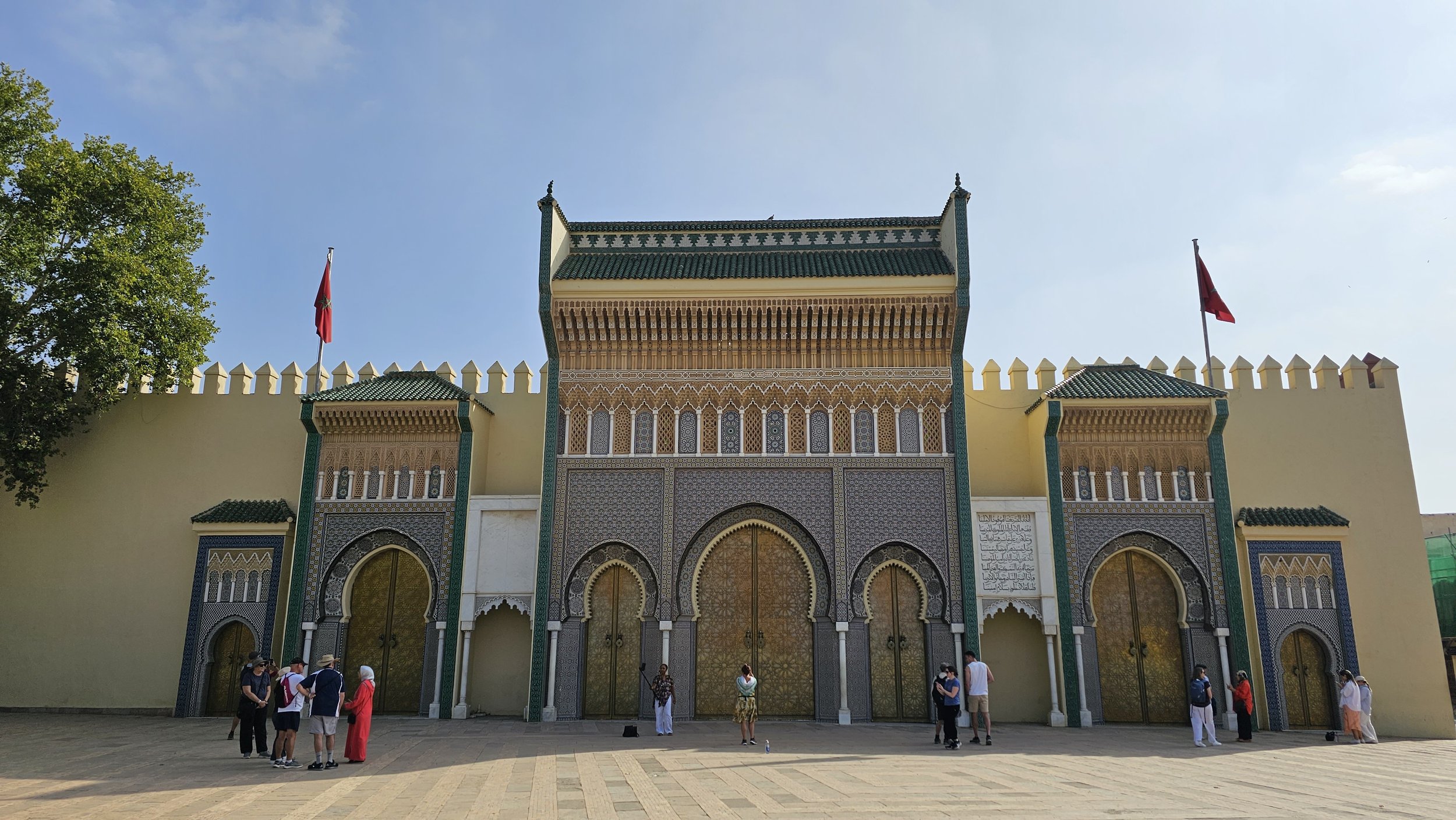


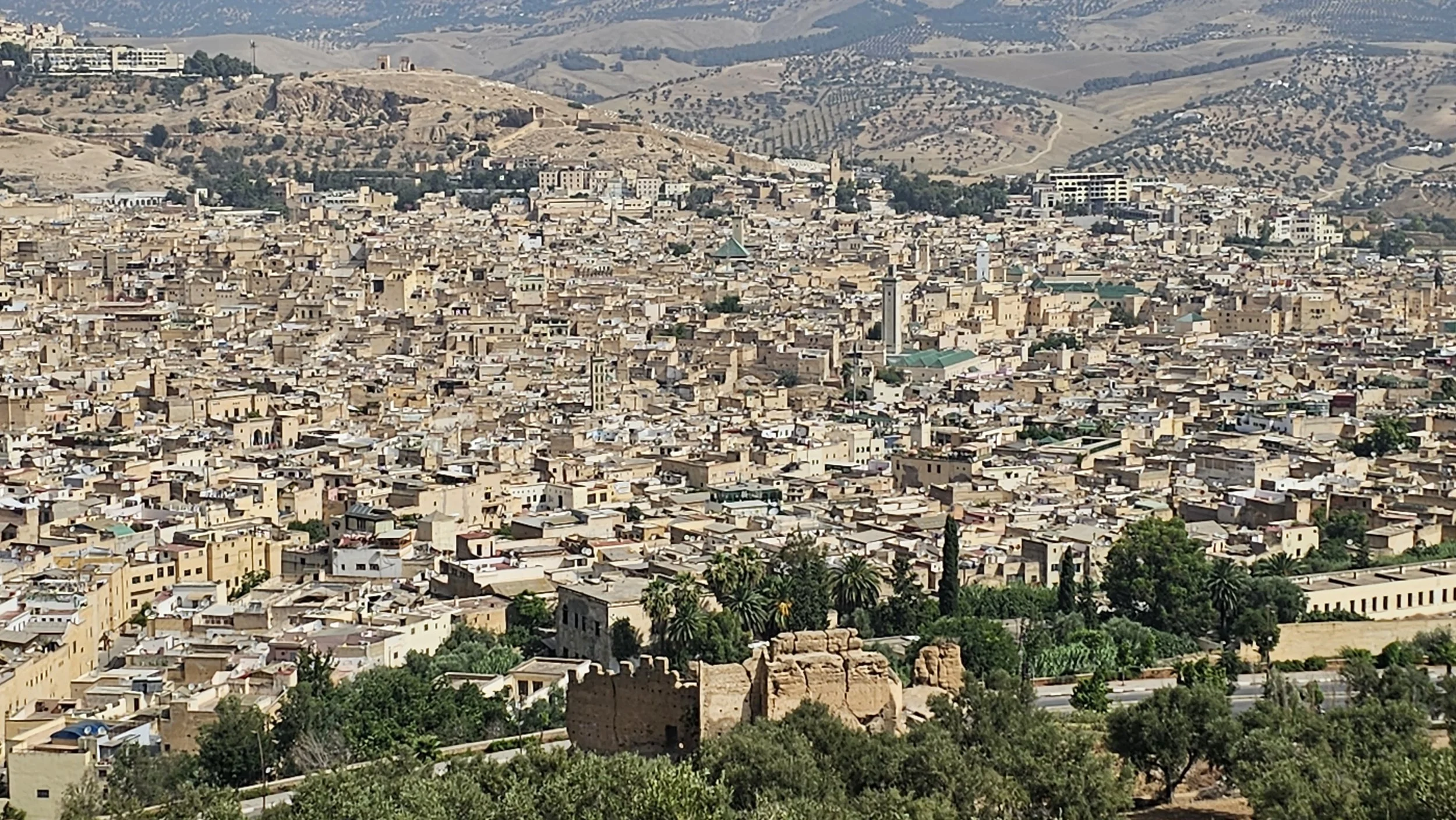
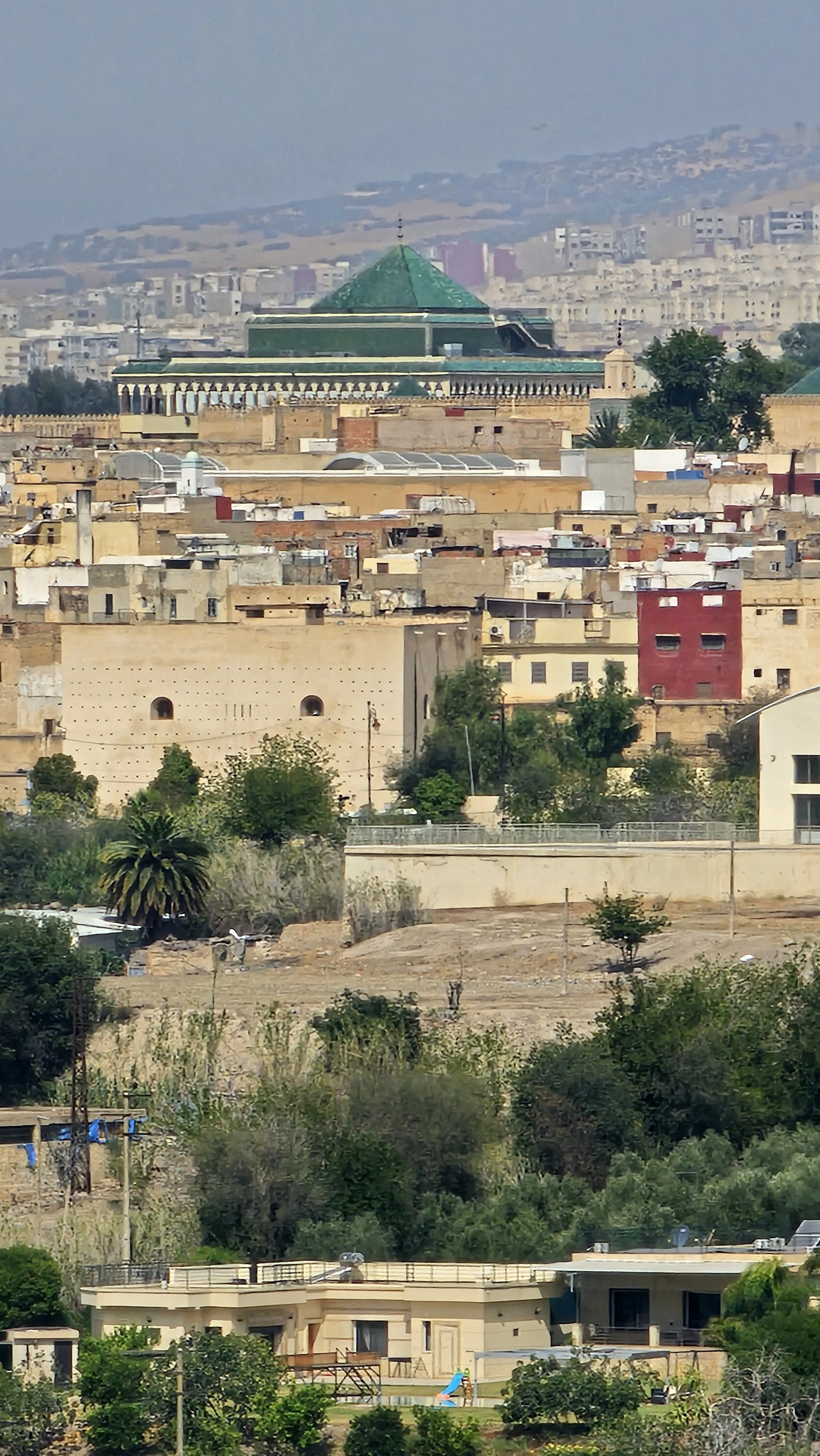
Day 4 - Fes
Medieval city from 14 century with the biggest royal palace in the whole of Morocco.
Old city Medina dates to the 8th century, and the New city was built under the French during colonial times, a common theme through Morocco.
I really really struggled in Fes. I got confronted with inequality and poverty, my tummy got upset and I didn’t eat anything the whole day. I was quiet, felt unwell, uncomfortable and sad.
These people have it so hard, it should not be like this. Our visit to a tannery brought it to life and I have to share it here to make you all aware of what goes on.
A tannery is a place where the animal skins are processed using pigeon waste to soften the skin before it gets treated and used for leather garments, bags, jackets, wallets. People work in open under direct sun and high temperatures with smell I can’t describe. Working conditions are terrible and they get poorly paid to make leather handbags that cost fortune in the Western World and a middle men make all the money. So unfair, it made me sick!
A few interesting facts:
Merhaba means welcome, and people try hard to make you feel welcomed.
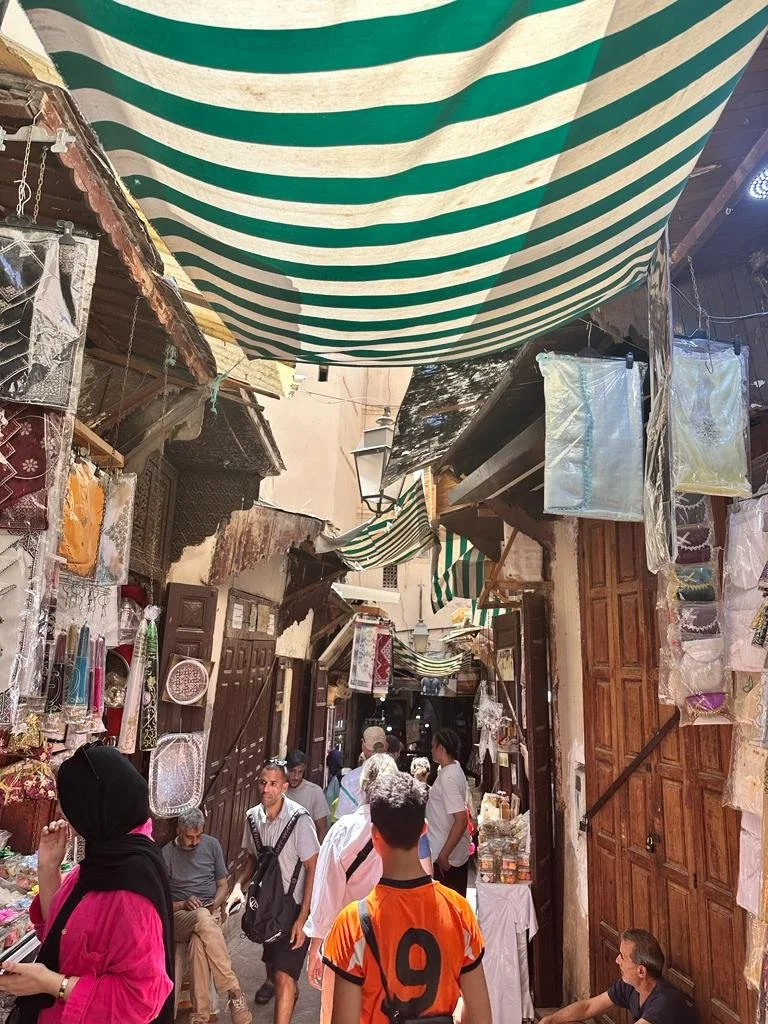
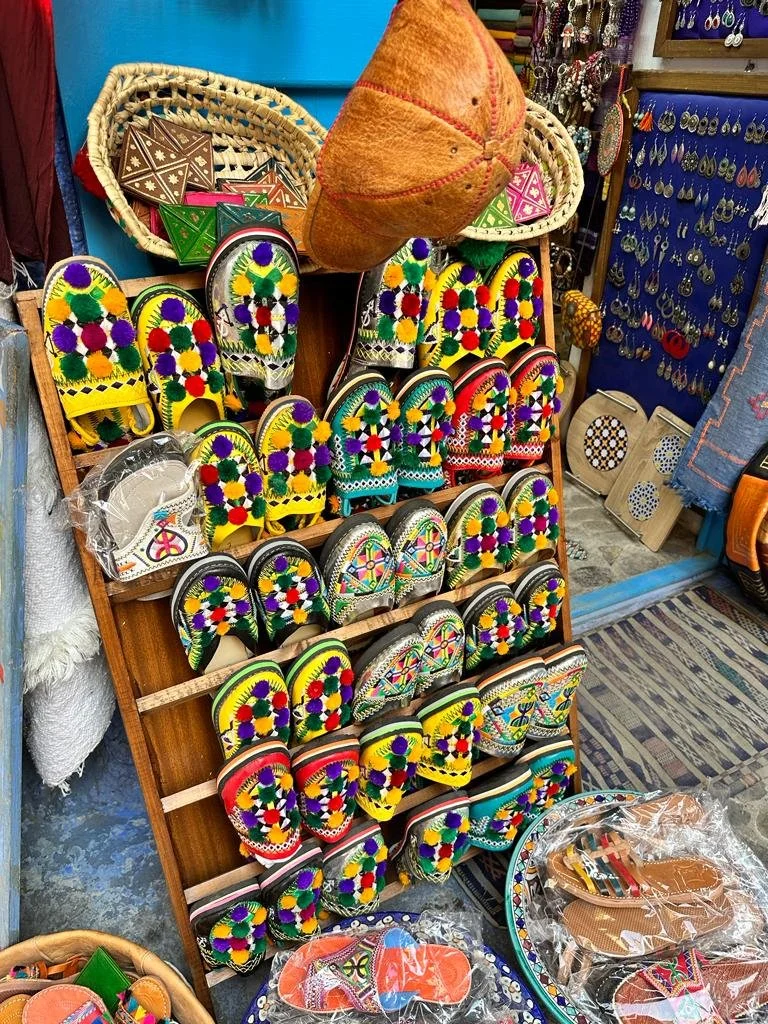
Buying anything required bargaining and although we knew that’s what happens, it troubled me. You ask for a price, they say 120 Dirmahs, you say that’s too expensive, they drop to 100, the moment you look away as I am unsure, let me think, the next question is - how much can you pay, we need the money.
We bought a few souvenirs but I simply couldn’t bargain with them, my tummy got upset each time. Maybe I am overly sensitive and naïve but I didn’t like it.
Jews dominated in salt trading for marble in the 14th century. It was a golden time.
Seville bitter oranges are even today used to clean brass doors and olive oil to clean silver.
A star means prosperity and richness, shades of blue are local colours and green is the Islam colour.
The city is dominated by the España Moorish architecture.
Back in a day woman could go out twice in her life - to get married or when she passed away. That changed in 1912 , under French influence / protectorate - not that long ago when you think about it!
Despite this approach to women, the Bride’s Mum decides if gifts are good enough, if not she can stop the wedding. Powerful!
Henna is believed to come from paradise, it’s an antiseptic and is used in Hamman.
Andalusian part of the city was built by people from Granada who were expelled, 8000 families moved to Fes.
Caravan Saray is the city part established by those who were forced to leave Tunisia, 2000 families moved to Fes.
There are three parts to Fes:
Intellectual where the first university teaching Arabic language in the world was built by a lady
Spiritual with 300 mosques
Capital of artisan - handcrafts and pottery
Medina has 10,000 streets, it is the largest and the oldest Medina in Morocco.
3m people live in Fes today.
Pottery is impressive! I wish I could buy lots, but no luggage space whatsoever!
To memorise the holy book takes anywhere between 9-13 years of practicing!
Agava thread is used to make clothes and I have got myself a beautiful blue agave silk scarf, so so nice!
The next day we jumped on a public bus and arrived to the most beautiful blue city called Chefchaouen!
Photo Album Day 4
Fes







Day 5 & 6
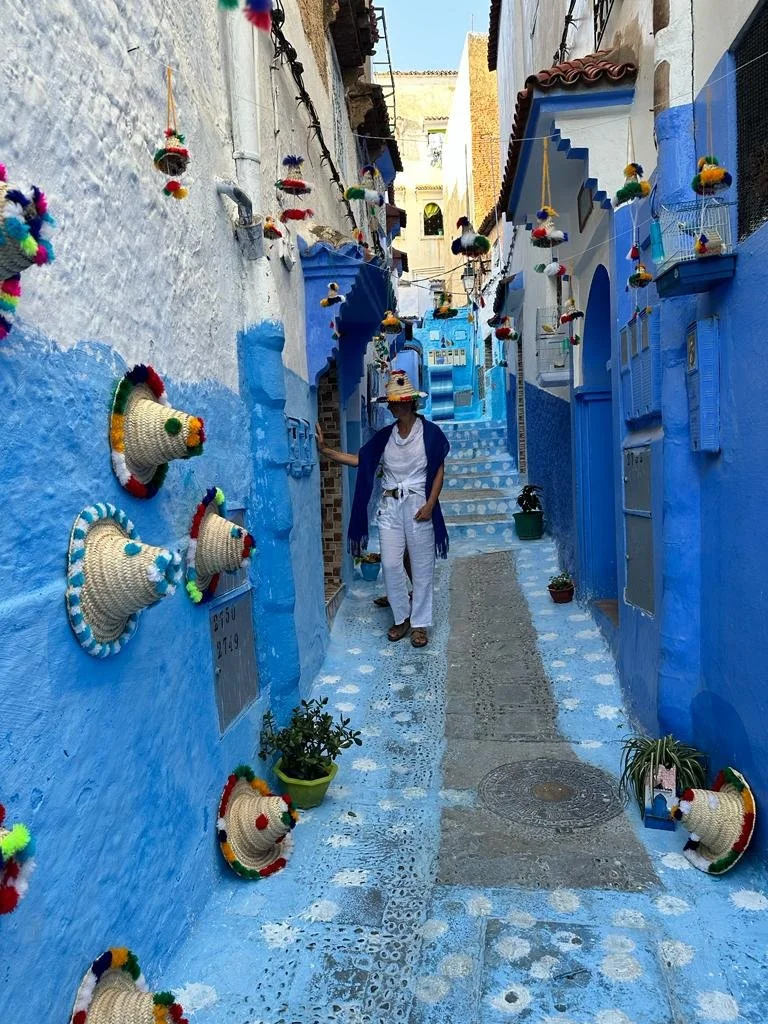
I love Chefchaouen, these blue buildings mixed with white lime walls and original terracotta buildings are stunning!
Love it, love it, love it! So, so, so pretty!
On arrival we settled in the most beautiful hotel designed in a true Arabic style. Our room was so pretty 🤩, Nebojsa felt like a sultan!
Went on a Medina tour and learnt a few things:
Jews quarter was established by the Jews who escaped from Spain, but then moved to Tangier, Argentina and to Chile in the end of the 19th century, cca 10% of population back then were Jews, there are almost none today.
Zoia is a small mosque with no minaret.
In the 16th century a woman ruled this region for 30 years. She is known as The Nobel Lady or Pirates Queen, depends whose history books you read: if it’s Moroccan she is The Nobel Lady who led resistance against Portuguese invasion for 30 years, if it’s Portuguese she is the Pirates Queen who fought and killed many pirates, ie a bad lady!
Experiencing a 45 degrees and high humidity it sounded absolutely impossible to learn that within a 20 mins drive in winter time there is heaps of snow. Our hotel had heaters in each room and in the city stalls you can buy summery dresses and winter coats, gloves, woolen socks! Hard to believe but true! During a winter there are big temperature differences from minus 5 to plus 29 in one day!!!
As the city was established in 1490 by those who escaped Spain its built in the Andalusian style. Initially the houses were built by natural materials, clay and water then they added “nila” ( indigo colour from Pakistan ) and lime to make them blue and white.
Firstly narrow dead end areas were painted blue to indicate it was end of the road. Then they started painting blue areas around windows and doors and a meter high walls. There are so many shades of blue, deep indigo blue with oranges provide the most beautiful contrast I’ve ever seen. I have taken so many photos, will need to buy extra cloud storage space and we are only a month into our travels!
Hats with pom-poms are typical here. The size and colours of pom-poms and women’s aprons tell what tribe they are from and how they wrap apron tells if they are married or not. Love these little quirky traditional facts!
We did an early morning hike and it was great. The mountains surrounding this small city are so high and steep, Nebojsa said it felt we were climbing Kozjak back in Croatia, not knowing that this mountain range belong to European Alps and its separated by the sea. Who would have ever thought that could be possible?! This mountain range is the National Park with over 1300 endemic plants including the black pine tree that only grows in Morocco. There are so many caves and mountain water springs, despite draughts they have never had water shortage issues.
Interestingly, this area of Morocco was also conquered by Vikings so there are many people with ginger hair, pale skin and blue eyes.
They are famous for their Mediterranean diet that’s recently been recognised by UNESCO. I didn’t even know there is such a thing as a diet that is UNESCO recognised. They eat a lot of veggies, fruits, nuts, fish and olive oil and they grow grapes.
Cannabis is the main plant that’s exported and people who drive flash cars are usually involved in its production/ distribution/export. It’s legal to grow it here, and as we hiked we could see cannabis plantations.
In the morning we got picked up by a private bus and drove to Tangier.
Photo Album Day 5 & 6
Chefchaouen




Day 7
Tangier is Moroccan Hollywood!
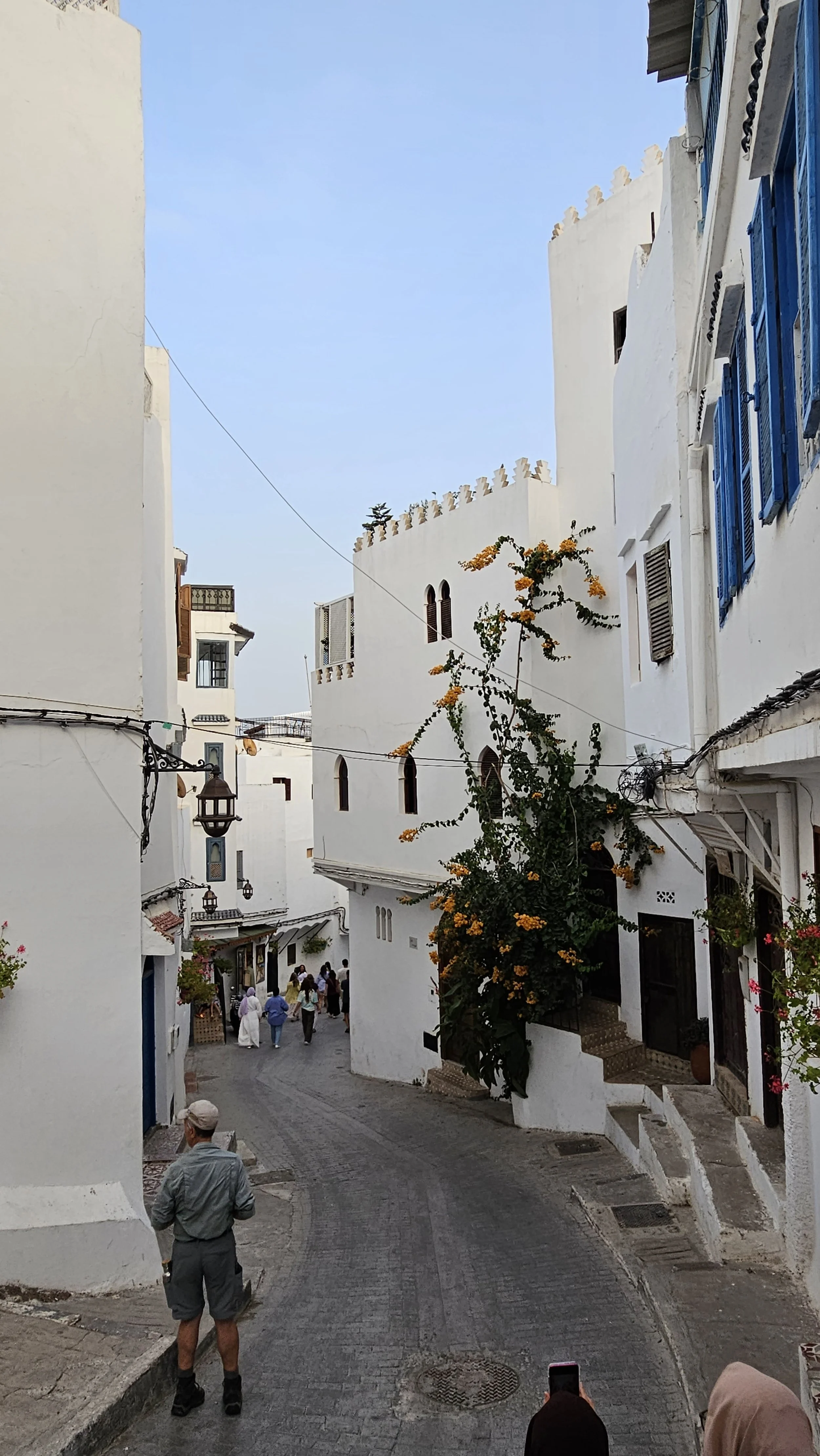
I could not believe the difference and contrasts between these cities, it’s like a different planet, unbelievable!
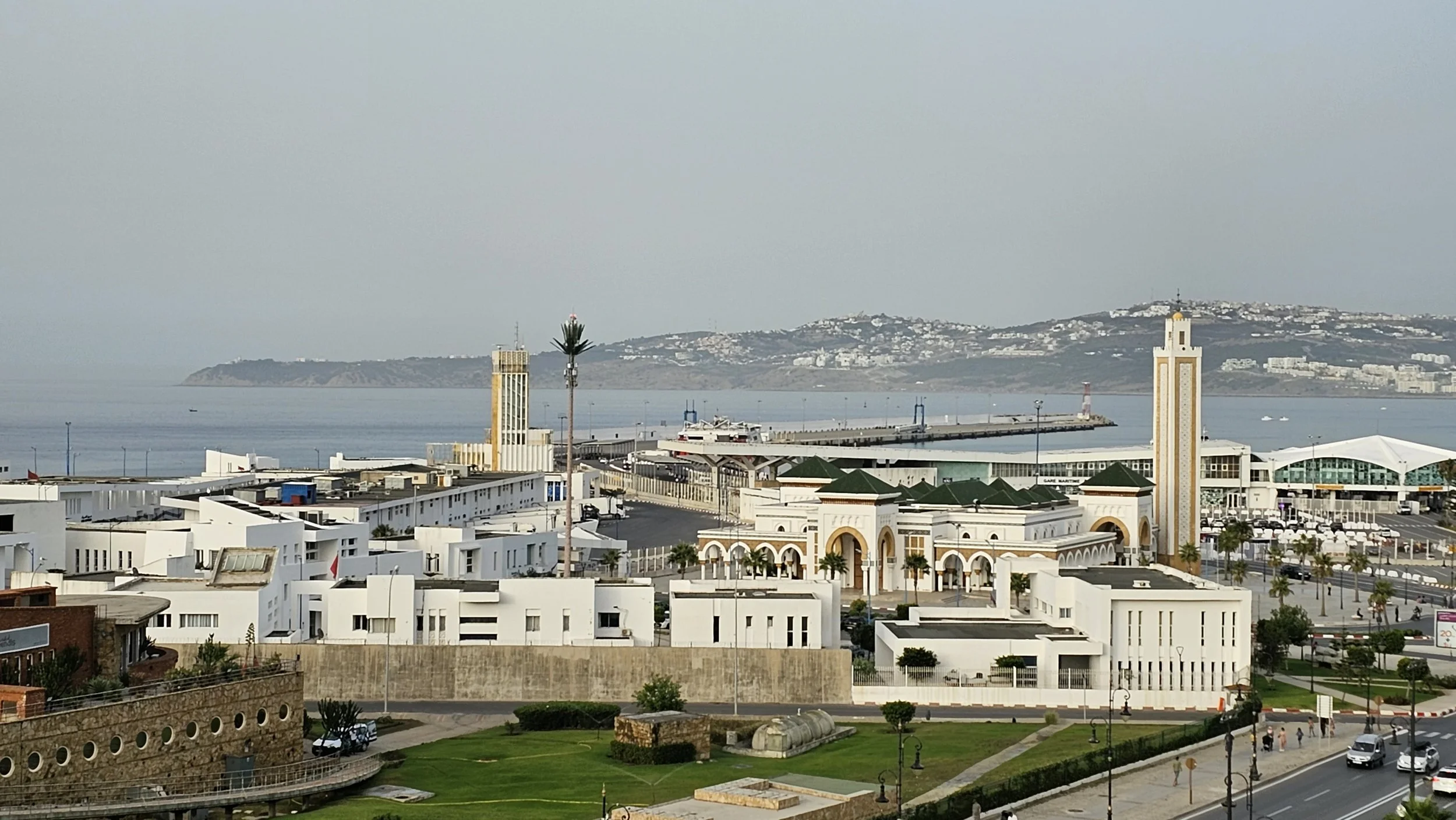
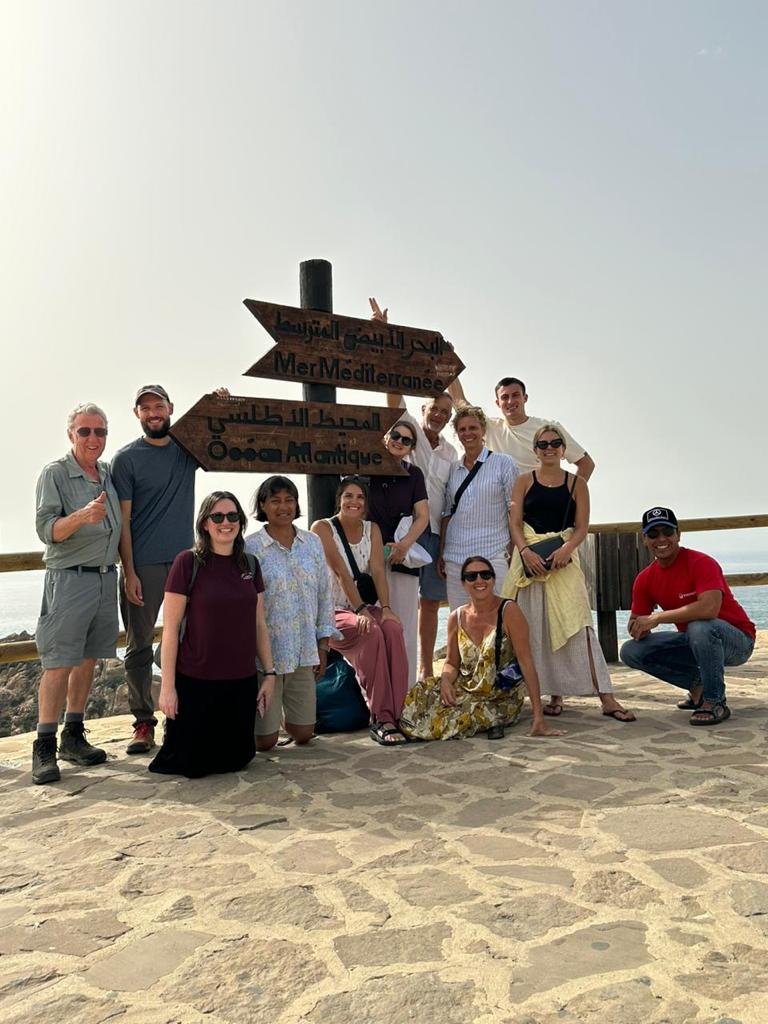
Tangier is a typical Mediterranean city that could be anywhere in the Mediterranean. It is a place where the Mediterranean Sea and the Atlantic Ocean meet. It’s the opposite side of Gibraltar.
A wealthy city where Moroccan King has done lots of investment, such as cars manufacturing to slow down the brain drain. He has also made it very easy for other European businesses to open up here, like Germans, Belgium, French etc, and it is a ferry ride or a plane ride so close to Spain!
We haven’t seen as many top range new cars on the roads in a long time. Registration plates from different European countries.
We stopped by the supermarket to buy food for a picnic lunch, the size and varieties of the food in the supermarket blew us away. Think of it as Kmart and Countdown combined and doubled! You would never think you were in Morocco we visited so far. So so different and it felt and looked like any other luxuries Mediterranean city.
Picnic in the park with amazing sea views felt as we were in Croatia, pine trees smell, nice temperature around 28 degrees after 43 in Chefchaouen felt great!
The first USA ambassador brought eucalyptus trees from Australia here to enjoy the scenery and they have now spread everywhere. So interesting to see them around the city.
Most of the beautiful houses are actually palaces that belong to different kings and presidents around the globe. This is a Monaco of Morocco!
We went to the beach for a swim and we swam in the Atlantic Ocean for the very first time ever! So refreshing and enjoyable with camels walking alongside us, a spectacular view and amazing experience.
We listened to their traditional music and uncovered this great artist Ahmed Alshaiba- a Moroccan performer of cover songs in Arabic tone, google him , his music is amazing 🤩 !
At the end of a great day we went to our bus driver’s sister home for a home made dinner and were treated as royalties. So much beautiful food presented on silver trays, and big serving dishes. As the food was served the hosts left the dining area, it felt strange but that’s their way of doing things we had to respect.
By 11.45pm we were on the overnight train to Marrakech! Another crazy experience where group got divided into girls versus boys as there is no mixing in the sleeping cabins! I slept better than I expected but couldn’t wait to reach the hotel in the morning to have a long cold shower!
Photo Album Day 7
Tangier








Day 8 & 9
We took it easy today! Nebojsa went to Hammam for a nice scrub and massage, I relaxed in the hotel and we went to wonder around the city on our own. We had a lovely dinner all together and said goodbyes. Some people continue with us, others have left Morocco.
It was our last day with the current group and our great tour guide Hisham and tomorrow evening we join the new group of travel buddies and continue to travel to a different part of Morocco!
Before we depart from Marrakech let me share a few things:
Also known as the Pearl of the South or the Red City, it is the gateway to the delights, dreams and colors of Arab-Berber-Muslim culture. Marrakech, sits proudly facing the largest desert in the world, the Sahara.
First capital of the Kingdom of Morocco, Marrakech is today one of the most visited cities in the country. Between tradition and modernity, it has succeeded in skillfully blending its thousand-year-old history with the cosmopolitan and trendy atmosphere of its new city. If it is well known for the maze of its medina classified as a UNESCO heritage site, it has many other treasures to discover such as monuments of Hispano-Moorish architecture or its green gardens.
We visited a few:
Medina - all roads lead to Medina! You can’t come to any of the Moroccan cities and not wonder the Medina narrow streets, colourful shops that sell everything and anything, with everyone inviting you to come in. Bargaining continues, and with a bit of practice I am feeling a bit better. It’s usually half the price to begin with and then goes up by cca 25%, you do the math’s but that’s a kind of a rule unless the prices are visible.
Taxi ride cost must be agreed before you jump in, there is no meter reader or anything like that. And you bargain again!
Colours of red are everywhere, buildings, carpets, cushions, if Chefchaouen was a blue city, Marrakech is a red city!
I love their colours, brightness and happiness, they try hard to make you feel welcomed, and are grateful for the visit and want us to tell everyone how great it is to be in their Morocco.
We attended a permanent show of the Jemaâ El-Fna square.
This was on Wednesday evening after a group dinner! What a crazy chaos!!!
I don’t know how to describe it but think of it as a big square with thousands of people walking, singing, performing rituals, playing with cobra snakes, monkeys, selling souvenirs, yummy juices (loved them), Tshirts and clothes and who knows what else! Never seen anything like this, and it happens each night, work day or a weekend! We left the square at 11pm and the show was still going on!
In the morning we left a bag of our unnecessary stuff in the hotel, and went on the second part of our Moroccan Tour exploring the nature, mountains and desserts, and the clock starts ticking again.
Photo Album Day 8 & 9
Marrakech


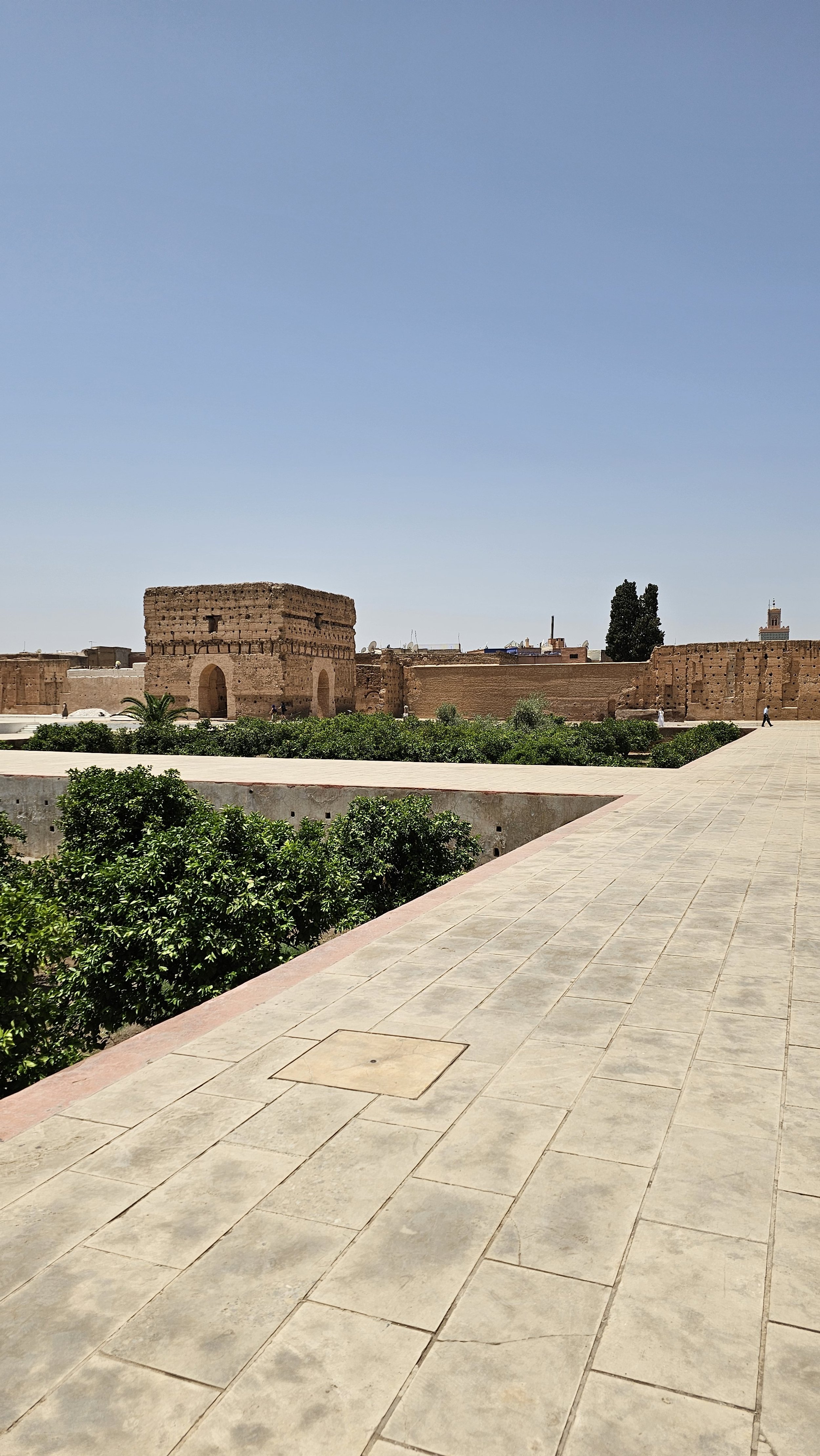


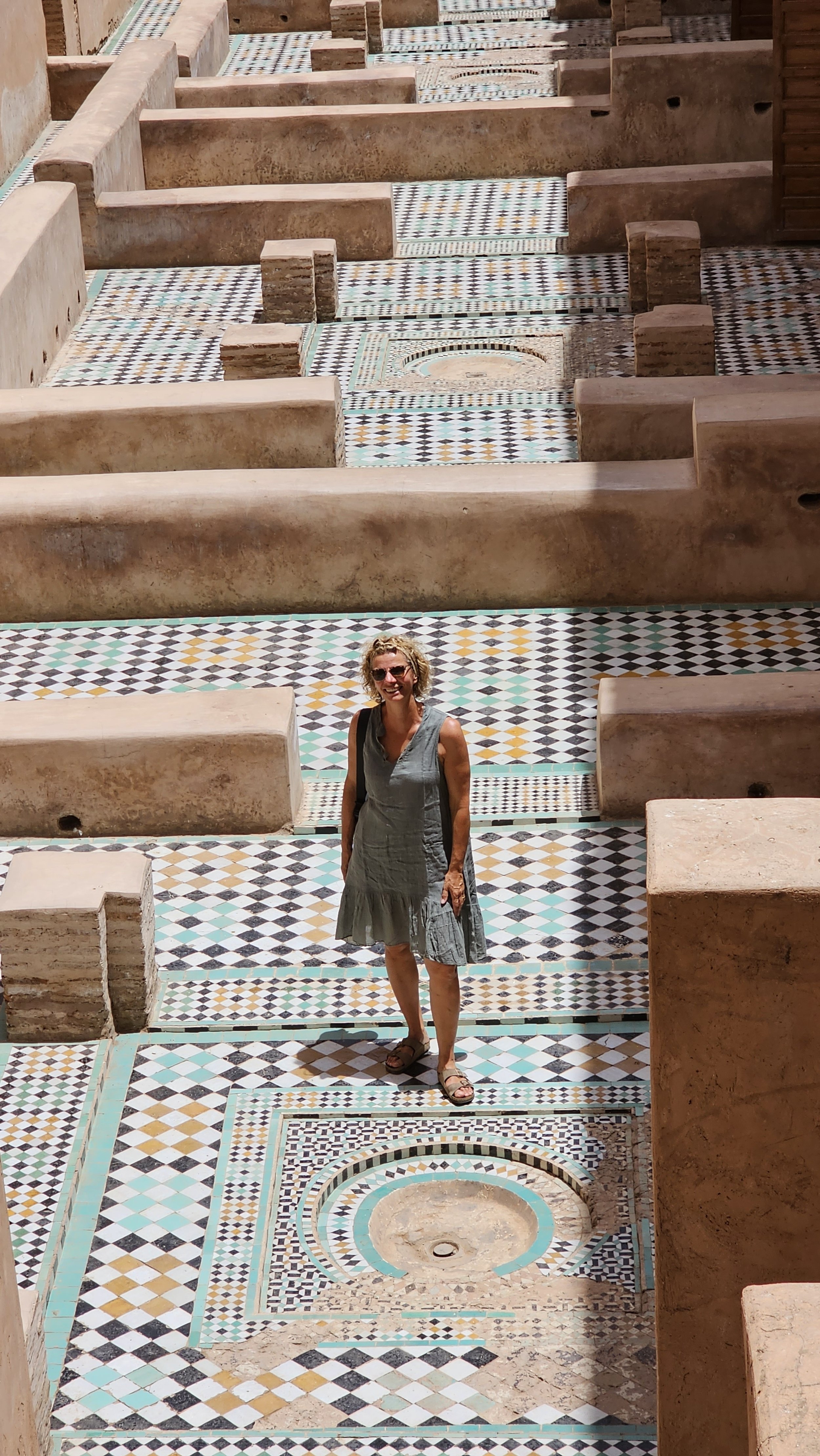


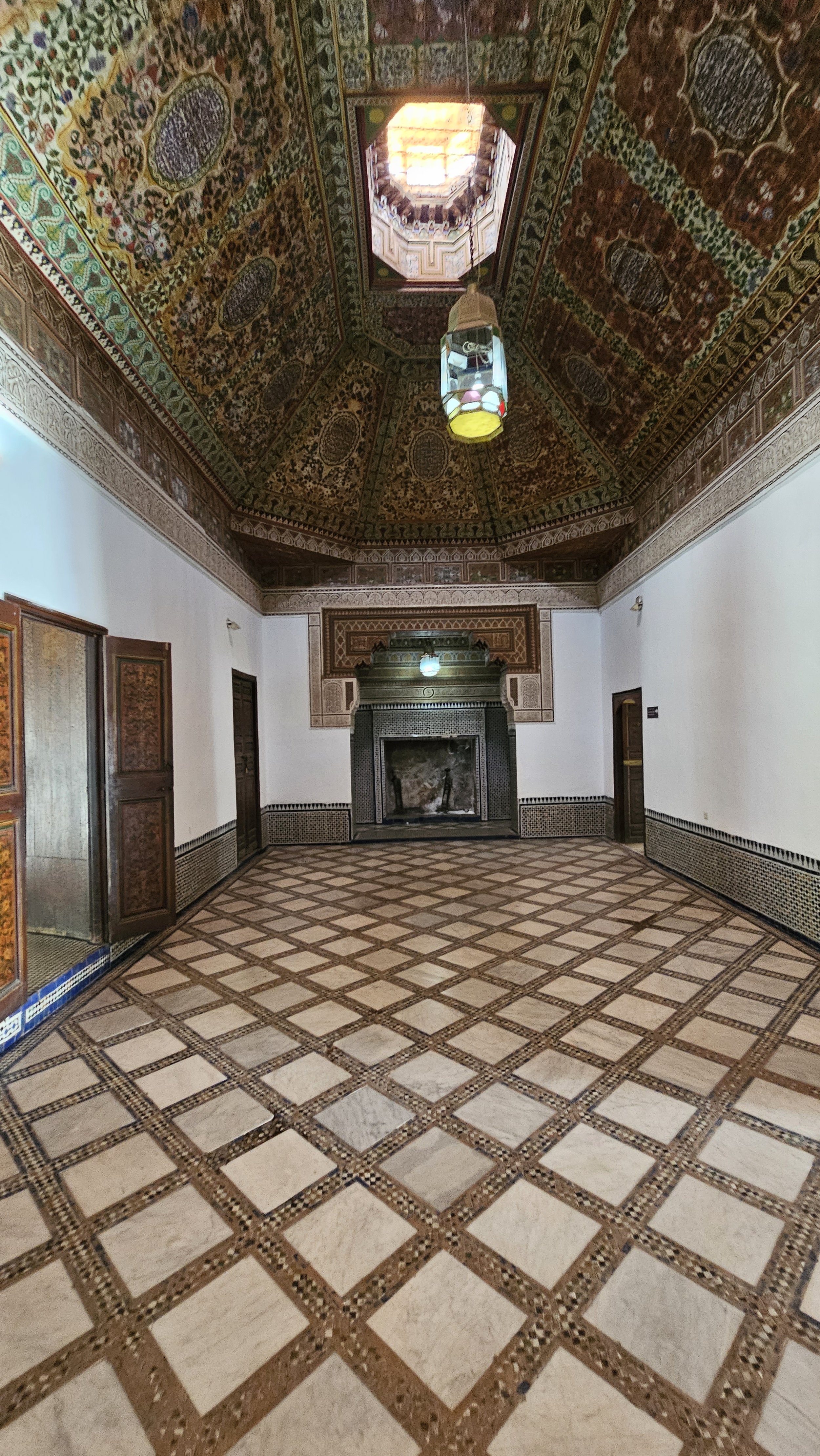


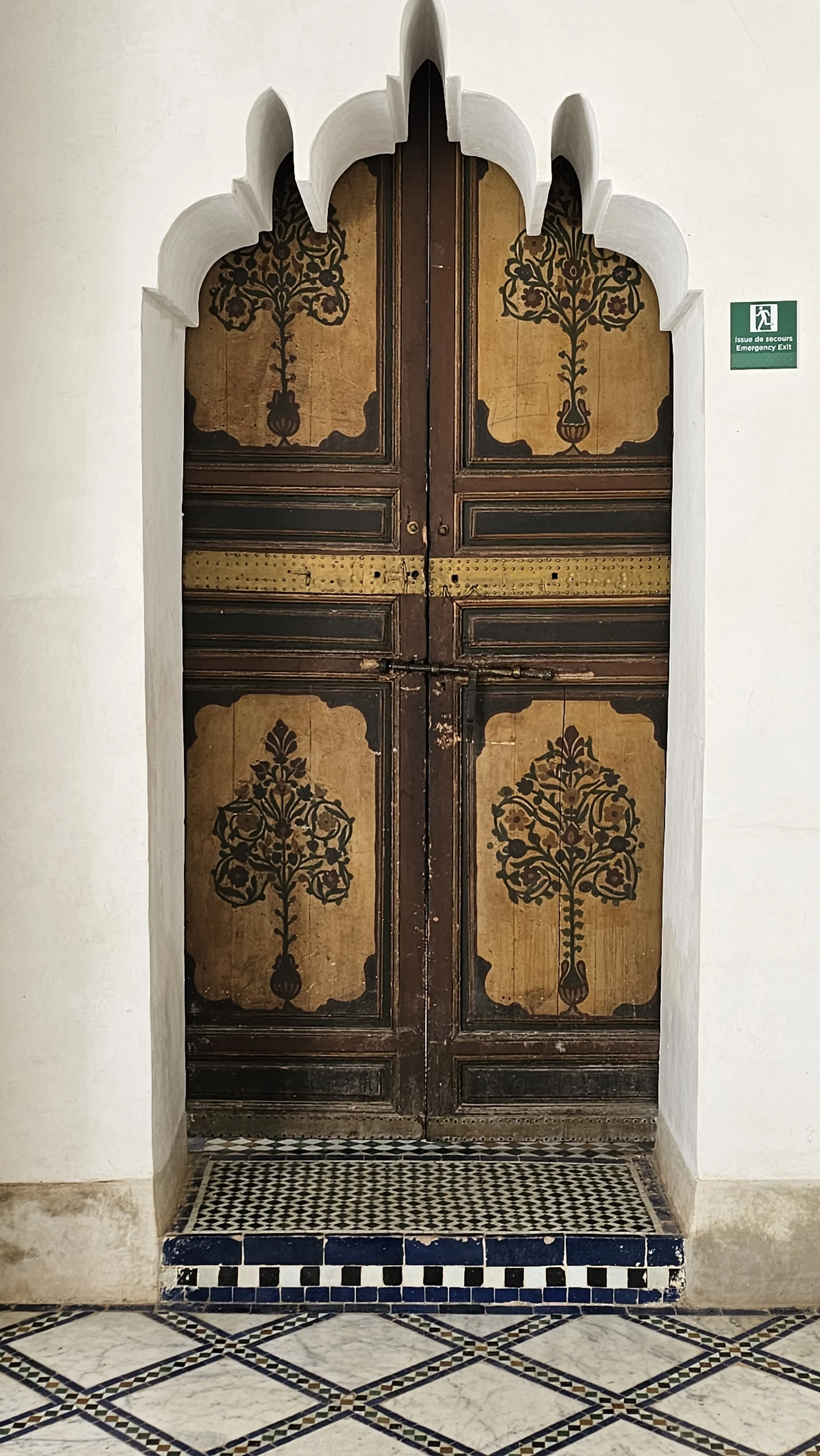


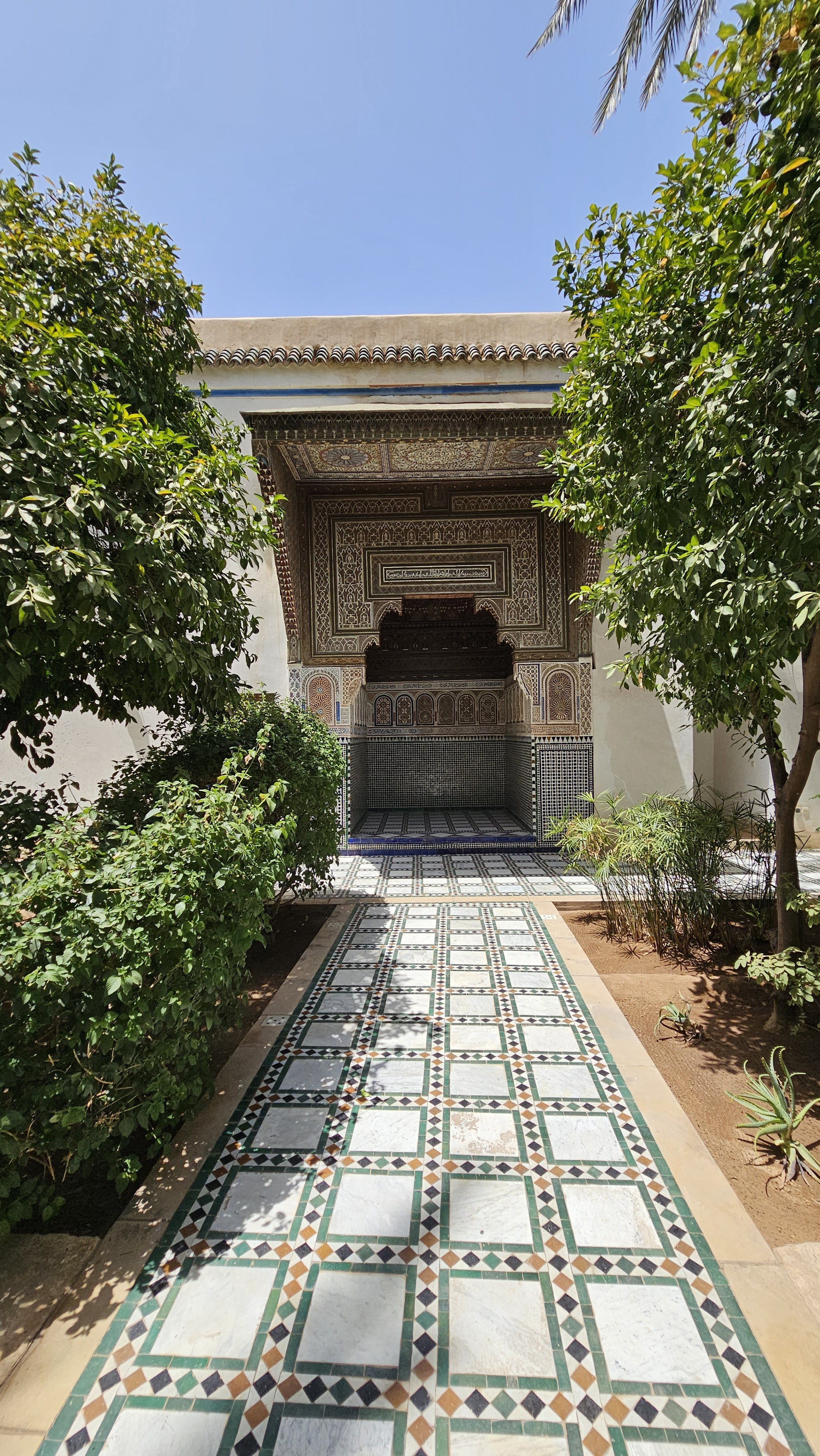


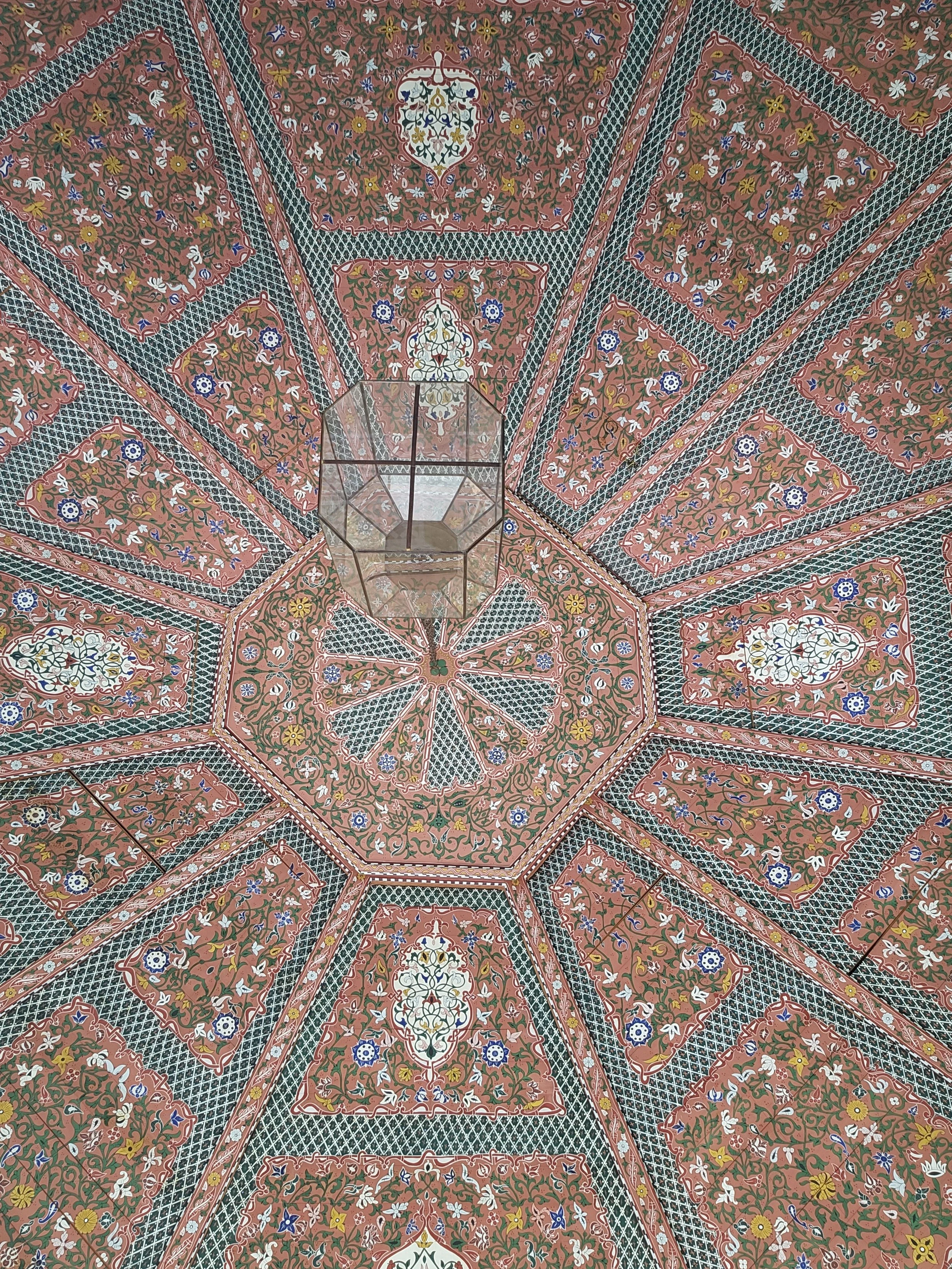


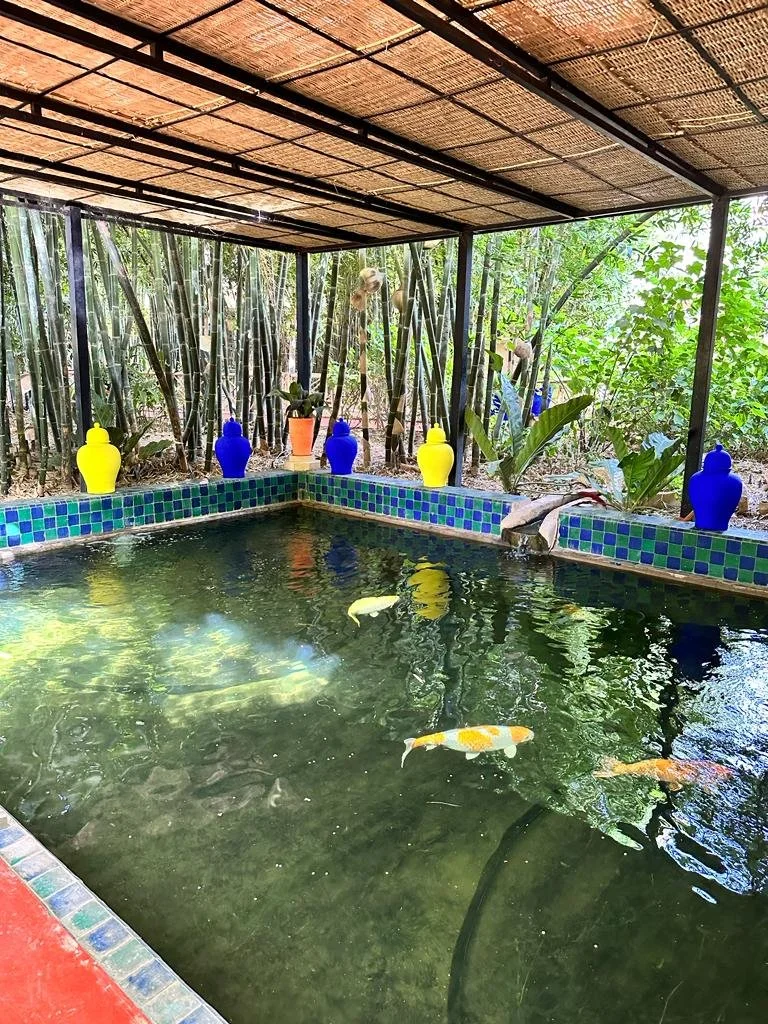


La Rendición de Andalucía ~ Andalusia's Surrending
I don’t know about you but we have forever had an endless travel wish list!
Spain has finally made it and Andalusia was a deliberate choice!
More than 800 kilometers of coastline, two National Parks and a number of cities such as Seville, Cordoba or Granada, are the great presentation of Andalucía, but this land is much more.
Before we embark onto our next adventure I have decided to write a series of short blogs lumped into one mega blog that covers Andalusia.
Nebojsa has cracked the code, made amazing albums and we hope you’ll enjoy a read over a cup of coffee.
If I was to sum it up I’d say:
Lovely people, slow pace ( heat has to do something with it), amazing food, stunning atmosphere, architecture, history and natural beauty.
Spanish people are proud of their language and many don’t speak English.
Finally, I have never expected to see Islam influence to be so prominent, to see Christianity weaved with Islam and Jews quarters in each town. Muslims have ruled this territory for so long, and as Christianity came they surrendered to protect their citizens and towns. They gave the keys to next rulers and left. There is something sobering and graceful in this, it is hard to explain my emotions but hopefully through the blogs you’ve got to understand the sentiment.
Happy reading!

Muslims handing over the keys of the city
We have forever had an endless travel wish list!
Spain has finally made it and Andalusia was a deliberate choice!
More than 800 kilometers of coastline, two National Parks and a number of cities such as Seville, Cordoba or Granada, are the great presentation of Andalucía, but this land is much more.
Before we embark onto our next adventure I have decided to write a series of short stories lumped into one mega blog that covers Andalusia.
Nebojsa has cracked the code, made amazing albums and we hope you’ll enjoy a read over a cup of coffee.
If I was to sum it up I’d say:
Lovely people, slow pace ( heat has to do something with it), amazing food, stunning atmosphere, architecture, history and natural beauty.
Spanish people are proud of their language and many don’t speak English.
I have never expected to see Islam influence to be so prominent, to see Christianity weaved with Islam and Jews quarters in each town. Muslims have ruled this territory for so long, and as Christianity came they surrendered to protect their citizens and towns. They gave the keys to next rulers and gradually left. There is something sobering and graceful in this, it is hard to explain emotions but hopefully through the blogs you will understand the sentiment.
Happy reading, as we pack bags to the next destination…
-
Stunning! Beautiful! Hot! Calm and peaceful!
Friendly and welcoming locals! Superb food! Free tapas with beer! Location of my dreams - an hour to the stunning beaches in the Mediterranean and an hour drive to Sierra Nevada ski resort! You recon I could live here, yep 👍!
Let’s start with a quick summary of this beautiful small city, walking distance everywhere as long as you are fit to climb steep cobblestone streets in the hot weather! We did it and used every fountain along the way to refresh ourselves, drank over 2 litres of water per day and continued to break new step records each day.
Highlights
La Alhambra, Nasrid Palaces and Generalife Gardens
AlHambra = “the red one” because of the reddish color of the earth used in its construction.
The Alhambra represents the zenith of Arab art, one of the most visited monuments in the world, and certainly the most visited in Spain. It has up to 8000 visitors a day, 2.8 m visitors a year!
The Alhambra is a monumental complex made up of palaces, towers, gardens and aqueducts. It is a medieval fortified city, residence of sultans and kings from the 13th to the 16th century.
The main language was Arabic, Islam was the main religion, between 2-5,000 people lived in the Alhambra city.
It was the last Moorish kingdom. Moors stands for a group of Muslim people from North Africa who ruled Spain from 711 to 1492, 700 long years, the longest period ever!
Moorish = the style of architecture used in Spain between 13th and 16th century relating to the Moors characterised by the horseshoe arch.
Interesting facts:
Granada’s symbol is a pomegranate!
There were 22 Sultans, only 13 didn’t die natural death, poison was very popular tool to gain the power.
Concubine and wives was the way to go. Sultan didn’t know when his wives or concubines will come in. The ladies owned the roster, so no fight among themselves.
Granada was the capital city, perfectly located in a valley, close to a quarry, Mediterranean sea and surrounded by the mountains.
It was a self sufficient city, with its own food production, organic fertilising and harvesting twice a year.
Everything in this city was developed in a sophisticated environment.
It was a powerful economical and political force. Jews and Christians paid Jizya to practice their religion and rituals and lived a peaceful life. Historians largely agree Jizya was the fee for protection provided by the Muslim ruler to non-Muslims, for the exemption from military service for non-Muslims, for the permission to practice a non-Muslim faith with some communal autonomy in a Muslim state, and as material proof of the non-Muslims' submission to the Muslim state and its laws.
Described as a Golden age, using the Silk Road from Middle East to Europe via Malaga as the entrance to the Mediterranean Sea brought the money they used to fund the construction of palaces.
Persians knowledge of maths, chemistry, physics and medicine enabled them to build these palaces with such a precision and symmetry, you wouldn’t believe it!
A quarry nearby provided materials, wooden frames used to build constructions, filled with red clay and tick walls, wooden sticks used as scaffolding, later filled with earth. Lime (calcium phosphate) made them look white to protect the citizens from the heat and insects. Stones used from 4 rivers around the area added the richness to the facades.
Although walls were originally white (lime) over the years became red due to the impact oxygen had on red clay. These buildings today look pink. Tradition continues to current days, Spanish people use lime in spring to keep their houses white. Before we knew this fact we thought for a minute they washed houses just for us! 😉
At the entrance to the Palace there is a Hand symbol, white symbol of protection ( Hand of Fatima), with each finger representing one of the Five Pillars of Islam.
Sour oranges were planted to decorate gardens and courtyards in the city to smell beautifully. They taste bitter and sour. Spanish people don’t use them, instead they export them to UK, so that English people can make the famous English breakfast Marmalade.
It can be 46 degrees in summer here!
Water Pools in the palaces were used as air conditioning and to show off, representing the power of the Sultan.
Small windows on the palace protected the intimacy, while courtyards and gardens with pools were used for gathering, relaxing and entertainment.
Throughout the palace walls are covered with poems, verses and stories from Quran celebrating the power of God. I have never seen anything like this, it leaves you speechless when you understand the story and you see the artisans masterpieces, 80% handmade.
Mundeha was a period of the peaceful coexistence between Christian’s and Muslims that lasted 7 years, then Spanish Inquisition came and Muslims had to leave or convert.
The history narratives indicate Muslims were seduced to believe in co-life, while Jews were sent away straightaway, many left to todays Netherlands.
Muslims were allowed to stay but had to publicly eat in open place, follow the rules, that contradicted with what they were promised.
Uprising happened as they refused to convert to Catholicism, but then eventually surrendered for the greater good of their citizens.
A total of 22 emirs and sultans reigned in the Alhambra until the arrival of the Catholic Monarchs in 1492. In 1492 the last Islamic ruler left.
After it was abandoned poor people moved in and lived in the complex with no appreciation to the place. It suffered fires and some destruction but today it is beautifully restored, we wouldn’t know any better, but for the wooden ceilings instead of glass mosaics from the original times.
After visiting this magnificent complex and an absolute must do when in Granada I ask myself - is our civilization really moving forward on a liner partway? The knowledge and skill of people from these old times continue to fascinate me. I believe we have to give our predecessors more credit and respect for their inventions and smarts that leave us speechless even today!
Flamingo show
You can’t come here and not go to one of the shows!
With the help from the locals we picked an authentic flamingo show!
We went up the hill again and in the hurry to enter one of the Sacromonte caves that have been home to gypsies, bohemians and Flemish artists for centuries.
The show took place in the actual cave, spectacular!
The passion, the energy, body movement, rhythm, facial expressions and their feet mastery are phenomenal!
I’d say if this is not erotical I don’t know what is! So so special, bursting with emotions and incredible 75 mins went in a heartbeat!
Videos are worth watching, trust me!
-
There’s no city in the world quite like Córdoba.
Cordoba is mixed and different!
Córdoba’s past is so turbulent due to its geo strategically important location. Despite careful listening and questioning I wouldn’t do it justice to retell the full story without the help of Wikipedia.
Instead of citing Wikipedia I would rather share my observations, impressions and a bit of learnings I do remember.
Let’s’ go!
Situated in the south of Spain, Córdoba has all the charm of a muggy summer town.
330,000 people live here, different religions lived peacefully here for centuries, remember this fact as I explain more!
It was 36 degrees today, but thanks to tall white houses there is shade everywhere, so it is actually ok!
The hottest city in Spain, where it’s legally forbidden to work in the afternoon if you work in open. We witnessed this rule in real life! After a long guided morning tour we went back to the hotel to refresh and returned to the old town to wonder around, well pretty much everything was closed. The only busy area was children’s playground with families enjoying picnics on the grass at 10.30 pm!
Cordoba is famous for its Patio flowers competition. This historical event was the reason the town wasn’t destroyed during the Franco era. The colorful baskets of flowers hang from hooks on whitewashed walls outside homes and businesses. It’s most beautiful in May when flowers are in full blossom, today we have enjoyed colourful geraniums.
It’s easy to get lost in the narrow roads, cars hardly fit through and the houses boast beautifully decorated patios. If you were to build a house in Cordoba today, you would be required by law to arrange for an excavation to determine if there were any historical archeological ruins on your site and you would need to build a house with a patio ( inner garden).
All the houses are white with bright yellow and baby blue fringes as if the whole city had a color scheme.
Strolling through the streets of Córdoba in July, I could have easily surrendered myself to the city’s ambiance alone. However, I wouldn’t be able to truly understand Córdoba without knowing its history.
History in a few paragraphs:
Córdoba is situated in the south of Spain, also called the Andalucia region, it was a part of the Roman Empire, and the last Roman colony.
Andalucia was conquered by the nomadic Visigoths from northern Europe during the Dark Ages.
The Moors soon took over, spreading Islam and building lavish mosques throughout the region.
After a brief period of Jewish rule, the Reconquista of the 13th century converted Spain to Christianity.
The Andalucia region was one of the last strongholds of the Moors ( Granada surrendered last) before Catholicism reigned.
The Reconquista is the historical term used to describe the military campaigns that Christian kingdoms waged against the Moors from the 8th century until 1492, in order to retake —or reconquer— the Iberian territories which were lost due to the Umayyad conquest of Hispania ( Muslim conquest of Hispania between 710-780).
From these religious upheavals came the Córdoba of today: a blend of Christianity and Islam —much like how Istanbul serves as the crossroads for the world’s three major religions (Christianity, Islam and Judaism). As we continue to travel we are connecting history dots, it’s very cool!
Cordoba is the only place in the world with 4 UNESCO World Heritage sites:
• The Mezquita, Mosque-Cathedral of Cordoba
• Gardens of the Alcázar de los Reyes Cristianos
• Archaeological Site of Medina Azahara
• Courtyard - Patios with flowers, there are 100 in Cordoba, 3 in Madrid!
During the train ride from Granada to Cordoba all we could see were olive trees. UNESCO is currently considering whether to declare this land area as another world heritage site.
St Raphael - the name means “God heals”. It is believed that in 1578, the Archangel San Raphael (St. Raphael) appeared to Father Roelas and swore that he would protect the city and its inhabitants, and he did!
15% population are called Raphael, including our tour guide!
Two interesting facts about our tour today:
Our tour guide Raphael was born and raised in Cordoba. He studied Humanities and Art degree and later Tourism. His graduation theses at the Tourism University was about Croatia!
One couple was from Israel. The gentleman’s father came to Israel from Ex Yugoslavia after the Second World War!
Wherever we go we find connections to our roots!
Seneca, the most important philosopher was born in Cordoba.
Columbus lived in Cordoba for a few years. It was in Cordoba that he was sent to explore and find new territories for Spain kingdom to continue expansion and to bring back gold.
Orange trees, bitter and sour are planted across the city because when they bloom they smell beautifully and their shade is better.
Sweet orange trees are planted in the fields, smell and shade are not important.
Oranges are harvested in winter to help us get vitamin C to fight cold - nature is wise!
Sour orange have two leaves ( small one first, the large one second) .
Within one square meter in the Cordoba Sinagoga we can find Hebrew writing, Arabic writing and a cross - this is what symbolizes Cordoba - coexistence of different cultures and religions.
Writing a blog about Cordoba and not telling you a bit about the Mosque Cathedral in Cordoba, the Mezquita would be a sin!
I have never ever seen anything like this, and I know you’ve heard me say this before.
What do I mean by this:
After seeing Istanbul, Sarajevo and Granada I recognized arches with geometric patterns instead of religious figures and the wide open spaces between them, classic to Islamic architecture.
There is mihrab, a traditional Islamic prayer room in rich gold. Everything pointed to the Mezquita being a mosque.
Half an hour of exploring later, I was surprised to come face-to-face with a grand Christian chapel.
Each section was unique from the rest, and each seemed to embody Christian architecture, Islamic architecture or a blend of both.
The architectural styles conflicted with each other but coincided at the same time.
Some parts are distinctly Islamic, others distinctly Christian.
Christian tower was built around the minaret, the only place in the world you can see something like this.
This is the only mosque left and preserved in Spain, built over different stages using recycling materials.
It experienced 4 expansions during Muslim rulers, and further expansions under Christian rulers, each leaving their own stamp of importance.
The world’s largest religions were supporting each other instead of tearing each other down. There would be no baroque ceiling without the support of the red and white arches below. The mosque provided the foundation, the church made the Mezquita unique.
Córdoba is comfortable with its roots and embraces all that has made it unique. While Spain is predominantly Catholic, Córdoba knows that its Islamic influence has shaped the city today.
Still, nothing is perfect. While technically labeled as a Mosque-Cathedral Monument Complex, Muslims are not allowed to pray in the Mezquita today.
At one point, Visigothic Christians and Muslims split the building as a place of prayer, but modern religious wars have made this impossible.
It makes me wonder: Have we, in recent years, ruined something that used to work?
It was certainly possible for both groups to pray at the same site before. The architects of the Mezquita embraced the idea. Why is everything distinct and divided now?
The original intent, however, shouldn’t be lost on us. Places like Córdoba and the Mezquita — while not flawless in modern times — still exist.
The world is a melting pot of cultures, but religious tolerance has a long way to go.
Deep inside me lies a hope that, if Córdoba managed to house two different religions under the same building hundreds of years ago, if Sarajevo was a happy place with three religions coexisting during my upbringing, we can do it now too. The choice is ours!
-
Everywhere we went over the years we would normally say we wouldn’t come back, only because we are curious to explore what else is to see and experience, until now!
Seville is beautiful, beautiful and more beautiful. Can you imagine waking around the Plaza de Espania crying, yes crying out of the majestic beauty around me🥹
As we are wondering around the city there is no moment in a day that we are not taking photos. Everywhere you look you see another beautiful building, park, promenade covered with white sheets to protect us from the sun and heat, beautiful artisan shops, restaurants and cafes with water spraying to cool us off, fountains, monuments and more historical points of interest.
I don’t know how many days is enough to fully surrender yourselves in this beauty, but I know we would love to come back, and if the stars align it will be in April or May to experience a different season and smell oranges blossom. We are thankful to those who planted these bitter orange trees, their strong shade saved us this time!
Highlights
Seville, ancient Hispalis, is the capital of the province of Sevilla in the Andalusia (autonomous community).
Sevilla lies on the bank of the Guadalquivir River, 87 km north of the Atlantic Ocean.
An inland port, it is the chief city of Andalusia and the fourth largest in Spain.
Sevilla was important in history as a cultural centre, as a capital of Muslim Spain, and as a centre for Spanish exploration of the New World.
Seville is the birthplace of flamenco and bullfighting. More in both later on.
The town is world-famous for its enticing mix of Moorish, Christian and Jewish architecture and history, as well as some of the most delicious tapas found in southern Spain.
The oldest tobacco factory in the world was built in Seville in 1760, today the same building is Seville university.
An interesting story about this tobacco factory:
Tobacco initially arrived from Cuba, Spanish colony. Only men were able to work in tobacco factory, 700 men walked 5km each day to Seville port, brought tobacco bags to the factory, made cigarillos not to smoke, but to chew.
In the 19th century 500 men were fired and 6000 women employed to roll tobacco and make rolled cigarettes, on Napoleon’s request. Why women? Because they had smaller hands, delicate fingers and could beautifully roll cigars so men can smoke them, and no longer chew. Women worked for 14 hours a day, fully exploited.
Gypsy Roman women from Tirana were called “cigaretta “, and became the first feminist group who organised riots, requested a kindergarten and a chapel to pray while at work. After years of discrimination in 1920, 6000 women circled the building, other women came to help, at the end there were 25,000 women who held the factory under siege, no one was able to enter, until they got their requests addressed. Enough is enough!
The most famous employee was Carmen, known from the opera Carmen. She was known for the fact that she could roll the cigars between her thighs.
Over the years, the building was abandoned and in 1949 became the university.
Plaza de España
Interestingly we started our tour at this site, the youngest historical landmark.
Its construction began in 1914 with the aim of serving as the central area for the Ibero-American Exposition of 1929.
It is the most monumental work of the brilliant architect Aníbal González. Built in a style reminiscent of the Renaissance and Baroque, symbolizing the embrace of Spain to the Ibero-American.
It is difficult to point one thing but the 50 benches, each one dedicated to a Spanish province, with ceramic representations of its territory on the ground and a relevant historical scene alluding to it on the wall left me speechless 😶
I cannot believe this plaza was used as a car park from 1930 to 1968, thank goodness someone was wise enough to get rid of the cars and made it to be what it is today, officially the most beautiful square/plaza in the world!
Alfonso Hotel( named after the king)
It is a luxury accommodation, with 126 original rooms where Spanish King resides when visiting Seville and all famous football (soccer) clubs!
3800€ for the most expensive room per day at any season!
We wanted to pop in for a coffee but haven’t had the time!
The Golden Tower
I love this story and have to share it😎
The Golden Tower is known as the Muslim tower.
As we know this area was under Muslim domination between the 8th and 13th century.
The tower was built in the 13th century when the Muslim Sultan already knew they were going to get conquered by the Catholic Kings. They ordered to build it to protect the city and its citizens. They also built a “Bridge of boats” from Triana to Ishbiliyah ( Arabic name for Seville), connecting two parts of the city and acting as a link for trades.
In 1247 Ferdinand the 3rd Christian King conquered the city after one year of battles.
After destroying the Bridge of Boats in 1248 Muslims gave the key of the city to Ferdinand. Interestingly, it took 10 years to conquer Granada! There is a beautiful painting in the Cathedral that illustrates this historical moment.
And the history repeats itself, they lived together till the 15th century when inquisition started at the market of Triana.
Jews and Muslims ran away from Seville.
Glorieta Curro Romero
Bull fighting is the most controversial topic in todays Spain!
This is the second oldest bull arena in Spain with 11500 seats. Today there are 3 stages of the fight:
1. Dance with a red mantilla to confuse a bull with its movements and it lasts 30 mins
2. Stage of luck - the luck of sword and mantilla lasts 30 mins - this is the period when a fighter can get help if he needs it
3. Stage of death - people are in a complete silence out of respect, no moving, no speech, total silence. A bull fighter keeps a sword inside his mantilla. Sword is used to kill a bull, it must be a clean kill with no suffering!
If a bull is strong to fight back in the second stage it can be forgiven. Between 1881 to 2023 only 10 bulls were forgiven !
Bull fighter gets two ears as his award and a tale is used in cooking with a bull tale stew available in restaurants. Skin is used for leather manufacturing.
Curro Romero is known as the best bull fighter in Spanish history but he was known to be very afraid during the stage of death but with a black magic help from Triana he continued to successfully kill bulls for years.
I didn’t like any of this and wanted to understand where has this tradition come from. Here is what I’ve learnt:
In the 15th century animal Aurochs ( Uro) was used for entertainment, only dance, no killing. People would sacrifice a different animal to feed families, like a chicken or a goat.
In the 18th century Uro became a rare animal, a bull looked similar and replaced Uro.
Nobel families used it for dance and introduced killing for two reasons:
1. Rather than sacrificing another animal they sacrificed a bull because it was more aggressive than uro?!
2. After killing a bull Nobel families gave the meet to poor/ normal people as a feed. Killing a bull became a Nobel thing to do in order to feed poor citizens!
And, if a Nobel family had a son he would often be a bull fighter who after killing a bull would receive a Nobel title at the age of 16/17 so young and so important!
Conservative Party today wants to keep the bull fighting tradition live and are introducing compulsory education at schools about it, as well as flamenco.
Young generations are against bull fighting and want the tradition to stop.
In Portugal there is no killing, just dance, in Mexico there are the biggest bull fighting arenas in the world.
My guess - bullfighting will continue to exist.
Cathedral & Alcazar ( similar to Alhambra but smaller )
Seville Cathedral is the biggest Gothic cathedral in the world. The story repeats itself, it was an ancient mosque but when Christians conquered Vatican asked them to use the mosque but use a different orientation to look to Vatican not Mecca. During a few earthquakes the mosque was damaged. Vatican gave cash to build a cathedral temple instead.
For 150€ you can have a wedding at the royal chapel but you need to wait 5 years! After Sergio Ramos football player had his wedding here the waiting list has doubled!
Tomb of Christopher Columbo can be seen in the Cathedral with a bit of a mysterious story behind it. It is believed that his ashes are spread across the last Spanish colonies, Cuba, Portorico and Filippine. However, 175gr of Columbus body ashes are buried in Seville with a massive monument built around his tomb.
Cathedral Tower was a minaret back then, it is 104 meters high, and guess what?!
Ramps are used instead of stairs so that muezzin, the official who proclaims the call to prayer five times a day, at dawn, noon, midafternoon, sunset, and nightfall didn’t need to climb the stairs. Ramps were made to make it easier to climb, so clever!
Triumph square
Celebrates the Victory of Christianity over nature ( EQ of Lisbon ). The only area destroyed was a royal chapel, and only 9 people died in earthquake who were in the chapel at the time. This is considered a miracle compared to thousands of people who died in Portugal.
Flamenco
We decided to see another Flamenco show in Seville, performed in one of the local theatres in the old town.
The show was okish, nowhere near as good as the one in Granada. This was a perfect example of producing a show for tourists on mass. It lacked emotion, passion and engagement with the audience. There was no introduction to the show, a few sentences to explain its origin and meaning, simply nothing.
Flamenco is an art form based on the various folkloric music traditions of southern Spain, developed within the Gypsies subculture of the region of Andalusia who have contributed to its origination and professionalization. It is focused on evoking and communicating passion, love, sadness, despair, joy, and more. We saw all of this in Granada and noting in Seville!
Flamenco has recently been recognised as the UNESCO Intangible Cultural Heritage.
Living on the budget!
It’s a very different experience when you travel for a long period, change destinations every few days, knowing that the money put aside for a long trip has to last to the end!
I am the Finance Minister and Nebojsa is the excel spreadsheet mastermind! Every few days we have to reconcile numbers and that is lots of fun, not! Just kidding, we argue and we laugh💰
So far we are tracking within the budget, but I am glad we left Seville as shopping paradise started to bite us😉🛍️
-
Malaga is a great destination for one off day trips around southern Spain. We took the opportunity to visit Gibraltar!
The second tour we wanted to do was cancelled due to hot weather, it’s on the “ next trip list”. Instead we have enjoyed a beach day, quiet and relaxing for a change!
Highlights
Gibraltar is a straight between Europe and Africa and the closest point is only 14km distance between the two continents!
Super cool!
There are two families of orcas living in the straight, they love red tuna, but don’t like yachts or cruisers! Tuna size are enormous, a 600kg tuna is just a normal thing here! The orcas are attacking yachts as they enter the straight, an interesting development that marine experts are researching as it is a relatively new thing!
The Rock is 426m above sea level and it is an entrance to the Mediterranean Sea, on one side is the Northern Atlantic Ocean and on the other is beautiful Mediterranean Sea.
Initially established by Tarik, a Muslim in 711 who built a castle in Gibraltar and gave the straight its current name.
In 1492 Christians took over. It was under Spanish rule, until yet another war and in 1713 became the sovereign UK country.
George Rooke was the first governor of Gibraltar in 1713, a powerful army man.
It was an important strategic base for the two world wars.
Today there are 30,000 habitants, English is the official language but people predominantly speak Spanish, or better say Spanglish!
It was an interesting experience crossing the border today! Since Great Britain is no longer in the EU there were two lines at customs - EU passports and All passports. Since we have both we took a faster lane and entered GB on Croatian ID. It felt this is a border just for the sake of it, but we still had to cross over. Weird feeling.
There are five monkey colonies living in Gibraltar and they are very, very important.
There is a story that says Spanish tried to re-seize Gibraltar under the ruling of the Great 6th, but monkeys felt something was going on and woke up people to defend it and keep under GB sovereignty. As long as monkeys are in Gibraltar it will stay under GB!
Shopping deals were great but not any more, taxes are now introduced, people mostly buy jewellery, tobacco and whisky.
It is a massive port with tens of cargo ships and many beautiful private yachts.
A little town just before the border is called “ La Linea- The Line “. It got the name from old days when it was a physical line separating Spain from UK.
There is not much land to build anything in Gibraltar. A few years ago they brought a massive cruiser boat and converted it into a permanent hotel docked in the port with a big casino that’s very busy all the time!
There are many man made caves in the Rock with galleries, and there are a few local beaches around.
Unless you are interested in shopping you’ll quickly see it all. Luckily we booked the Rock Tour. The tour guide was so passionate, it was so much fun.
We were lucky with the weather too, it wasn’t too hot, little bit foggy, we could clearly see Morocco mountains. It is an incredible feeling leaning on the fence, behind me Africa and Europe and I can see a line in the water! Super special experience! It reminded me of Cape Rēinga.
There is a Big Ben here, a tiny brother that sounds like a text message 😂
There is a suburb called Little Monaco with very simple houses but very expensive, remember you are waking up with a view of Africa!
Government desalinates sea water and each house have 2 set of pipes - fresh for consumption and salted water for cleaning, washing and toilets.
There are no rivers here, waterfalls are artificial, and yet everyone rushed to take a photo of a man made waterfall 😇.
A new mosque recently built was a present from Saudi Arabia, there are 1000 Muslims living here, and there are 21 religions, with Anglican,Catholic,Jews and Muslim being the top four. They have and continue to live in piece and harmony. I guess it is easier to control such a small area…
St Michael cave trip was nice. It is located inside a natural reserve called “An upper Rock” to protect monkeys. I have never seen a natural cave with a light show and music to enhance the experience. It felt to me like a man made intervention into something beautiful by nature, but Nebojsa was impressed so here you go, different people different perspective!
There are more tunnels than roads here, and they are so narrow. Rocks from tunnels were used to build artificial new part of city.
It is so expensive to eat here, two thin pancakes and a coffee $30!
I am glad we visited Gibraltar and with a bit of luck rather than careful planning saw what interested us. Nature, cave, monkeys, views, Morocco mountains, Africa continent and history!
Granada Photo Album


Cordoba Photo Album


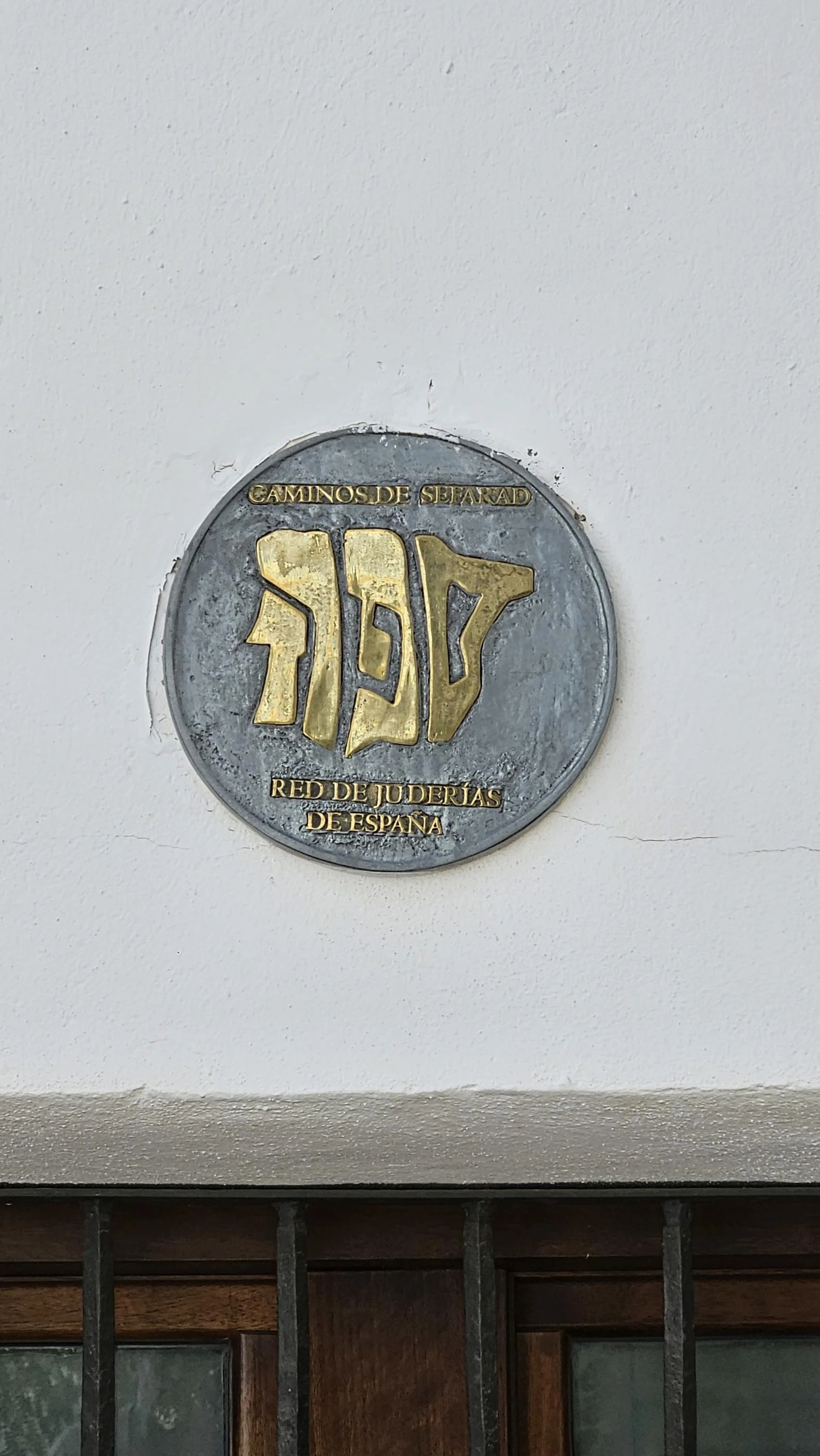


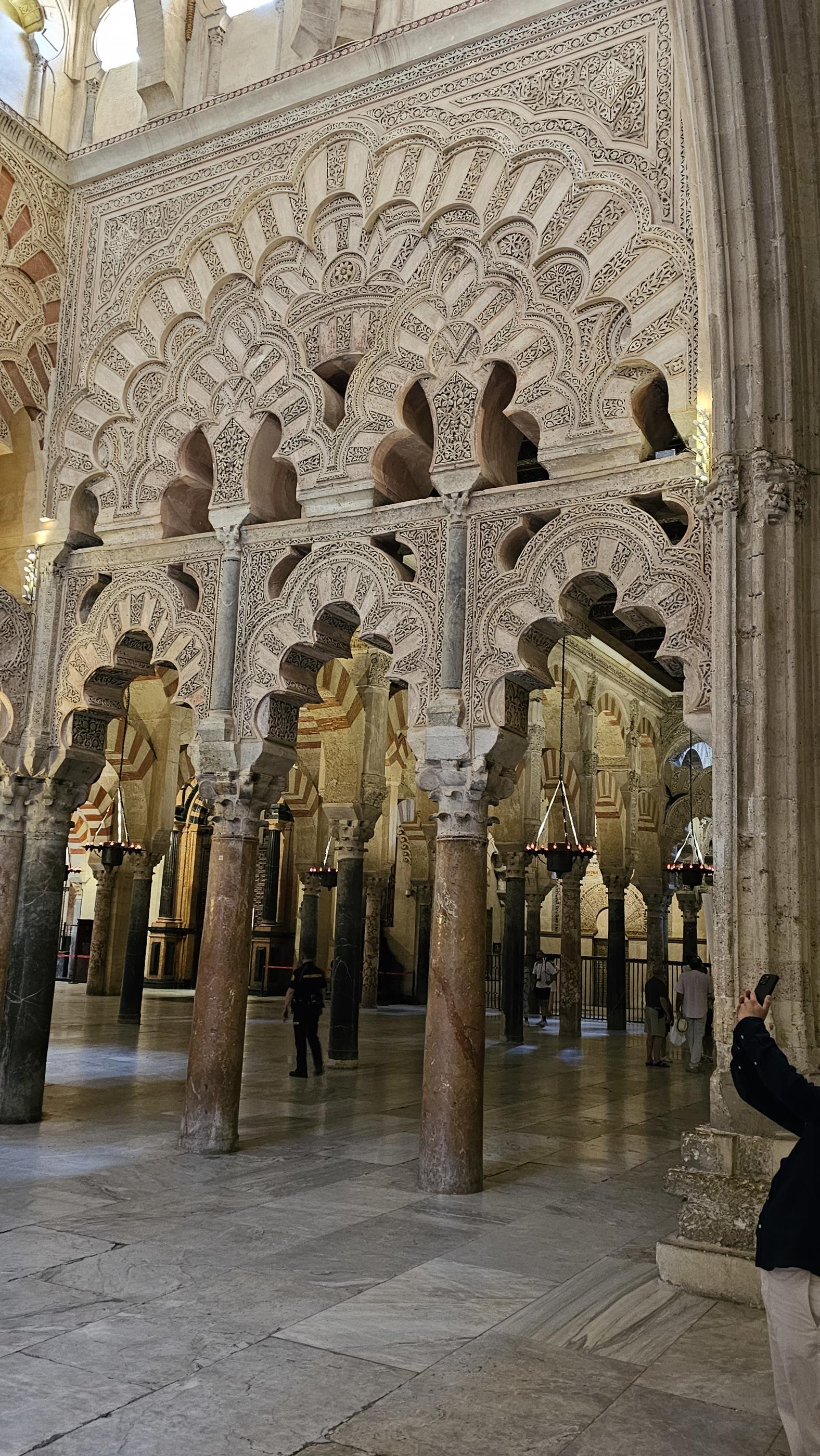


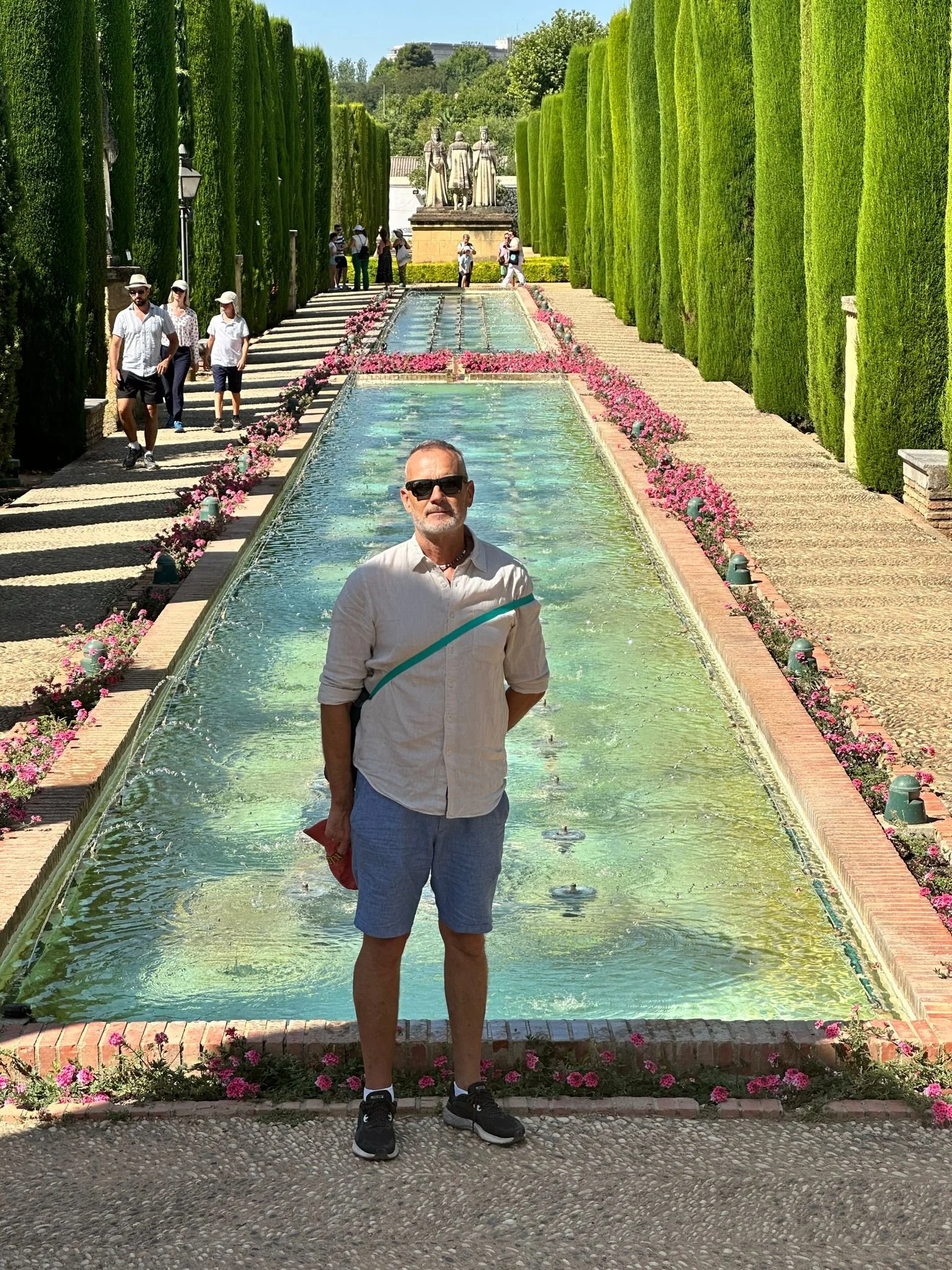


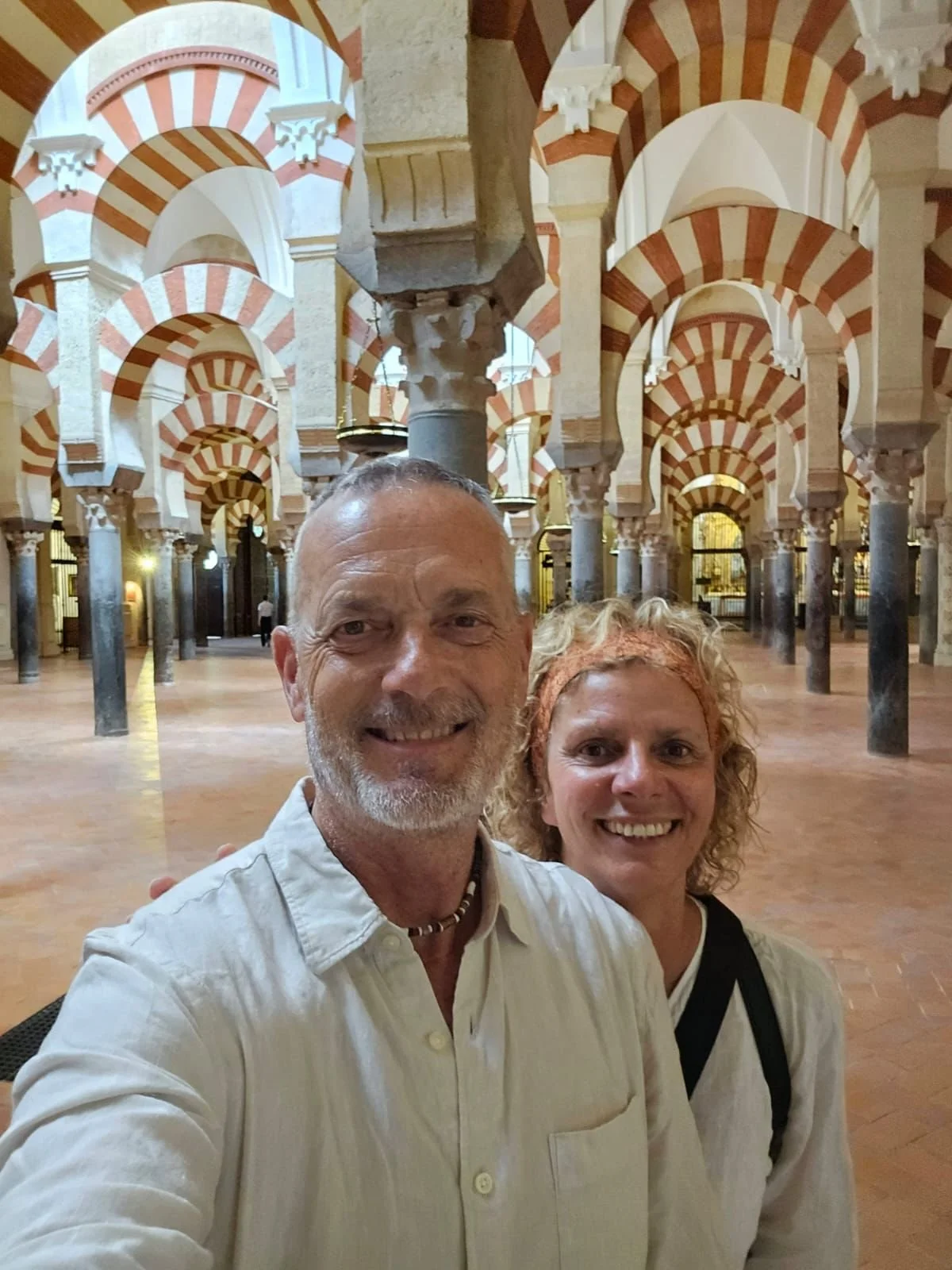


Seville Photo Album

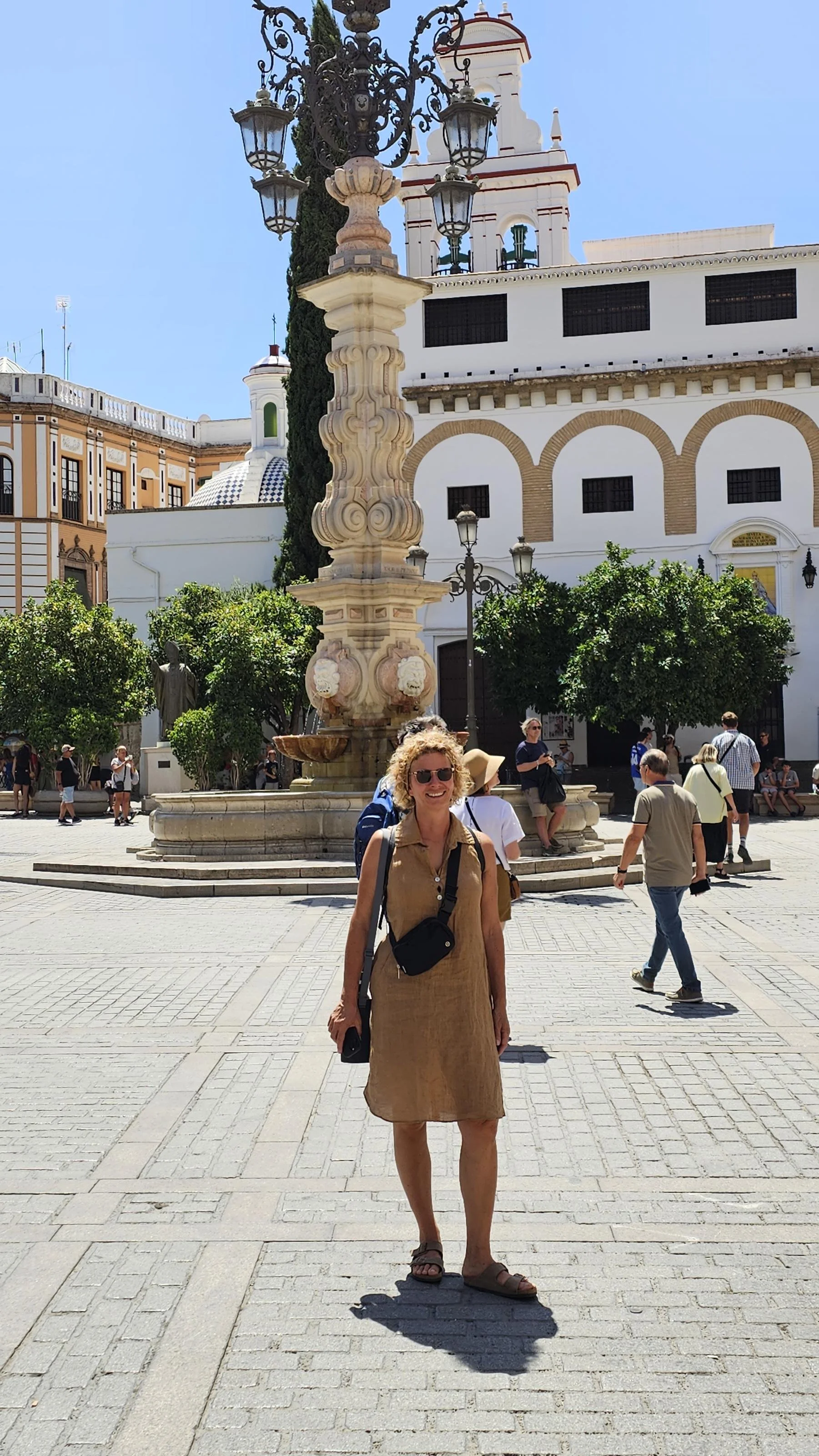


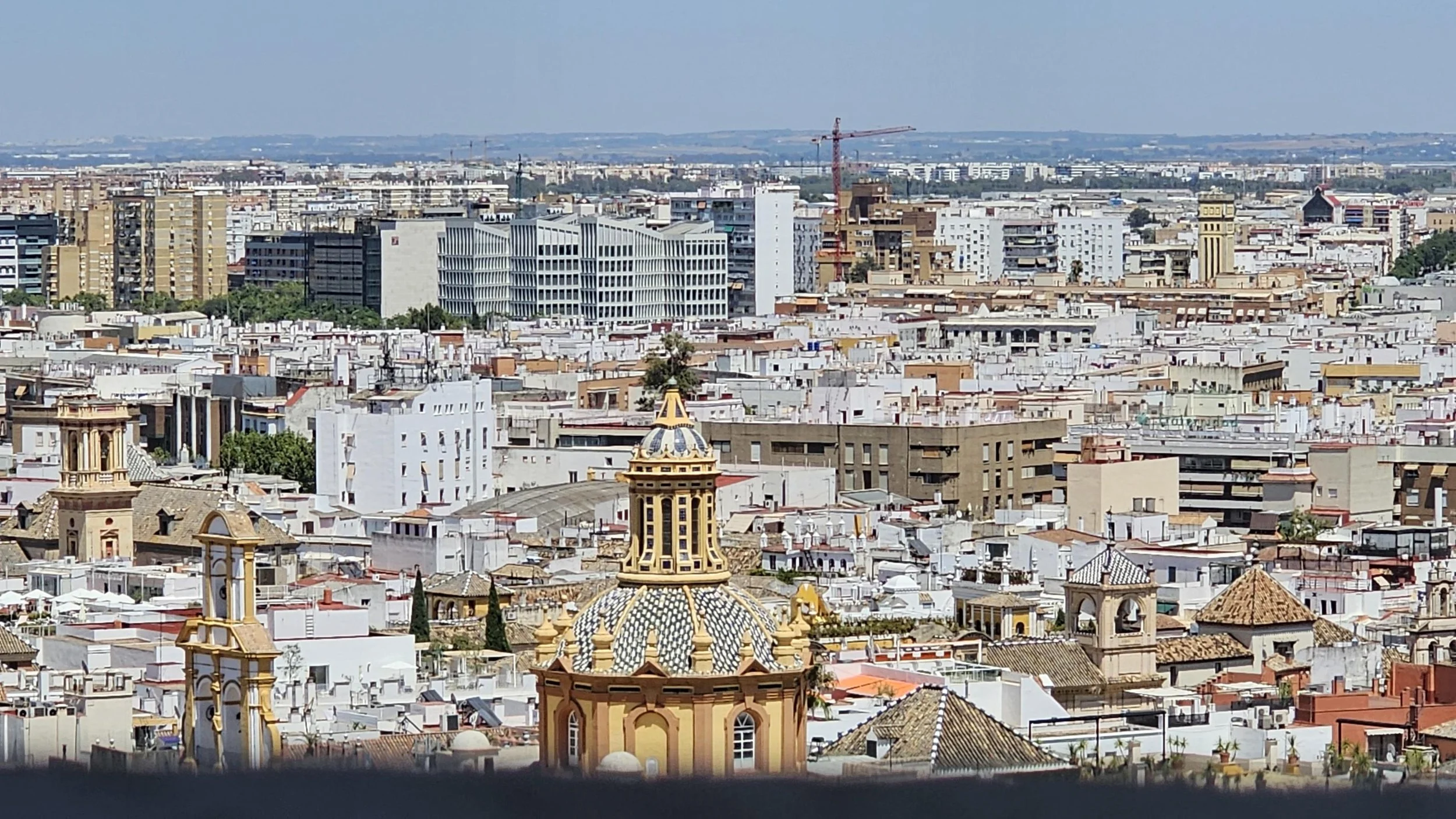


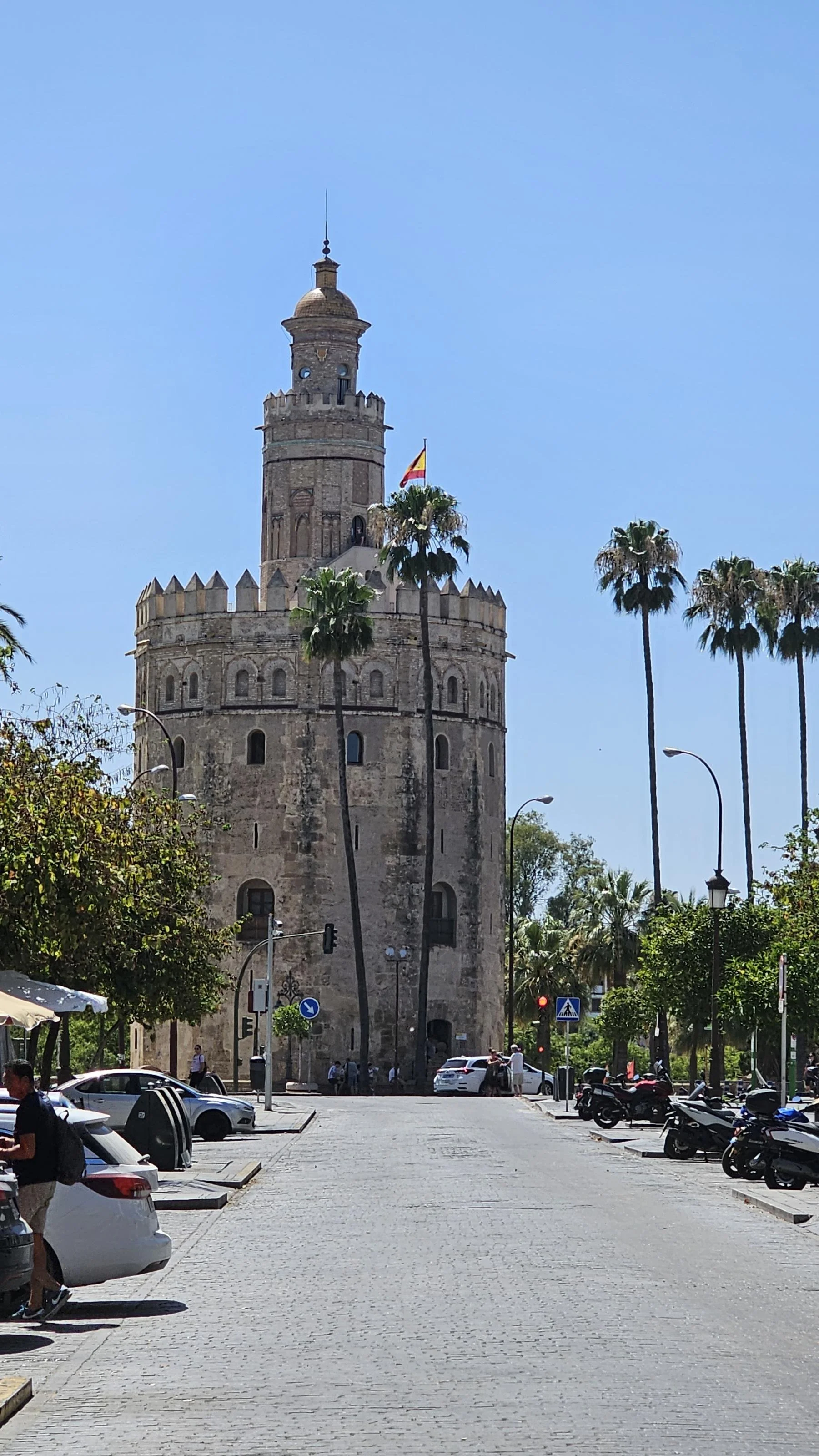

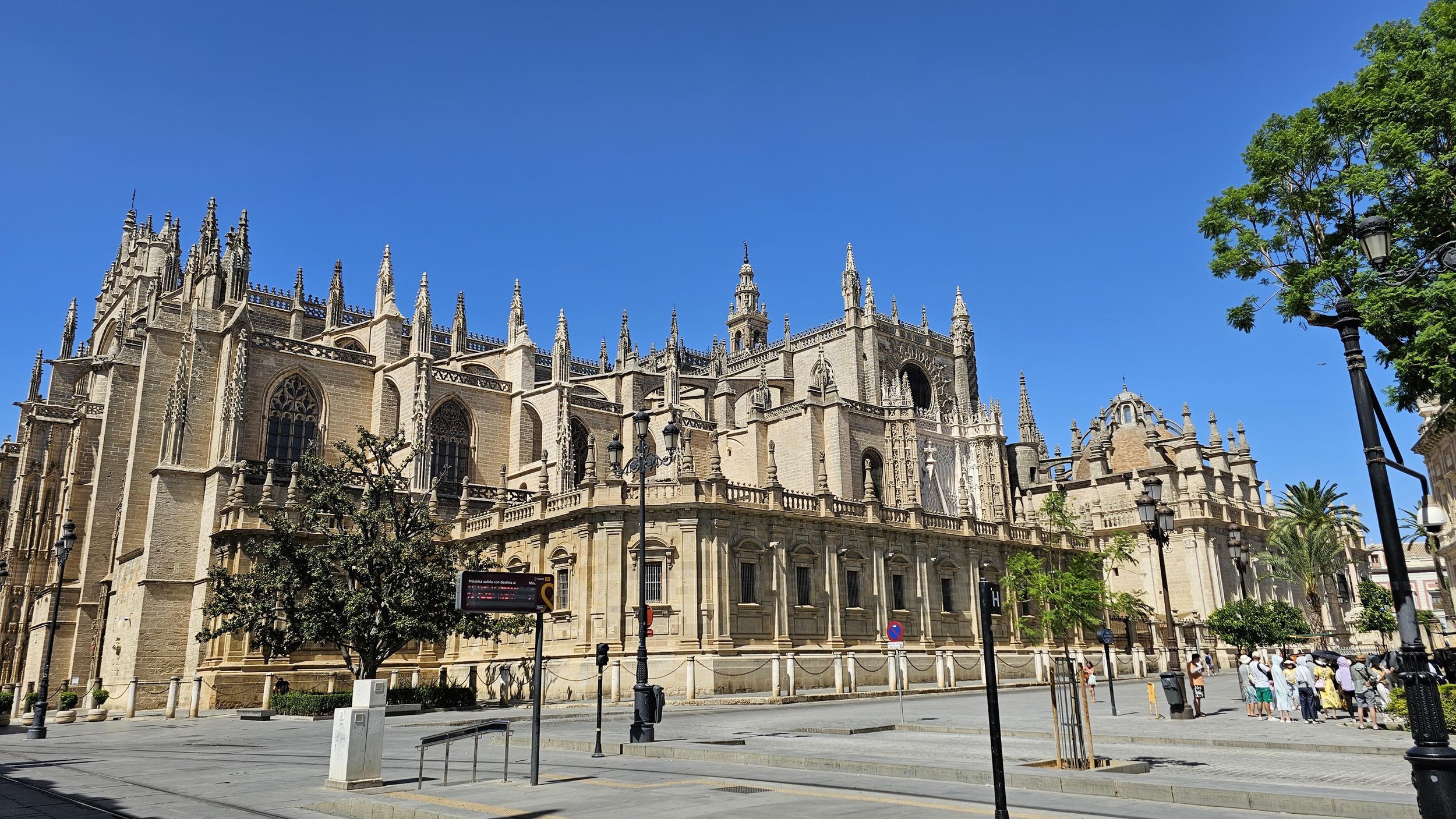


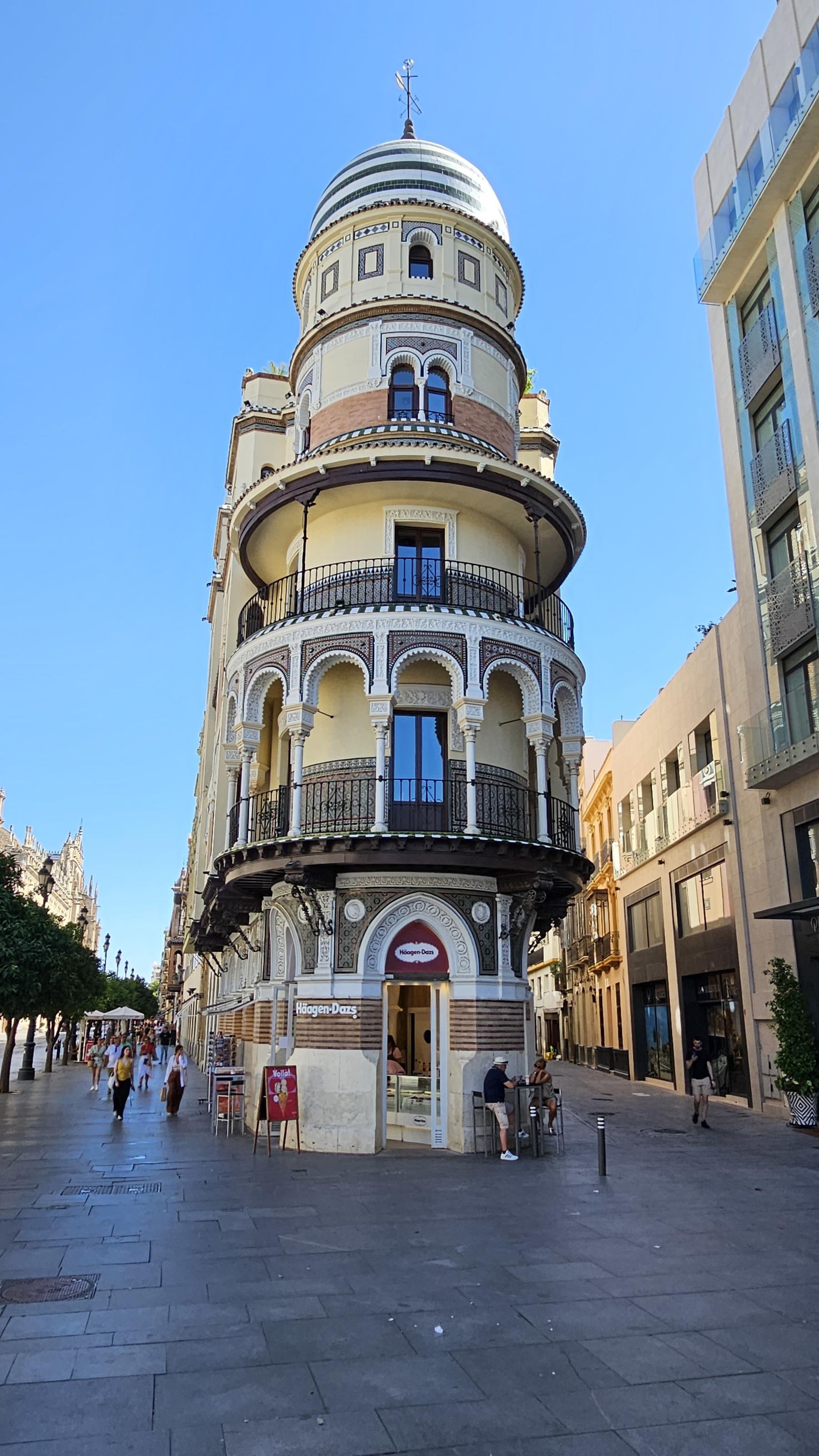


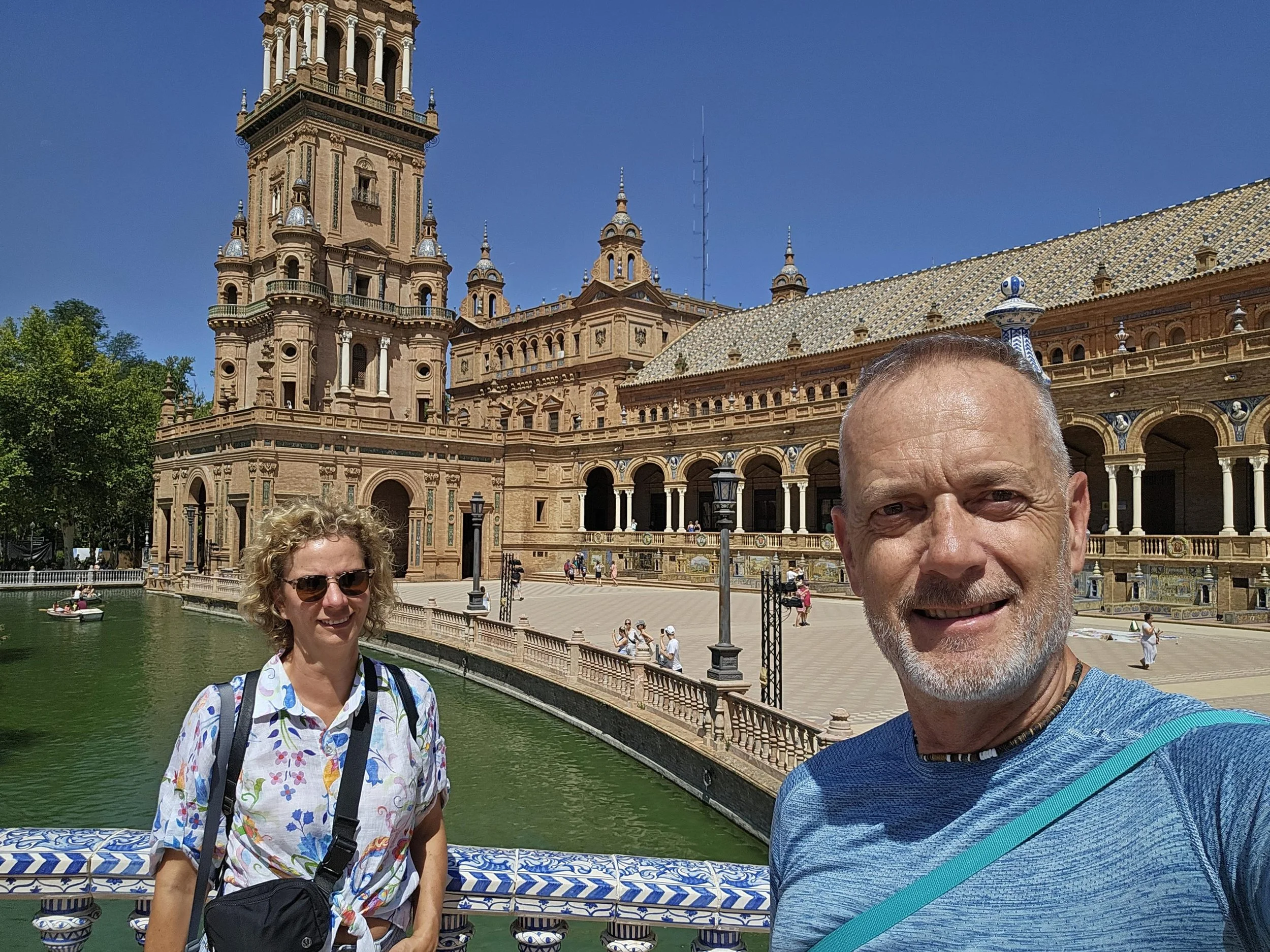


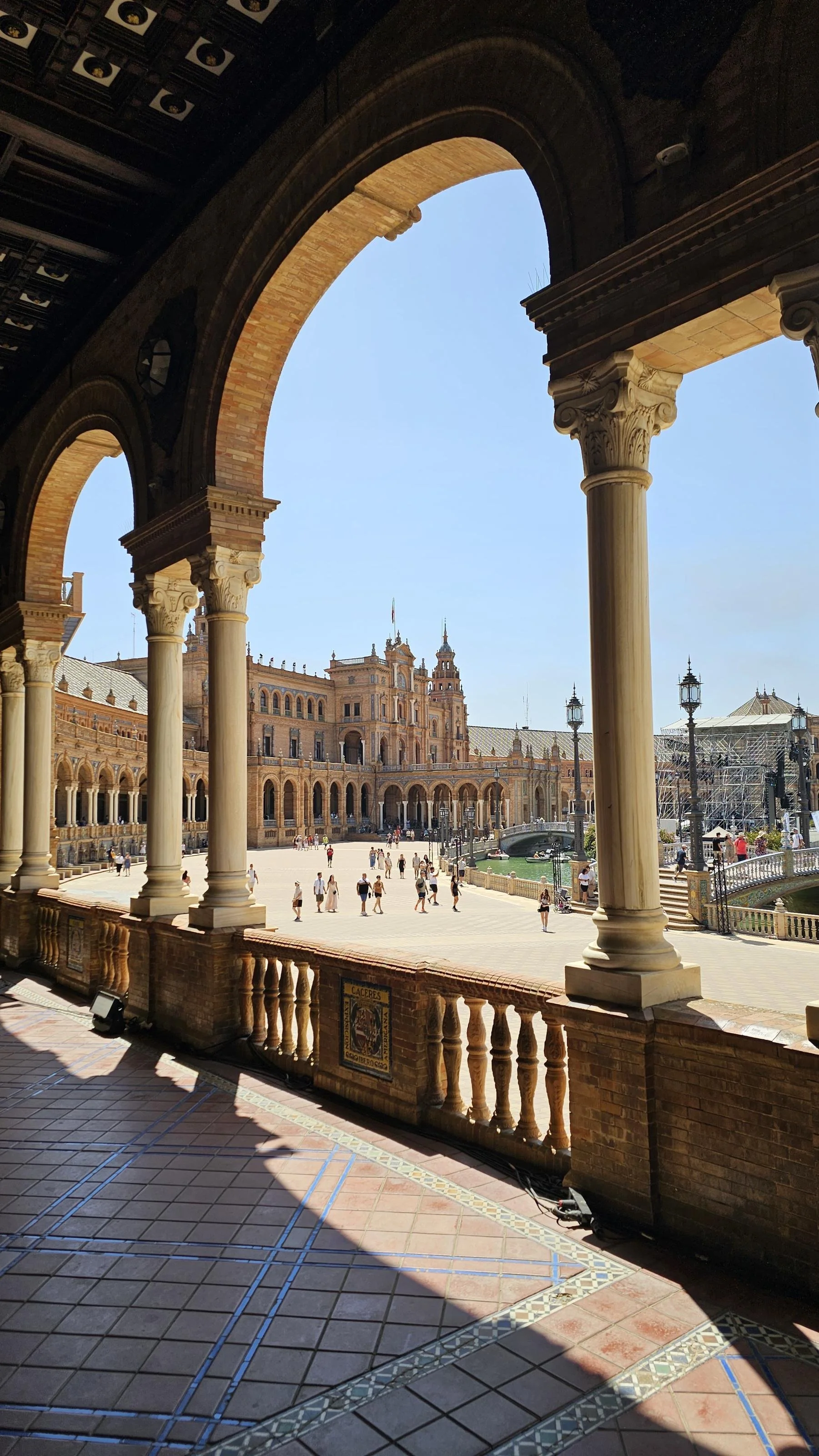


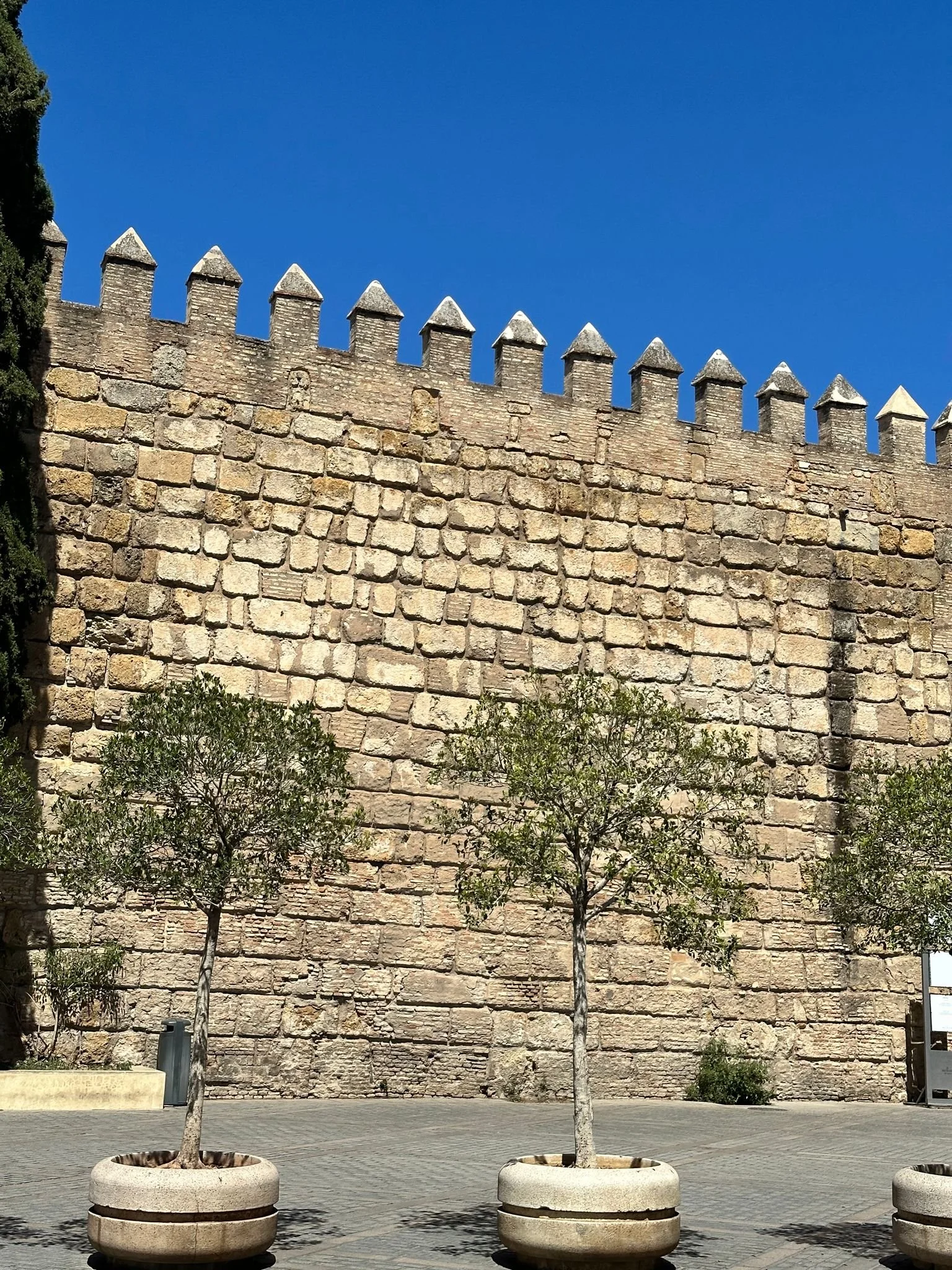


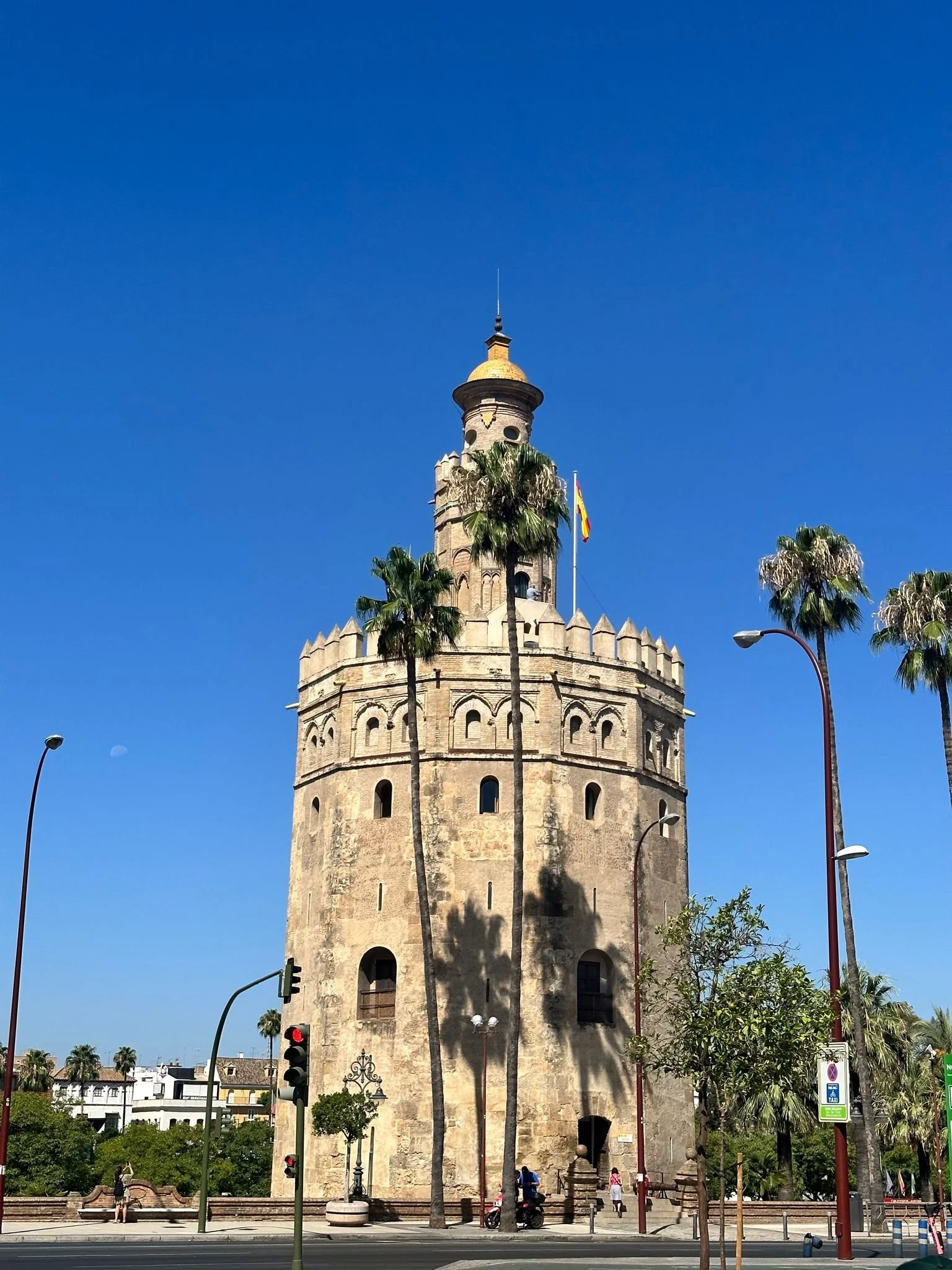


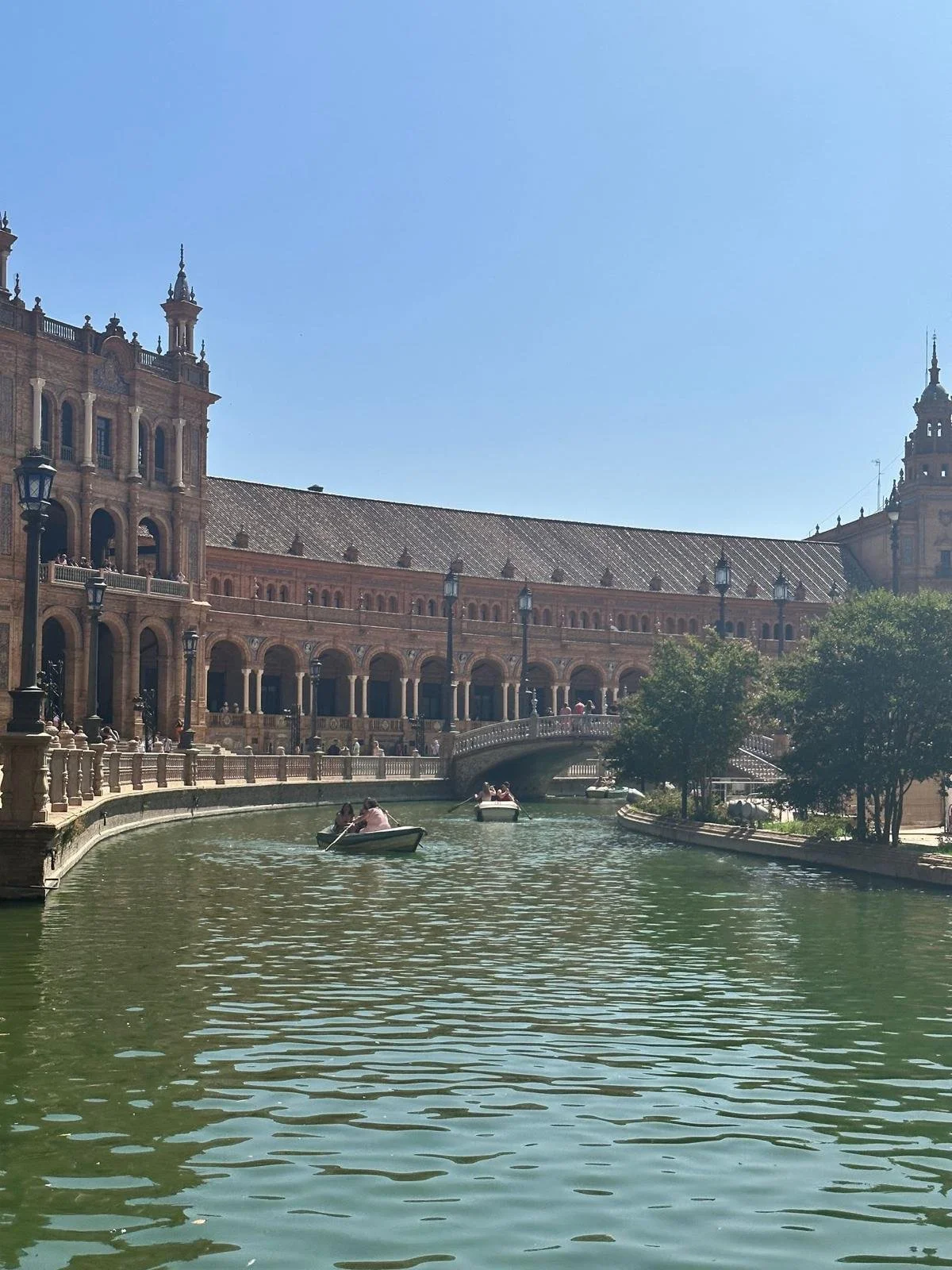
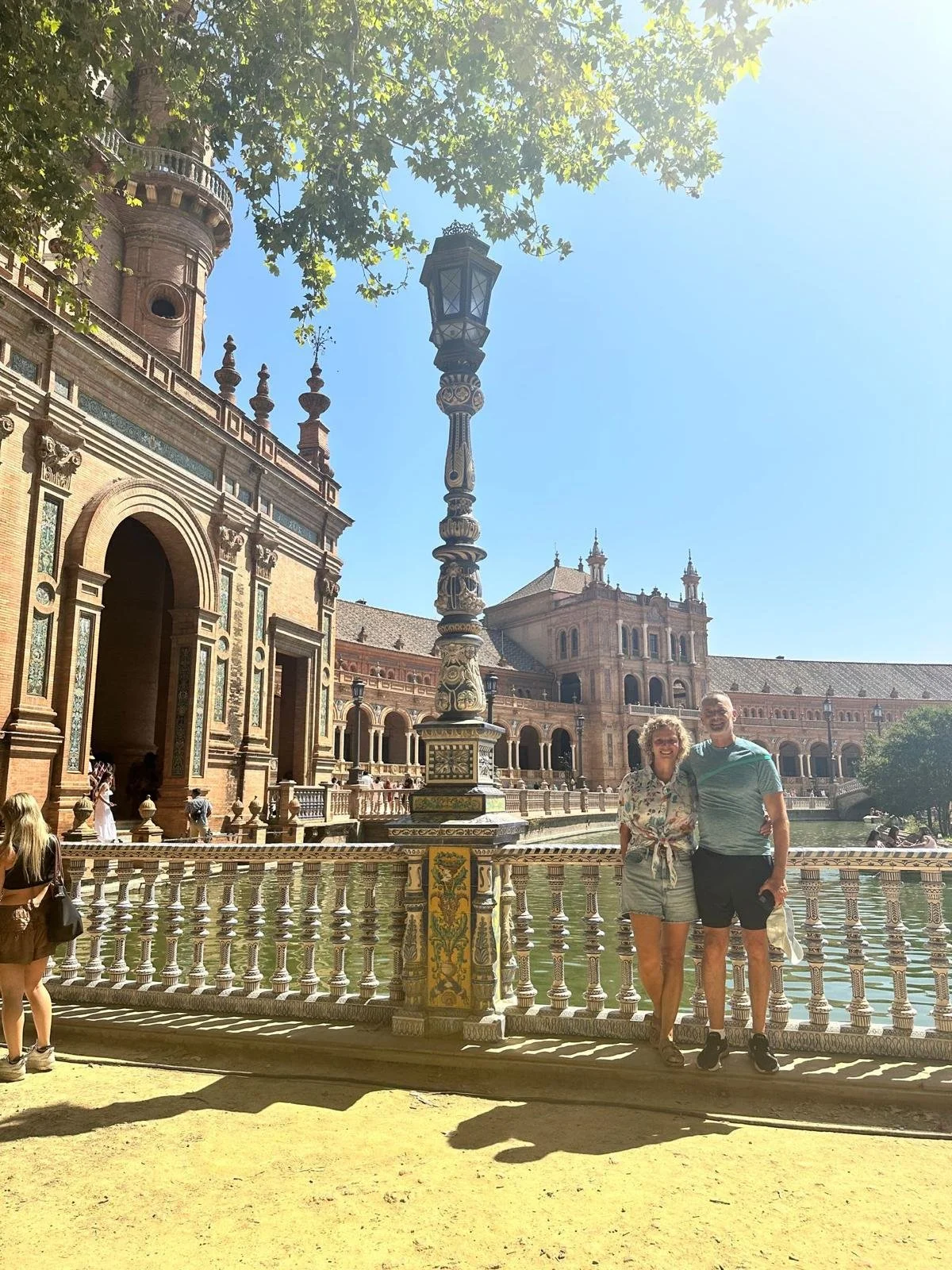


Malaga/Gibraltar Photo Album
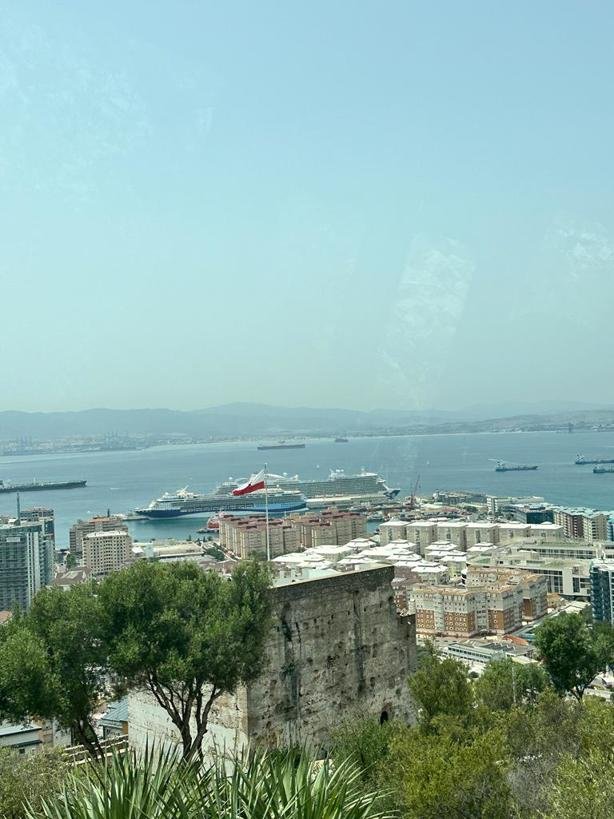


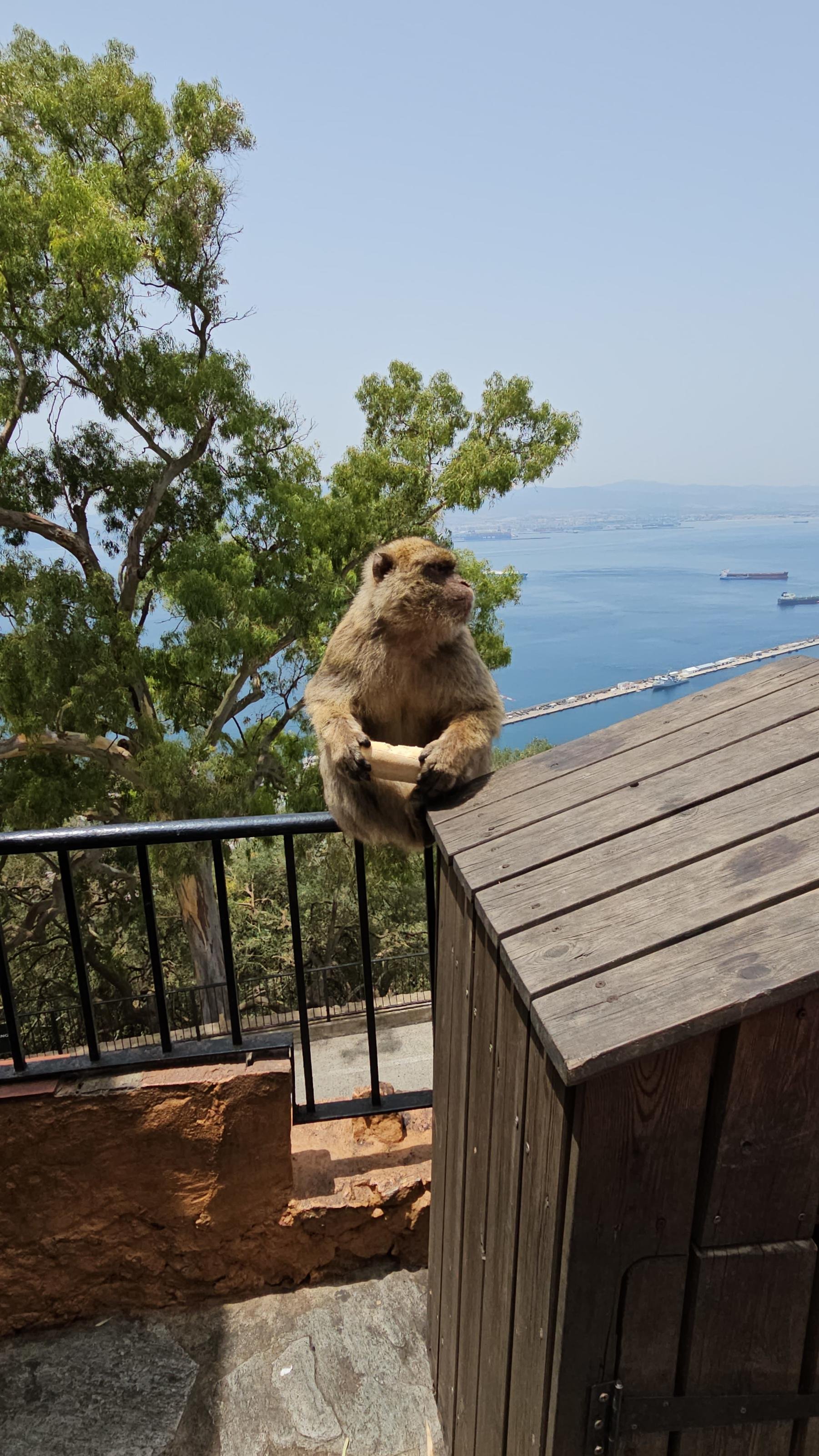


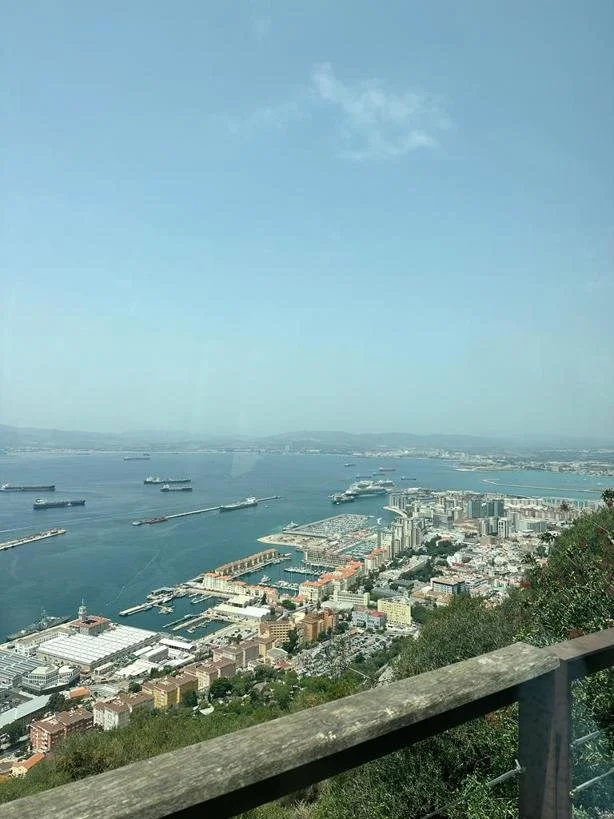


Food Photo Album


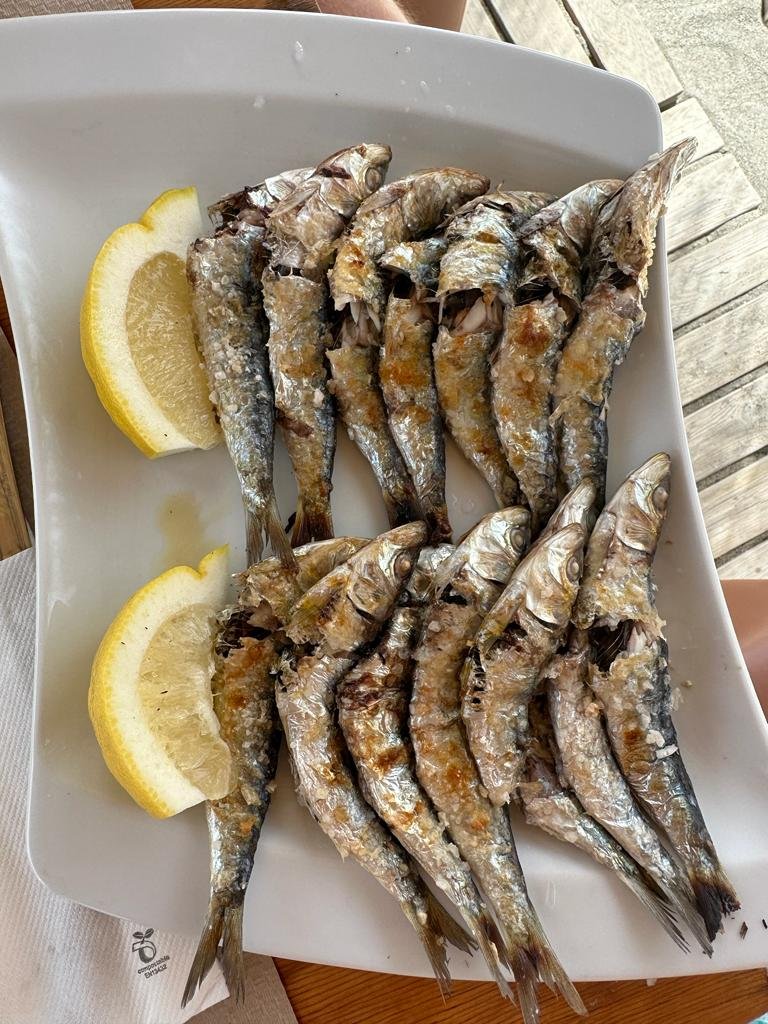


Hola desde Barcelona! ~ Hello from Barcelona!
The next lot of our adventures has started!
When you get two active tourists together and they want to maximise their time at any location you get a combo of planning in advance, deciding on the spot and walking on average +20km a day! Your feet burn and your head is about to explode 🤯 but you feel amazing, fulfilled and exhausted, all at once!
The next lot of our adventures has started!
When you get two active tourists together and they want to maximise their time at any location you get a combo of planning in advance, deciding on the spot and walking on average +20km a day! Your feet burn and your head is about to explode 🤯 but you feel amazing, fulfilled and exhausted, all at once!
Barcelona in two days!
I would say it feels as it is overcrowded by tourists, you can see many graffiti “f..c of tourists”! To be honest, I don’t blame them!
At times, it reminded us of Rio De Janeiro during the carnival weeks full of tourists, hot weather and urine smell. An interesting combination!
Metro amazed us, with a two days pass we could see so much with ease.
We have learnt the city is particularly renowned for the architectural works of Antoni Gaudi which have been designated UNESCO World Heritage Sites.
We planned our stay around history, culture and fun!
A bit of history and culture:
The capital and largest city of the autonomous community of Catalonia as well as the second most populous municipality of Spain.
Barcelona has a rich history and cultural heritage. Founded by Romans, today it consists of 10 districts with 1.6m people.
The city developed around three neighbourhoods:
El Raval - created in Roman times where criminals and prostitutes lived, today the most vibrant area
Barri Gothic - where nobles lived built in Medieval times, today the historical old town area
El Born - craftsman district, still the same today, my favourite!
Fun fact:
Municipal buildings were built in the Barri Gothic square that allowed nobles to be separated but very close to El Raval, an easy access to crime, drugs and prostitution. You do the maths!
Who was Antoni Gaudi?
Another Mr “G” was a Catalan architect and designer known as the greatest exponent of Catalan Modernism.
Gaudí's work was influenced by his passions in life: architecture, nature, and religion.
Gaudí had a deep appreciation for his native land and a great pride in his Mediterranean heritage for his art. He believed Mediterranean people to be endowed with creativity, originality and an innate sense for art and design.
When handing him his degree, the director of Barcelona Architecture School, said: "We have given this academic title either to a fool or a genius. Time will show."
Well, the time has shown he was a true genius!
We have chosen to see a number of his masterpieces. I’d say he was very quirky, in love with nature and religion.
The Basílica i Temple Expiatori de la Sagrada Família
It is the largest unfinished Catholic church in the world.
Designed by architect Antoni Gaudi (1852–1926), his work on Sagrada Família is part of UNESCO World Heritage Sites.
The construction started in 1882, and Gaudi took over as chief architect in 1883. Gaudí devoted the remainder of his life to the project, and he is buried in the church's crypt. At the time of his death in 1926, less than a quarter of the project was complete.
Relying solely on private donations, the Sagrada Família's construction continued, got interrupted twice - during the Spanish Civil War and Covid.
It is estimated that the construction will be completed by 2032, although locals say it should never get finished as that will be the end of the world!
It is the only church in the world that has three facades (birth, crucifixion and resurrection of Jesus) , it is devoted to the life of Jesus Christ. The exterior narrates the story of his life and interior celebrates the space and is an ode to light.
This masterpiece was Gaudi’s last work. He was hit by a local tram at Passeig de Gracia and subsequently died in the hospital being confused to be a homeless person due to his attire.
My initial impressions were mixed. From the outside it looks huge, unfinished and a combination of so many different styles, like kitsch. It’s only when you get to learn the story behind it and you go in on a guided tour that you get to understand and appreciate it.
Definitely worth a visit and with an audio tour guide to learn about the years of work by different architects who built upon the Gaudi’s visions and continue to do so.
Park Guell
Another UNESCO World Heritage Site of Antoni Gaudi.
While the Sagrada Familia church embodied Gaudi’s passion for religion, Park Guell reflects his passion for nature.
Built in the actual native park it bursts with mosaics expressing Gaudi’s love for nature and is designed to bring the peace and calm that one would expect from a park, if it wasn’t for hundreds of tourists!
Really nice and I am glad we managed to squeeze it in!
Gaudi’s Modernism masterpieces:
A number of buildings designed by Gaudi at request of different wealthy families who used his talents to show off their luxuries!
Casa Mila built in 1912 and designed by Gaudí who was inspired by the sea ( check out balcony waves). It took six years to built it and he never finished it, carved directly from the ground. It is his last private works.
Renting an apartment of 205m2 in this building costs only 400€ a month. A fixed rent on a life time contract that passes from generation to generations, cheap today but not back then!
Casa Batllo, a textile industrialist, built in 1906 and designed by Gaudi, who was inspired by the guardian of Barcelona, Sant Jordi (St George). The legend says he drove his lance into the dragon and a bush of red roses sprang out of the blood that spilled. His bold and selfless gesture changed the course of the town's history and gave birth to this legend. Ever since it has been the custom in Catalonia to give your loved one a rose.
Check the balcony design and you’ll see the bones of the dragons victims.
The building was sold three times, today it’s owned by the Chupa Chops Coy.
Casa Amattler, a chocolate industrialist with links to Argentina. The combination of colours and materials makes this building stand out even today.
That ends our explication of Mr “G” masterpieces, simply amazing!
A trip to Monserrat = Serrated Mountain
We took a half day bus tour to this sacred place and the National Park.
It is a multi peak mountain range near Barcelona, 1236m above sea level, the highest point is St Jeroni.
It appeared 25m years ago due to tectonic movements raising up from the depths of the sea.
The mountain is composed of pink conglomerate, a form of sedimentary rock, with lots of rare bird life enjoying the clean and green areas. It’s wonderful for hiking and peak mountain climbing due to its unique curves and smooth surfaces.
The Monastery of Montserrat at the footsteps of the mountain peaks and it houses the virgin that gives its name to the monastery and is on the mountain, although it is also known as La Moreneta ("the little tan/dark one" in Catalan.
The story says back in 880 Black Madonna was found in a cave by a shepherd who heard angelic sound noises. Bishop ordered to take her down to the sea level but with every step forward it became heavier and heavier. Shepherds convinced the Bishop it was the God’s message the Black Madonna wanted to stay in the mountains!
It is the only black Madonna in the world.
Why black?
Two theories:
It changed its colour due to the candles smoke or they simply coloured her black! You decide 💨😉
There are between 70-80 monks living in the Monastery at any one time, all incredibly musically talented, with the largest collection of music going back to 1400.
We enjoyed the trip and a half day was good amount of time to explore on your own.
Warning - thieves are present at the most sacred places! Nebojsa left his drinking bottle in the basilica for a couple of minutes, by the time he went back it was gone! And security is everywhere, but no lost property section. 😕
If you have ever visited Ostrog Monastery in Montenegro, then Monserrat might look familiar. Definitely gets a tick from us!
Jews quarter
As expected, the Jews quarter existed in Barcelona.
During the black plague terrible times it became obvious Jews had a much higher survival rate. Catholics became intrigued why that was and the history narratives point to two facts:
They lived in a ghetto therefore were simply more protected
They had better hygiene habits
Unfortunately, Jews were used as ones to blame for black plaque death tolls, became a blame victim which resulted in terrible destinies for hundreds of Jews families who got killed unless they couldn’t escape. There is a massive Jews cemetery in the outskirts of Barcelona, we saw it on our way to Monserrat. This is noted as terribly sad times of the Spanish history.
WARNING: Fun part - R 18+!!!
I have left this one for last to make you learn something first🤗
We visited the Erotica Museum, one of its kind in the world!
So much fun, and even though you may think at our age we should know it all, let me tell you we learnt a lot!
It offers an extensive historical and cultural record of the influence of eroticism in mankind from the beginning of time.
14 rooms of explicit paintings, photos, inventions and sculptures that illustrate how sexuality has been a source of inspiration throughout history.
My take on it - they had way more fun than modern humankind obsessed with the look and on line presence. I’d swap today for Greek era any day!
It now comes down to practising the new learnings, flexibility aside! 😉
After the museum we felt very hungry (weird?) and found the restaurant of our choice - Madre Taverna Moderna. We started our dinner with cocktails. Try to guess which one Neb ordered.

While I leave you to imagine what happened after the cocktails, we need to run and jump into a speed train to the next destination.
Happy days!
Barcelona Album


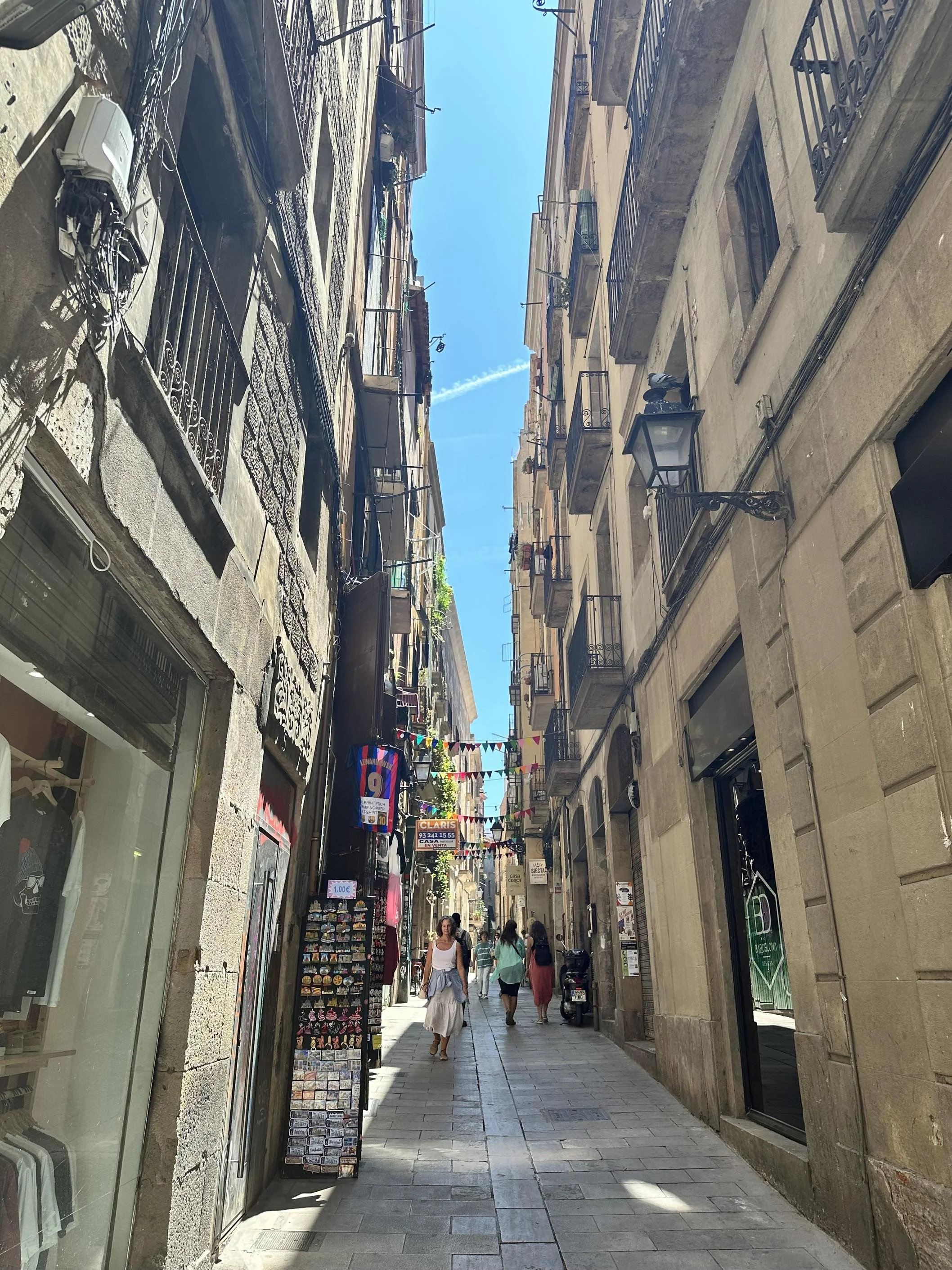


Sagrada Familia Album

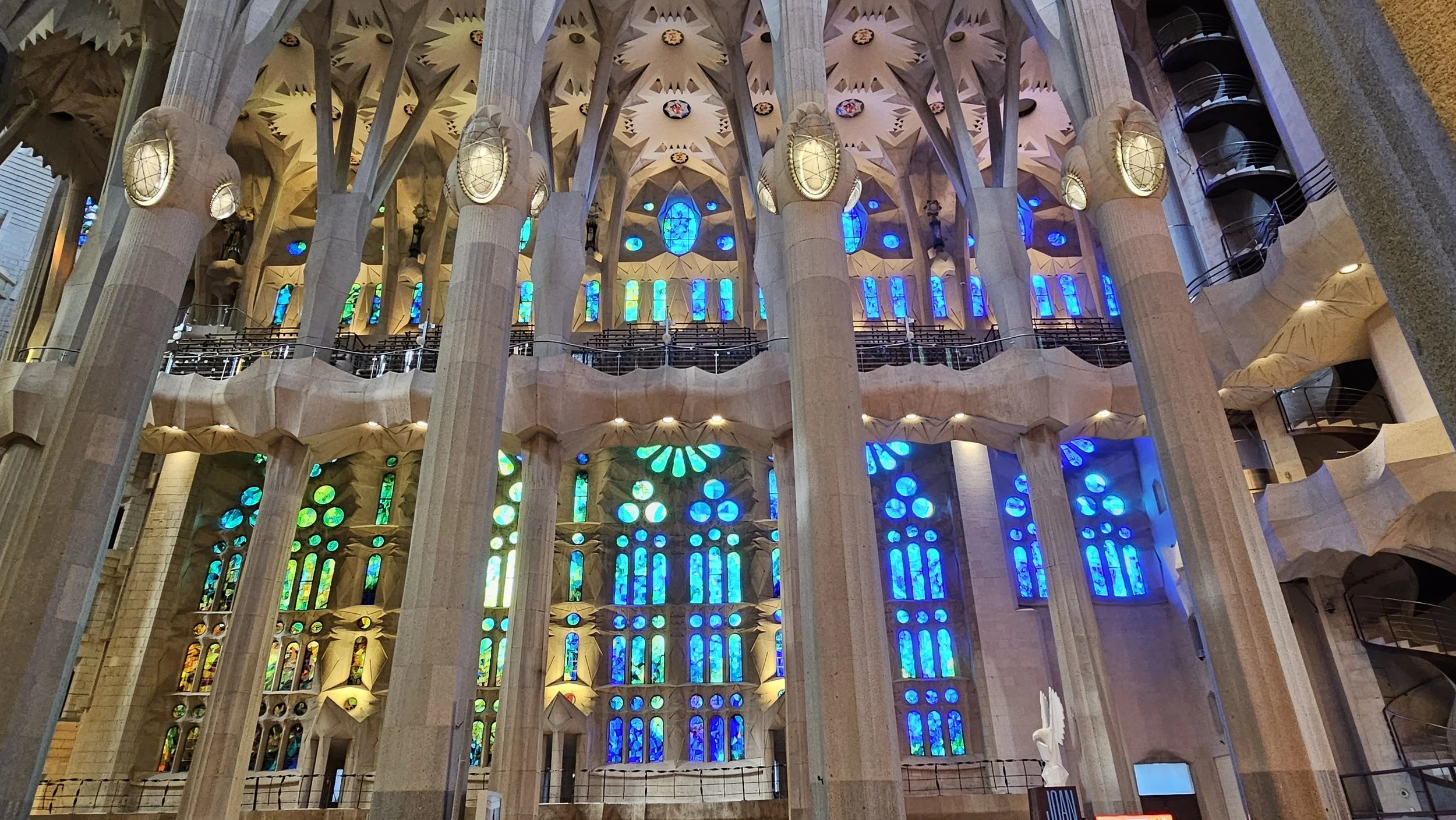




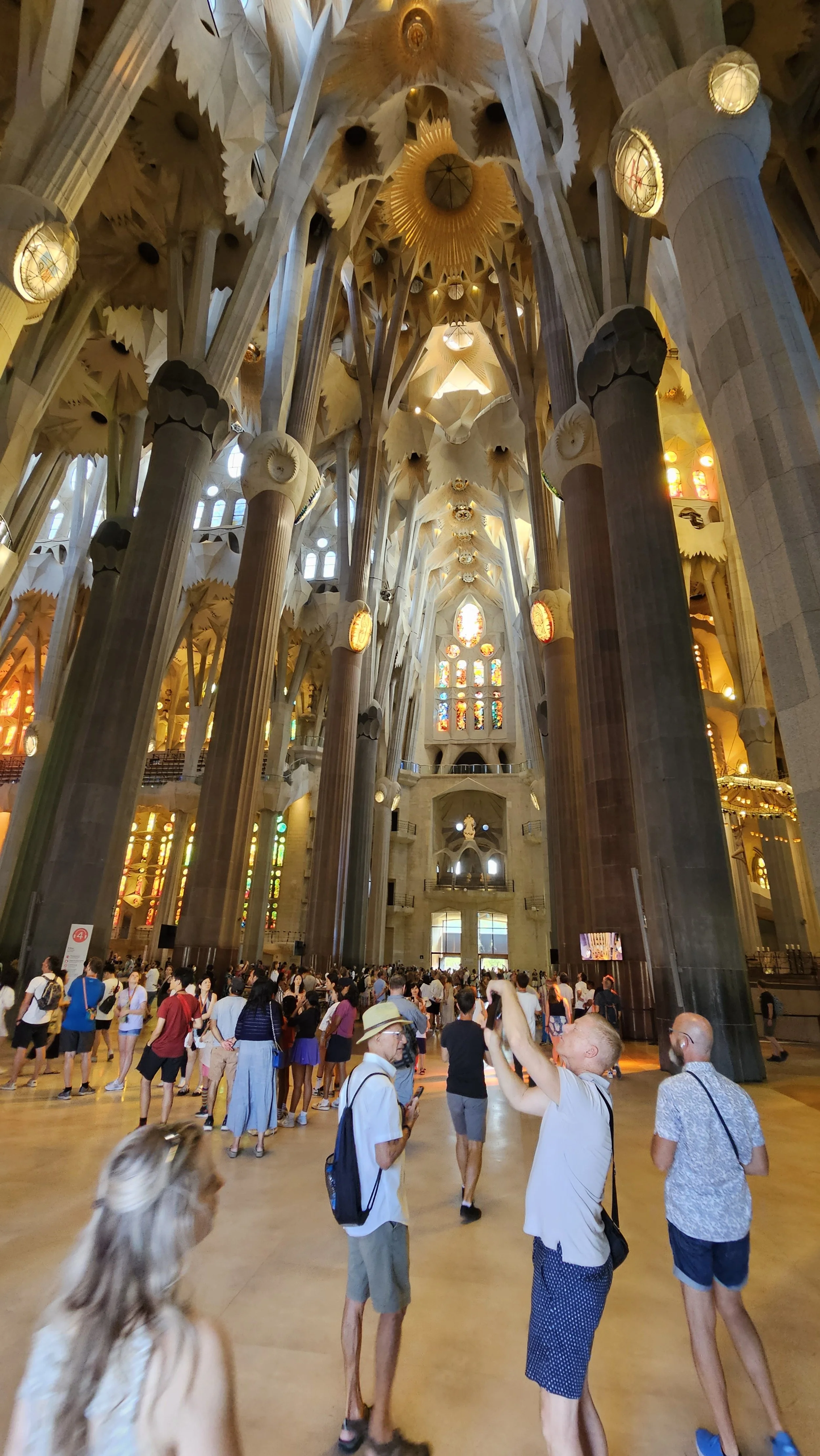


Geuell Park Album

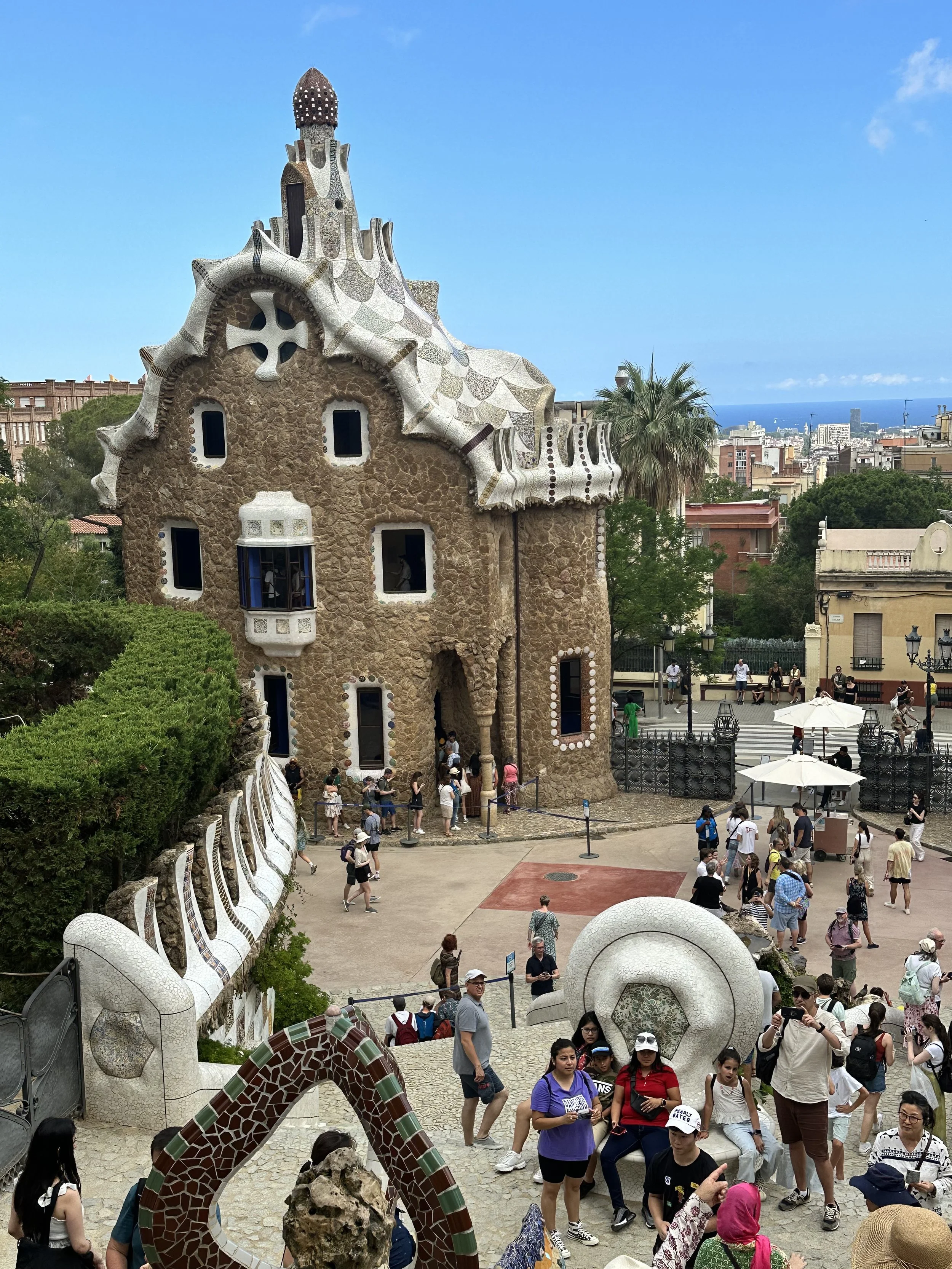


Montsarrat Album

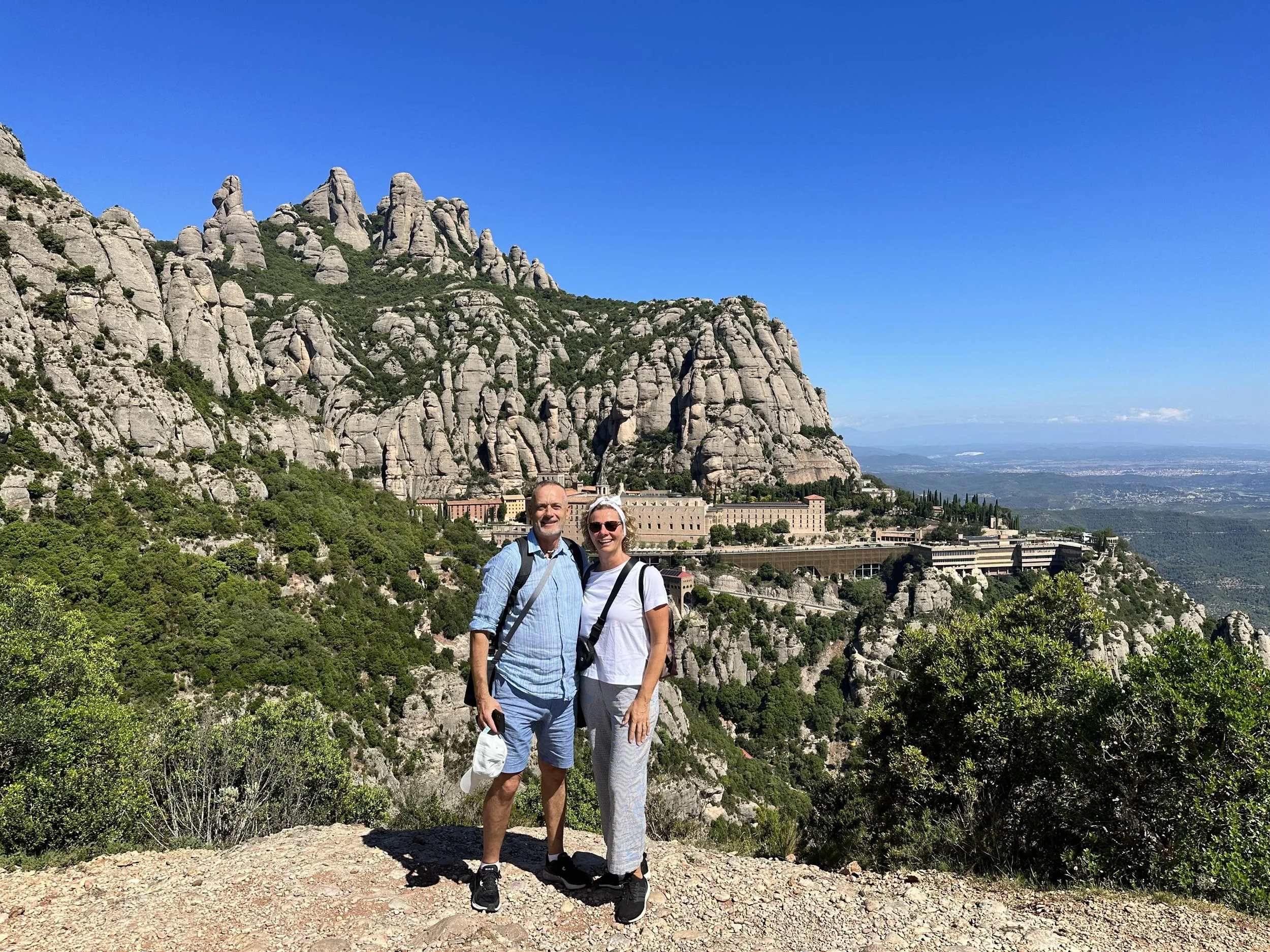


WARNING R18 - Erotic Museum


Buongiorno da Rovigno ~ Dobar dan iz Rovinja ~ Good day from Rovinj
Let’s start today with a continuing story that will explain what are we doing in Rovinj all of a sudden!

Let’s start today with a continuing story that will explain what are we doing in Rovinj all of a sudden!
So, my parents and I arrived to Split in July 1969, and we lived between Sarajevo, Jahorina and Split for 22 happy years. We had a good life style and I had unforgettable childhood for good!
And then one day, everything changed, overnight. From living a great life in piece, harmony and happiness to experiencing unimaginable things.
Why? I don’t have a better explanation but to say because we had a “wrong surname”. Once again, I won’t talk about the dirty politics but our lives changed forever.
The 1990-ties war was declared just at the time we were ready to spread our wings fresh out of university and build a family nest together in the town we both grew up in.
But no! That’s not how the world rolls!
We learnt quickly others can destroy everything we own and everything around us but a hope for a better life is in our hands. We took a brave or a crazy step forward and immigrated to Aotearoa with a suitcase and a three years old Miroslav. From nothing to nothing with nothing.
With my Dad’s blessing we left him on his own in our apartment in Split hoping we will make it down under, he will survive the war, retain the apartment and one day come to NZ for a visit.
We had no clue how the life story will evolve and promised one another to put our family first, always!
In 1996 we welcomed Petra to this world, Nebojsa’s parents followed us and immigrated to NZ in 1999, after having lost everything in the war. Nebojsa’s Mum passed away and his Dad who we all call “grandpa” is well enjoying his life at the Greenvalley Rest Home in Auckland going strong at the age of 92.
My Dad came for a short visit in 2000 to check on us, I still think he never believed his princess was ok, and came to NZ not to live but to get assurance things were fine.
During his stay we agreed he would sell the apartment in Split, after winning the battle with the government, buy a smaller one in Istria, and enjoy his life. We had one of our “family board meetings” and deal was sealed.
On his return to Croatia, thanks to the support and guidance from our close friends parents, late Zlata and Lovre Vranješ, he found a lovely apartment in Rovinj and the rest is history.
Whenever we arrive to Europe, we visit Split. I always go to my Mums grave with the most beautiful bunch of flowers, we say hi to a few remaining friends and we leave. Too many horrible things happened to us and our families during the war years, mental scars are too raw despite many years gone by.
We now call Rovinj our home, as we do for Jahorina and Auckland. We always travel home to go back home and it works in every direction. Home is where your friends are.
What we have been up to?
We are here only five days, a short administrative stop over before we embark on a next adventure. We will return later on to enjoy the summer, more on this another time.
What can I tell you about beautiful Rovinj?
Rovinj was under Venetians for 500 years rather than Otoman Empire, one could argue a better option!
It’s a small coastal township with 14,000 inhabitants, and on average, 3.5 million overnight stays during the three summer months.
Situated on the north Adriatic Sea, located on the western coast of the Istrian Peninsula, it is a popular tourist resort and an active fishing port.
The town is officially bilingual, Croatian and Italian, hence both town names ( Rovinj and Rovigno) are official and equal. Here you go, now you know why I’ve been studying Italian!
Main industry is tourism, tobacco and sardines.
Rovinj flag is a yellow goat with red socks - because of the terracotta soil.
“Tabacine” and “Sardinele” were the names for ladies who worked in Tobacco and Sardines factories years ago. No one needed to ask ladies if they worked back then, by-passers knew by the smell!
Rovinj was built with narrow streets, high buildings, no balconies in old town, it was an island to begin with.
The Church of St. Euphemia, often known as the Basilica of St. Euphemia and by locals as the Church of St. Fuma is a local gathering point. Built during Venetian times, in the Baroque style, located in the heart of the historic part of Rovinj. St Fuma statute was built in the 18th century, its wooden with a brass on the outside. She rotates daily depending on winds. When she looks towards the sea everyone is in a good mood and happy, always after the wind “bora”.
We can see Alps in Italy and Slovenia from St Fuma church after the wind bora.
City hall today was a tobacco factory.
Bafi door is the entrance to old city named after Daniel Bafi who decorated the entrance door with lions in the Venetian style.
Battinade is a type of local singing.
Tourism started with a hospital built by Austrians in 1883 for kids with respiratory problems, it was a health resort at its early beginnings.
Rovinj has been cited as the number one touristy destination of Croatia for a number of years in a row! Amazing and each time we come something new surprises us.
First ever Michelin restaurant Monte opened in Croatia, now there are 3 in Rovinj.
A few fun facts!
Batana is a wooden boat with a flat bottom protected by UNESCO. It is built with a flat bottom to allow people to use it in shallow waters in Rovinj’s archipelago. When Batana go out they use decorated sails to represent family who owns them, today there are 100 sails preserved.
Battere means to hit, to slap in Italian ( flat bottom slapping the water ) 😊
Adriatic hotel is 110 years old, it has a whiskey bar with 110 bottles from all the world and each Saturday they offer a tasting with a live classical music - superb!
Malvasia is a famous white wine. 60% of all wine produced here is Malvasia. Colours are golden and yellow. Tasting the wine will produce fruitiness and mixed flavors of apricot, peach, apple and jasmine flowers, 14% alcohol.
Temperature for white wine needs to be 7 degrees Celsius, red wine 18, and olive oil 28 - aren’t you impressed with my knowledge?!
Fish must swim three times - sea, olive oil and wine. We love it when it does exactly that!
Istrian Olive oil - Buža my favorite flavor. Smell it first, feel the grass, olive fruit, tomato leaf and apple flavors. Taste it by breathing it through your teeth then swallow ( must be warm) 👌
Rovinj soup - red wine, a bit of sugar or honey, warmed up and add bread croutons with olive oil and pepper. Can add fruits, can add pelinkovac or dried figs toasted and a bit more olive oil.
Bisca is Istrian traditional grappa.
Pelinkovac is made in Rovinj, think of it as a Croatian version of Jaggermaster.
There is a lot more to say about this paradise, if interested check it here and even better come for a visit, I guarantee you won’t regret it! And we will welcome you with open arms.
https://www.rovinj-tourism.com/
That’s us for today, tomorrow a new chapter starts, we are off to our next adventure, wish us good luck as we have no idea if we are up for it!
Rovinj Album


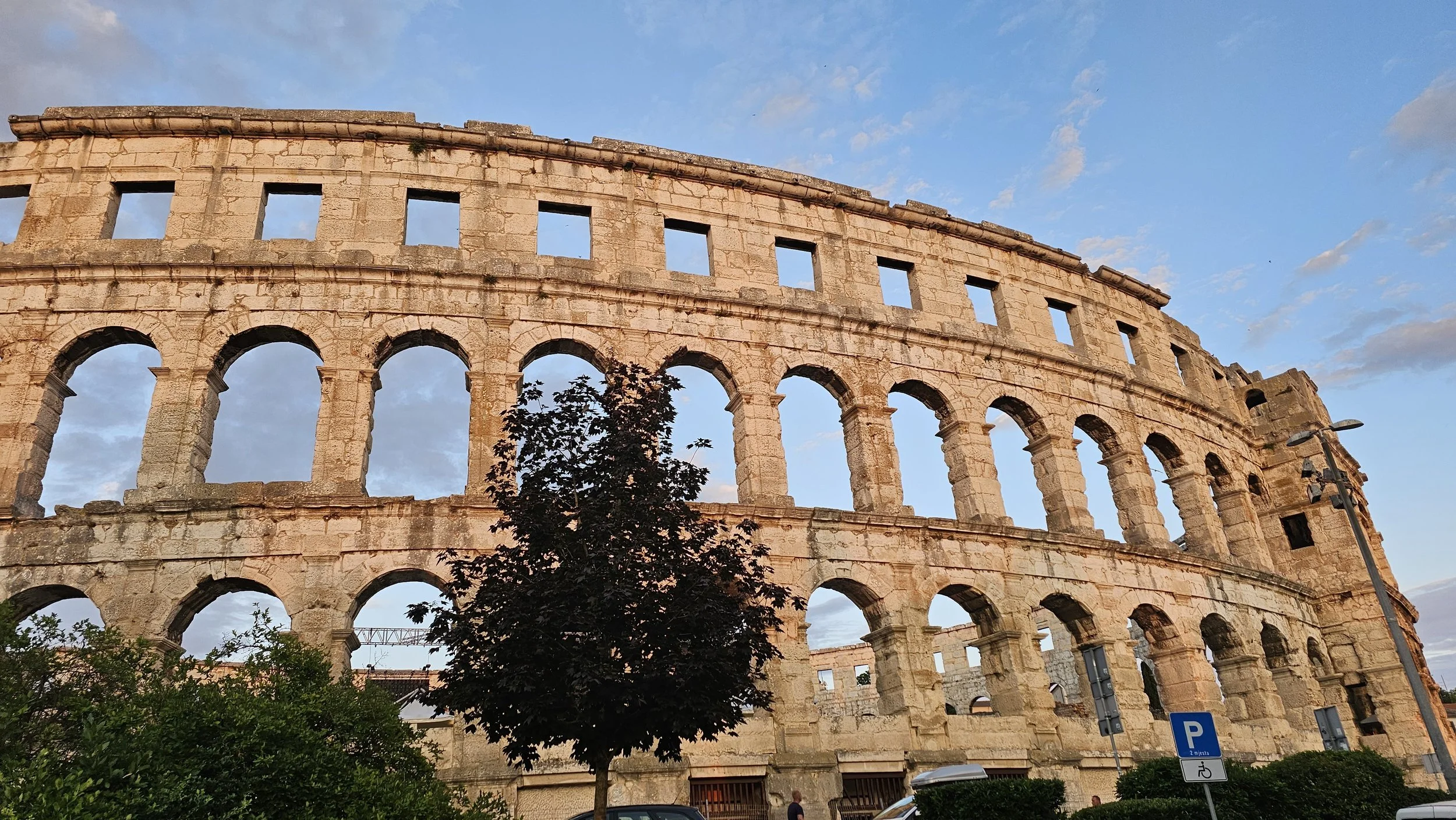


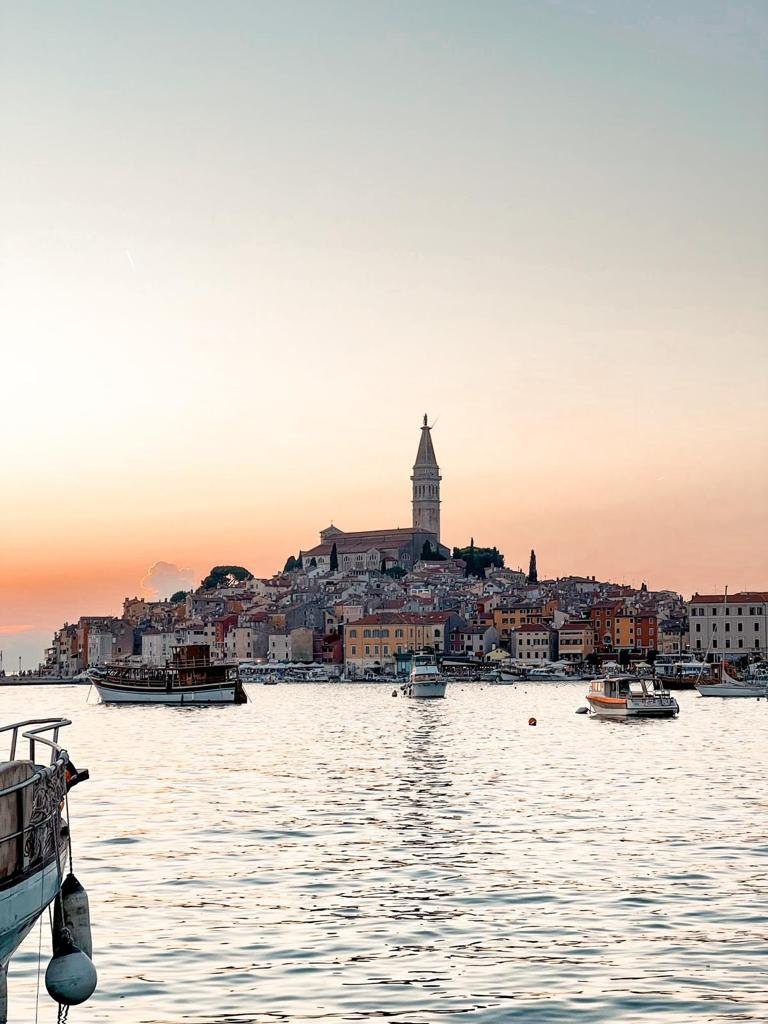
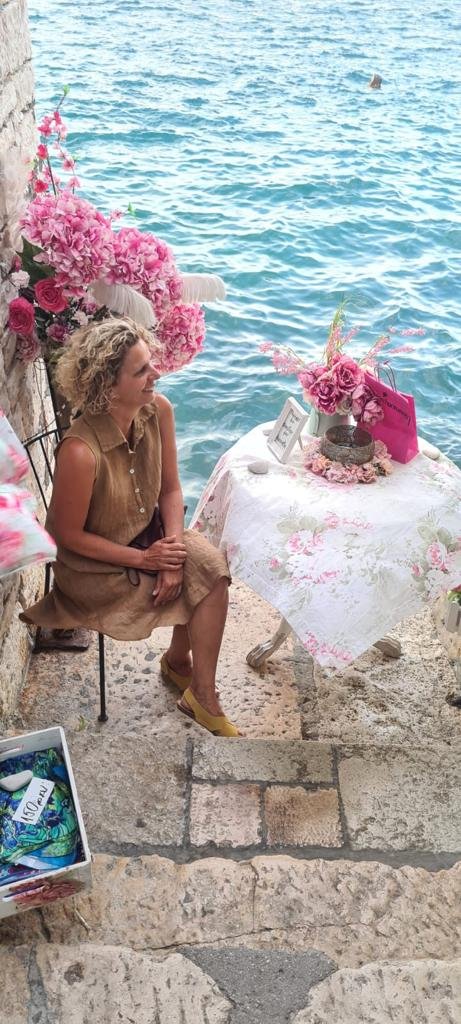

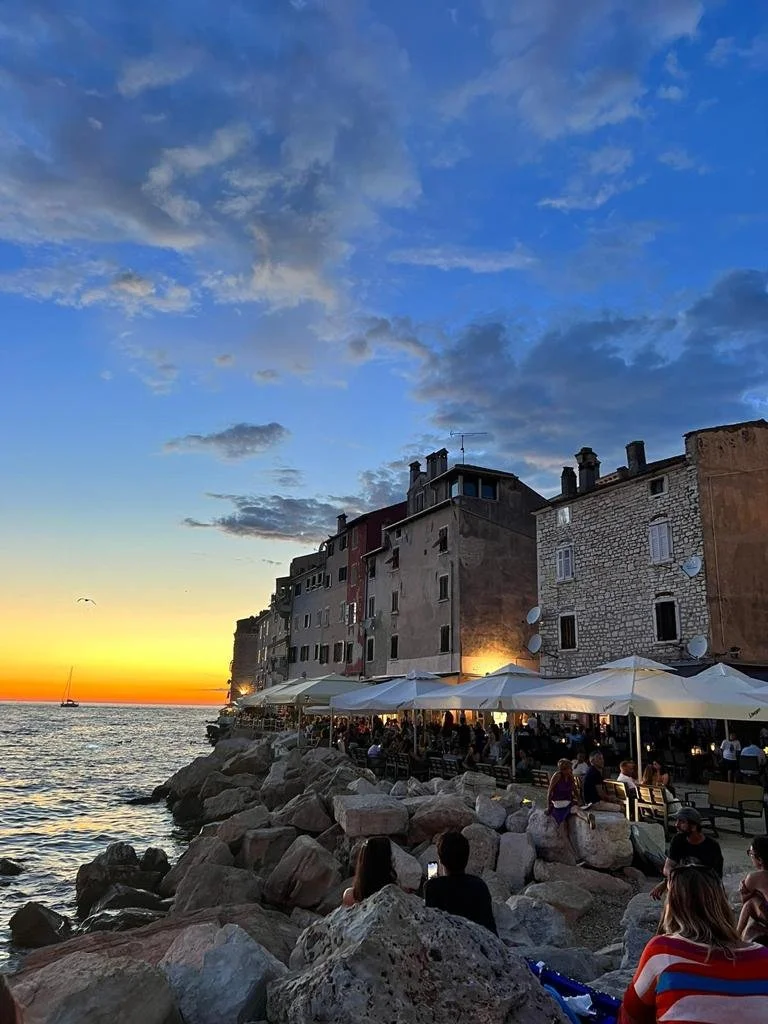


Waiting for Robbie Willaims to come up on the stage:
Watch some of his performances here:
Dobro došli u Sarajevo & planinu Jahorinu
I am an emotional bubble today.
I feel happy, sad, troubled and grateful to be back to where I always feel the happiest!
How can all these emotions run through all at once I can’t explain, but I feel them each and every time I come to my birth place Sarajevo and to the most beautiful mountain in the world Jahorina.
Welcome to Sarajevo & Jahorina mountain

I am an emotional bubble today.
I feel happy, sad, troubled and grateful to be back to where I always feel the happiest!
How can all these emotions run through all at once I can’t explain, but I feel them each and every time I come to my birth place Sarajevo and to the most beautiful mountain in the world Jahorina.
Let me share a bit of a personal story!
My father Savo Golubovic was born in Mostar, he joined the Second World War as a young 15 years old boy to defend the country from the Nazis. He was wounded many times, received a number of bravery medals, but as a consequence his health was compromised.
After the last surgery he settled in Sarajevo, graduated a law degree at a latter stage of his life, met my beautiful Mum Miroslava Rechter in Sarajevo and I was born in 1964.
The story says everyone was ready to welcome a baby boy (based on mum’s belly shape), his name was going to be Dražen and then I arrived as a surprise. Mum’s creativity kicked in and she sent a letter to Dad from the hospital and signed it “with love from Miroslava and Dražen-ka”! A female made up version of a popular male name Dražen!
Mum passed away when I was young and Dad passed away at the age of 92. I have had the best parents and the best childhood one could ask for. Love them both and am forever grateful for their love and inspiration.
Do you know who discovered Jahorina all these years ago?
During Dad’s partisans days and post war, together with a few of his partisan friends, Dad walked across the mountain Jahorina, 31km away from Sarajevo. He fell in love with its beauty and quickly realised a potential to build a ski resort. He was a passionate skier and mountain lover.
One could say, Jahorina ‘s development started with Mum and Dad building a small family batch, an A shape mountain house.
After a while Dad engaged engineers and the very first ski lift and a ski slope was planned and opened in 1969.
Sarajevo ski club, and later Jahorina ski resort were kickstarted by Dad, and he gave 50 years of service to this paradise here in the middle of Bosnia and Herzegovina.
The story says I started to ski before I walked, can’t tell you if it’s true but I grew up believing it was true!
At the age of four we moved to Split in Croatia, and we continued to live in between Sarajevo, Jahorina and Split. We would come to Jahorina each summer during the month of August to pick up field mushrooms, blueberries, raspberries and native plants and of course we spent winter months skiing.
As a young girl, the only child and Dad’s princess, I had to do three things:
Be respectful of elderly
Be great at school ( so that I can do well in life but also so that I can skip school often and spend as much time in Sarajevo with my mates and ski during winter months)
Be helpful at home
If I did these three things all other little white lies, mischievous behaviors were forgiven! And did I push the boundaries - oh yes!
When Nebojsa, 3 years old Miroslav and I emigrated to New Zealand in 1994 I promised my Dad that I would never ever sell our batch, instead I would look after it and pass the love and respect for what he did onto our children. I am happy to share both Miroslav and Petra love coming here and that gives me the utmost joy.
Let me tell you now a little bit about my Sarajevo!
Do you know how Sarajevo got its name, who founded it and why?
It was established at the end of the 15th century by the Ottoman Empire.
Saray = palace in Turkish. It was an administrative center, a palace in the valley.
Ottoman Empire was big, powerful especially during the 16th century under Sultan Suleyman the Magnificent. His Nick name was “ a sick man of the Europe” for his ruthless rulings.
Ottomans ruled this area from the end of the 14th to 19th century - 400 years!
In 1878 Austrian Hungary Empire came in and ruled till 1918. During their 40 years of ruling they invested a lot of money, it was a very productive period for the region. They wanted to show to the Muslim population they were not bad occupiers, they were modernising Bosnia. They preserved all mosques, the market area and kept the Heart of the city called Baščaršija.
On 28 June 1914 Franz Ferdinand was killed near the Latin Bridge in Sarajevo which triggered (not caused) the First World War. The event put Sarajevo on the world map.
In 1918 Yugoslavia was established as kingdom, known as the first Yugoslavia, ruled by the King Karađorđević. Belgrade became a capital city which resulted in not as much investment in Sarajevo.
When the Second World War started in 1940 the King Karađorđević ran away and found exile in London.
Tito with the partisans troops liberated Yugoslavia and established the second Yugoslavia known as Socialist Federation Republic of Yugoslavia (SFRJ).
Russians wanted to take over Yugoslavia but Tito said the famous “No” to Staljin, became a life long president and died in 1980 at 88 years of age.
Tito controlled nationalism on every side, although he used repression at times, we lived the best life!
Soon after his death, nationalism started to erupt, there were economical and political problems, followed by a break up of USSR. Yugoslavia known as a great socialist country started breaking up.
Slovenia broke off first in 1990, followed by Croatia in 1991, then Bosnia and Herzegovina in 1992. These were republics during Yugoslavia days, and became independent states through the war.
I won’t go into dirty politics, but will say it was a horrible war, each side did terrible things, innocent people died, we lived through it for three years before we could legally and gracefully leave to New Zealand.
A little bit more about Bosnia and Herzegovina!
It was always a melting pot, during Ottomans times Jews and Catholics could practice their religion but had to pay higher taxes.
During Yugoslavia times, ethnic Croats, Serbs, Muslims, lived together, had similar traditions, were the same people, the only difference was religion.
After Bosnia and Herzegovina declared the independence in March 92, the war started on 9/4/92, Sarajevo was under a siege for 44 months, till December 1995.
The system failed to protect people, people felt let down which culminated in anger and frustration that still exists against UN, Western World and those who came to help but didn’t.
Today, demographics are:
78% Bosniac , interestingly not all practising Islam
12% of Serbs ( was 30% pre 1990ties war)
8% of Croats ( was 25% pre 1990ties war)
2% of Jews and others
There is still a lot of denial of horrible things that happened during 90ties, at some point we must confront the past to move forward, but mental scars are the worst scars and I will forever wonder if they could heal.
Today, people are getting fed up with 90ties stories, they still follow politics but want to enjoy the life.
Polish Pope John Paul the 2nd came to Sarajevo in 1997, he was the first catholic pope who came to this territory. He came to send a message of piece and co-living. People say he was the first “tourist “ who opened Bosnia to tourism after the war.
There are many important and beautiful buildings in Sarajevo, I will mention a few:
Hotel Evropa - built by Austrian Hungary in the 19th century, known as the best hotel for many years with a number of famous people staying in the hotel.
Next to the hotel is the mosque and a building built in socialist Yugoslavia - this spot is known as a place where East meets the West!
The Ugliest building in Sarajevo
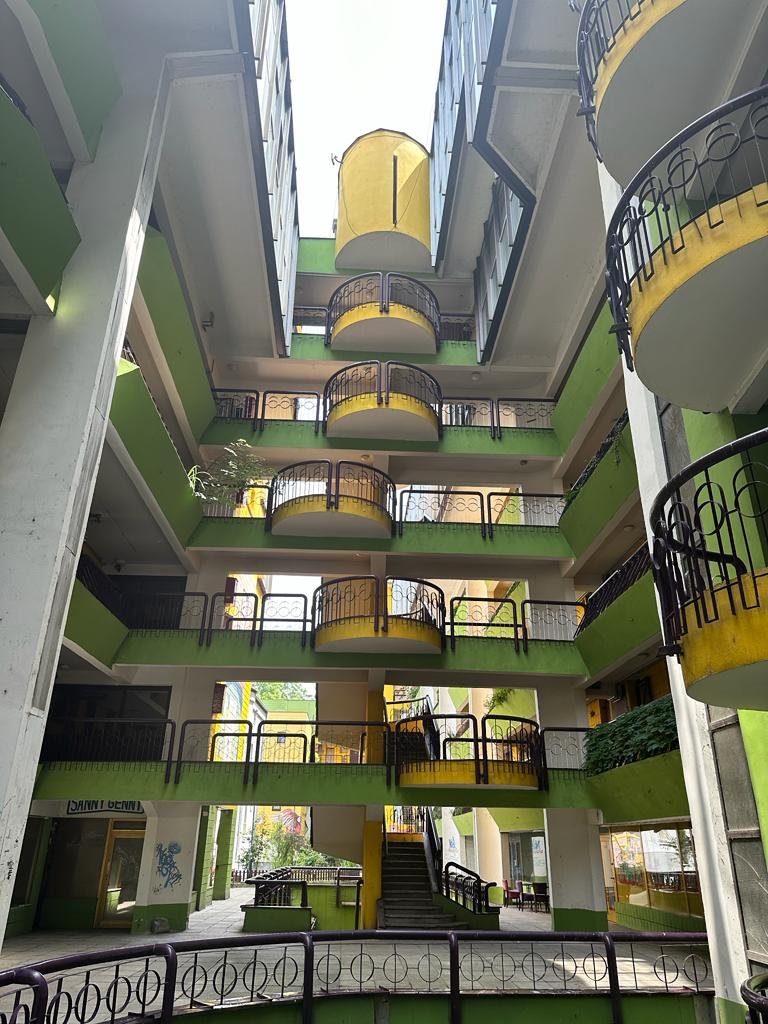
Built during socialist times in 1982 - as a new building just before the 1984 Winter Olympics. It is described as a modern and fun building, built in a Funky Socialist style, but now has got its nick name, a parrot building!
Jews synagogue built in 1901 is the only remaining active synagogue in the country. Jews history is 400 years old, first Jews came here from Spain following extradition in the 16th century.
Many Jews left this area during the Second World War, with only 700 Jews living here today. Back in 1983 there was a last Jew’s wedding in town, and next week after 40 years there will be a wedding between an American Jew and a local Jew girl. The Jew community is stoked!
I would like to share an incredible true story from the Second World War that depicts the happiness and co-life irrespective of religion, nationality and culture. This story represents Sarajevo I remember and will love forever!

This photo from 1941 illustrates two ladies, Zejneba Hardaga a Muslim woman and a Jew woman from Kabiljo family walking close next to one another with Zejneba burka covering a yellow star of David to protect her so she could walk freely.
Zejneba helped Kabiljo family to escape Nazi - occupied Sarajevo and then move to Jerulasem.
Many years went by, and in 1992 the same Kabiljo woman helped Zejneba’s family to leave Sarajevo and arrive safely to Jerusalem.
A full story here:
https://aish.com/muslim-and-jewish-families-save-each-other-50-years-apart/
A movie based on this true story:
Righteous Among the Nations is an honor recognition used by the State of Israel to describe non-Jews who risked their lives during the Holocaust to save Jews from extermination by the Nazis for altruistic reasons.
Zejneba was the very first Muslim woman to ever receive this prestige recognition for her sacrifice in rescuing Kabiljo family.
And finally a few interesting facts:
Baščaršija (pronounced like Bashcharshia) = main market, when established by Ottomans was used only for business, not for living. It was too busy, too noisy to live there. Back then people lived in Mahala = neighborhoods.
During Austria Hungary times the living concept changed. They brought living and working together in one place. Shops were downstairs and people lived upstairs.
Baščaršija is a network of 50 streets and each street was a different trade / craft.
Clock tower built in the 16th century. It’s a countdown clock tower, counting hours to sunset. It needs to be manually adjusted every day, and it’s one of a kind in the world.
Gazi Husrev Begova mosque, library, Medresa ( Islam school) and a clock tower. The “G” guy funded all these buildings. He was the most famous local governor during the 16th century.
Gazi = a warrior, originally from Greece
Husrev = a Nobel man
Caravan style hotel - Morića Han
Downstairs it was a horse stable, people stayed for a few weeks but the first three nights were without charge during Ottoman times. There is saying in our language “Svakog gosta tri dana dosta” which means for every guest three days is enough.
They offered three free days to stimulate trading and hospitality was very important.
Ćejf = Zen moment with a coffee
Ašćinica = cantine style ( food on displays )
Coffee culture is very important. Three types of coffee in Bosnia:
Welcome coffee - strong good quality - dočekuša
Second - open discussion coffee - razgovoruša
Third - goodbye coffee - sikteruša
Served with sweets Lokum ( rose flavour most popular)
Town Hall and national library
Constructed in Spanish style to make a fusion with markets and to tribute Jews.
It was destroyed during the 90ties with over 2m books burnt to ashes.
Known as Sarajevo Fenix - today reborn from ashes and fully restored. It was reopened on June 28 2014, a 100 years from the First World War, with a desire to send a message of no more wars, ever!
Inat kuća

Inat kuća - a small house across the road from the Town Hall. The story says when the Austrian Hungarian rules wanted to build the Town Hall they had to pay local people to move to a different location and free up the land. One man took the money but asked that they move his house across the road too!
People say this house represents mentality of people of Bosnia.
Inat = I struggle to translate this word, and have landed on a definition of illogical stubbornness. I welcome English professors to correct and improve the translation in the Comments box. 😊
Enjoy the photos 🤗
Sarajevo photo album


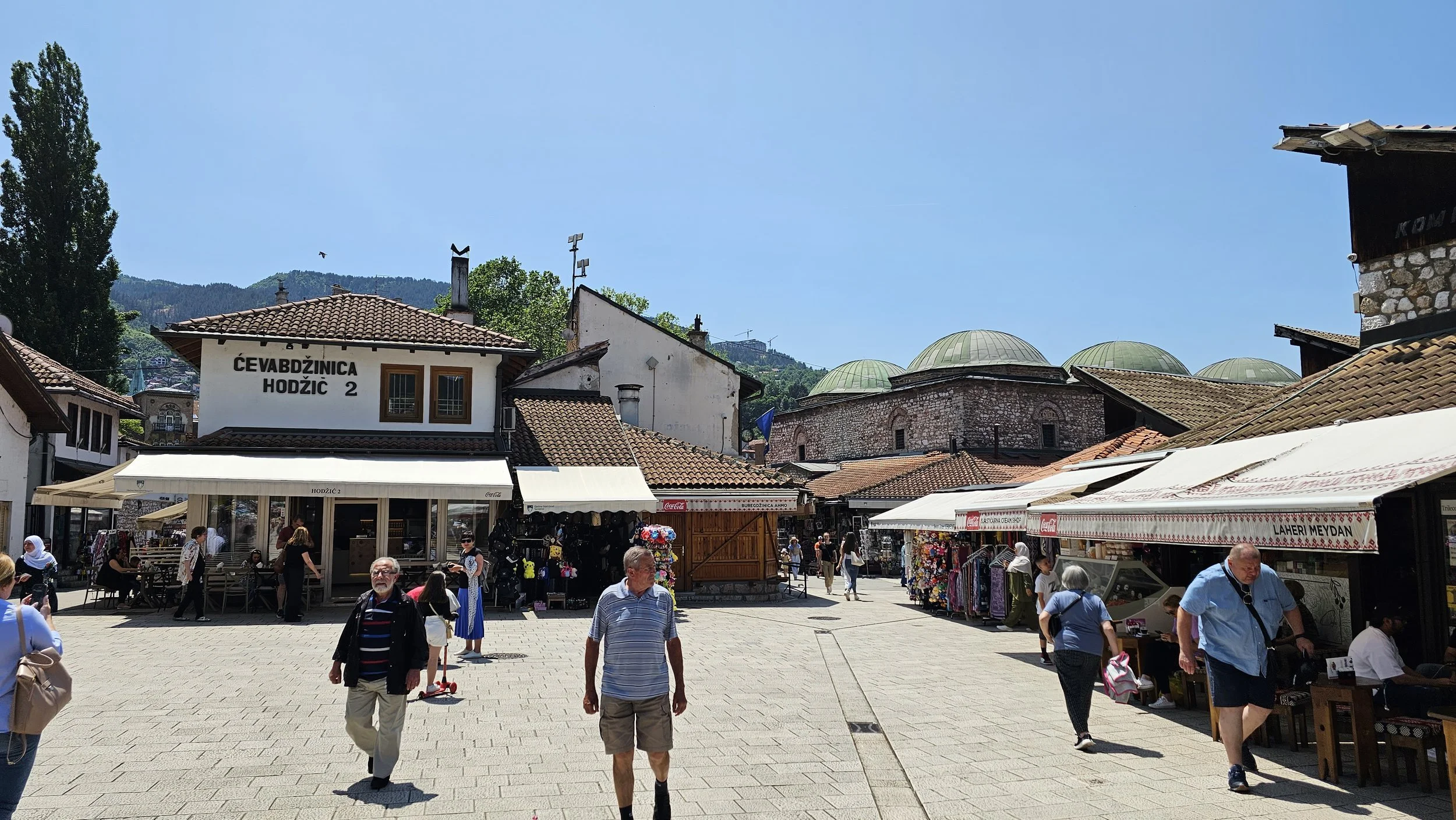


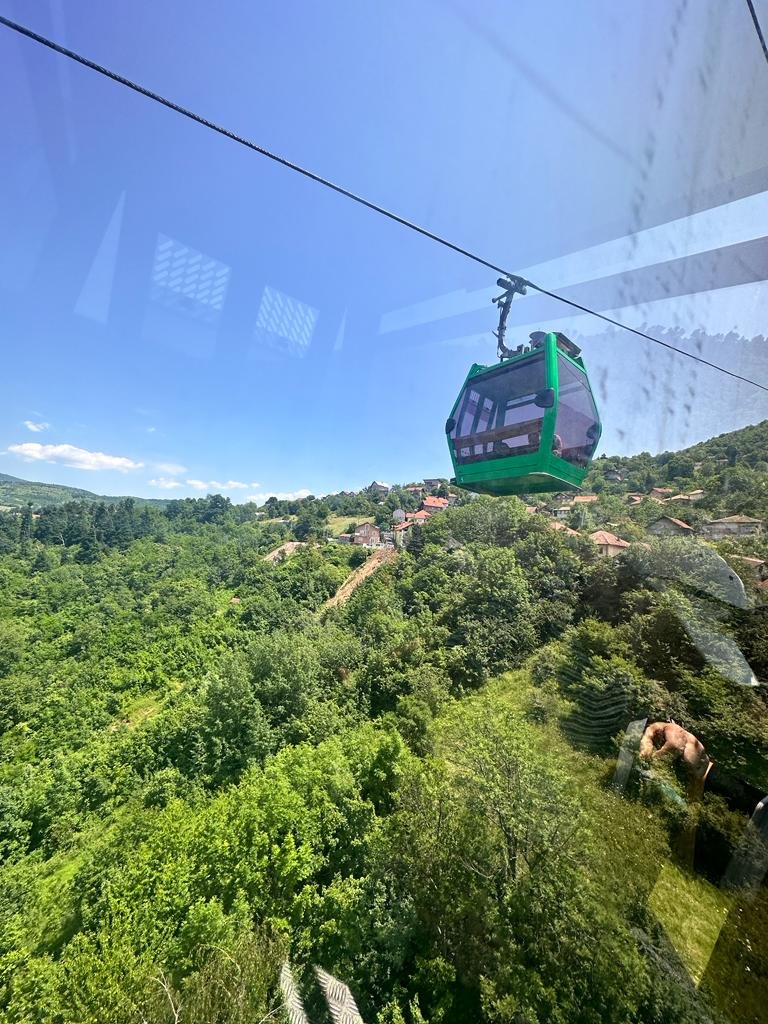

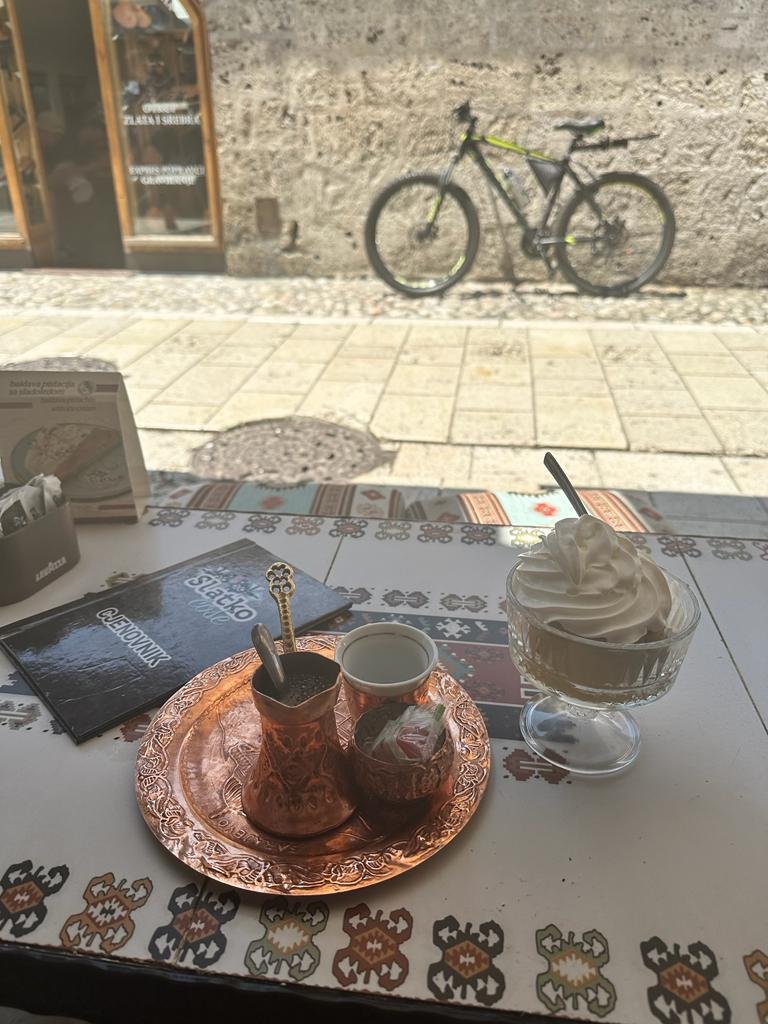
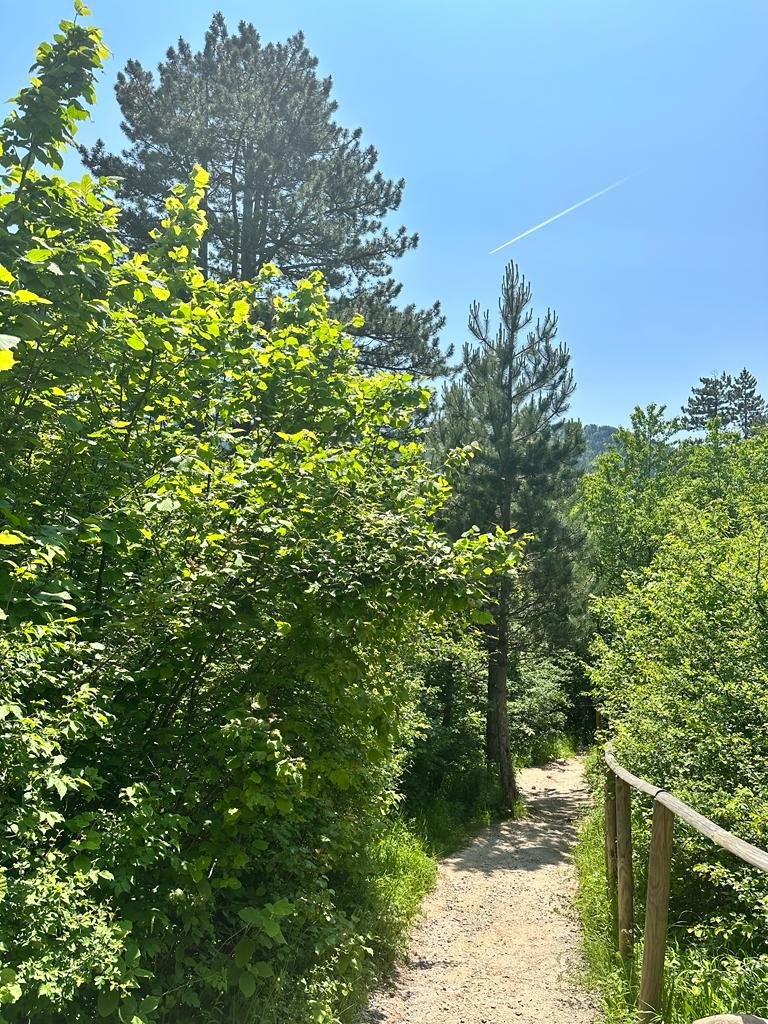


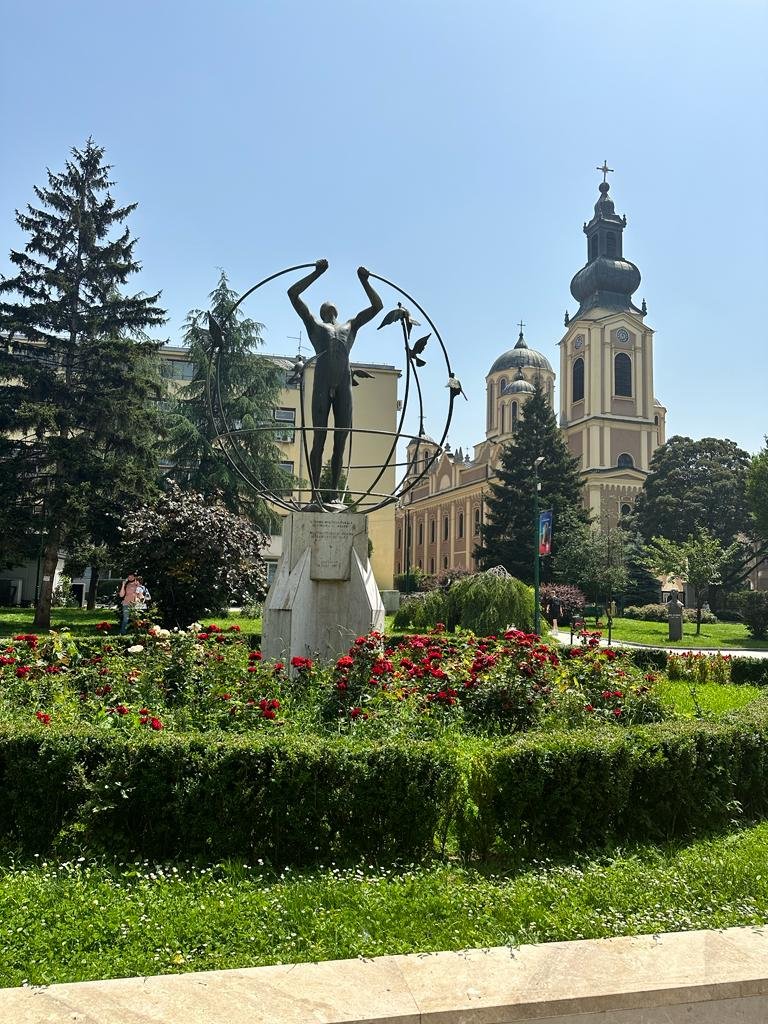
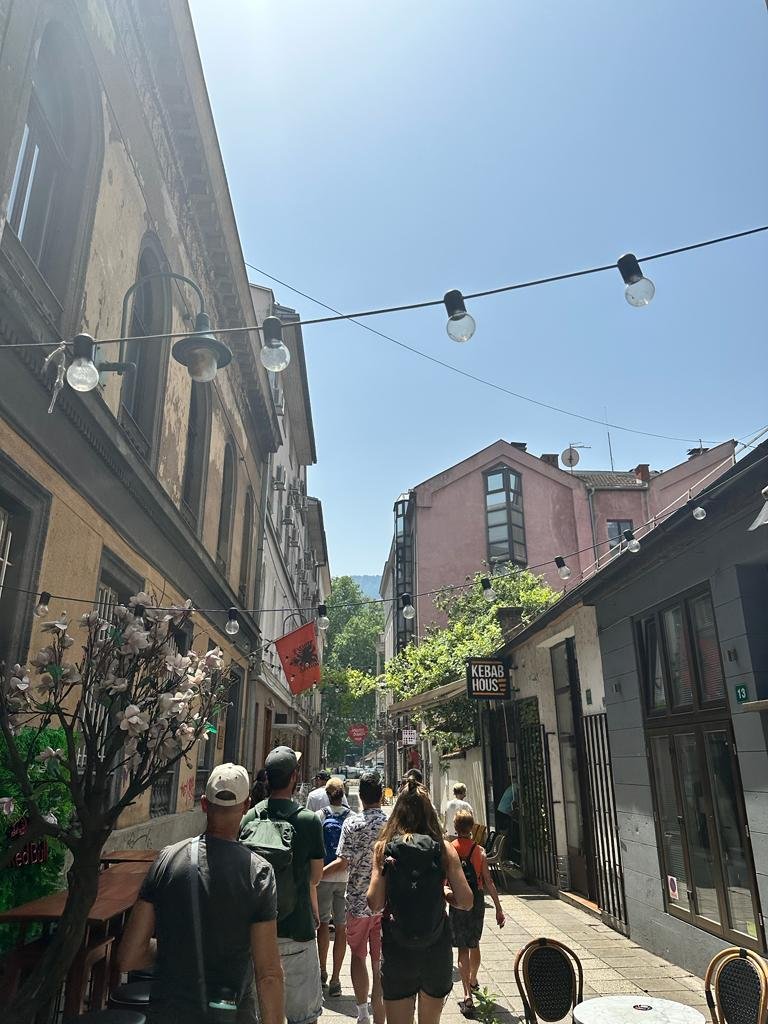









Jahorina mountain (1916 meters above sea level) photo album