
Dobro došli u Sarajevo & planinu Jahorinu
I am an emotional bubble today.
I feel happy, sad, troubled and grateful to be back to where I always feel the happiest!
How can all these emotions run through all at once I can’t explain, but I feel them each and every time I come to my birth place Sarajevo and to the most beautiful mountain in the world Jahorina.
Welcome to Sarajevo & Jahorina mountain

I am an emotional bubble today.
I feel happy, sad, troubled and grateful to be back to where I always feel the happiest!
How can all these emotions run through all at once I can’t explain, but I feel them each and every time I come to my birth place Sarajevo and to the most beautiful mountain in the world Jahorina.
Let me share a bit of a personal story!
My father Savo Golubovic was born in Mostar, he joined the Second World War as a young 15 years old boy to defend the country from the Nazis. He was wounded many times, received a number of bravery medals, but as a consequence his health was compromised.
After the last surgery he settled in Sarajevo, graduated a law degree at a latter stage of his life, met my beautiful Mum Miroslava Rechter in Sarajevo and I was born in 1964.
The story says everyone was ready to welcome a baby boy (based on mum’s belly shape), his name was going to be Dražen and then I arrived as a surprise. Mum’s creativity kicked in and she sent a letter to Dad from the hospital and signed it “with love from Miroslava and Dražen-ka”! A female made up version of a popular male name Dražen!
Mum passed away when I was young and Dad passed away at the age of 92. I have had the best parents and the best childhood one could ask for. Love them both and am forever grateful for their love and inspiration.
Do you know who discovered Jahorina all these years ago?
During Dad’s partisans days and post war, together with a few of his partisan friends, Dad walked across the mountain Jahorina, 31km away from Sarajevo. He fell in love with its beauty and quickly realised a potential to build a ski resort. He was a passionate skier and mountain lover.
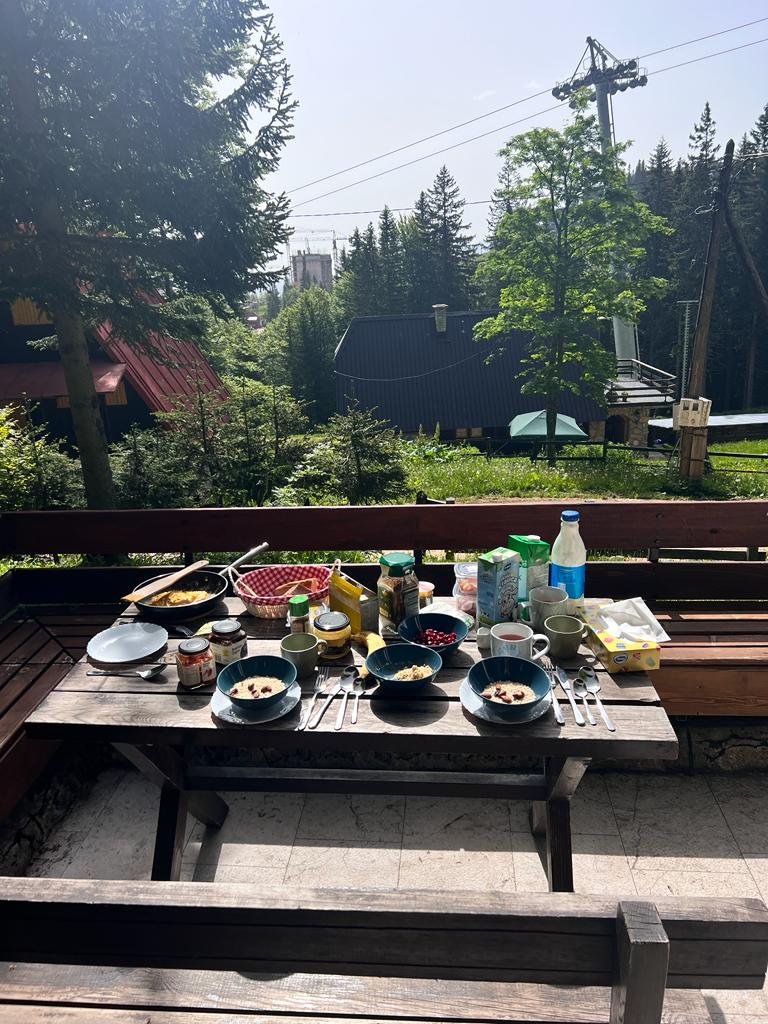
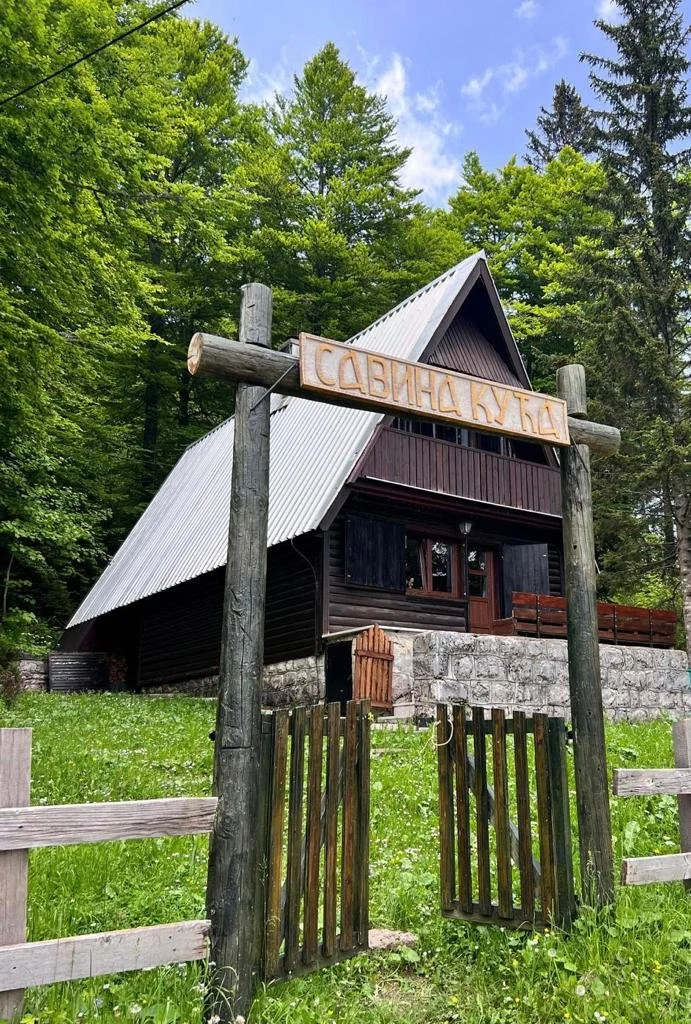
One could say, Jahorina ‘s development started with Mum and Dad building a small family batch, an A shape mountain house.
After a while Dad engaged engineers and the very first ski lift and a ski slope was planned and opened in 1969.
Sarajevo ski club, and later Jahorina ski resort were kickstarted by Dad, and he gave 50 years of service to this paradise here in the middle of Bosnia and Herzegovina.
The story says I started to ski before I walked, can’t tell you if it’s true but I grew up believing it was true!
At the age of four we moved to Split in Croatia, and we continued to live in between Sarajevo, Jahorina and Split. We would come to Jahorina each summer during the month of August to pick up field mushrooms, blueberries, raspberries and native plants and of course we spent winter months skiing.
As a young girl, the only child and Dad’s princess, I had to do three things:
Be respectful of elderly
Be great at school ( so that I can do well in life but also so that I can skip school often and spend as much time in Sarajevo with my mates and ski during winter months)
Be helpful at home
If I did these three things all other little white lies, mischievous behaviors were forgiven! And did I push the boundaries - oh yes!
When Nebojsa, 3 years old Miroslav and I emigrated to New Zealand in 1994 I promised my Dad that I would never ever sell our batch, instead I would look after it and pass the love and respect for what he did onto our children. I am happy to share both Miroslav and Petra love coming here and that gives me the utmost joy.
Let me tell you now a little bit about my Sarajevo!
Do you know how Sarajevo got its name, who founded it and why?
It was established at the end of the 15th century by the Ottoman Empire.
Saray = palace in Turkish. It was an administrative center, a palace in the valley.
Ottoman Empire was big, powerful especially during the 16th century under Sultan Suleyman the Magnificent. His Nick name was “ a sick man of the Europe” for his ruthless rulings.
Ottomans ruled this area from the end of the 14th to 19th century - 400 years!
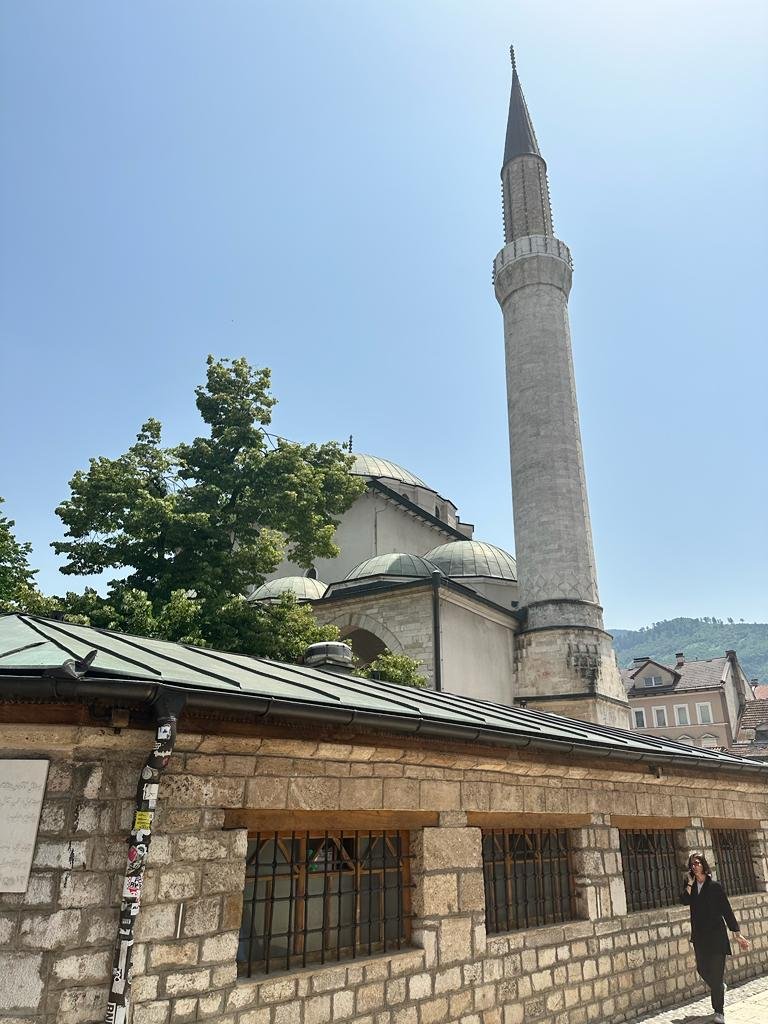
In 1878 Austrian Hungary Empire came in and ruled till 1918. During their 40 years of ruling they invested a lot of money, it was a very productive period for the region. They wanted to show to the Muslim population they were not bad occupiers, they were modernising Bosnia. They preserved all mosques, the market area and kept the Heart of the city called Baščaršija.
On 28 June 1914 Franz Ferdinand was killed near the Latin Bridge in Sarajevo which triggered (not caused) the First World War. The event put Sarajevo on the world map.
In 1918 Yugoslavia was established as kingdom, known as the first Yugoslavia, ruled by the King Karađorđević. Belgrade became a capital city which resulted in not as much investment in Sarajevo.
When the Second World War started in 1940 the King Karađorđević ran away and found exile in London.
Tito with the partisans troops liberated Yugoslavia and established the second Yugoslavia known as Socialist Federation Republic of Yugoslavia (SFRJ).
Russians wanted to take over Yugoslavia but Tito said the famous “No” to Staljin, became a life long president and died in 1980 at 88 years of age.
Tito controlled nationalism on every side, although he used repression at times, we lived the best life!
Soon after his death, nationalism started to erupt, there were economical and political problems, followed by a break up of USSR. Yugoslavia known as a great socialist country started breaking up.
Slovenia broke off first in 1990, followed by Croatia in 1991, then Bosnia and Herzegovina in 1992. These were republics during Yugoslavia days, and became independent states through the war.
I won’t go into dirty politics, but will say it was a horrible war, each side did terrible things, innocent people died, we lived through it for three years before we could legally and gracefully leave to New Zealand.
A little bit more about Bosnia and Herzegovina!
It was always a melting pot, during Ottomans times Jews and Catholics could practice their religion but had to pay higher taxes.
During Yugoslavia times, ethnic Croats, Serbs, Muslims, lived together, had similar traditions, were the same people, the only difference was religion.
After Bosnia and Herzegovina declared the independence in March 92, the war started on 9/4/92, Sarajevo was under a siege for 44 months, till December 1995.
The system failed to protect people, people felt let down which culminated in anger and frustration that still exists against UN, Western World and those who came to help but didn’t.
Today, demographics are:
78% Bosniac , interestingly not all practising Islam
12% of Serbs ( was 30% pre 1990ties war)
8% of Croats ( was 25% pre 1990ties war)
2% of Jews and others
There is still a lot of denial of horrible things that happened during 90ties, at some point we must confront the past to move forward, but mental scars are the worst scars and I will forever wonder if they could heal.
Today, people are getting fed up with 90ties stories, they still follow politics but want to enjoy the life.
Polish Pope John Paul the 2nd came to Sarajevo in 1997, he was the first catholic pope who came to this territory. He came to send a message of piece and co-living. People say he was the first “tourist “ who opened Bosnia to tourism after the war.
There are many important and beautiful buildings in Sarajevo, I will mention a few:
Hotel Evropa - built by Austrian Hungary in the 19th century, known as the best hotel for many years with a number of famous people staying in the hotel.
Next to the hotel is the mosque and a building built in socialist Yugoslavia - this spot is known as a place where East meets the West!
The Ugliest building in Sarajevo
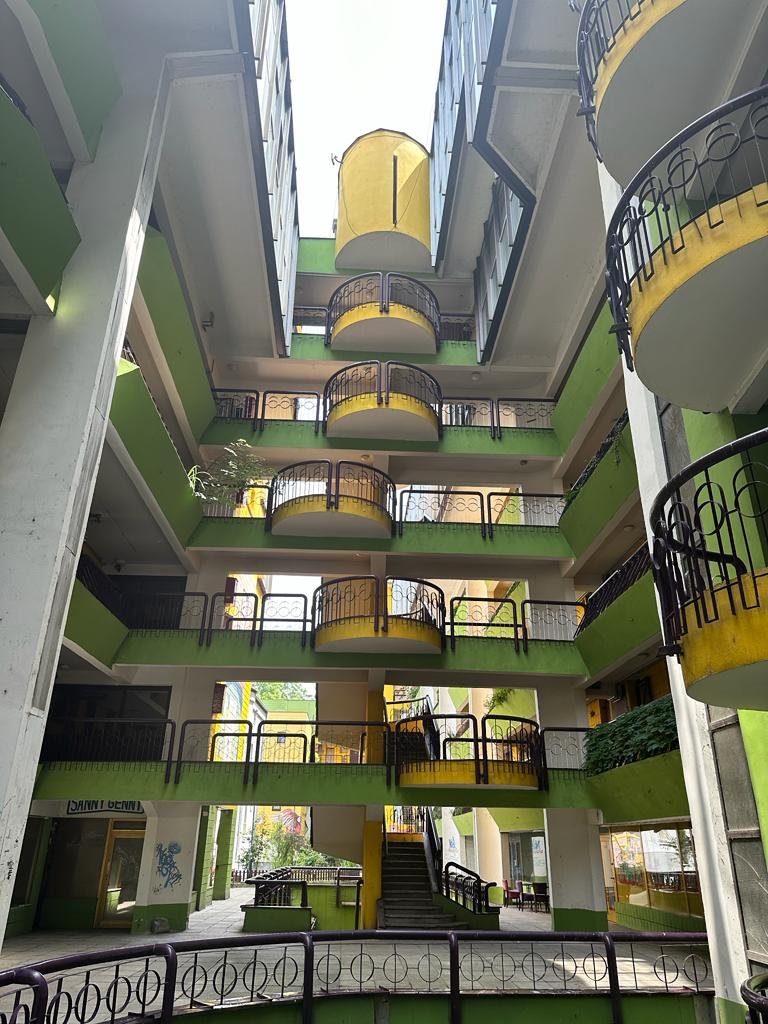
Built during socialist times in 1982 - as a new building just before the 1984 Winter Olympics. It is described as a modern and fun building, built in a Funky Socialist style, but now has got its nick name, a parrot building!
Jews synagogue built in 1901 is the only remaining active synagogue in the country. Jews history is 400 years old, first Jews came here from Spain following extradition in the 16th century.
Many Jews left this area during the Second World War, with only 700 Jews living here today. Back in 1983 there was a last Jew’s wedding in town, and next week after 40 years there will be a wedding between an American Jew and a local Jew girl. The Jew community is stoked!
I would like to share an incredible true story from the Second World War that depicts the happiness and co-life irrespective of religion, nationality and culture. This story represents Sarajevo I remember and will love forever!

This photo from 1941 illustrates two ladies, Zejneba Hardaga a Muslim woman and a Jew woman from Kabiljo family walking close next to one another with Zejneba burka covering a yellow star of David to protect her so she could walk freely.
Zejneba helped Kabiljo family to escape Nazi - occupied Sarajevo and then move to Jerulasem.
Many years went by, and in 1992 the same Kabiljo woman helped Zejneba’s family to leave Sarajevo and arrive safely to Jerusalem.
A full story here:
https://aish.com/muslim-and-jewish-families-save-each-other-50-years-apart/
A movie based on this true story:
Righteous Among the Nations is an honor recognition used by the State of Israel to describe non-Jews who risked their lives during the Holocaust to save Jews from extermination by the Nazis for altruistic reasons.
Zejneba was the very first Muslim woman to ever receive this prestige recognition for her sacrifice in rescuing Kabiljo family.
And finally a few interesting facts:
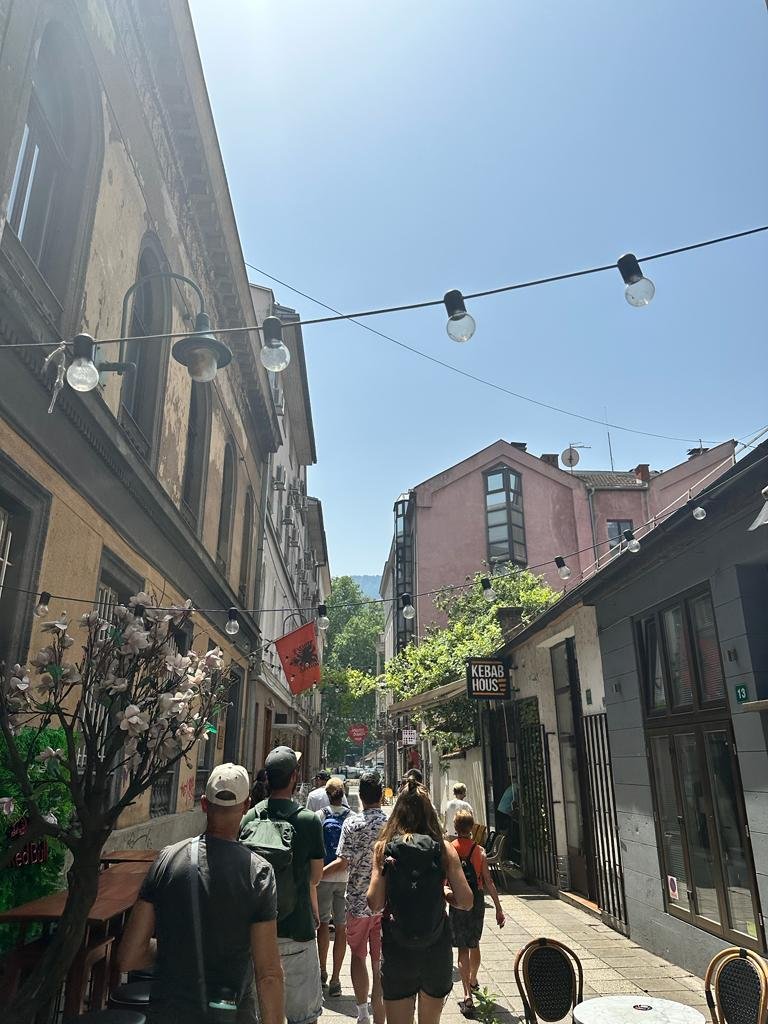
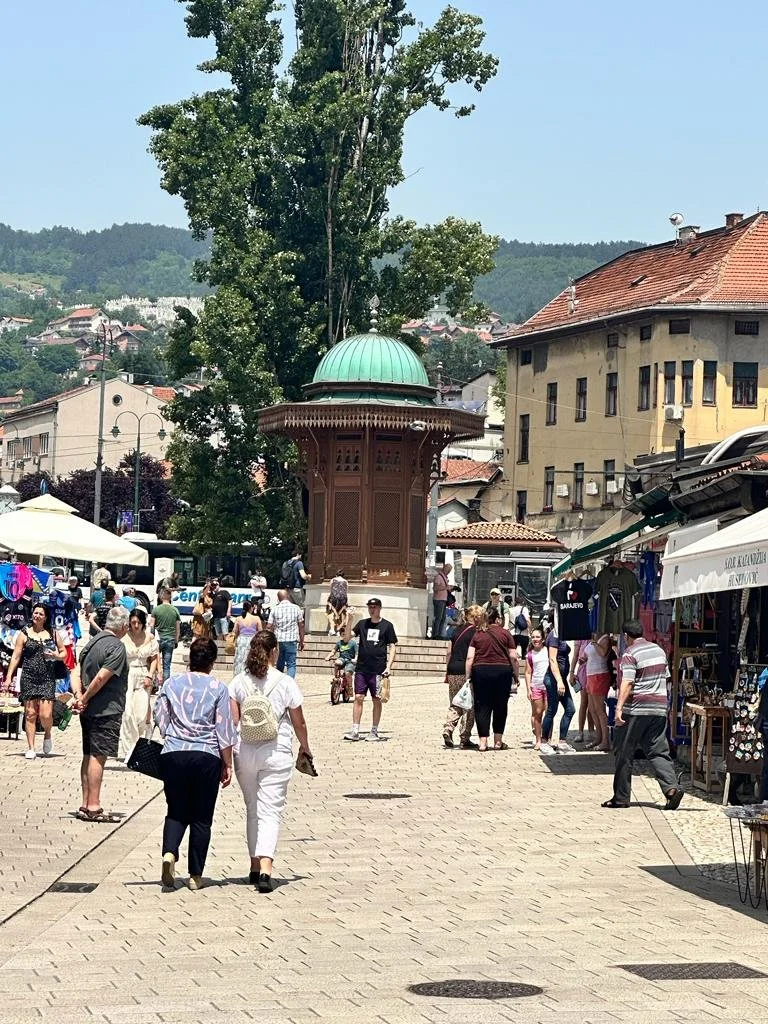
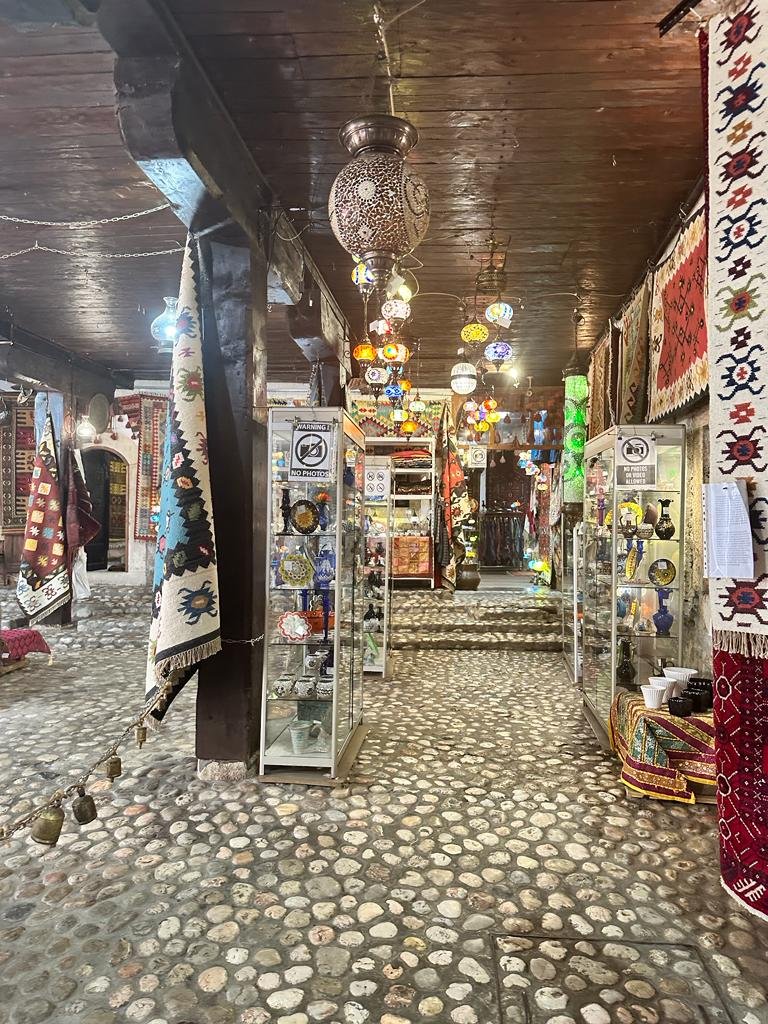
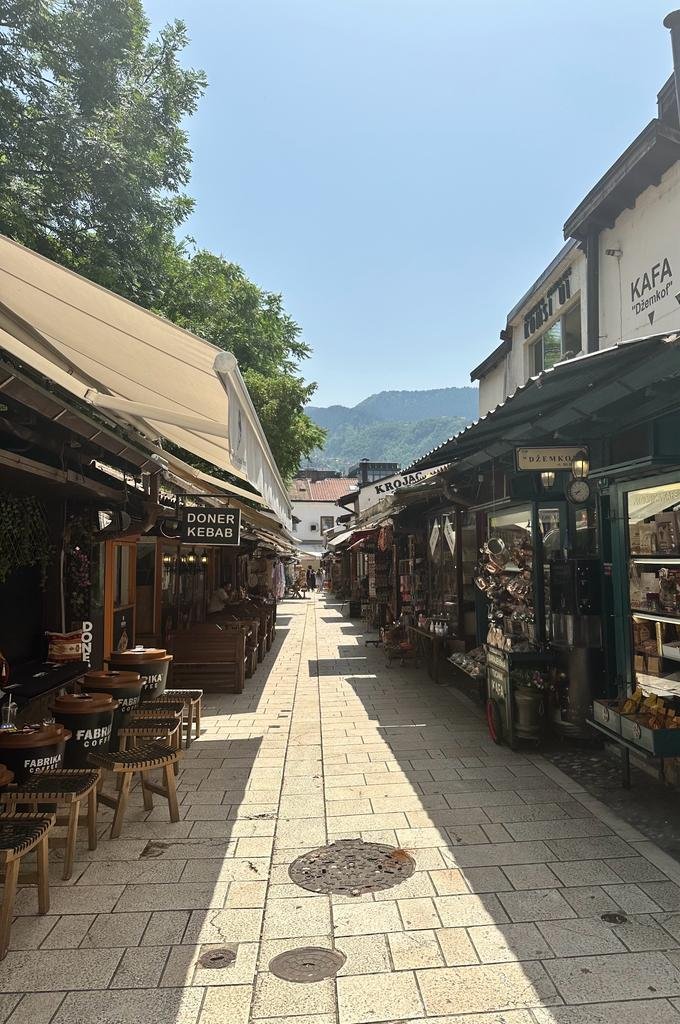
Baščaršija (pronounced like Bashcharshia) = main market, when established by Ottomans was used only for business, not for living. It was too busy, too noisy to live there. Back then people lived in Mahala = neighborhoods.
During Austria Hungary times the living concept changed. They brought living and working together in one place. Shops were downstairs and people lived upstairs.
Baščaršija is a network of 50 streets and each street was a different trade / craft.
Clock tower built in the 16th century. It’s a countdown clock tower, counting hours to sunset. It needs to be manually adjusted every day, and it’s one of a kind in the world.
Gazi Husrev Begova mosque, library, Medresa ( Islam school) and a clock tower. The “G” guy funded all these buildings. He was the most famous local governor during the 16th century.
Gazi = a warrior, originally from Greece
Husrev = a Nobel man
Caravan style hotel - Morića Han
Downstairs it was a horse stable, people stayed for a few weeks but the first three nights were without charge during Ottoman times. There is saying in our language “Svakog gosta tri dana dosta” which means for every guest three days is enough.
They offered three free days to stimulate trading and hospitality was very important.
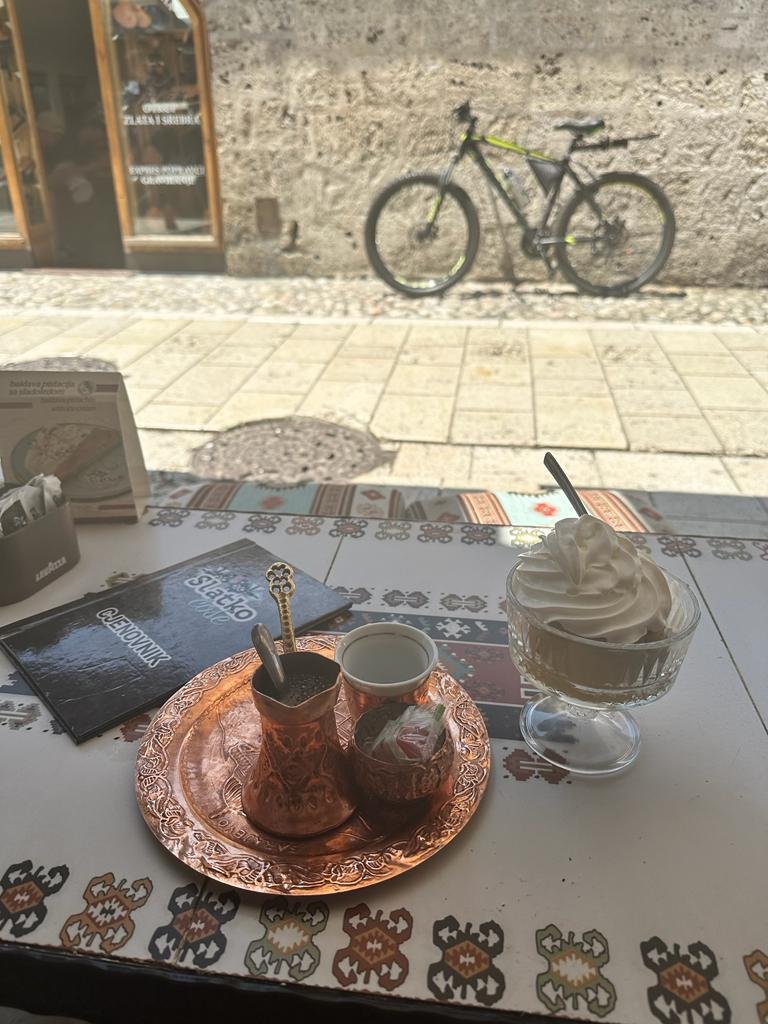
Ćejf = Zen moment with a coffee
Ašćinica = cantine style ( food on displays )
Coffee culture is very important. Three types of coffee in Bosnia:
Welcome coffee - strong good quality - dočekuša
Second - open discussion coffee - razgovoruša
Third - goodbye coffee - sikteruša
Served with sweets Lokum ( rose flavour most popular)
Town Hall and national library
Constructed in Spanish style to make a fusion with markets and to tribute Jews.
It was destroyed during the 90ties with over 2m books burnt to ashes.
Known as Sarajevo Fenix - today reborn from ashes and fully restored. It was reopened on June 28 2014, a 100 years from the First World War, with a desire to send a message of no more wars, ever!
Inat kuća

Inat kuća - a small house across the road from the Town Hall. The story says when the Austrian Hungarian rules wanted to build the Town Hall they had to pay local people to move to a different location and free up the land. One man took the money but asked that they move his house across the road too!
People say this house represents mentality of people of Bosnia.
Inat = I struggle to translate this word, and have landed on a definition of illogical stubbornness. I welcome English professors to correct and improve the translation in the Comments box. 😊
Enjoy the photos 🤗
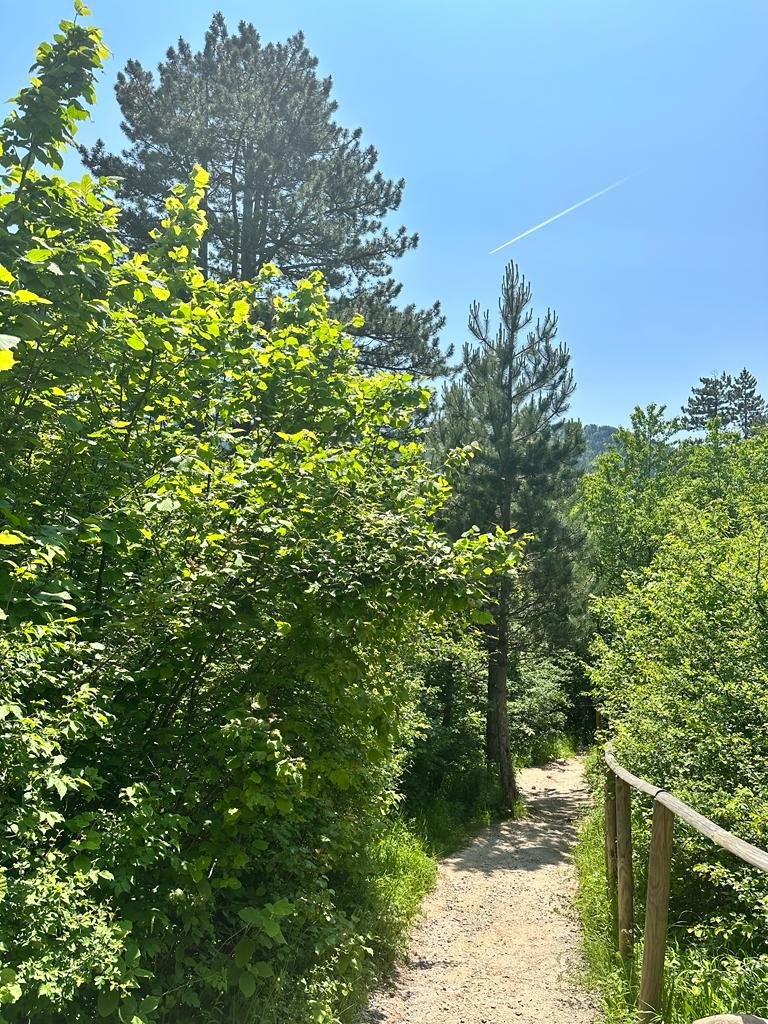
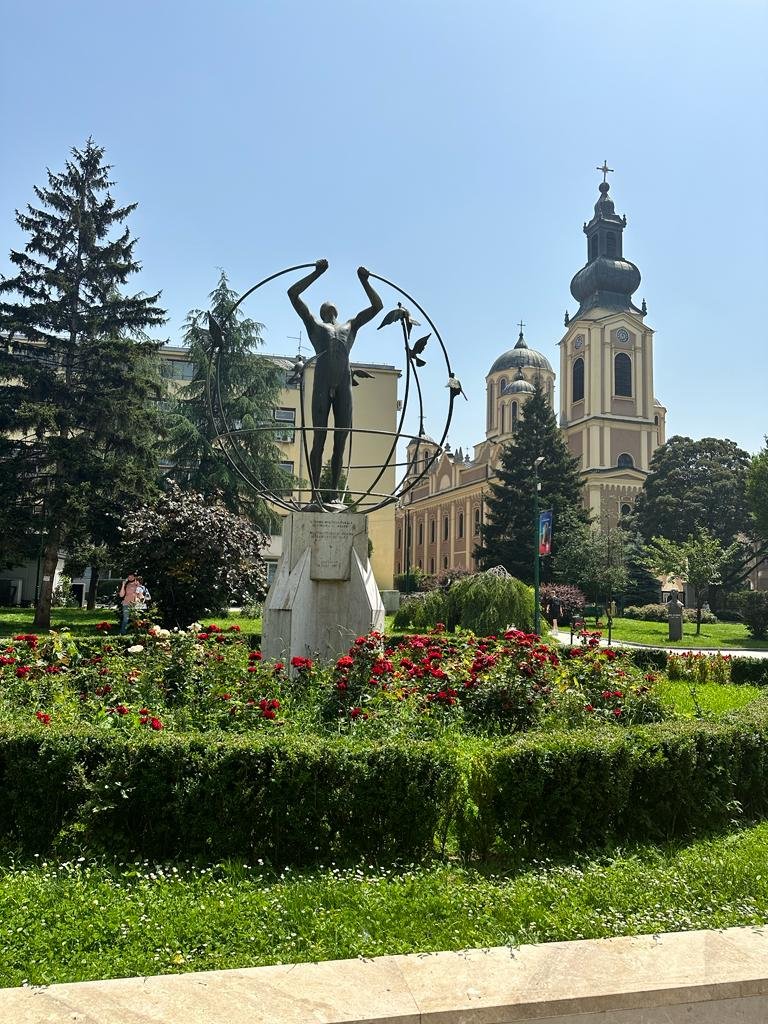
Sarajevo photo album


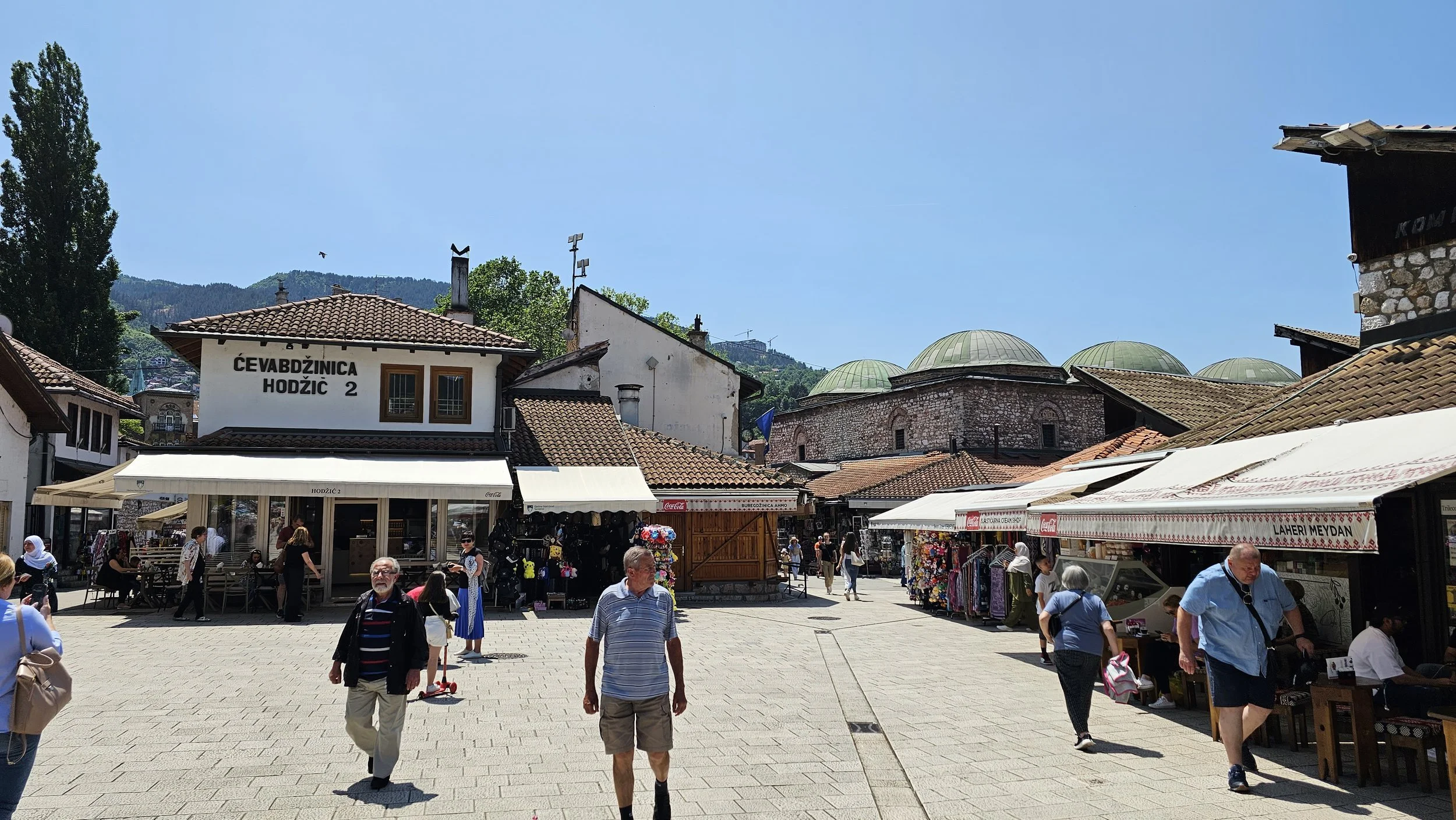


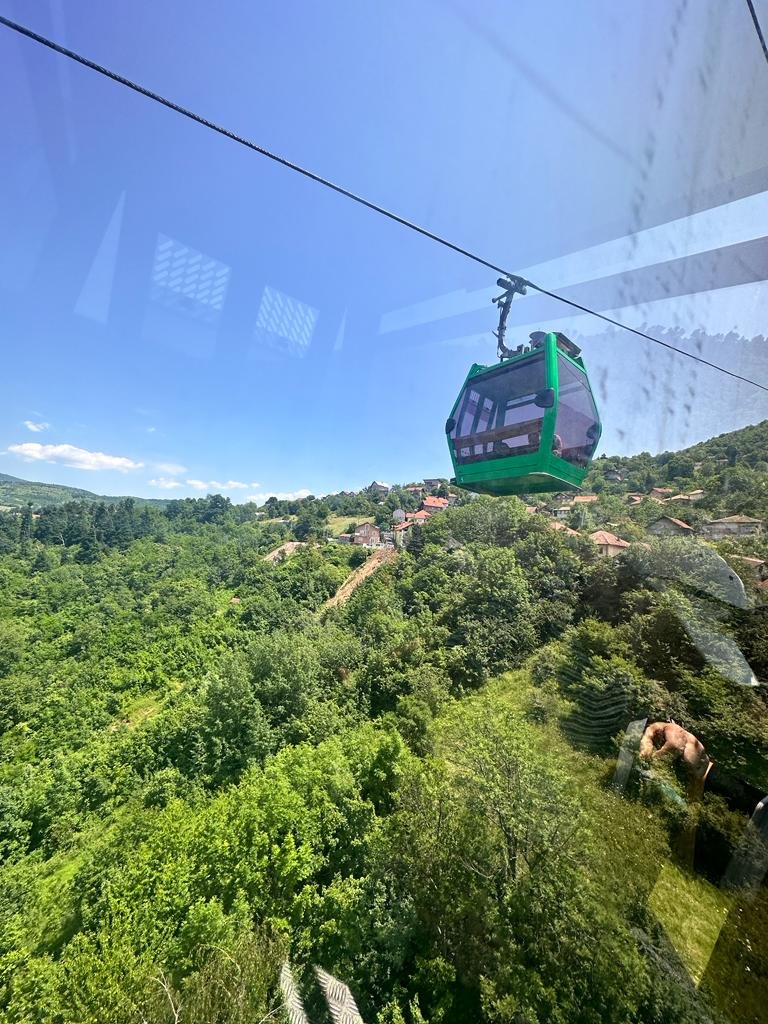
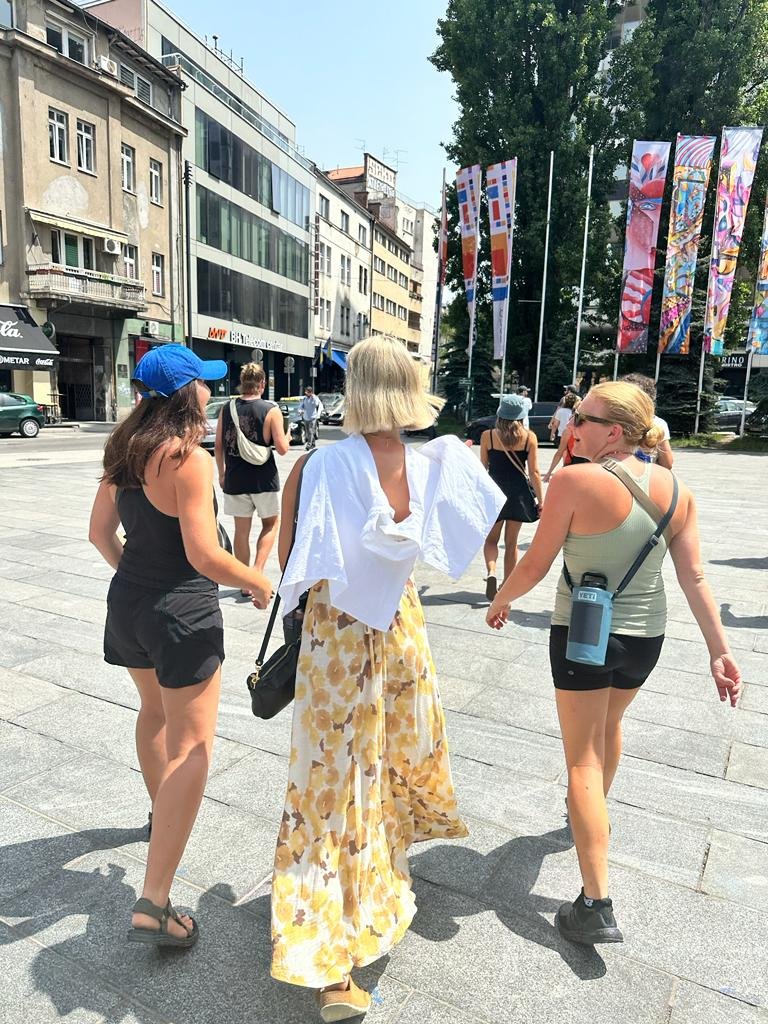












Jahorina mountain (1916 meters above sea level) photo album





Büyü Istanbul
Magic Istanbul
Today I’ll start by saying it is simply impossible to capture 3000 years of history into a short and interesting blog.
Instead, I will share a number of historical and fun facts to ignite your personal interest in the history of Istanbul, and a number of photos🤗
You may get itchy feet after reading this one. 👣 …….

Magic Istanbul
Today I’ll start by saying it is simply impossible to capture 3000 years of history into a short and interesting blog.
Instead, I will share a number of historical and fun facts to ignite your personal interest in the history of Istanbul, and a number of photos🤗
You may get itchy feet after reading this one. 👣
Let’s start!
Istanbul was established 2600 years ago by Greek fisherman Bizas
Became a main trade location and rich city, which attracted enemies who tried to conquer it 29 times
Romans came in 6th century, Constantin the Great emperor settled in and built 21km long walls to protect the city
In 1453 Turk Sultan Mehmet conquered the city and changed the name from Constantinople to Istan polis = in the city
1453 is the most frequent PIN number in Turkey!
During the 16th century Otoman Empire was the strongest and ruled over Asia, Europe and Africa.
Ottomans - one family ruled for 7 centuries, today family members are well and alive living in England.
Ottoman Empire lost the First World war and Istanbul got occupied by British.
In 1918 Mustafa Kemal Ata Tur ( father of Turks) started the independence war against alliance troops and declared a new Turkey republic on 19/10/ 1923.
Ata Turk built a democratic state and became a new president.
Istanbul is the only city in the world spanning two continents, Europe and Asia connected with bridges and underground underwater metro.
Throughout the history Istanbul was the capital city of 3 empires:
Roman
Byzantine ( Eastern Roman)
Ottoman
Roman Empire was divided into two empires in 390, one catholic ( Latin) and one orthodox ( Greek). Eastern side survived known as Byzantine, while western collapsed in 425.
Istanbul is 270 km long, spreads across 7 hills, has cca 15 m population who legally live here and a large number of refugees from Afganistan and Syria.
Bosphorus channel separates two continents, long 32km.
City highlights - too many to mention, will stick with a few that fascinated me the most!
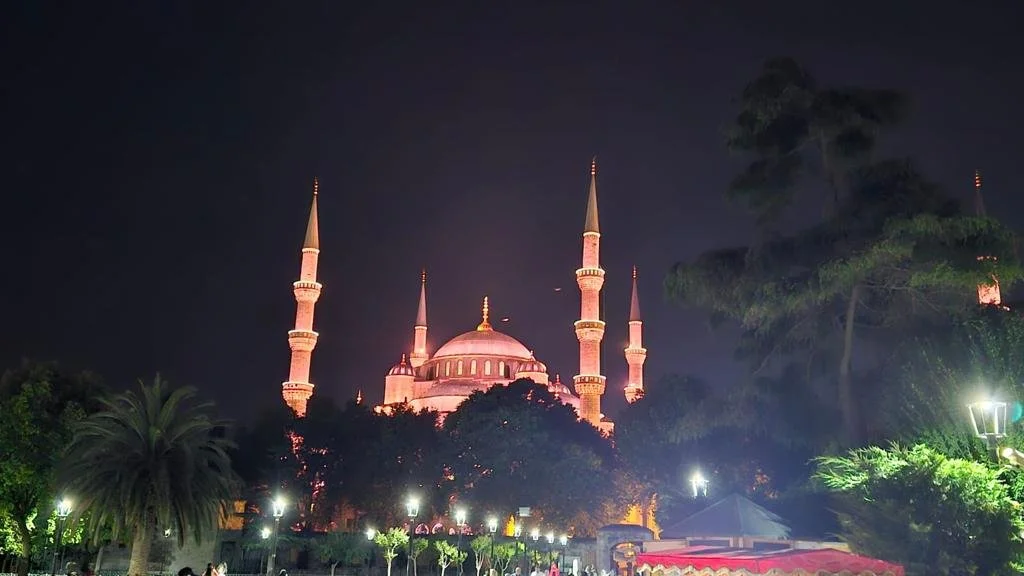
Blue Mosque - Sultan Ahmed Mosque - Masterpiece of Islam
Sultan Ahmed became sultan at the age of 14, reined for 14 years and was 14th in the family to become a sultan, died at age of 28.
Did you know what had to happen for someone to become a sultan?
For centuries the rein shifted from a father to the oldest son who had to kill all younger brothers to stop them fighting among themselves and threaten his throne.
Sultan Ahmed introduced a change. The rein shifted from older brother to a younger brother, but instead of killing younger brothers they were caged until ruling sultan’s death.
It took 42 years for one brother to become a Sultan. Since he lived in a cage all his life he wasn’t educated or had smarts to rule and this fact alone was one of the reasons Ottoman Empire collapsed.
Mosque is used for prayers but also as a place for gathering.
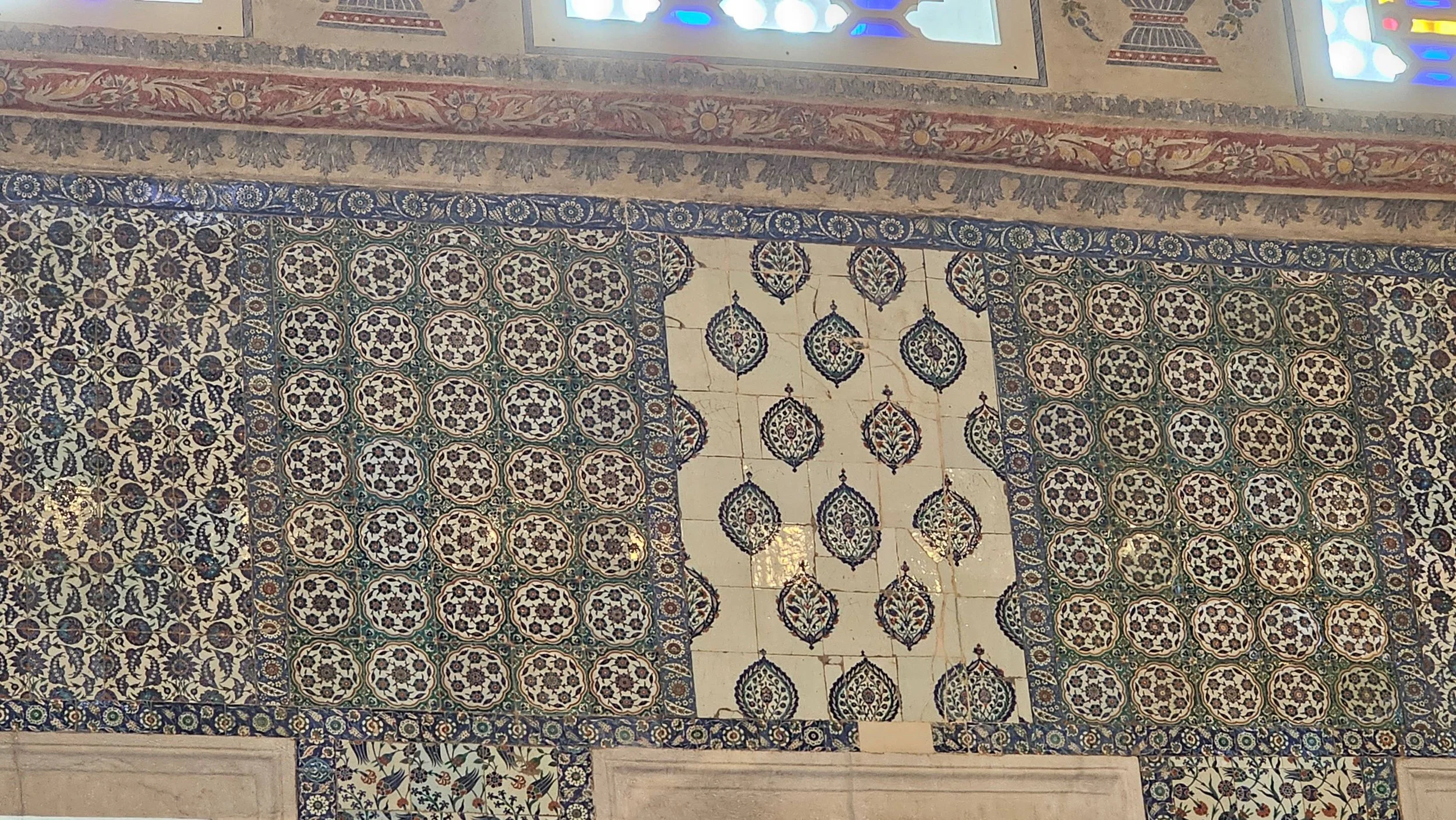
Predominant colour is blue with over 20,000 unique pieces of ceramic hand made tiles.
Built in 17th century with six minarets, unheard of and unacceptable by Mecca mosque administrators. Mecca mosque had six minarets and was the largest, the best, the most powerful. To make a piece with Mecca Sultan sent his people to build additional minaret and Mecca mosque became the number one again with 7 minarets. Today it has 9 minarets in total.
Turquoise colour comes from the word Turkey - a mix of blue and green colours represented in the Blue Mosque.
In todays Turkey population is split:
4% Jews
4% Cristians
92% Muslims
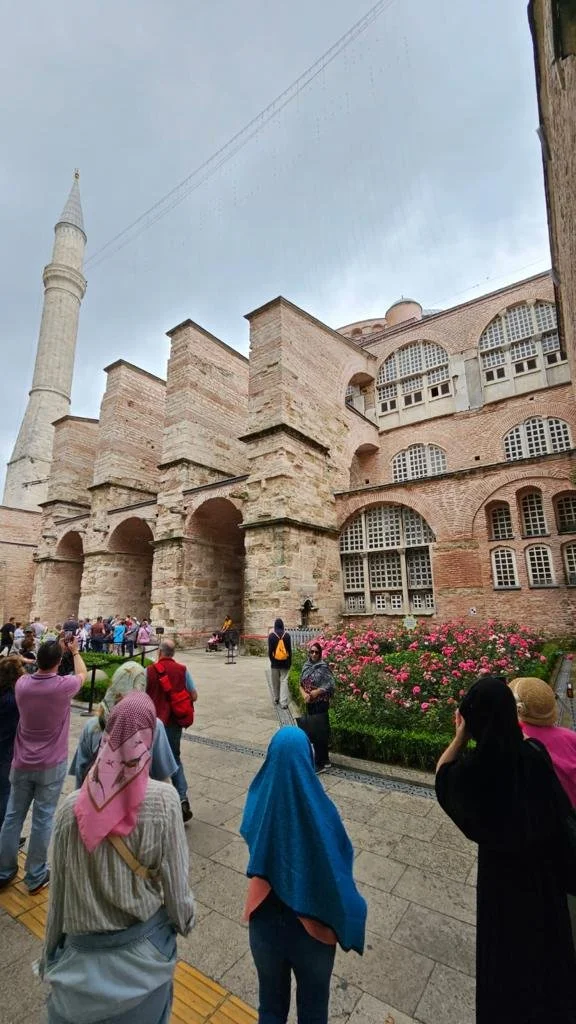
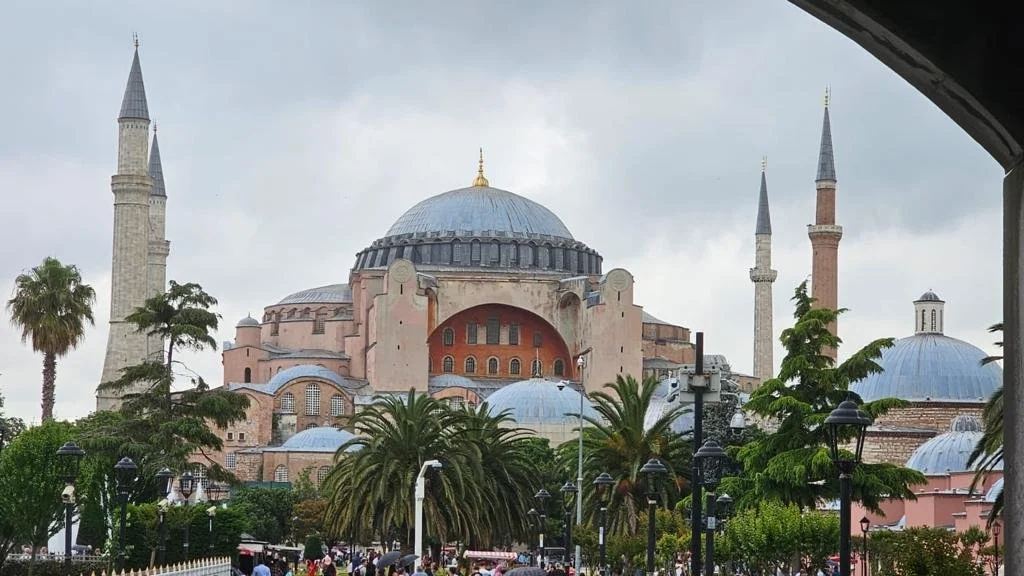
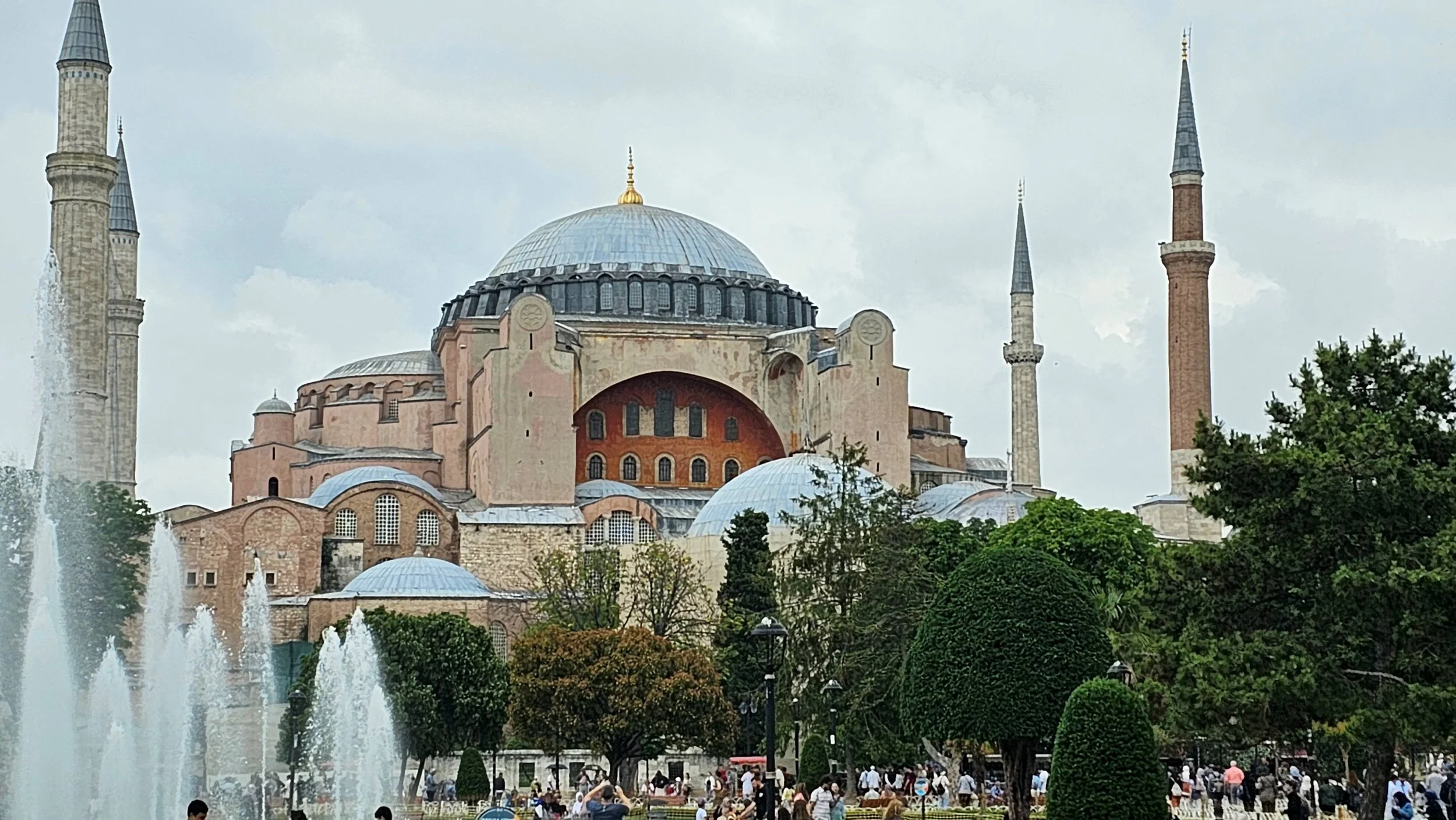
Aya Sophia - Church of Holly Wisdom - Masterpiece of Orthodox Christianity
Built in the 6th century and was the world largest Christian cathedral for 1000 years.
It is the birth place of Christianity being split into catholic and orthodox.
Got converted into a mosque in the 15th century when Muslim Turks conquered the city of Constantinople. It was easier to convert then to build new.
Post the Turkey independence war and Republic declaration in 1923 Aya Sophia was converted into a museum.
The myth says Turkey people were sad for years, wrote melancholic music and no one could explain the reasons.
One day three years ago the government made a decision to convert Aya Sophia museum back into a mosque and all sadness went away! As long as there is good tobacco, coffee and cats people are happy 😊.
Today, curtains cover human and animal characters on the mosque walls during pray times.
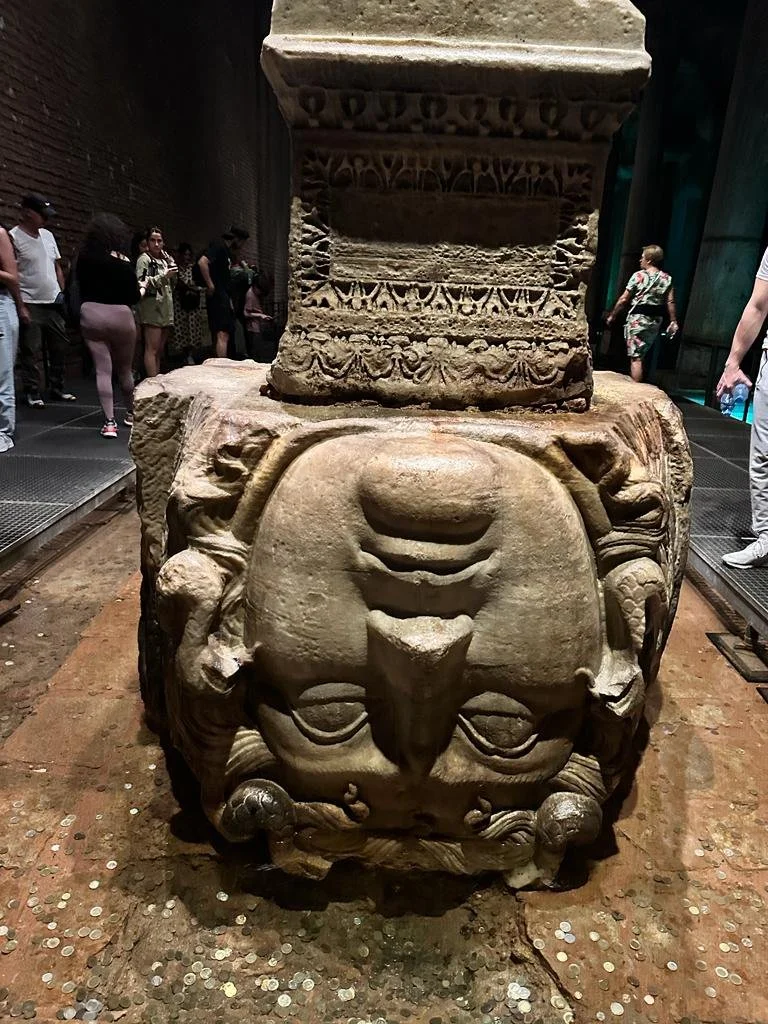
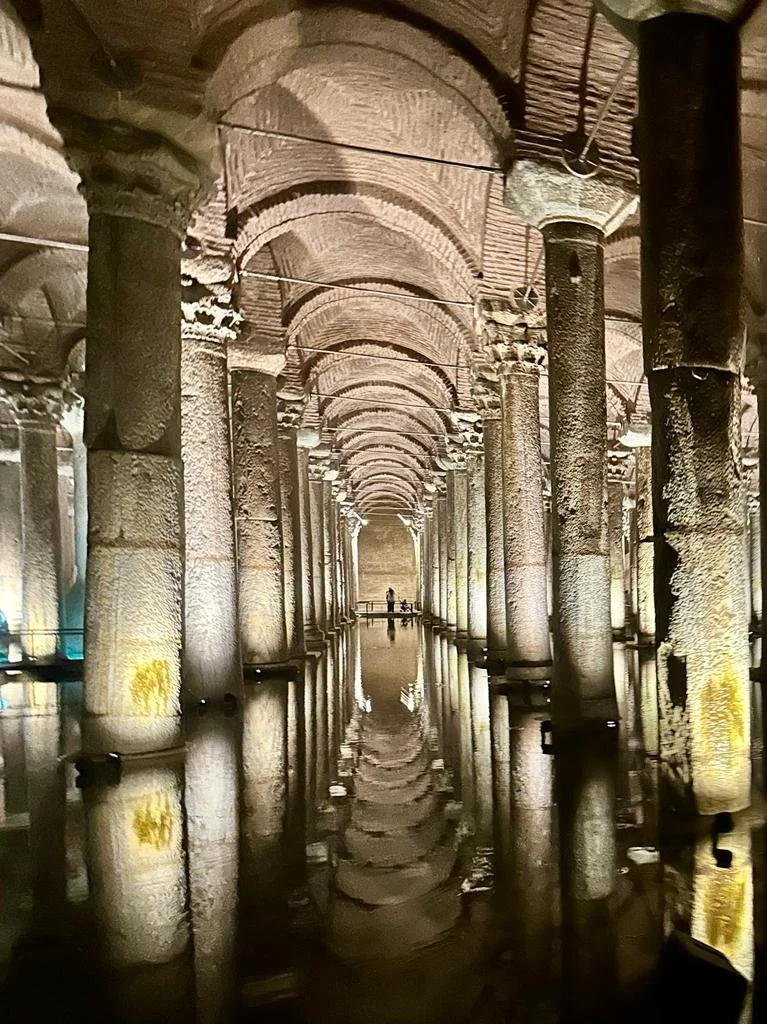
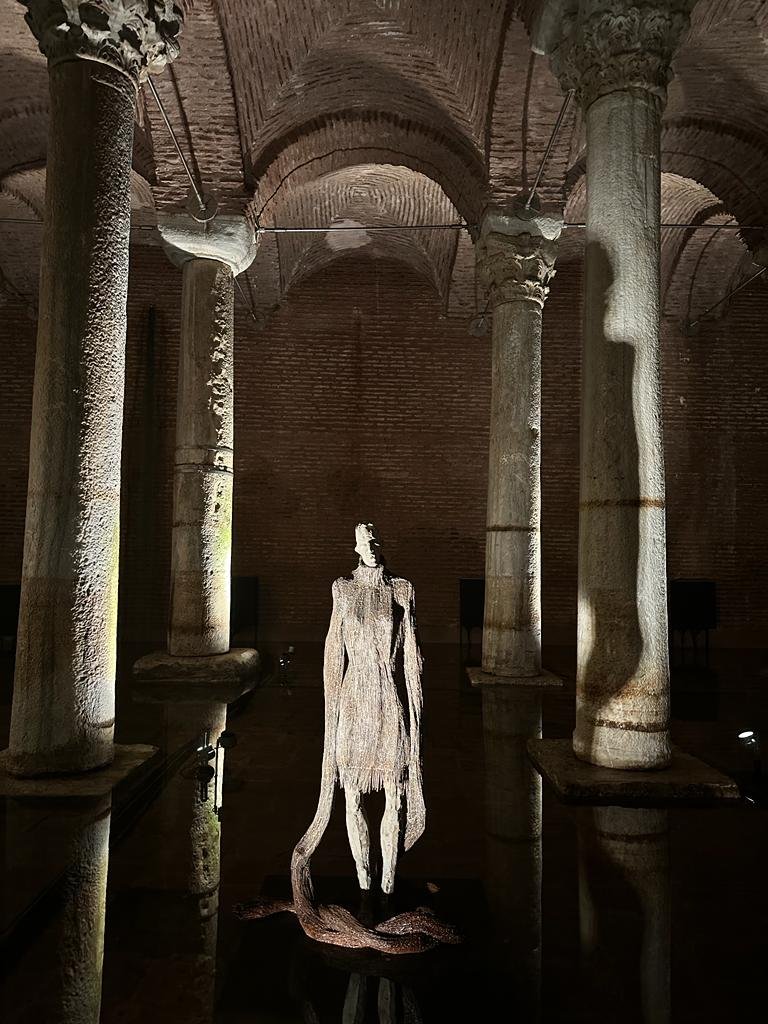
Basilica Cistern - underground water cistern
Built 1500 years ago by the Bizantine Empire.
The same engineers built Aya Sophia.
It is the largest Roman water cistern in the world, but Istanbul has 200 water cisterns in total.
Did you know why it was built?
Following a civil unrest in 532 city was destroyed. They had to find the water that was at a higher level than land and build acqua duct to bring water to suffering citizens.
They had no resources, had to use recycled materials from destroyed buildings and churches, basilica etc.
Water was mixed with vinegar or wine to kill the germs and fish was introduced to clean it naturally, like a small pond with eco system
Ottomans never used it.
It holds between 80 - 90 000 cubic meters of water.
Incredible invention and unique in its architectural design,
Hamam - Turkish Bath
A life time experience that cannot be described in words, you need to experience it to appreciate it, worth every penny.
Let’s just say, I have never ever felt as clean as I did after the Ottoman treatment that included a whole body rubbing with “kese”.
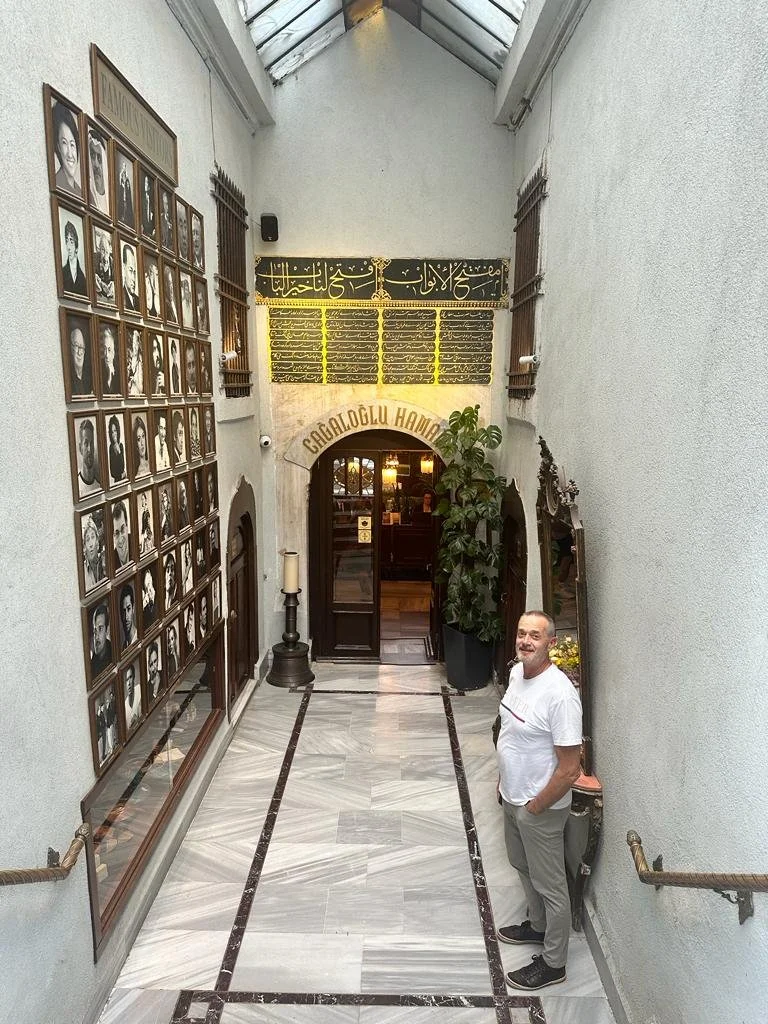
There were nearly 300 hamams in Istanbul, 60 of them are still in use and mostly commercialized. There are separate sections for men and women. We visited the oldest Hamam in town called Cağaloğlu built in 1741.
A number of world famous people visited this place: Omar Sharif, John Travolta, Cameron Diaz, Ophrah Winfrey, Steve Irwin, Harrison Ford, Tony Curtis, King Edward VIII and many others and now including Nebojsa and I!
Finally, a few fun facts:
4 commonly known words come from Roman times in Istanbul:
Carisma
Justice
Nike
Porno
If interested to know the story behind these words ask a question in the Comments Box.
Mosque is a place for praying and gathering. A number of minarets had a meaning in old days:
One minaret - built by citizens
Two minarets - built by a royal family
Four minarets - built by a sultan
Enough of words, let the pictures bring the magic to life!
Magic Istanbul photo album


Blue Mosque photo album






Aya Sophia photo album




Basilica Cistern photo album






Cağaloğlu Hamam - Turkish Bath



Lezzetli Yemek
Delicious Food
A few days have gone by with thousands steps and non stop walking but no activity can burn the calories of Turkish delicious food.
People are so friendly, prices affordable in comparison to other European countries and food is simply yummy! ….
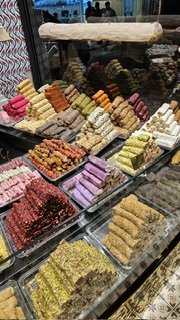
Picture tells it all!
Delicious Food
A few days have gone by with thousands steps and non stop walking but no activity can burn the calories of Turkish delicious food.
People are so friendly, prices affordable in comparison to other European countries and food is simply yummy!
From the famous kebabs, to lavish ( type of bread), to mezze platters to die for, to spices and nuts as much as you can take to sweets that blow your mind.
Yes, baklava is the most famous desert but there are tens of different types of baklava. My favourite is the one where everything is made of walnuts and honey, even the actual pastry. Unbelievable!
Lokum is served with a Turkish coffee and it’s a soft sweet made back in a day for the famous Sultan Ahmed after he broke his teeth eating hard sweets.
Rahatlokum (known as Lokum or Turkish Delight) = “to comfort one’s throat” and the variety is enormous! The better ones are made with honey and the ones made with sugar are often the presents for mothers in law.
The very first ever Lokum store was opened in Istanbul in 1777 and it still runs selling the very best Lokum in the world. Did we buy any? Of course, and after trying who knows how many my pick is double pistachio and rose.
Turkish coffee is served to guests only and always with a piece of Lokum. If guests start by eating a Lokum it signals they are hungry and a host will bring food. It’s a test for guests and a little secret not many people know about.
Did you know about the famous Turkish viagra? It comes as a tea and as a desert (walnuts with honey), and it apparently works !
A few of our favorite dishes so far:
Yaprak dolma - vine leaves rolled with rice and spices filling served with yogurt Iskender kebab - local kebab (Iskender = Istanbul) Kofte - mince meat balls cooked in tomato sauce with different spices, yum!
Testi kebab / meet and veggies cooked in pottery dish that needs to be broken up before eaten Gozleme - flat savory pockets usually filled with salty white cheese, spinach or minced beef.
Pide - another type of bread
Lavish - type of bread, tin dough tiled and slammed against hot wildfire oven that looks like a big rugby ball and empty inside!
Borek - all different fillings, spinach and feta cheese is my preferred choice Simit - student street food, round sesame with cream cheese is my pick!
Manti - Turkish ravioli served with a yogurt and tomato sauce, delicious 😋
Kunefe - Kadayif traditional Ottomans desert with cheese in a middle served hot
And the list goes on….feeling hungry? Yep, we are, it’s time to try something new and then walk and walk more!
A few travel tips:
If you like wondering around the city and learning about it then Guru Walks are a great choice. They are available worldwide, free of charge and based on a donation of your choice. Run by local qualified tour guides who share a lot more information about their country, rituals, tradition and tricks and tips. Highly recommended, we have used them when travelling around South America and now again in Istanbul.
Download the Guru Walks app and off you go!
eSIM card
Thank you Petra for introducing us to this new tech invention! We are using FlexiRoamX app. So simple, no changing of SIM cards and worrying about it. Choose a plan and start Googling!
Istanbul Card
A great way to see more by using Metro, ferries, buses, anything really and a good break from constant walking.
Although Turkey became capitalist country in 1950s, it has retained a number of socialist aspects to life. An example is BELTUR - government funded restaurants in top locations serving delicious food at affordable prices.
My next blog comes soon and talks to history of this area and amazing monuments we’ve visited in this short stopover before we get to Bosnia.
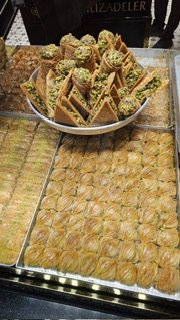
Baklava

Sweet viagra!
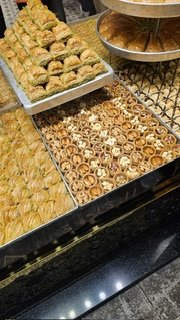
And more Baklava
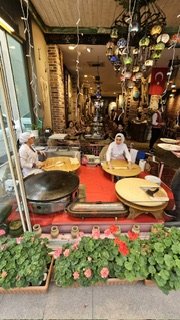
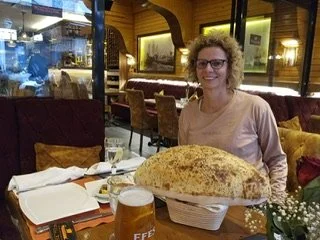
Lavish bread my favourite!
Merhaba
Hello from Istanbul - Queen of Cities!
I expected to be fascinated with this big and vibrant city that spans two continents, Europe and Asia. Expectations are beyond being met! Wow, wow, wow!

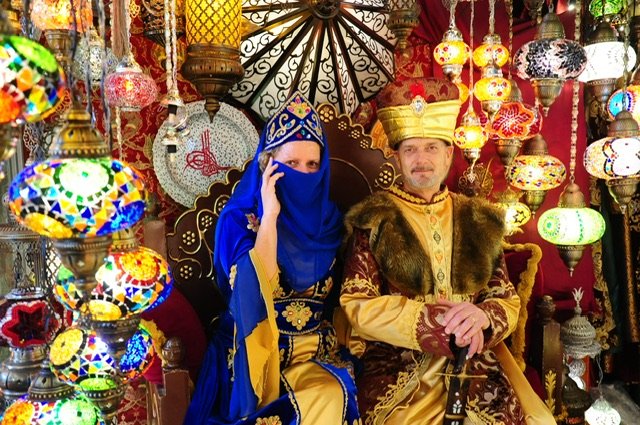
Photo shoot at Grand Baazar
Hello from Istanbul - Queen of Cities!
I expected to be fascinated with this big and vibrant city that spans two continents, Europe and Asia. Expectations are beyond being met! Wow, wow, wow!
We landed at 5am, got to the Sultanhan hotel, enjoyed the traditional breakfast and a strong Turkish coffee, so nice! By 10am we were already out wondering the streets of the old town.
I am soaking it all in and there is plethora of things to visit and explore. We went to the Grand Baazar with 61 streets and over 4000 shops. There is something there for everyone, from spice shops, souvenirs, teas, clothing and leather stores, shoes shops - I have never seen this many shoes shops in one place! Everyone was trying to sell me a leather jacket and golden jewellery and although they are famous for being great salesman, I’ve got a compliment for being equally a good saleswoman, ha!
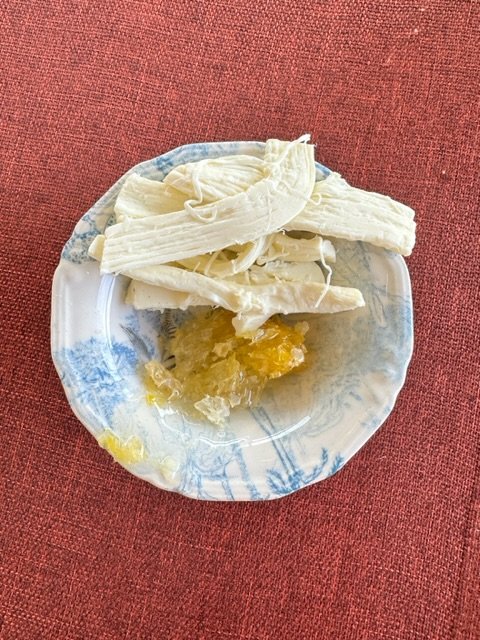
Honeycomb with fresh mozzarella cheese is my favourite gourmet discovery today!
Guru walks are booked for the next few days, my brain is working hard being super curious about it all.


My First Blog
Ready to see the world!
In the next few weeks, a big milestone will kick in for me, 25 years of service with IAG New Zealand! Who would have thought a young woman, new to New Zealand, with no English, no insurance background, and a desire to learn and try new things would land in insurance and then make it her career? ….

Ready to see the world!
In the next few weeks, a big milestone will kick in for me, 25 years of service with IAG New Zealand! Who would have thought a young woman, new to New Zealand, with no English, no insurance background, and a desire to learn and try new things would land in insurance and then make it her career?
It's safe to say, it has been a phenomenal experience, a roller coaster full of ups and downs, lots of big jobs done well, with many mistakes made along the way that led to growth and more growth.
After what’s been an amazing experience, I feel grateful and privileged to be able to do something uniquely special for my family and I. My husband Nebojsa and I have decided to take a well-deserved career break and do what we love doing the most – travel. I will return to work on 1 May 2024.
This trip will allow us to spend quality time with our loved ones who live overseas, give us new experiences as we explore a few countries and most importantly, give us the opportunity to celebrate life. This is our shout to ourselves for making it work in a new country, after coming from nothing to nothing and with nothing, raising two lovely human beings, Petra and Miroslav and making it work.
As we embark on our new adventure, I will be writing short travel blogs to capture memories, share experiences and show the beautiful world. Since I have never done anything like this, I am feeling anxious and excited, one and the same emotion just a different perspective. Safe travels to us!
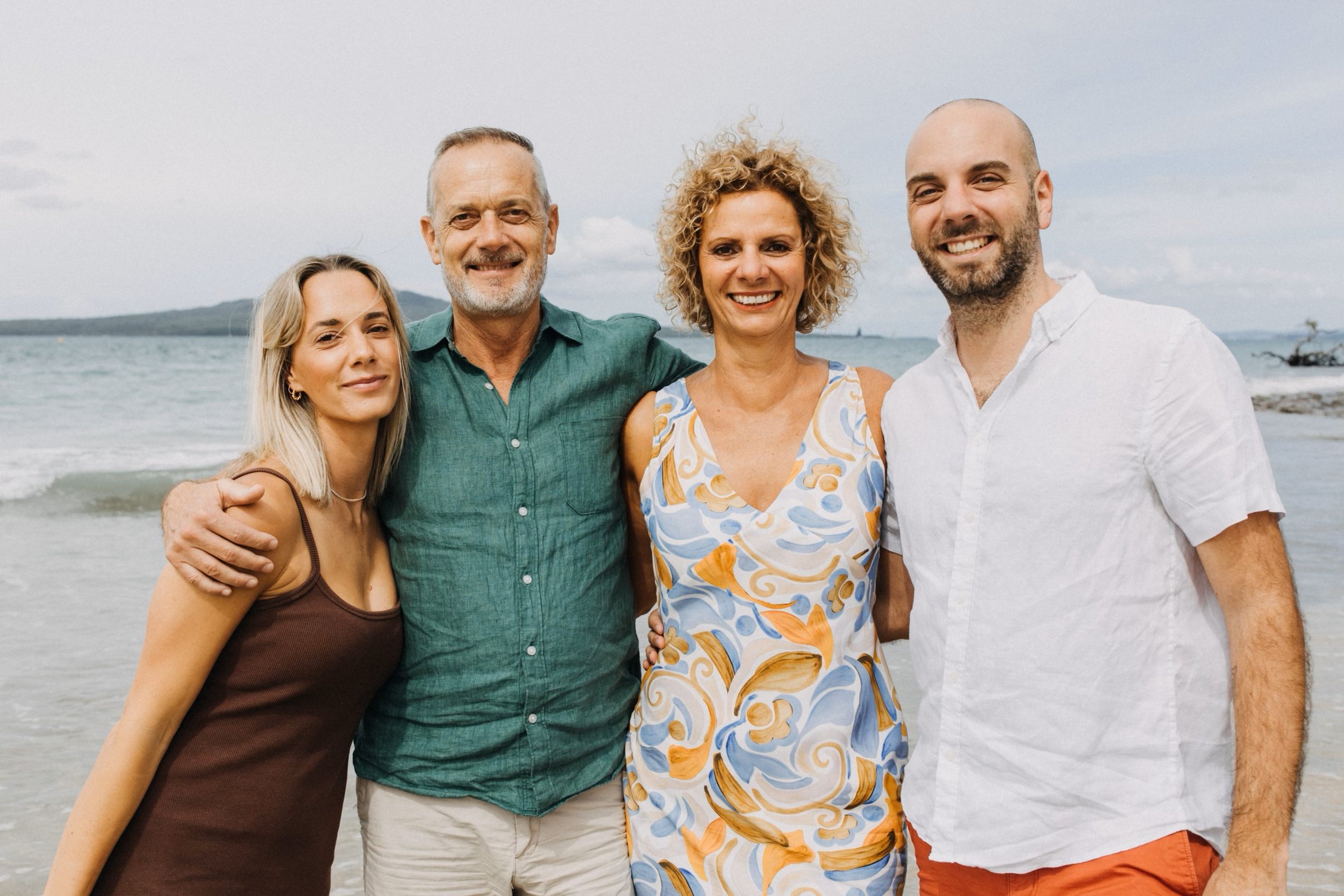
Đorđević family - Petra, Nebojša, Draženka and Miroslav